1.33:1 Fullscreen

As a child growing up in the 1970’s I remember quite vividly the Saturday morning cartoon experience. It’s what we all lived for. We’d wake up early and pour out a bowl of sugar and milk, reaching for some cheap toy that was buried in the cereal box like Blackbeard’s own chest of gold. Then we would entertain ourselves with zany characters, superheroes, and action filled adventures until the noon news programs would begin and it was time to take our playtime outside. It was a far more innocent age, and we didn’t have video games to play. These were our video games. If they appear simple and at times crude, perhaps they were. But these were something of our very own. Watching them today, they don’t hold the same kind of magic they did then. That doesn’t mean it isn’t fun to revisit those days from time to time. It wasn’t the cartoons that were always special. But, Saturday morning … man, that was something special.

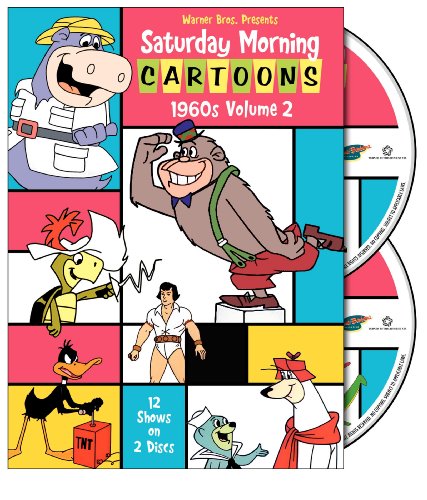
These cartoons are mostly Hanna Barbera shows which dominated the Warner archive from that era. No question this group contains some of the most recognizable characters from my childhood. Certainly, there some of the very well known titles from Bugs to The Roadrunner. I’m glad to see a few other characters added here like El Kabong and Atom Ant. It’s a very eclectic collection, to be sure, so you should find a little something for everyone.

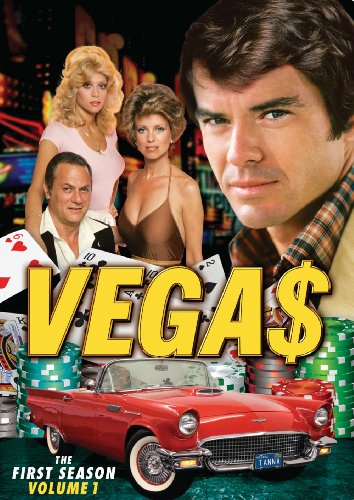
By 1978 the television detective model had been nearly complete and possibly already a cliché. Dan Tanna might have well been the complete model as far as the formula goes. It was almost as if you could go down a checklist and, like Dr. Frankenstein creating a monster, you would check off the necessary elements. The scripts could then almost write themselves, and you let the show fly on autopilot for three seasons or so until someone decides to look behind the curtain.

So let’s go down that checklist, shall we?

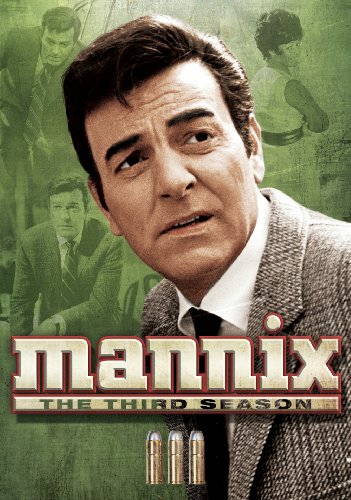
It sounds like nothing new. Hard boiled detective uses computers and other forms of technology to solve cases. It isn’t anything new, except the detective in question is Joe Mannix, and the series started in 1967. The computer that Mannix used took up an entire room and was queried using cardboard punch cards. This wasn’t science fiction. We’re not talking some newly discovered Irwin Allen series. Mannix didn’t go after aliens or robots. This was a down to earth gritty detective show. Mike Connors played the tough as nails detective. He was perfect for the part and blended into the role seamlessly for 8 years.

The show was created by the team of Link and Levinson, who later gave us the detective in the rumpled raincoat, Columbo. It was groundbreaking in so many areas. While it might not be remembered today as one of the top detective shows, there can be no argument about the impact Mannix had on the genre. A decade later one of my favorite television detectives, Jim Rockford, would borrow rather heavily from Mannix. Like Rockford, Mannix was getting beat up a lot. They both had the same sense of style, wearing rather ugly sport jackets. Neither was afraid to bend the rules, or the law, when necessary. Again like Rockford, Mannix often falls for the wrong girl at the wrong time. Mannix was good with a gun and equally adept with his fists. The show received a ton of controversy from the start for the amount of violence it employed. Tame by today’s standards, Mannix was quite aggressive for its time. The joke was that the show’s producers mandated a fight or car chase every 15 minutes whether it was needed or not. I’m sure that wasn’t true, but nonetheless the show opened the floodgates for the detective shows that followed. In this first season, Mannix worked for the enigmatic detective agency, Intertect. They supplied him with the latest in modern technology and with his cases. His main company contact was Lou Wickersham, played by Joseph Campanella. Now Mannix is on his own and begins to resemble more and more these detectives that would eventually follow in his tire tracks.

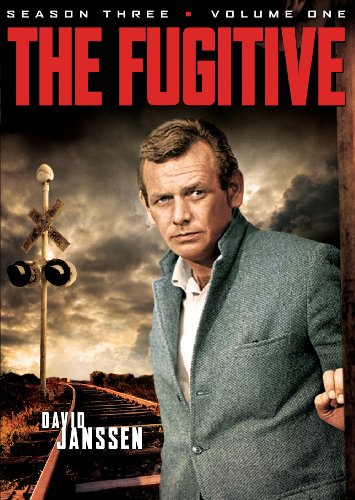
“The man is Richard Kimble and, not surprisingly, the man is tired. Tired of looking over his shoulder, the ready lie of the buses and freight trains. Richard Kimble is tired of running…”

The elusive “one armed man” is one of the best known television icons of all time. The plight of Dr. Richard Kimball has been the subject of numerous imitations and even a feature film staring Harrison Ford as Kimball and Tommy Lee Jones as his pursuer. Tim Daly left the ranks of comedy to fill the shoes of Kimball in a very short lived revival series. While some of these efforts managed to capture the essence of The Fugitive, none can truly compare to the real thing.

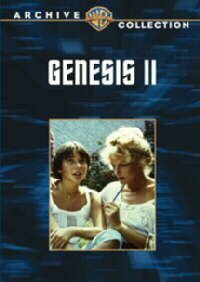
“My name is Dylan Hunt. My story begins the day on which I died. My last look at my world was to be from inside a pressure chamber at NASA’s underground laboratory at Carlsbad Caverns. Our goal was the development of a form of suspended animation which would allow our astronauts to make longer voyages through our solar system. It had been my decision that our method was ready to test on a human so, it seemed that any risks should be mine…”

Gene Roddenberry was riding high as Star Trek began to grow more in popularity during syndication than it had as a prime time network series. Suddenly television executives wanted more ideas from The Great Bird Of The Galaxy, as Trek fans began to know him. One of those ideas was Genesis II. It tells the story of a scientist who is conducting a suspended animation experiment. He expects to be under for only a few days, but a cave-in traps him in his chamber, and he is not rediscovered for 154 years. He awakes to find an entirely different world than the one he remembers. Humans live underground as a group called the PAX. They are a peaceful sort and have left behind most of the science that destroyed the world Hunt knew. Their enemies are a group of mutants, identifiable by having two belly buttons, because they have two hearts. They have enslaved humans and live an aristocratic life in the city of Tyranus. Now Hunt (Cord) is being courted by both civilizations. He must choose between them. Attempting to win him over to the Tyranians is Lyra-a (Hartley). She seduces him and tries to taint his opinion of the PAX. But Hunt soon learns from experience which side is the nobler race.

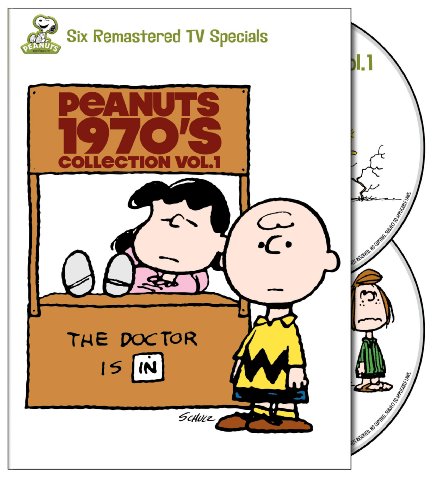
I grew up on the Peanuts creations of Charles M. Schulz. Most of us have, in some way or another. His newspaper comic strip is one of the longest running and most successful strips of all time. The work has been translated into every language currently spoken on the planet. The images of Charlie Brown, Snoopy, Linus, and the rest of the Peanuts gang have appeared on just about any kind of product imaginable. Our pop culture contains too many references to the strip to mention briefly. For me, it was the television specials starting in the mid 1960’s that brought the gang into my life. The classics are running annually, still after nearly 50 years. A Charlie Brown Christmas and It’s The Great Pumpkin, Charlie Brown are the most mentioned and certainly beloved by generations of children and adults. I thought I never missed an airing.

Now Warner Home Video has brought together a special collection of the cartoon specials that started it all. It includes those annual greats and a few that I don’t really remember so much. Now we get into the first volume of the 1970’s specials. The two discs include the following Peanuts specials:

This is like a best-of compilation of the musical acts who were a part of the Secret Policeman's Ball(s) that were put on by famous English comedians and rockstars for the benefit of Amnesty International that plays out like a feature. There is no commentary between the acts, only a fade to black and applause.

Have you ever walked down the street and heard a chorus of “Five Oh” making the rounds? In street lexicon, that means the police. It’s a warning to the drug dealers and any other illegal activities that the police are on the way. That’s just one of the ways that Hawaii Five-0 has invaded our pop culture. Who hasn’t heard the phrase, “Book him, Danno”? It’s no surprise, because until Law & Order, Hawaii Five-0 was the longest running crime drama on television. It started in 1968 and didn’t end until 1980 when the production staff and facilities were immediately retooled to produce Magnum P.I., which was an unofficial spin-off of Hawaii Five-0. While he never actually appeared on Magnum, Five-0’s McGarrett was often referred to by characters on the series. The series continued for a few years in syndication where the episodes were all mixed up. These DVD’s allow the first chance since their original broadcast for these episodes to air complete and in the correct order. While continuity wasn’t huge, as there were few actual story arcs beyond the episodes, there were minor changes that made the show look strange in syndication. The final season was aired under the title “McGarrett”.

Written by Adrienne Ambush

Before there was American Idol, before there was So, You Think You Can Dance and definitely before there was Dancing with the Stars, there was Fame.

Written by Adrienne Ambush

Before there was American Idol, before there was So, You Think You Can Dance and definitely before there was Dancing with the Stars, there was Fame.