1.33:1 Fullscreen

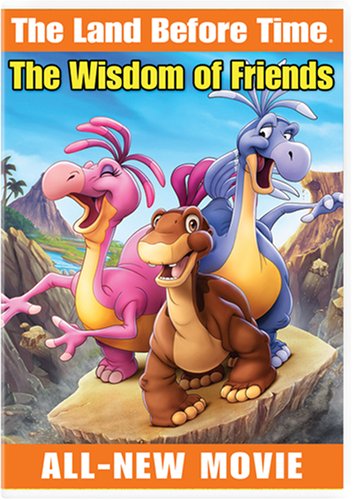
In 1988 the original Land Before Time animated feature enjoyed moderate success at the box office. This is the 12th direct to video sequel in what Universal describes as a billion dollar franchise. A lot has changed since the original film. None of the voice actors from the feature remain. The animation is really Saturday morning cartoon quality and has none of the detail work that Don Bluth gave to the first film. It seems these little gems have been coming out about once a year since around 1994.


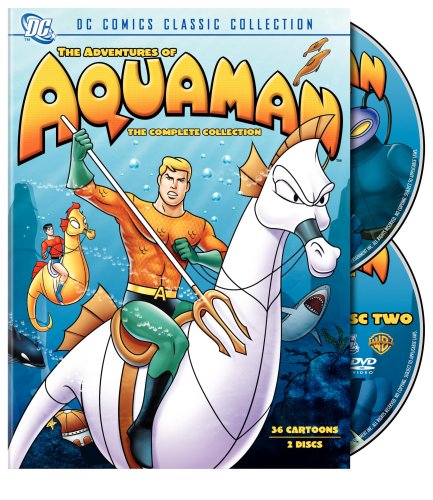
Remember Aquaman? You know, that guy who lived underwater and fought people who would dump hazardous waste in the ocean or people with big helmets named the Black Manta. No, not Charlie the Tuna. Let's try this description. He's King of Atlantis and has giant muscles and was a very popular super hero. Namor, the Sub-Mariner? *sigh* He's the one who sat behind the desk feeding the Justice League information cause simply he had nothing else better to do. Oh Aquaman, quite right. Well he had his own cartoon show in the late 60's that ran for a couple of years with the Superman/Aquaman hour of Adventure (which incidentally only ran half an hour). It featured Aquaman, Aqualad, and a vast array of exciting characters like Tusky the Walrus. I'm not making this up.

Ever sit in a cartoon show and wonder why you keep having a sense of deja vu? The series wasn't so bad, it was quirky and sported the classic 60's superhero feel. The good guys are just spending another day at the office which happens to be the ocean and the evil guys come and mess it up. Biff, bang, boom the bad guys are defeated and the world is good again. But it suffers heavily from using the same frame of animation over and over again. It's no Batfink but it's not very far off. Another thing that Aquaman did was borrow heavily from Batman, the live action show. If I hear "Holy Haddock" one more time or watch as Aqualad act as a complete copy of Robin complete with rather homo-erotic tendencies, I think I might scream. Outside of that, the stories while simple aren't so bad and it is one of those things that is fun; just in small doses.

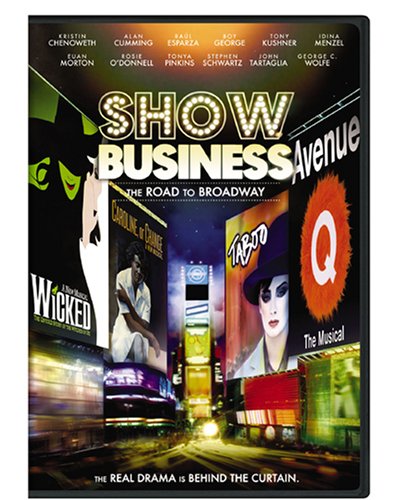
Prepare to take a journey behind the curtain, with the all-access pass that is Show Business: The Road to Broadway, a documentary chronicling the fates of four musicals that beat the odds to reach theatre's "big show."

That's the premise for Show Business, and it certainly does get behind the scenes with Wicked, Avenue Q, Taboo and Caroline, Or Change, showing how they made it to Broadway, and then how they vied for the big prize: the Tony Award for Best Musical. Hardcore musical fans may not learn anything new here, but the average viewer will likely be enlighted considerably. At the same time, theatre buffs will likely be much more excited than most viewers about seeing stuff like rehearsal footage and interviews with show creators.


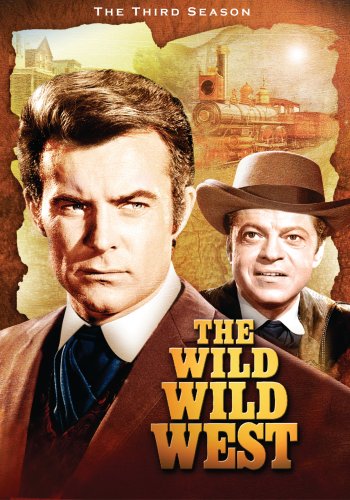
James West (Conrad) was a Union Army vet. He’s the kind of act first think about it later kind of guy. Artemus Gordon (Ross) was a typical con man. He could create the most convincing disguises and was also a master of sleight of hand. Together they worked for the Secret Service in the days of the western frontier. The two of them were the prototype of the future spy. They would use incredible inventions and Bond-like gadgets along with their own skills at trickery to investigate major Federal crimes, often plots against the United States. Think of James Bond in the Wild West.


This collection of SpongeBob cartoons has a distinct musical theme, underlined by the main offering, “Atlantis SquarePantis,” a 2-part episode that just aired. SpongeBob and friends travel to Atlantis on a song-powered bus (but of course!) and witness the many marvels of the lost city. Their tour guide is Lord Royal Highness (voiced by David Bowie). The action is cheerfully episodic, and many of the song sequences are very funny (one highlight being Sandy’s ditty which occurs with the cast transported into a 1991 video game). The other shorts are pretty fun, too, with the highlight being “Sing a Song of Patrick,” wherein the starfish writes his own pop tune, with hilariously catastrophic results.

Audio

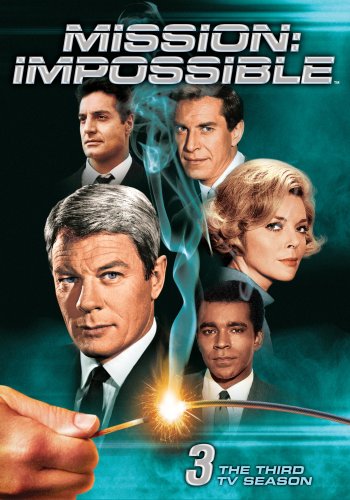
It was in the second year that the format of Mission:Impossible became what we all remember today. By this third year the show was running on all cylinders and full speed ahead. By now the formula was tight, so the audience knew exactly what to expect. They weren’t disappointed. The third year was also a very successful year in the ratings as the show began to come into its own. Mission:Impossible was a companion show to Star Trek. Both were produced at the Desilu Studios and often shared guest stars. If anything changed, it could be said there was a little more action in the third season. A few more fights and gunfights were added without compromising on the style or traditions of the series. A lot of time is still given to show the team performing some elaborate setup, often without any dialog for rather extended periods at a time. The scams were entertaining enough that somehow the audience stuck around for what many broadcast professionals would have called dead air.


After going all the way back to the 20s with the last entry in this series, now Cult Epics gives us a collection from 1960s, a period that marks the beginning of the end for this kind of pornographic short. Theatrical hardcore is just around the corner, and things will never be the same. In the meantime, though, things are remarkably the same. Other than some clothing styles (in those brief moments when clothes are actually on), it’s interesting to note that there is very little to distinguish these twelve entries from those of any other decade, a point driven home by the bonus short from the 1940s, which doesn’t feel very different from the rest of the offerings. Artistically, there is not much going on here (surprise, surprise), but the star rating indicates the fact that, despite this, there is some clear archival value here.

Audio

In the manner of the 1920s release, the audio track that had been standard for the rest of this series (the sound of film running through a projector) has been replaced with a music score. In this instance, it’s a series of swinging grooves, very much in keeping with the 60s, and acting as one of the only reminders of when these movies were actually made. The music is treated well by the 2.0 mix. The movies themselves are, of course, silent.

Video

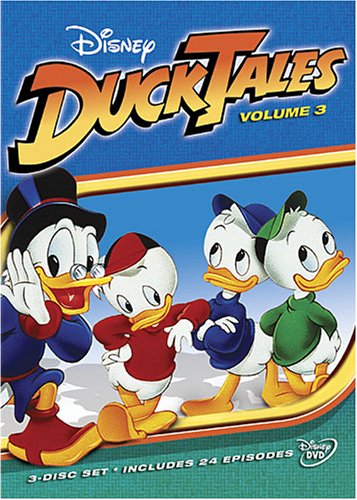
Disney Studios reinvented the afternoon cartoon when they introduced something they called Disney Afternoon. It was the brain child of studio animation head Bob Jacquemin. He saw the potential of taking famous Disney cartoons that were already beloved by millions and spinning them off into regular television cartoons. Not willing to take chances with the studio’s icon, Mickey Mouse, Michael Eisner allowed the Donald Duck universe to serve as the launching pad for this new venture. In 1987 Disney Afternoon and Duck Tales was born.


The Jungle Book was a milestone event in the history of Walt Disney’s animation history, so it shouldn’t come as too much of a surprise that the studio would tap this source for future adventures. The Disney Afternoon series has been a chance for the studio to continue many of the beloved characters. Tailspin was just such a series. The show is set in the Jungle Book world but minus little Mowgli. Now lovable bear Baloo runs an airline service with his new little friend baby bear Kit Cloudkicker. All of the other characters show up, from Shere Kahn to King Louie. This isn’t a musical, so the songs aren’t there, and there is no real mention or connection to the events in The Jungle Book. The stories are a kind of Indiana Jones affairs with plenty of tomb raiding and high flying stunts and narrow escapes. Ed Gilbert takes over the voice of Baloo, and while some of the original intonation is there, it’s clear how much the voice of Phil Harris gave Baloo so much character and charm. Obviously none of the same voice cast returns. The cost would have been prohibative for a television show, and unfortunately many of those voices are no longer with us.


Erle Stanley Gardner wrote crime fiction, and while many of his 100 or so works are unknown to most of us, he created a character that has become as identified with criminal lawyers as any other in fiction. It was in these crime novels that Perry Mason first faced a courtroom. He developed a style where he would investigate these terrible crimes his clients were on trial for. He would find the real killer, and in what has become a Hollywood cliché, reveal his findings in a crucial moment during the trial. While we may not remember the novels, we all remember the man in the persona of Raymond Burr.  Burr had a commanding presence on our screens and enjoyed a well deserved 11 year run as the clever lawyer. What makes this run so amazing is that the show followed pretty much the same pattern the entire time. We always know what’s going to happen, but we wait eagerly for that gotcha moment when Perry faces the witness on the stand. We know when he’s got the guy squarely in his sights, and we can’t sit still waiting for him to pull the trigger. OK. So, maybe that’s a little over the top, but so was Perry Mason. From the moment you heard that distinctive theme, the stage was set. To say that Perry Mason defined the lawyer show for decades would be an understatement. Folks like Matlock and shows like The Practice are strikingly similar to Perry Mason. If you haven’t checked this show out, this is your chance. See where it all began.