1.33:1 Fullscreen

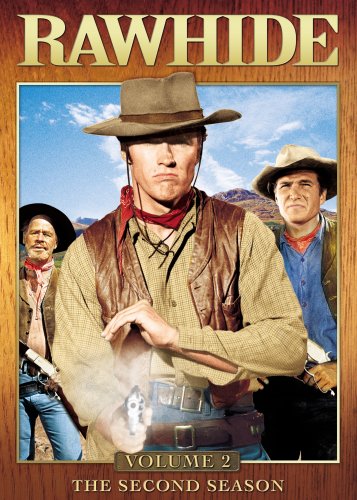
Long before Clint Eastwood was making our day as Dirty Harry or even roaming the badlands without a name for Sergio Leone, he was working the cattle drive on Rawhide. Rawhide was created to take advantage of the huge Western film and television wave that Hollywood had been riding for nearly a decade. With huge ratings for Gunsmoke and Bonanza among others, Rawhide was a bit of an unlikely success. Here the show explored the West on an endless cattle drive to get a few thousand steer to market. Along the way the crew would find themselves involved in someone else’s troubles or meet trouble head on themselves. The cattle drive theme would rely on the changing landscape to distinguish the show from other more sedentary westerns. More like Wagon Train, the constant movement always gave a sense of action even when there wasn’t much.


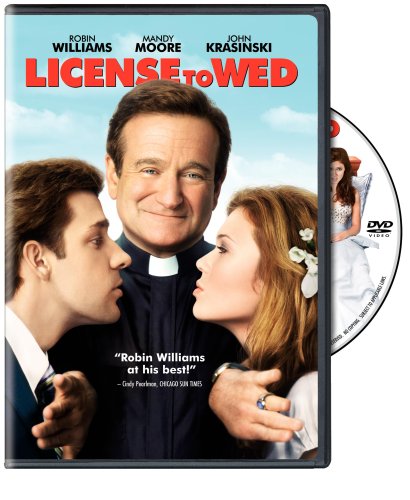
I like Robin Williams (Good Will Hunting). A lot. Generally, his presence alone is enough to make me watch a particular movie — an unfortunate fact, given his spotty record. The man can be hilarious, and he has starred in some highly entertaining films over his long career. But he's also done bad movies, flops and failures. License to Wed is one of those.

10 minutes in, I wanted to turn it off. At 18 minutes, I was actively mocking everything and anything onscreen. By the half-way point, I was cursing my obligation as reviewer to sit through the entire film. This movie is an all-around bust. Stop reading now, and check out some other Upcomingdiscs reviews for better films to watch. You can pretty much close your eyes and click to find something that'll top License to Wed.

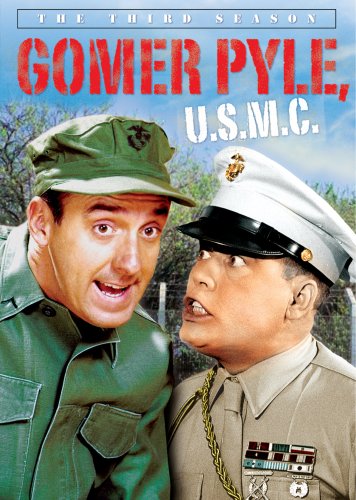
Gomer Pyle began life as a one of the down home residents of Mayberry, where Andy Griffith held court as the sheriff and Don Knotts blundered his way to fame and fortune. It’s no small task indeed to find a way to shine as a minor character who wasn’t even there from the beginning; he replaced Floyd after the second year. But shine he did. Much of the character’s charm and success has to be given to Jim Nabors. The shy naive Gomer worked as an auto mechanic in Mayberry, but for his own series he appeared in one of the most unlikeliest of places, the U.S. Marine Corp. There Nabors found the perfect comedic partner in Frank Sutton, who played his superior Sgt. Vince Carter. The chemistry and remarkable timing these two brought to the Andy Griffith spin-off made it an instant hit. Critics at the time were very skeptical of the move, and most of the predictions called for a swift end to Gomer Pyle U.S.M.C. But before you can say “surprise, surprise, surprise”, the series became as popular, if not more so, than the parent series, at least for a time. In syndication the show was always a hit.


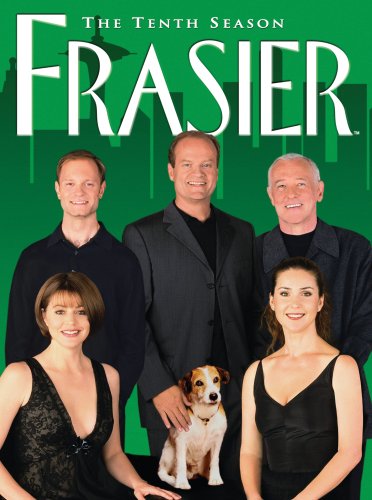
Frasier was another one of those unlikely hits. Frasier started as an intended one-off character on the hugely popular Cheers. Kelsey Grammer made the most out of it, and before long he was one of the regular barflies inhabiting a stool at Sam’s. In Cheers the wit worked because Frasier was so unlike his fellow characters. He was a sophisticated, almost snobbish psychiatrist with a taste for fine art and high class entertainment. Instead of a ballgame, Frasier was more at home at the opera or an art opening. The humor was to be found in his attempts to blend in with his crass companions or even make a run at enriching their lives with his cultured tastes. My favorite Frasier moment will always be his plan to expose the bar patrons to Charles Dickens, but instead of his changing them they eventually had him reinventing the brilliant author in his reading of David And The Coppers In The Field. Soon Cheers had run its course, and everyone was expecting a spin-off. There was too much rich material to be found here to let it just die with the closing of Sam’s bar. While Norm or Cliff were the natural choices, it was Frasier who would move on. While most fans were a little confused by the move, the show would go on for 11 seasons that were arguably far funnier than Cheers ever was.


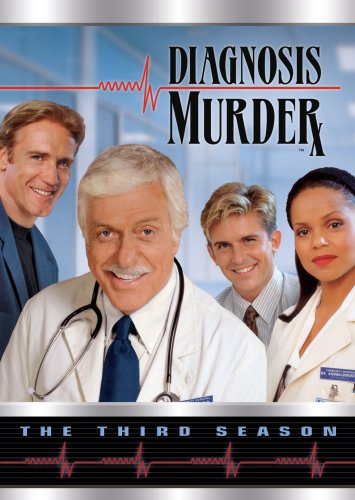
Dr. Mark Sloan first appeared in The It Never Entered My Mind episode of Jake And The Fat Man. In that episode Sloan was accused of a murder, and it was up to Jake and Jason to prove his innocence. The character had a certain charm that appeared to carry with audiences, and two years later Sloan had his own show, Diagnosis Murder. Dick Van Dyke did for doctors what his good friend Andy Griffith did for lawyers as Matlock. Both traded on their earlier careers in trademark comedies to reimagine dramatic roles in their twilight years. For Dick Van Dyke, Diagnosis Murder was more like a family affair. Almost every member of the Van Dyke clan arrived to play characters on the show that mirrored their real life connections. Jerry Van Dyke made numerous appearances as Sloan’s brother, while all of his children at one time or another played children of Sloan’s. Most notable, of course, was Barry Van Dyke, who costarred along with father. He played an L.A. Detective who often went to his father with his vast medical knowledge to solve crimes. Dr. Sloan had his own group of helpers who often either helped solve the crime or got themselves into danger, requiring doctor and son to rescue them, of course, just in the nick of time. Charlie Schlatter played Dr. Jesse Travis. Travis was a young ambitious resident who looked up to Sloan and would do almost anything for him. Victoria Rowell was Dr. Amanda Bentley who played the hospital’s real-life Quincy. She was the resident medical examiner and an important cog in Sloan’s crime fighting machine. Sloan was a combination Quincy and Columbo. Like Quincy, he had a knack for making medical discoveries no one else could find. His Columbo personality was brought out in his innocent simple nature that he relied on to lure criminals into a false sense of security.


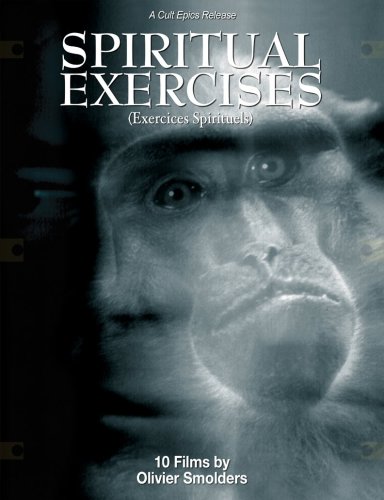
Olivier Smolders is a Belgian filmmaker with a sensibility as distinctive and challenging as his artistry is developed. Cult Epics has done North American audiences a huge service by bringing his films to Region 1 DVD release. This disc has ten short films. Each piece has its own distinct identity, yet they are all very clearly the work of a singular creative talent. The frequently disturbing shorts range from a tale of murder and cannibalism in “Adoration” (previously available on the Cinema of Death collection), to the heartbreaking “Mort à Vignole” (where Smolders narrates a family tragedy filtered through home movies made by his and his wife’s parents, along with his own family footage), to an extended yet elegantly filmed practical joke (“Point de Fuite”) to a most unusual adaptation of Sade with “La Philosophie dans le Boudoir.” The films are invariably gorgeous and clinical in the precision of their observations. The blurbs on the case invoke Lynch, Greenaway and Bergman, and the comparisons are apt, though Smolders is also very much his own man.

Audio

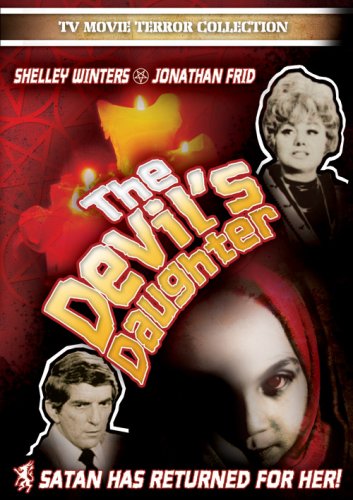
Come with me, gentle viewer, back to the state of horror on TV, Anno Domini 1973. After her long-absent mother dies in mysterious circumstances, Belinda Montgomery attends the funeral where she meets Shelley Winters, an old friend of the family, or so she claims. Winters takes Montgomery into her home, and there our young heroine meets all sorts of strange people, and gradually realizes she is in the clutches of a Satanic cult who believe she is Satan’s daughter.

Televised horror has made great strides since this Movie-of-the-Week era, though even the likes of Masters of Horror still has to work, on its best days, to reach the level of a decent theatrical release. But The Devil’s Daughter is eye-witness to an era where mediocrity was, with very rare exceptions, the best one could hope for. Awful as it is, this pick is awful in entertaining ways. So here we have Shelley Winters teasing us with the promise that she might not take the volume to 11, and then spectacularly breaking that promise; Abe Vigoda channelling the spirit of Boris Karloff; Jonathan Frid stuck with a mute character of unclear motivations; Montgomery’s character portrayed as such an incurious wallflower (she’s only mildly interested in the Rather Big Clue that is the portrait of a cloven-hoofed Satan hanging over Winters’ fireplace) that sympathy is very difficult to muster; Robert Foxworth showing up late in the day as a plot device only the dullest of viewers will fail to see coming; Joseph Cotten doing ditto; and such treasures as a photo album complete with a picture of all the Satanists, in full black regalia, happily posing for a group shot. In other words, the camp comes thick and fast, and that kind of entertainment value is what accounts for this terrible movie’s star rating.

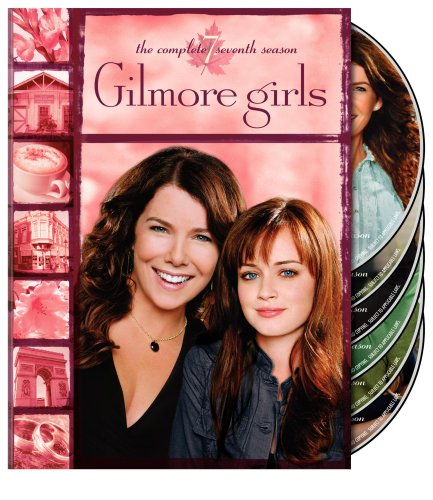
The fat lady has sung, taken her bows and waddled off to the after-party. Gilmore Girls, a show loved by many — and abhorred by some — was canceled in May, leaving fans without a true series finale. Here, in this DVD set, lie the final episodes, created without input from series creator Amy Sherman-Palladino, who left the show after season six.

This is not a fitting end for our Gilmore Girls, but unless a rumored movie becomes reality, it's all we're going to get. So if you're looking for closure, this ain't the place.


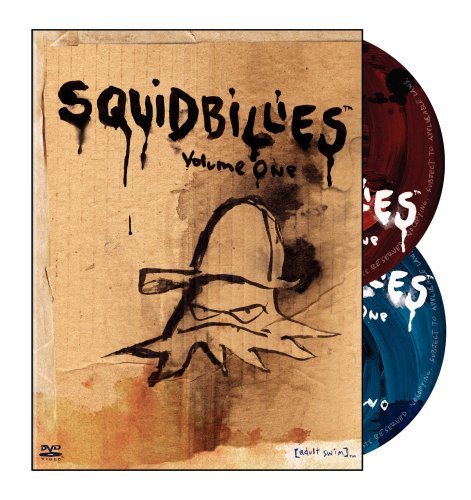
I love some Adult Swim. There are some real standouts shown that have fun plots, edgy animation, and a whole lot of outlandish humor. Venture Bros, Robot Chicken and Aqua Teen Hunger Force immediately come to mind. Heck, I've even gave smaller shows like The Boondocks and Metalocalypse a try and liked them on some level. So needless to say, I was interested when I received Squidbillies Volume 1. Twenty episodes staring a Georgia-based hick squid family. How bad could it be?

The story goes something like this. Early Cuyler (voiced by Stuart Daniel Baker) is a backwoods Georgia hick squid (yes, calamari) that has sex with a rather overweight white girl named Krystal. In the process, he robbed a liquor store for cassettes and booze and was caught by the Sheriff. Convicted for 15 years of hard labor, he had no idea that he had got Krystal pregnant. Krystal gave birth to Rusty, a little green squid. Krystal leaves him on Lil's (Early's sister) doorstep where the squid spends the next 15 years. At that point, Rusty finds his dad working on the chain gang and the Sheriff takes pity on the two. He decides to release Early which is where this story really begins. The mis-adventures of Early bringing up his illegitimate child Rusty serve as fodder for the rest of the twenty episodes.

Have you ever watched a recent Robin Williams film and yearned for the days when the actor wasn’t so full of himself and stealing every scene he was in? Well, you’re out of luck, because there was never such a time for Williams; however, you can journey to a time when at least he was hungry and wasn’t so over the top. OK. Even in the days of Mork and Mindy Williams was never capable of reining himself in. Still, I thought I would look back on these episodes with that warm nostalgic feeling I tend to get and just remember the good times. And yes, there were good times. But the more I watched this third year of Mork and Mindy I was becoming all too aware that in 35 years nothing has changed except that the routine has gotten old. Watching Williams prance around with his silly voices and wide eyed faces might have been fresh in the 1970’s, but honestly, haven’t we all had just a little too much of it by now? A television film about the show didn’t present either of the stars in a very positive light, and perhaps it is that image that has tainted the show for me. Whatever the reason, I just didn’t find this stuff nearly as funny as I did 30 plus years ago. Somebody’s matured, and it wasn’t Robin Williams.