Posted in: Disc Reviews by Gino Sassani on April 28th, 2006
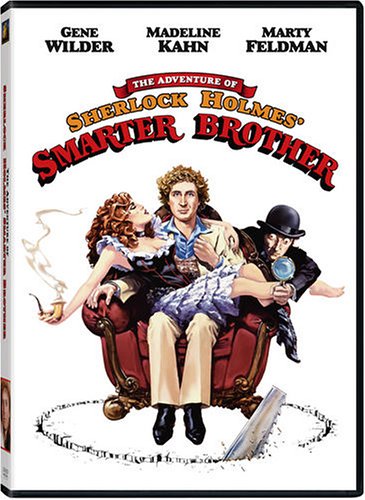
The Adventure of Sherlock Holmes’ Smarter Brother has everything that Young Frankenstein had except Mel Brooks (although he does make a very brief vocal cameo). With the combined comedic genius of Gene Wilder, Madeline Kahn, and Marty Feldman, how could this film go wrong? Like Young Frankenstein, Sir Arthur Conan Doyle’s Sherlock Holmes offers a rich classical mythology to mine for material. A wonderful supporting cast featuring the likes of Dom Deluise can’t miss, right? No so elementary, my dear Watson. Focus. ...hat’s the rub. I’m not referring to the work of the cameramen here. Gene Wilder appeared so sure of his own brilliance that he forgot to bring the story.
The game’s afoot, and it smells like it, too. Never before has so much talent been squandered on so little substance. I understand this is a farce, and I’m fully prepared for the absurd. I’m just not prepared to go nowhere. I was extremely disappointed at every turn. Toilet humor replaces wit. There are also no straight men. What’s Costello without Abbott? Everyone is so into trying to be funny no one offers to be the foil. Simply uninspired. The entire film makes one feel they are witness to one large in joke and we’re on the outside of the punch line. The musical numbers make the film all that much more intolerable.
Posted in: Disc Reviews by Archive Authors on April 28th, 2006
Teddy Pendergrass, one of the lesser known soul rebels of the seventies, comes to DVD in this lackluster edition, which purports to be 80 minutes – but that’s only true if you factor into the running time the one bonus feature. This fact could be a detriment to fans of Teddy’s music. For me, however, it was a relief to discover the actual concert only ran about an hour. There was nothing here to justify the man’s status as some kind of legend, as his audience interactions and movements on stage were limited in scope ...nd creativity. Also, his raspy voice doesn’t translate well to the performance setting. Not that I’ve heard his studio work, but it seems that would be the most effective venue for him.
Still, he seems to enjoy performing – he just doesn’t bring anything remarkable to the table. Some of the tracks on this disc will be familiar, but it’s pretty much just Teddy conducting someone else’s orchestra – and a couple of songs, which do ring familiar, have been performed better by other artists. This disc includes the following tracks: “Life Is A Song Worth Singing,” “Only You,” “All By Myself,” “Medley: If You Don’t Know Me By Now / The Love I Lost / Bad Luck/ Wake Up Everybody,” “Easy, Easy, Got To Take It Easy,” “Close The Door,” “When Somebody Loves You Back,” and “Get Up, Get Down, Get Funky, Get Loose.”
Posted in: Disc Reviews by Gino Sassani on April 26th, 2006
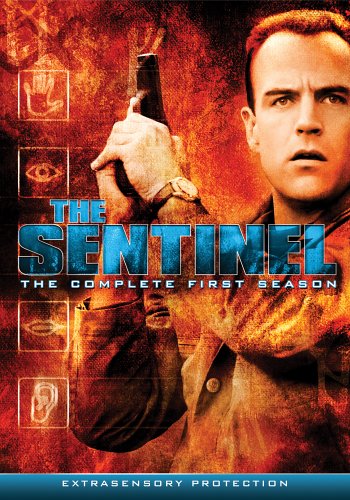
I must first admit that I never saw The Sentinel when it originally aired in the 90’s. I guess this one never made my radar. It’s basically a cop show with a somewhat sci-fi or maybe paranormal twist. It seems that Jim Ellison’s (Burgi)plane went down in the jungles of South America. While the crash killed his crew, he not only survived, but somehow obtained strange super powers. The idea is that this ancient jungle tribe develops a “sentinel” to be their guardian. For years Ellison protected the village before his...eventual rescue. Now he’s a cop with a certain advantage. Ellison has heightened hearing and vision. The rub is he can’t really control when or where it kicks in. As I watch the series, predictably the powers always kick in at just the right time. His other senses are also super-active, but sight and sound make for the most used power. Of course there has to be a team. Blair Sandburg (Maggart) is an anthropologist who studies Ellison. Captain Banks (Young) also contributes to the team This was an early UPN show. It should be noted that this series has nothing at all to do with the upcoming film with the same title.
Video
Posted in: Disc Reviews by David Annandale on April 26th, 2006
Synopsis
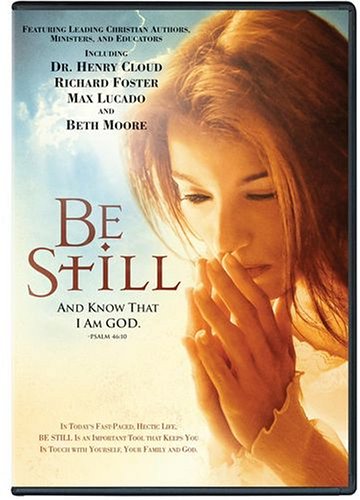
Not much to is. This is one larger film and a series of shorter ones (though they are all of a piece) extolling the virtues of contemplative prayer, which, it appears, consists in sitting quietly and listening to God, rather than speaking yourself. The whole thing drips in every “inspirational” cliché you can imagine (lots of shots of parks, clouds, sunsets, gentle spring rains, and so forth). Oddly, for a piece that’s supposed to help viewers practice being quiet, some of the speakers here ...re hardly advertisements for that fact. Priscilla Shirer, in particular, speaks in a Camille Paglia-style torrent of words, making one extremely doubtful that she has ever had a quiet moment in her life. But whatever. Those who like this sort of thing will surely like this sort of thing. Obviously, I’m utterly outside the demographic for this thing. For a chuckle, check out the consumer review on Amazon to see how this bit of flotsam can generate hugely polarized viewpoints. Hilarious.
Posted in: Disc Reviews by Archive Authors on April 26th, 2006
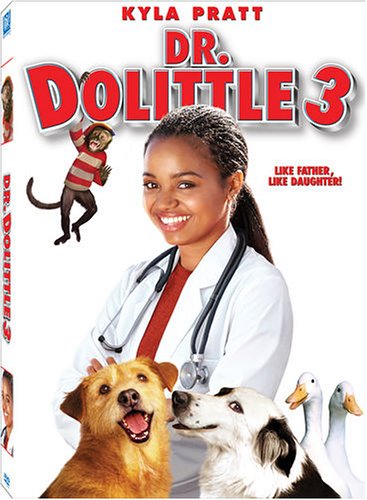
Dr. Dolittle 3 is yet another unnecessary direct-to-DVD sequel of a film, whose glory has long since passed. Young actress Kyla Pratt takes center stage as the next generation of Dolittle to inherit the gift – or curse – of hearing animals speak. At the outset of the film, she is ashamed of her gift, and her lineage. But when she is sent to an old family friend’s ranch for the summer, she begins to see that a talent is what you make of it. Along with telegraphed comedy, lightweight rivalries, and a budding rom...nce with a young ex-bull rider, Kyla’s feature debut is a harmlessly amateur piece of family film fluff, sure to delight the kiddies (but only the very young).
From an adult’s perspective, the film contains a lot of weaknesses – namely stemming from a core plot founded and developed on one cliché after another. The slapstick aspects of the humor have also been done to death – and here, they’re not very effective. The whole “will they or won’t they save the ranch” thing also feels like familiar territory, and tension is absent as a result. It’s been said there’s nothing new under the sun – certainly, this is the case at the Durango Ranch in Dr. Dolittle 3. But sometimes, a film filled with regurgitated plot points matters not when the eyes appealed to are that of a child. Kudos to the animal trainers, though – they do a fabulous job making all the ensuing hijinx feel authentic.
Posted in: Disc Reviews by Archive Authors on April 25th, 2006
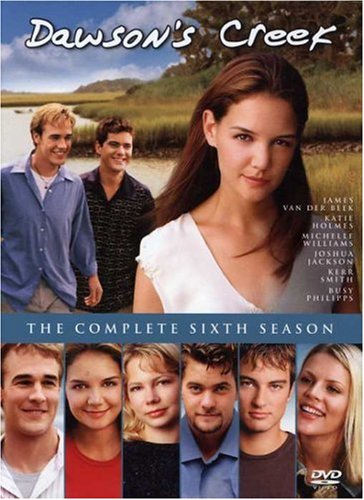
Dawson’s Creek follows the lives of Dawson Leery (James Van Der Beek) and his friends, as they struggle through their formative years and – in this final season – search for their places in the adult world. The first episode pulls a cruel tease in finally putting Joey (Katie Holmes) and Dawson together before the rug is pulled out from under their love affair the very next episode. Some might say it’s a decision from which the season never recovers – I say the show never had its footing to begin with. Plagued ...y writer and executive producer Kevin Williamson’s penchant for overwriting every single character, the two-hour finale has more laughable life affirmations that in no way resemble the ways that actual people talk than you can shake a stick at. His dialogue – and that attributed to other series scribes – revels in its own verbosity. No matter what the character’s intellectual playing field, he or she has something profound, deep, and flowery, to say; and such speech is usually followed by a self-congratulatory retort from another character – as if the writers are throwing out a line they think sounds terrific, and they’re so pleased with themselves, they must have the other conversational participant pat them on the back for thinking of it. I can’t tell you how many times you’ll hear things like, “So true”; “Well-put”; “I never thought of it that way”; “I couldn’t have said it better myself”; blah, blah, blah…
The final decisions for the two-hour finale are also terribly clichéd and can be seen coming from a mile away. Williamson drives one major character’s death into the ground so much that by the time he/she actually goes, you’ve lost all emotional attachment to the character, and are just thankful you don’t have to listen to one more weeping goodbye. On an unrelated note, the show heavily promotes the gay lifestyle. What your feelings are with regards to this are your own business, and as a free citizen, you have every right to them, but what Dawson’s Creek is guilty of is its refusal – along with the rest of popular entertainment – to feature positive characters opposed to the lifestyle. In this case, the show skirts the issue all together, with the exception of a moment where Jack (the primary gay character) refers to such thinking as living in “the Stone Age” – a relatively small potshot, but still a potshot. I’m not suggesting the gay characters be portrayed in a negative light – but it would be nice if the writers had a large enough understanding of the human race not to paint the opposition in such broad, generic strokes. Of course, if these writers had such ability, they wouldn’t be the pompous lit-class rejects they come across as in this show.
Posted in: Disc Reviews by Archive Authors on April 24th, 2006
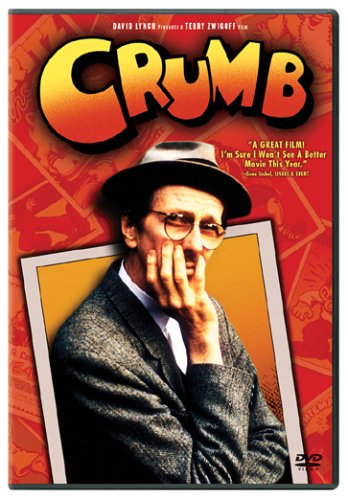
Say what you want about Robert Crumb, and his controversial cartoon funnies, but at least he’s found a healthy way of expressing not-so-healthy ideas – more than what can be said for his brothers, Maxon and Charles. Sony’s classic documentary Crumb (directed by Terry Zwigoff) demonstrates this in a beautifully ugly piece of filmmaking, now available in a new special edition to celebrate (albeit, a bit late) the film’s tenth anniversary. Maxon is the “molester” of the Crumb kids, and I say that hoping it’s an e...aggeration, but knowing somehow, deep-down, he’s probably been on his share of sex offender lists. Charles, if not for his appearance in this documentary (and role in Robert’s life), might as well not exist. He sits at home and bathes sporadically (but never often enough – you can almost smell the guy as he sits there with a pompous grin and green teeth), and he never leaves the house to get a job, seek out a slice of personal happiness, or add any value to society. The brothers of Robert Crumb are, indeed, losers, and the only things preventing Robert from sharing their fate is his talent for drawing, and for using said talent to carve out a better niche in life. Still, he, too, is guilty of hypocrisy, not necessarily in his work, but in his personal thoughts and opinions. He bemoans the commercial aspects of our society. He makes rushes to judgment about large groups of people, based solely on the kind of clothes they wear, yet his own views do little else besides espousing hostility towards women and presenting other races in unflattering lights (even if that isn’t his intended purpose). He can lay claim to all the liberal social ideas he wants, but if an African-American read his strip “Angelfood,” and had immediate access to Crumb’s throat, he or she would be ringing it emphatically (and would be just in so doing).
I am unsure of Zwigoff’s intentions in his presentation of Crumb – is this guy supposed to be a visionary artistic hero, or a mealy-mouthed little pervert with better ways of expressing it than Max? What I managed to draw from Crumb is that the case can be made for both. Make no mistake – I did not like this man. I’m more inclined to believe the pervert aspect of him than the hero. Still, I find his artistic style pleasing to the eye, and I enjoyed this examination of his work very much. He may not be a model citizen, and his move to France, which takes center stage in the final act, can only mean good things for our country, but he’s an interesting chap, and he makes for interesting viewing during the solid two-hour running time. I also found the extensive discussions among the three brothers very fitting to the film’s overall purpose – to dissect a legendary artist and his work. See, the brothers play such a huge part in shaping what this central figure becomes that, without them, there is no film – and subsequently, no Robert Crumb. Overall, this is a great piece of documentary filmmaking, which represents the difference between those that dream, and those that make their dreams come true. But the more obvious message – at least, to me – through the dichotomy of the Crumb siblings’ personalities, is how a degenerate doesn’t have to be a human slug, too. And that’s how Robert differs from his brothers.
Posted in: Disc Reviews by Archive Authors on April 20th, 2006
posted by Kim Lee
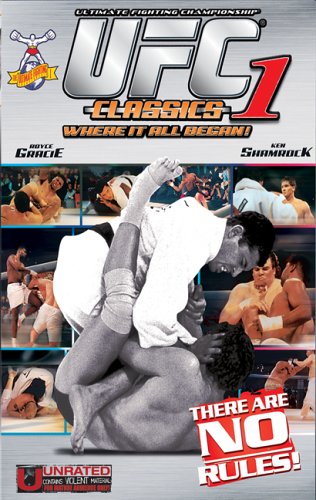
UFC 1 is where it all began… in the OCTAGON! 8 deadly fighters go head to head in the octagon (steel cage) where two men enter but only one man leaves victorious. These fighters battle it out in a tournament style no holds barred, bare knuckle (no gloves allowed) combat. There are No Rules, No time limit, and No judges.
Posted in: Disc Reviews by Archive Authors on April 19th, 2006
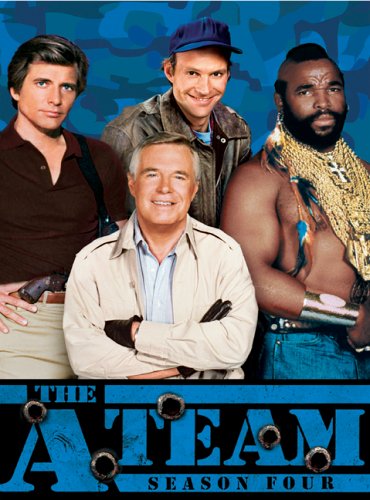
The appearance of Mr. T as B.A. Baracus unfortunately overshadows the rest of this show. Why is that unfortunate? Because Mr. T’s appeal mostly comes from his performance as the show-stealing Clubber Lang from Rocky III, and not from any major importance he had on this series. While people certainly tuned in to see Baracus, they were often disappointed by the back seat he would frequently take to the other stars – disappointed because they wanted to see Clubber Lang on the A-Team, and not the back-seat charact...r he plays here. But after watching more of his role as Baracus in The A-Team: The Complete Fourth Season, it becomes obvious why he wasn’t used any more than he was – he really is a one-trick-pony actor. He plays one role – plays it well, in fact – but he simply cannot add anything else to the character. The new quickly wears off, and all you’re left with is a supporting character stealing the spotlight by presence alone over the show’s real star, George Peppard.
Some of the episodes included in this latest release are solid, while others are childish – in fact, most are childish, but I won’t say they’re not all a little fun. It always amazed me how The A-Team’s battles with the bad guys – while often containing the use of machine guns, grenades, assault choppers, and dozens of other deadly militaristic weapons – most always resorted in their victory without the loss of one human life, good or bad. It’s also amusing the government has such difficulty locating them, but any yahoo gas station owner can track them down with ease – a shortfall of the series most loyal fans will overlook. Still, the nostalgia factor is huge with this show – it’s got to be – and it does still manage the occasional episode with deeper value (see the season finale). It’s certainly a stupid show, but don’t let that stop you from enjoying it. There are far worse things on our silver screens today.
Posted in: Disc Reviews by Archive Authors on April 17th, 2006
It’s his show, he’s Andy Milonakis. That’s what the rap says to begin each and every idiotic entry to the first season of The Andy Milonakis Show. And as Andy himself points out in the commentary for episode six, the show is meant to be as stupid as humanly possible. With Milonakis at the helm, it reaches such high aspirations with ease. I’m still not sure of the merits of a program, whose only intention is to see how asinine it can be. Rest assured, there’s a huge difference between stupid-stupid and stupid-f...nny, and Milonakis sticks with the former like it’s his religion.
I don’t know what else to really say about the eight episodes included in season one. The format of each is Andy acting as stupid as he can in a series of unrelated vignettes. For those who don’t know the name Milonakis, you’ll probably know the face that goes with it. Then again, with his only film credit that immediately comes to mind being a supporting role in Waiting (a funny flick with marginal-at-best box office returns), you may not. But if you’ve ever seen his face, you’re not likely to forget it. Afflicted with a growth hormone condition that puts him in the body (and mind) of a 14-year old, this 30-year old “comedian” usually gets a jaw-dropping reaction from those familiar with him once they discover his true age. Count me in that throng. But the real shock here is not that Milonakis is twice as old as he looks (and acts) – no, the truly flooring bit of information is that his show was ever picked up and produced in the first place. If this is the future of comedy, then I proudly call myself an old fogy.