1.78:1 Widescreen

Written by Dave Younger

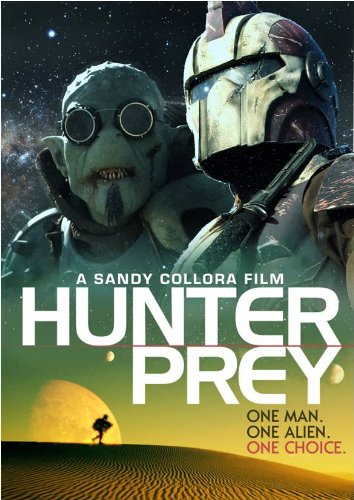
A couple, Alex and Kate (Nicholas Shaw, Zoe Richards), has fallen asleep on the couch watching a movie.  Kate wakes up muttering, “Don’t open it.”  Someone rings the doorbell.  You know they shouldn’t open it.  It’s only David (Giles Alderson), a good friend, a little freaked out because he’s just discovered his girlfriend is cheating on him.  They agree to let him spend the night.  Bad idea.  He’s more than a little freaked: he can’t sleep, and he sees monsters.  We can’t see the monsters too well, but what we do see is reminiscent of the phantasmagoric creatures on The Outer Limits.  We’re mostly aware of them through sound – they make spectacularly creepy and eerie sounds – thumping, banging, screeching, and hissing combine with constantly unsettling music.

John Wayne Gacy was one of Chicago's most infamous killers. He most remembered for the images of him as a clown. He used to entertain at parties in the costume. While it was never really part of his killing life, he was forever known as the Clown Killer. Gacy would entice young men, often gay hookers, into his home where he would drug them and have sex with them. He would also trick them into putting on handcuffs, and he would strangle them to death. He buried the bodies of his victims in a crawlspace beneath his house, where the mass grave's discovery would lead to his arrest and conviction. A bit of a surprising development was that Gacy himself ended up drawing an accurate map of where each of the bodies could be found, because he didn't want them to rip up his floors. Of course, it should have been clear to him by then that he wasn't going to be living there ever again.

We all know the story. There have already been countless films and documentaries as well as books dealing with every aspect of the killer's life and crimes. Apparently, there was another little known story that hadn't gotten quite the same amount of attention. In the 14 years that Gacy was incarcerated awaiting his eventual execution for the murders, he was quite the communicative butterfly, writing to many of the folks who wrote to him in prison. He would attempt to manipulate these people from behind his own prison cell. One of these pen pals was criminology student Jason Moss. Moss would later write a book about his experiences with Gacy called The Last Victim. In the book he described the correspondence that led to him actually visiting with Gacy in the last days leading up to his execution. Obviously, there are going to be some liberties with the film, but it is nonetheless a fascinating character study of a relationship that got terribly out of hand.

KISS fans will likely feel like they’re in heaven with this quasi-intimate look at the long-tongued demon of rock. All others might be tempted to stay away, and yet, that might be a mistake. Let me first admit that I’m no fan of reality television or KISS. With that said, you might be expecting me to trash this particular program. Wrong! Honestly, as an outsider I have the unique ability to judge the show without all of the trappings of the band’s fame and history.

I’m not sure if it’s a case of morbid curiosity, but I ended up somewhat liking the show. At about 21 minutes an episode, it’s just the right length. Even if I did find this stuff entertaining, there was only so much of Gene’s family I could take in one sitting. The premise is simple and has been done to death by now. Cameras follow some famous person or family in the hopes of providing compelling drama for millions of viewers. OK, so that’s a bit of an exaggeration, but so is the idea that we’re going to get an intimate inside look at these folks while the cameras are rolling. It’s a lot like wrestling. If you don’t buy into that what you’re seeing is actually real, you can get a few laughs out of the whole thing. I will also admit this show destroyed a lot of the Gene Simmons mystique for me. Let’s face it. Can you ever watch the stage persona in the same light again after watching Gene scoop kitty litter or wash his dog by throwing him in the pool? Let’s not even talk about an attempt to get semen from a bull. Still, Gene turns out to be an interesting character very much removed from the one we’re so used to seeing. While Gene dominates the show, there is plenty of time given to wife Shannon Tweed, from Playboy and soft-porn films.

Thierry Guetta has the habit of filming everything he does in his entire life. This habit did not shake while filming the, technically illegal, work of his cousin 'Invader' who is a street artist that pastes up images from and inspired by the video game Space Invaders. Guetta quickly fell head over heals for this underground movement of creating street art and started documenting some of the most famous street artists in the entire world, including the ever (in)famous 'Banksy.' It was Banksy who questioned Guetta as to what his plans were for all of this footage, which was originally nothing, and encouraged him to make a documentary about street art as it is a temporary medium (since it is considered vandalism, all pieces are removed or destroyed soon after being created) and these pieces deserved to be recorded for history's sake in a formal film. Guetta's attempt at the film was deemed unwatchable and so Banksy took over the film and turned the camera on Guetta so that his personal story would be told along with displaying many artists' work.

Some speculations state that this film is an elaborate prank being pulled by Banksy. Remaining anonymous as he directs this film, who is to say that the art made by Guetta is not in fact created by Banksy as a way of demonstrating that pop art is the last vestige of the under-talented, and yet they can make millions if hyped just right. Indeed, the climax of the documentary is Guetta putting on an epic gallery opening in Los Angeles as his new moniker “Mr Brainwash” (a name that has been seen as evidence towards Bansky's message of how hype can brainwash the masses and disguise lack of depth or meaning). I do not subscribe to this theory, as this film seems more like a jab at those (Mr Brainwash being central) who use marketing and gimmicks to make money from something that should be about expression and not profits.

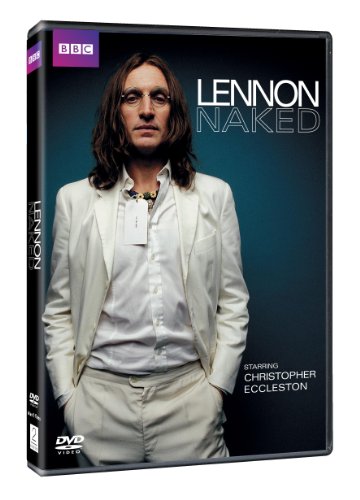
In December of 1980, John Lennon was gunned down by a crazy man who was trying to get the attention of yet another celebrity. In 2010, the BBC assassinated the man's character in this dreadful television film called Lennon Naked. I had such high hopes for the film. I rather like star Christopher Eccleston. I enjoyed his take on The Doctor from Doctor Who. He was also quite good in the zombie thriller 28 Days Later with a run as a man who can become invisible on Heroes. What made such a fine actor stoop so low as to take a gig like this is beyond my understanding. If it was the temptation to maybe play an idol from his childhood, I would have hoped he would have stopped short once he'd read the script. As the aforementioned warning tells us, this film is actually a hodgepodge of speculation that doesn't fail to kick the singer at every point.

I'm not a huge John Lennon fan. In fact, I only have mild feelings about The Beatles in general. I respect what they have done but have leaned more toward Paul and George in their years after the super-band. I have no illusions that Lennon was anything but a spoiled brat, particularly at the height of his career. His famous, "We're bigger than Jesus Christ" statement said a lot about his immaturity at the time. It should be expected. The "lads" were mere teens when their music caught fire. Before they had a chance to start shaving, women were throwing themselves practically faint at the band, and money was coming in as if it were the most common thing in the world. It's really no wonder that the band members had a feeling of entitlement and were a bit rough around the edges. There is certainly a bit of fairness to some of this portrayal.

And the George Lucas Award for the filmmaker who has mined the most out of his movie this year....the envelope please. It's James Cameron for releasing not one, not two, not three, but four different versions of Avatar in less than a year. But I'll have to give him a pass, just this once. This 3-disc collection offers enough goodies that it will tempt you to trade in your still-new version for this complete collection. Better yet ... put it at the top of your Christmas list. The film comes in three versions. One with 8 minutes added. Another with 16. What's the point of having the new version if not to see the most extensive edit?

"September 19th. Dear Diary, as I sit here thinking about picking up the pieces of what used to be my life, I realized something. Every room in this house holds a painful memory for me. Even though he's suffering, something somewhere in me wants him to suffer more. A few months and a divorce can take you through just as many emotions as 18 years in a marriage. And I'm starting to feel all of them at once. But the one that is clear is rage. Signed, a Mad Black Woman."

Lately I've had an opportunity to watch a ton of Madea on Blu-ray. Lionsgate is bringing out all of the Tyler Perry collection on high-definition Blu-ray of late. It makes sense that this wave of releases would also include Diary Of A Mad Black Woman. This is where Madea's cinematic life began. Watching these films has been a bit of a blessing and a curse. The blessing part comes from some of the pure hilarity that can be Madea. The curse comes in the form of Perry's Jekyll and Hyde style of presenting these absolutely classic comedy moments with tales of faith and redemption. Again, both styles are admirable and good on their own. I just have trouble with the mix. However, Diary Of A Mad Black Woman is better than most of his efforts in that department. Because Madea relates more integrally with the other story, it doesn't come across near as awkward as some of the others. This was probably the best of this recent wave of Tyler Perry movies. And so it seems I saved the best for last.

Written by Diane Tillis

The world of Avatar has been a part of James Cameron’s dreams for over a decade. When he initially approached studios to pitch the concept, they denied him the opportunity, citing the huge budget that would be necessary to create the film. Thus Cameron had to wait for technology to catch up with his vision. Flash forward a decade with the advancements in capture-motion cameras and 3D technology; Cameron finally saw his opportunity. With an amazing crew of visionaries, Cameron broke several boundaries in the film industry and created a cultural phenomenon. In early April 2010, the theatrical version of Avatar was released on DVD with only the feature film and no special features. Now in November 2010, the extended collector’s edition of Avatar is released with tons of goodies. The collection includes three versions of the film: the original theatrical version, the re-release version with eight minutes of deleted scenes, and the extended collector’s version with sixteen minutes of deleted scenes. The collection is divided into three discs. The first and second discs have the three versions of Avatar, each split in half. Thus, when you watch one version, an hour and a half later you will have to switch to the second disc to continue the movie. The third discs has all the deleted scenes from the films collected for instant viewing, forty-five minutes of never-before-seen deleted scenes in various stages of production, and a ninety-eight minute behind-the-scenes featurette.

"Compulsive hoarding is a mental disorder marked by an obsessive need to acquire and keep things, even if the items are worthless, hazardous, or unsanitary. More than three million people are compulsive hoarders. These are two of their stories."

The reality television craze has entered its second generation. In the beginning, shows merely found folks who were willing to put themselves in odd circumstances for the chance to earn some big payday. That first wave included such shows as Big Brother, Fear Factor, and Survivor. These shows quickly evolved, or devolved, depending on your point of view, into the relationship game. Instead of cash, these contestants went looking to marry, most often a millionaire. It turns out that Chuck Barris actually invented the reality show in 1965 with The Dating Game and later with The Gong Show. He discovered, way ahead of his time, that we wanted to see real people make complete fools of themselves for love or money. When the writers’ strike hit, these shows became a gold mine to network executives looking to fill prime-time slots. That's when everyone noticed just how cheap these shows were to make.

In the first season of Showtime’s Californication, we were introduced to David Duchovny’s character, bitter yet upbeat writer Hank Moody. Hank, after moving to Los Angeles on the heels of his first novel – a critical darling entitled “God Hates Us All” – has recently lost his long-time love and, by extension, his daughter, to a straight-arrow bore who makes his girlfriend Karen (Natascha McElhone) feel safe.

The first season told us the story of Hank’s attempts to win Karen back and his increasingly perilous relationship with a sixteen-year-old Lolita, whose inclination for combining sex with a wicked right hook leads to one of television’s all-time great novel titles. Oh yeah, and it also featured lots and lots of raunchy sex between Hank and many gorgeous women. This was a major reason for the show’s notoriety, but what really makes the show work is Duchovny’s portrayal of Hank. He imbues him with a charming kind of good-natured nihilism and, even when he is being a grade-A jackass, we still like him.