1.85:1 Widescreen

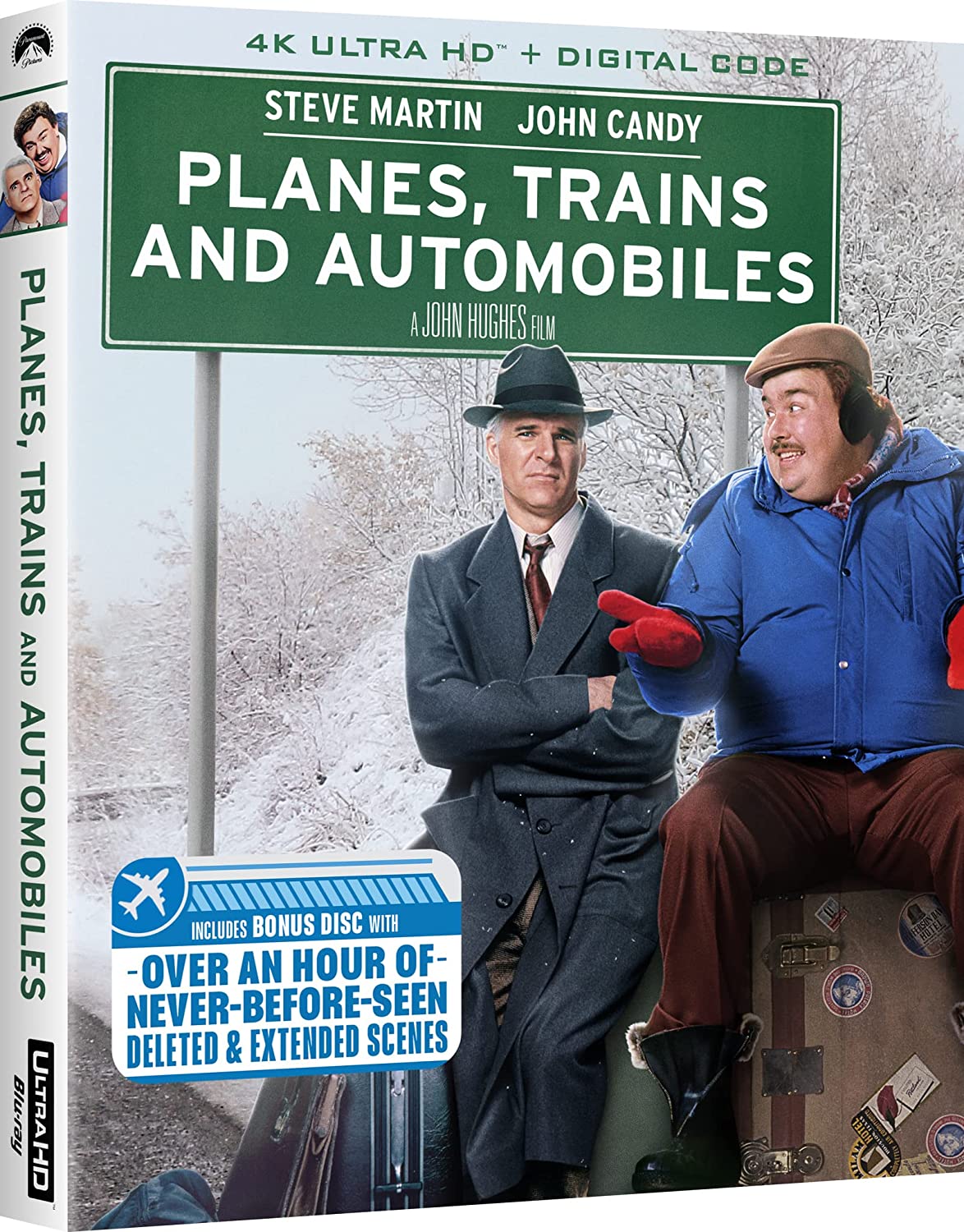
Favorite movies are usually easy to come back to.  It's a familiar song, stars you feel at home with, and even if you recite all the lines by heart, you can find something new to come back to.  In the case of Planes, Trains, and Automobiles, even though I had seen the movie probably around a dozen times or more, I was lured by the promise of new deleted and extended scenes but also a 4K-quality picture.  But as with life, you don't always get everything you want.  Let's take a look.

Please note that portions of this review came from my 2011 article on the Blu-ray, and I have improved on it where possible (and it makes sense to).  

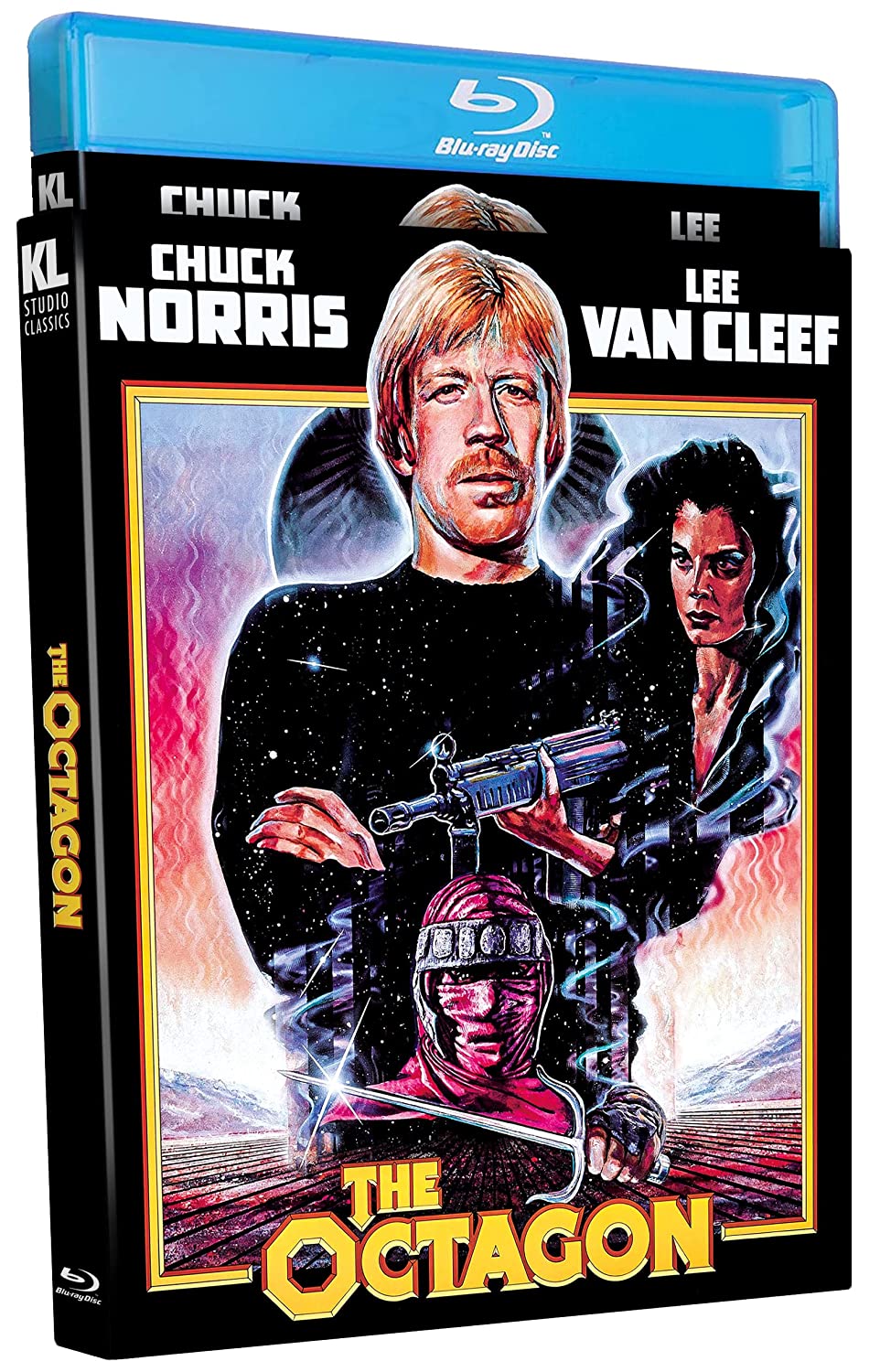
In truth, I have never been a "Chuck Norris" type guy.  I can get down with many martial artists as previously explained, from Van Damme to Seagal  to Jeff Speakman and probably many others in between.  Except when it came to the Texas Ranger.  Sure, he was an amazing martial artist, but he never had the ability to draw me in, the charisma that could keep me interested when his punches and kicks could not. (But yet I liked Jeff Speakman; go figure.)  Anyhow, I think after all this time I finally found the film that could change that.  Enter The Octagon.

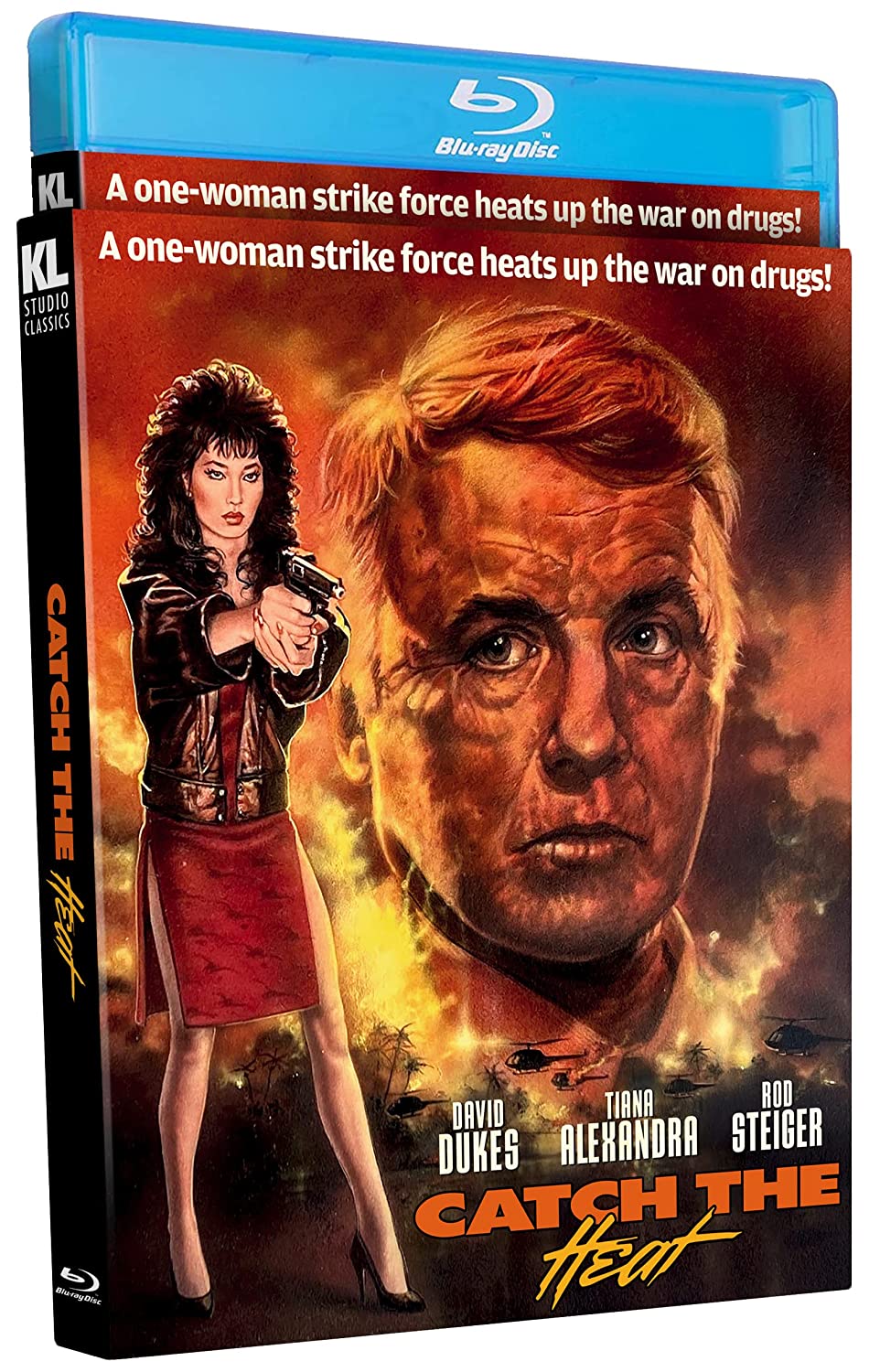
Some of my favorite movies from the 80's and 90's consist of films where very little brain matter needs to be used to consume the action of what's going on the screen.  The type of films I'm talking about are films like Bloodsport, Above the Law, the Perfect Weapon, and Rapid Fire.  Now, from reading those titles, it might sound like I'm a little "man" heavy so to speak but I also heavily enjoy films like La Femme Nikita or Moon Lee films  (Princess Madam or Devil Hunters for example).  Today's film is Catch the Heat which stars Tiana Alexandra in a film where she cranks up the kick butt meter to ten.  Let's see how it performs.

A good erotic movie is actually harder than it sounds.  Sure, you have to have skin, word play, arousal, and yes, that other kind of play.  But the good erotic films like Basic Instinct, 9 1/2 Weeks, and Embrace of the Vampire (You thought I was going to say Fatal Attraction, didn't you?) are very entertaining and have a story that draws you in to keep you there even when the spicy bits aren't on the screen.  Today's erotic film is Curiosa, which certainly hits all of the skin elements, but does it have a story that I would want to watch again and again?  Let's check it out.

A curiosa is an erotic object, book, or photograph.  We start the movie with a little photography as we watch our two main characters, Pierre Louys (played by Niels Schneider), who is taking pictures of Marie de Heredia (played by Noemie Merlant).  Marie is set to marry Henri de Regnier (played by Benjamin Lavernhe), but she does not love him.   She is actually in love with Pierre, who is Henri's best friend as well.

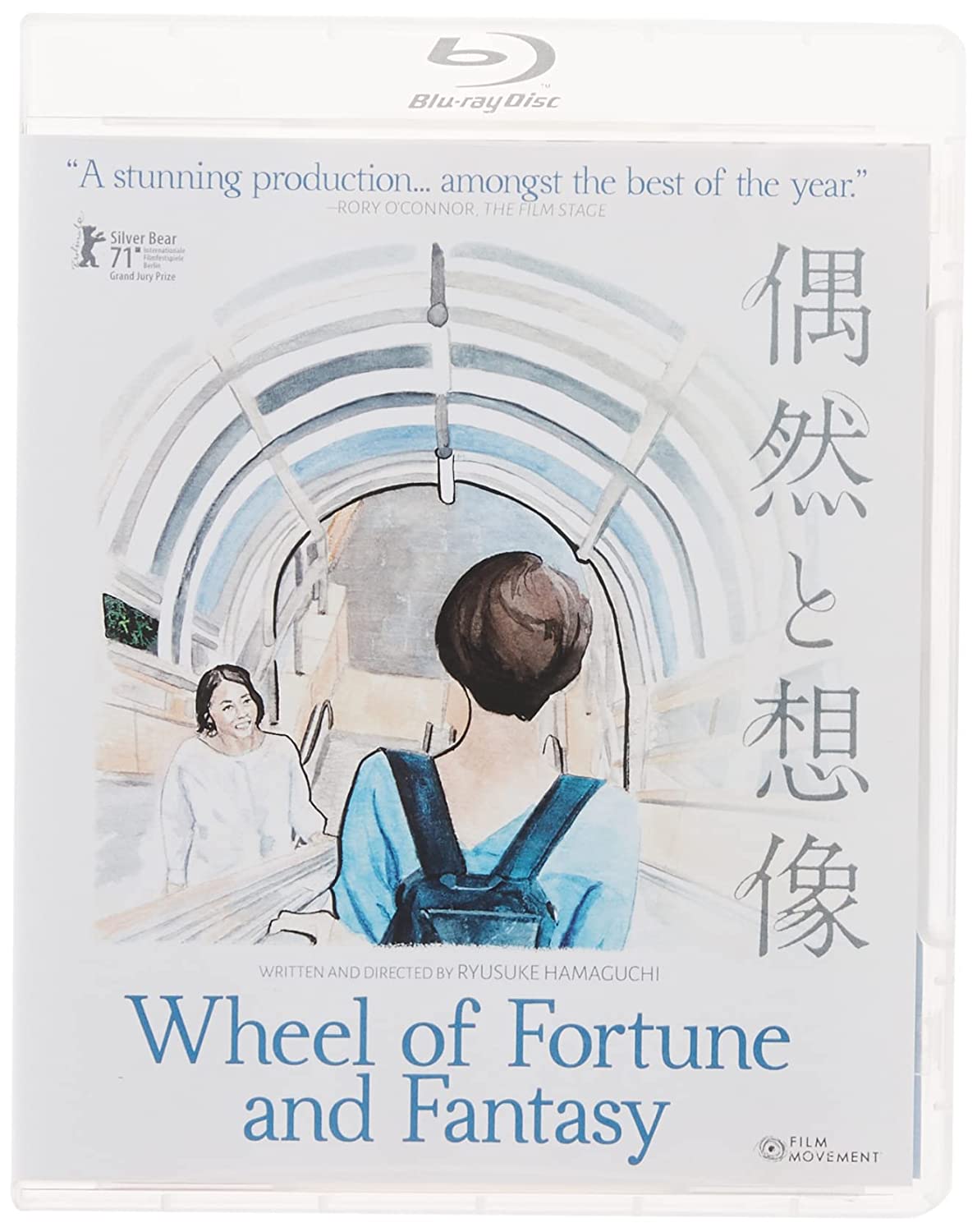
When I am not writing reviews, playing games, having a family, oh, and also having a job (because writing reviews doesn't exactly pay), I do try to dabble in the occasional short story.  Perhaps it's fantasy or science fiction, but I like spinning tales about a world that I want to be a part of even if its just for a few minutes.  It's relaxing, and that's why when I saw the opportunity to review Wheel of Fortune and Fantasy, a collection of three tales steeped in chance, culture, and some wonderful word banter, I knew I'd enjoy my time.  Let's take a look.

The stories are broken out in "Episodes".  Here is a brief summary of each one:

"Let me speak to you directly and from the heart."

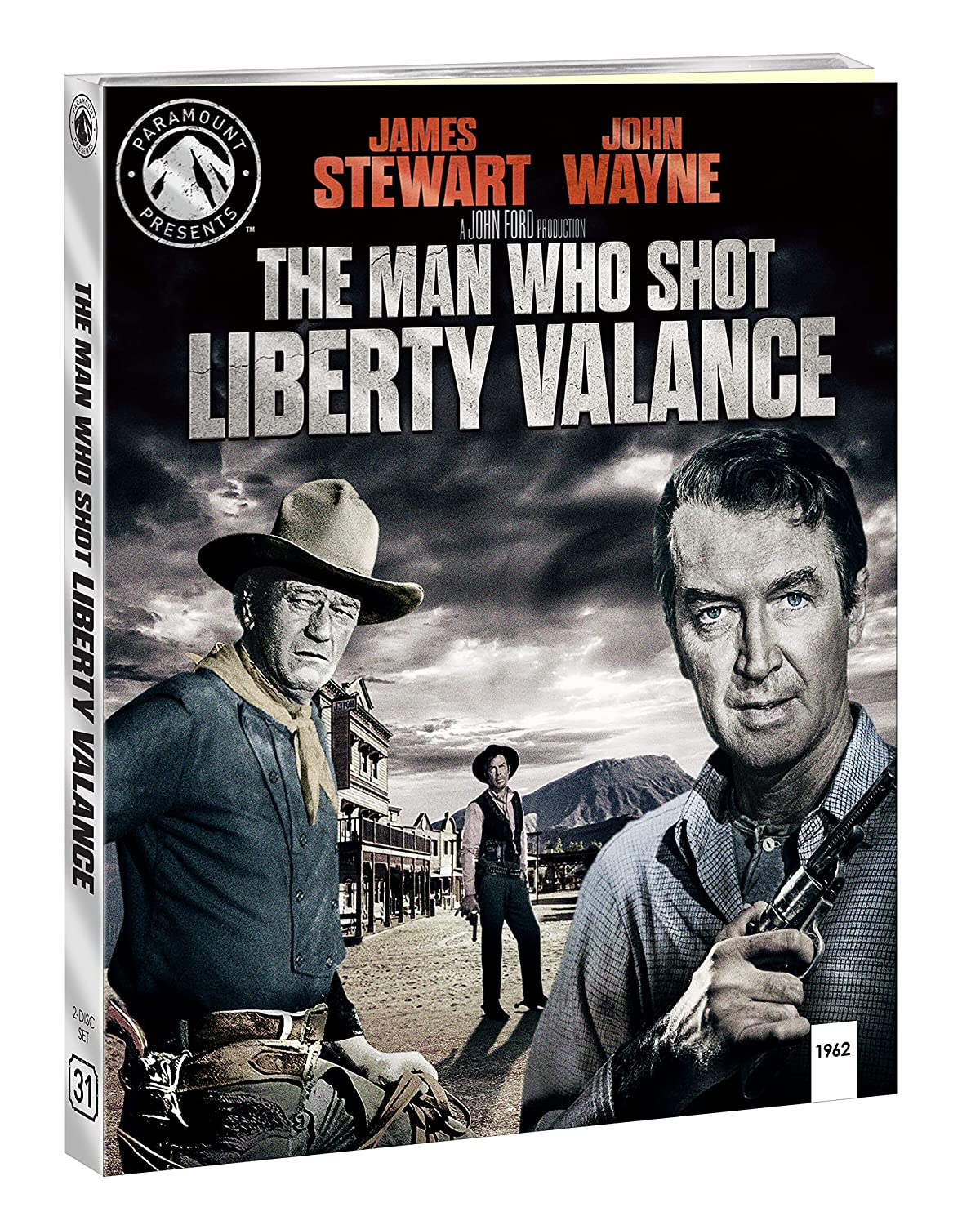
My first exposure to The Man Who Shot Liberty Valance wasn't the film at all. It was the song (The Man Who Shot) Liberty Valance, written by Burt Bacharach and Hal David. It was a 1962 hit song by Gene Pitney and was written to be included in the film. I wouldn't really be taken with the song until James Taylor would cover it and have his own hit with the song in 1985 with his album That's Why I'm Here. By then I'd seen the film but only on late-night television broadcasts which offered bad transfers and plenty of commercials that caused the film to be chopped by over 26 minutes. The funny thing about the song is that while it was written to be included in the film, it actually never appears. Director John Ford thought it sounded too modern and suggested it would only weaken the film and insisted it not be used. It's almost unfortunate that at the time the song actually received more commercial success than the film did. Now you have a much better opportunity to check out this often overlooked classic, because Paramount has remastered the film and released on UHD Blu-ray and in glorious 4K.

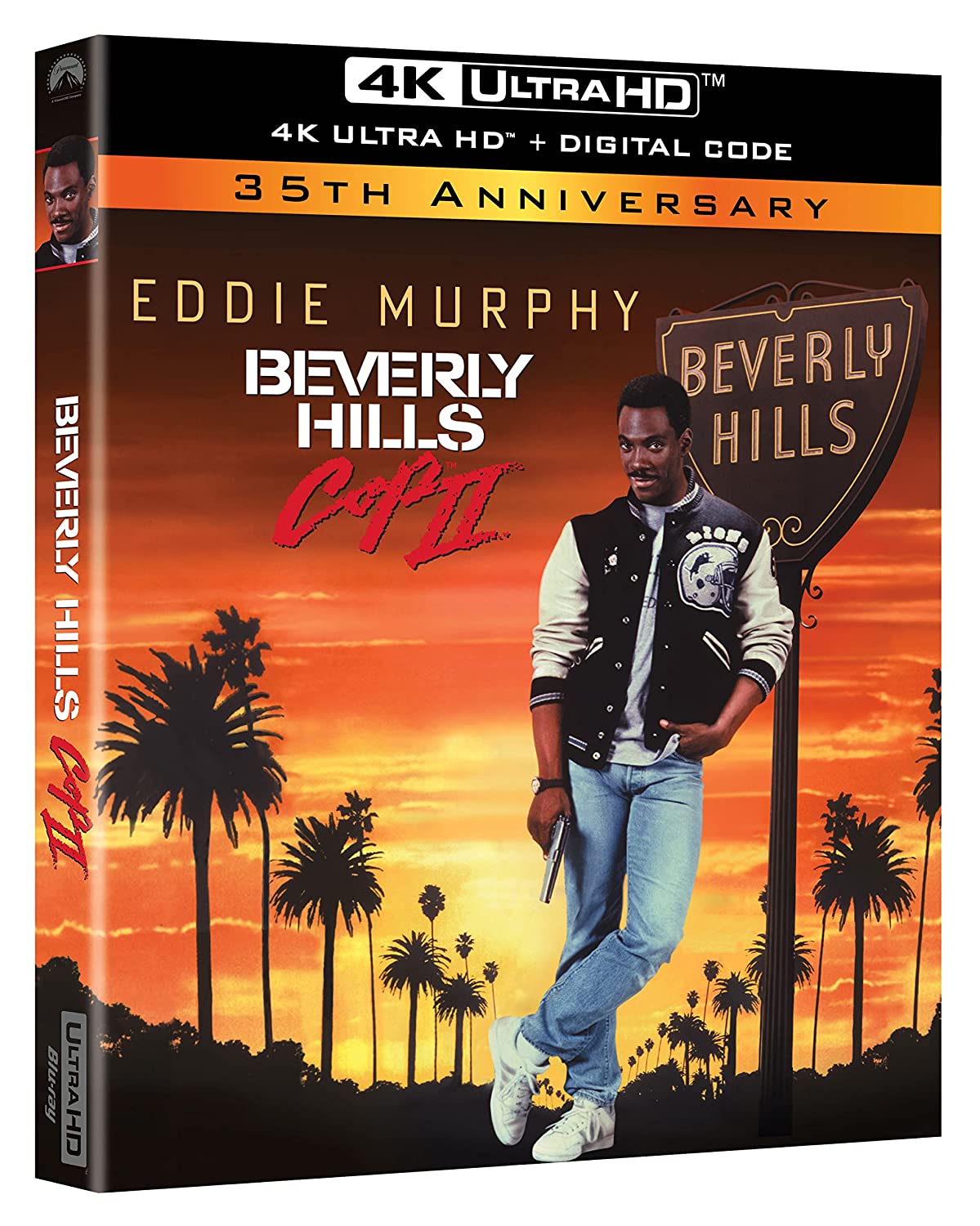
From the bouncing opening music by Glenn Fry to the final frame of Eddie Murphy's smile, Beverly Hills Cop had established itself as a classic. The movie had a complicated history, and it's a kind of miracle that the version we know ever happened at all. The movie was originally conceived as a straight action film with the plan to have either Al Pacino or Clint Eastwood in the title role. At that point the script was called Beverly Drive. When they couldn't get Al or Clint, they turned to Sylvester Stallone, and Sly took the role. He took the script and rewrote it to fit his own particular style. The main character's name went from Axel Foley to Cabretti so that he could be called The Cobra. The problem with Sly's version is that the cost was rising higher than the execs at Paramount were willing to put out. Sly was offered another film to drop Beverly Hills Cop. He took his rewrites with him, and they eventually formed the nucleus of his movie Cobra. The rest of the film had already been cast, so imagine their surprise when the action movie they thought they were making with Rocky turned into a comedy/drama starring the Saturday Night Live but unproven box office comedian Eddie Murphy.

The result changed the face of the cop movie forever. With Beverly Hills Cop, the comic buddy cop film was born, and imitations follow to this very day. This was when Eddie Murphy was still hungry. Axel Foley is filled with drive and energy and loaded with charm. Murphy ended up adlibbing a lot of the material, but in those days he was a generous actor and was known for being very good at setting up his co-stars with great material to go with. He didn't feel the need to steal every scene; the truth is he didn't have to. The camera loved him then, and he was a natural. It didn't hurt that the supporting cast here was also very good. Judge Reinhold and John Ashton had wonderful chemistry as the Beverly Hills detectives Rosewood and Taggert respectively. Neither performer has been in a better movie or had better roles before or since. Finally, there was Gilbert R. Hall as Axel's boss, Inspector Todd. While scouting police stations in Detroit, Brest found this particular actor working as a genuine detective in the Detroit police department. He's quite a catch and adds a great dose of authenticity in his few scenes with Murphy. The film didn't get him a switch to movies, however. He only did the three Beverly Hills Cop movies, but he did use his bit of fame to become a Detroit councilman and even ran for the office of mayor of Detroit.

"Susie, one of the longest borders on earth is right here between your country and mine. An open border. Fourteen hundred miles without a single machine gun in place. Yeah, I suppose that all sounds very corny to you."

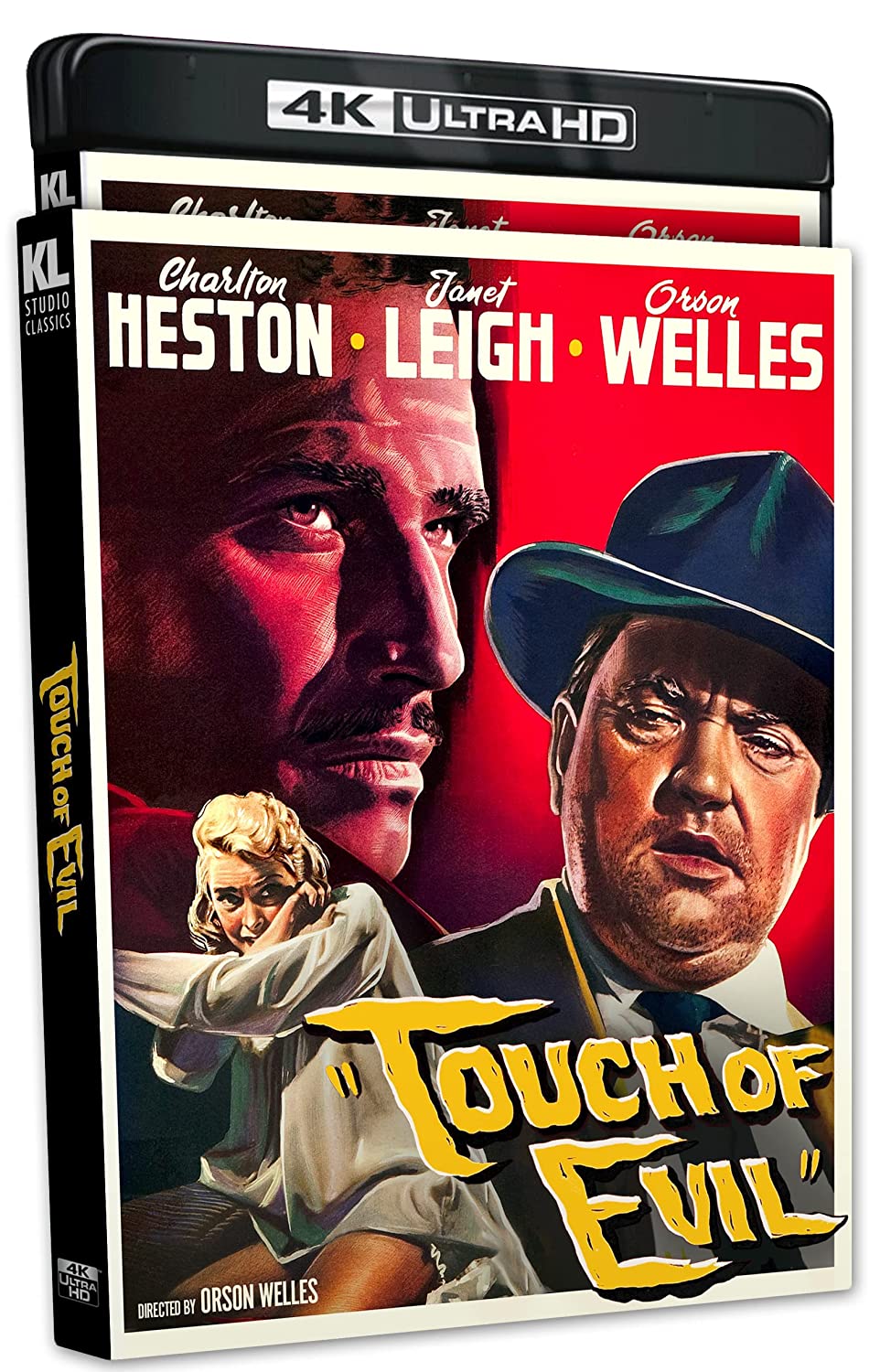
Orson Welles was a huge personality in Hollywood both in his stature and his work. Taking a controversial poke at media giant Randolph Hearst, he struggled against fierce odds to direct a film that is often considered the best, or at least one of the best films ever made. Of course, I'm talking about Citizen Kane. I happen to believe the first two Godfather films are better, but there's little doubt that Citizen Kane was a masterpiece. Because it was so good and because Welles never functioned well in the Hollywood system of his age, his other films often get overlooked. Touch Of Evil is one of those films, and in many ways it's just as good or better than Citizen Kane. Like that film and pretty much everything Welles ever did, it came with plenty of controversy and behind-the-scenes drama. But Welles was used to that by 1958, so he should have known better. Still, this is the guy who scared the crap out of this country 20 years earlier with the Mercury Broadcasting presentation of H.G. Wells' (no relation) War Of The Worlds. His infamy would follow him the rest of his life with one project or another.

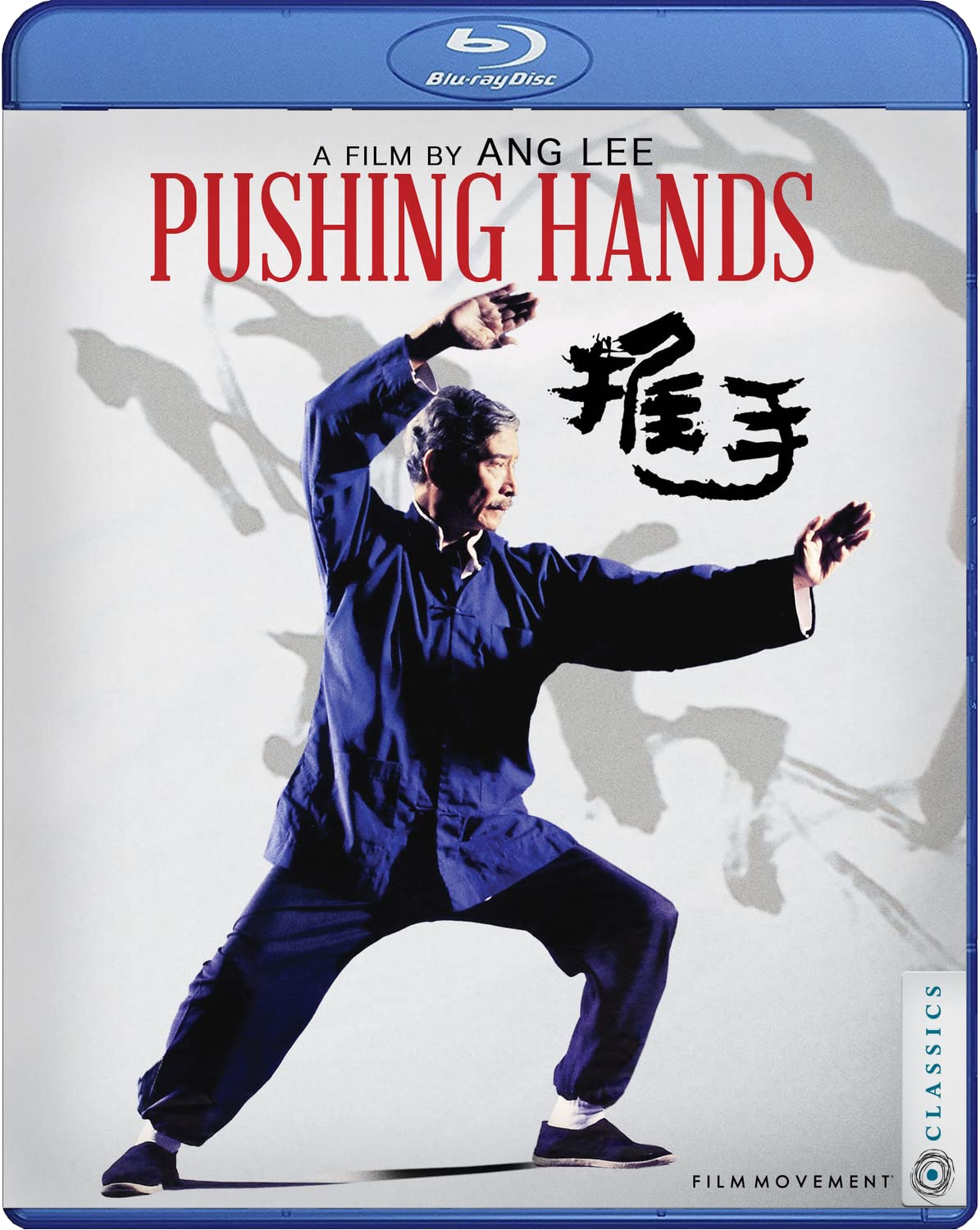
Director Ang Lee has come a long way since his 1991 debut film Pushing Hands.  When you look at Ang Lee’s impressive resume, the only film that stands out is sadly his only major misstep as a director, and that’s the 2003 film Hulk, the movie I feel audiences have been trying to forget and comic fans simply want to pretend doesn’t exist.  When you look at the rest of his resume, there are some impressive titles that have made a difference within the Hollywood cinema landscape.  Crouching Tiger, Hidden Dragon, Brokeback Mountain, and Life of Pi are just a few of his films that are standouts that were commercial successes but at the same time define his unique style and focus when it comes to character. Pushing Hands is character study that was released during the rise of independent cinema in the 90’s when film focused more on characters and finding unique voices that could tell great stories on a limited budget. What makes the film all the more unique is that it’s a martial arts film without the violence we’re used to seeing on the big screen, and instead its focus is more on the holistic methods of tai chi.

The film opens with Mr. Chu (Sihung Lung) and Martha (Deb Snyder), his American daughter in-law, at odds with one another.  The two butt heads most because of their cultural differences, and we get to see how difficult it is for them to live under the same roof. Back in China, Mr. Chu was a well respected tai chi master, but now he lives in America with no understanding of the language, living under his son’s roof, and he simply rejects the American way of living because he is stuck in his old ways. Martha is a housewife who is attempting to write her first novel but is thwarted by her father-in-law’s antics that are a constant distraction. Alex Chu (Bozhao Wang) is the dutiful son who is caught in the middle of being a loyal and loving husband while being the caretaker of his father. This dynamic and how it’s presented is very relatable for those in culturally blended families. If this was the only layer to the story the film would still be pretty good, but there is so much more going on that makes this a fun and charming viewing experience.

From the beginning of civilized history, the government regardless of where it resides has always preferred its society to conform, to act alike so that there is no trouble or dissenting.  It is far easier if people fall in line so that the ruling class can continue to prosper while its peasants struggle along.  Truth is that most citizens would rather not rock the boat, so they forsake their personality and their soul for another day that was like yesterday.  Even when there is conflict or angst within a society, it's often manufactured by the government in order to give its people a perceived outlet for their deepest and darkest emotions.  Today, we explore Privilege, a film that takes a look at the not so distant future where a British pop star takes the UK by storm, but little does the public know that the government is the one pulling the strings.

The narrator tells us that Steven Shorter (played by Paul Jones) is quite happy to be back in the UK after a successful American tour.  His adoring fans are being held back (well, most of them) from the pop singer.  He gives them the release they need from the state of the world and gives them an outlet for their emotion, which they gladly pour out for this musical icon.