Posted in: Disc Reviews by Gino Sassani on June 19th, 2009
This is one of the best of the series to benefit from the high definition Blu-ray release. You might recall that I had some serious reservations about the 3D work on the last DVD release. That kind of 3D depends entirely on a completely true color reproduction. With unstable reds and blues or greens, the effect becomes somewhat difficult to appreciate and more than a little bit of a strain on the eyes. This release offers you for the first time what was only promised on the DVD. You finally get a print clean and detailed enough to make the effect worth checking out in your own home theater. It still doesn’t fix the fact that most of the effects were obvious and quite gimmicky. Still, it’s the best chance you’re ever going to get in this technology to experience HD at home. There is progress being made on potential 3D capable monitors and a newer process, but let’s be honest. Ralph Kramden was waiting for 3D television for 60 years. There’s still some time to wait, but this release is an inch closer to that reality. So put those campy paper glasses on (2 are included with the disc) and have a little fun with Jason and his Camp Crystal Lake playmates.
It didn’t take the Friday The 13th film series long to reach down into the gimmick bag. The sad thing is that the franchise didn’t really need a gimmick. Steve Miner returned to the director’s chair, and he delivered an important, if not great, entry into the franchise’s history. Jason would, for the first time, don the hockey mask that would make his image the iconic horror visage it remains today. This was also an important film because a young makeup artist from this staff would break out to become one of the best in the business. Stan Winston was an uncredited artist on this film. Of course, I have no way of knowing what was his, but can there be any doubt that he left his mark throughout the film? Winston didn’t often talk about the film at all. It’s almost as if he never considered it a part of his resume, but he’s likely the biggest thing to come out of the movie.
Posted in: Disc Reviews by Gino Sassani on June 19th, 2009
A group of amateur ghost hunters armed with cameras and other equipment pose as documentary producers for the Discovery Channel. They head for the isolated town of Goldfield, where an abandoned haunted hotel is rumored to be one of the 7 portals to “the other side”. Their car breaks down just outside of town near an old cemetery in the middle of the night. A local bartender appears to be the caretaker for the old hotel and the town’s historian. He gets the exposition that sets up the story for the kids. He hands out the keys to the hotel, but warns them not to go into room 109. Of course, I don’t have to tell you where they go.
The film shows the past events in sepia tone flashback sequences. A woman was brutally tortured and killed in the hotel many years ago. One of the kids has a connection. Her grandmother was involved in the tragic events. Mostly, the kids stumble around drinking, having sex, and pinching a few of the hotel’s antiques. Until the ghost decides to join the party.
Posted in: Disc Reviews by Gino Sassani on June 17th, 2009
“You may only see it once but that will be enough.”
That was the marketing slogan for the first Friday The 13th film in 1980. Apparently they couldn’t have been more wrong, because most of us have seen the film countless times, and no, it was never enough. The franchise would thrive with over 10 sequels or affiliated films, taking us right up to the present remake/reboot of that very first outing at Camp Crystal Lake. No, my friends, once was never going to be enough.
Posted in: Disc Reviews by Gino Sassani on June 17th, 2009
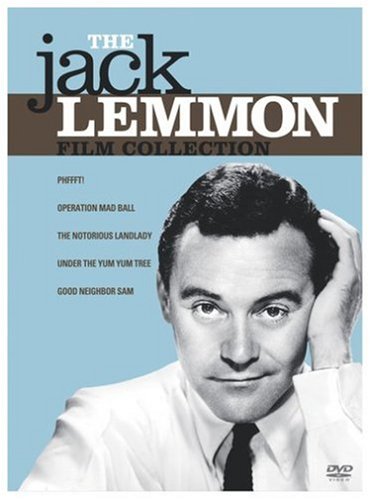
Perhaps best known and beloved for his portrayal of Felix Unger in the original Odd Couple film, Jack Lemmon has a long list of credits to his name. He’s appeared in 100 films and many stage and television productions as well. It was also a little known fact that he was an extremely accomplished musician and wrote music for a couple of his films. He was one of those actors who simply loved his job. He was known for uttering the phrase “It’s magic time” before a take on the set of almost all of his films. While primarily known for his comedy, Lemmon was actually not a bad dramatic performer and believed there was no reason the two couldn’t be combined. His role in The China Syndrome was far from a comedic one and showcased his ability to do drama.
Jack Lemmon might not be the most dramatic or even the most acclaimed actor out there. But there was something about him that defined him as an icon all the same. He was a very typically American actor. He brought to life characters that were instantly identifiable, but yet oddly eccentric enough to keep our interest. He always came off as genuine and was literally loved by the plethora of actors who always considered it an honor to work with him. He developed lifelong friendships with many of his co-stars, most notably Walter Matthau. The relationship you saw on the screen was what you got off the screen. Jack’s son Chris referred to him as Uncle Walter and claimed that if Matthau played golf, Jack would have married him. But this was just the kind of guy he was. In a day of angst-filled superstars who make more press outside of their roles, Lemmon is still a breath of fresh air. You might miss the man, but Sony and Chris Lemmon have gotten together to make sure you don’t miss some of the greater films.
Posted in: Disc Reviews by Gino Sassani on June 17th, 2009
I’m not sure that this one benefits tremendously from the high definition treatment of a Blu-ray release. It’s certainly a good looking film, and the level of detail is welcome, but I don’t imagine that’s what fans of this kind of film really care about. It’s an early role for LeBeouf, and I still don’t get what the fuss is all about. Still, he works well for this kind of part. He might have been best to stay in this lane. He appears to be a favorite action/genre actor, but this is his true calling.
When I saw that title on the case my immediate thought was: “How did Disney find out about my 1981 Marathon game of RISK where I took out Mark “Trip Sixes” Shreader in 9 hours of battle? Of course, I soon decided they meant professional sports. This film would be about the Minnesota Viking playoff whoopin’ of the Green Bay Packers at Lambeau Field. Turns out that wasn’t it. Point of fact, not one game of the 1980 World Series victory of the Phillies made the cut. Suddenly it hit me. Disney does ice hockey films. They must have made one about the Tampa Bay Lightning’s Game Seven beat down on some Canadian boys to win the Stanley Cup. Wrong! Apparently long before my boy Abner picked up a bat or Dr. Nesmith was shooting soccer balls into his trashcan, some funny looking fellas in Scotland had come up with their own game. Golf. Don’t get me started. Still ESPN says it’s a sport, so who am I to argue?
Posted in: Disc Reviews by Gino Sassani on June 15th, 2009
“One night stands can be murder.”
That’s the tagline for 1987’s Fatal Attraction. Perhaps it’s no coincidence that both Fatal Attraction and the later Indecent Proposal were both directed by Adrian Lyne. Both were quite controversial upon their release. Both dealt in a kind of “what if” scenario that got people talking around their water coolers and watering hole gatherings. While the latter was pretty much a morality or ethics drama, the former was a gut wrenching morality tale with a Grimm’s Fairy Tale twist. Even if you’ve never seen the film you’ve at least heard of the “Bunny Boiler”, a term that’s entered the pop culture lexicon describing a woman who is likely to go psycho on you. The film was almost never made.
Posted in: Disc Reviews by Gino Sassani on June 10th, 2009
Back in the 1960’s the Beatles were telling, preaching, “Can’t Buy Me Love”. Of course this wasn’t a novel concept even then, and Lennon and McCartney certainly didn’t invent the phrase. In 1993 Indecent Proposal came along to question the age old expression. The film sparked one of those cultural philosophical debates that Hollywood loves to start. It meant that people would be talking about the film, and talk about it they did. Television and radio talk shows would spend a great deal of time talking about the morality or ethical questions involved. Experts in morality and psychology would earn a living talking about the subject. It caused quite a stir, but in the end Indecent Proposal was a one trick pony. After the debate got old, the film aged quickly. Watching it again now, it seems almost impossible that it’s really only 16 years old. It seems like decades ago that like a frightening tsunami, it made its splash and disappeared almost as quickly as it had arrived.
David (Harrelson) and Diane (Moore) are a young couple very much in love. It’s the kind of ultra-sweet relationship that could send you into insulin shock if you had to watch too much of it. Thankfully the plan here is to put a serious kink into the relationship. David is budding architect, while Diane is a successful real estate broker. Both run into hard times when recession hits and they lose their jobs. Their dreams appear on the brink of disaster. Down to their final cents, David takes a loan of $5000 from his father. As he admits in the film’s narration, it wasn’t nearly enough. They needed 10 times that to get back on their feet. So what do they do? These supposedly educated smart people decide to take the 5 grand to Vegas and turn it into the 50 grand they need. (Why didn’t I think of that?) Bad luck at the tables isn’t the most dangerous thing the couple faces. They meet John Gage (Redford), international billionaire and playboy. Sort of a Bill Gates, if Bill Gates looked like… well… Robert Redford instead of Alfred E. Neuman. Gage notices Diane and is quite taken with her. He befriends the couple to get close to her. After a part one night in his suite, Gage and David are shooting some pool. The conversation turns to wealth and what it can or cannot buy. Diane makes the statement that money can’t buy people or love. Gage proposes to test the concept. He offers the couple one million dollars for one night with Diane. They immediately refuse, but their situation eats at them and they eventually agree. What it does to their lives is predictable and inevitable.
Posted in: Disc Reviews by William O'Donnell on June 8th, 2009
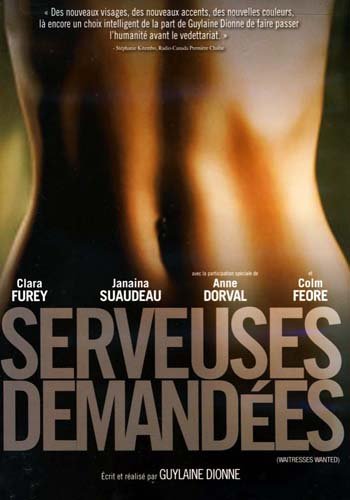
The main plot of the film is that of a young woman from Brazil named Priscilla, whose student Visa expires and is lead into working as an exotic dancer. The title of the film comes from the ad posted by the pimps and promoters of exotic dancers “Waitresses Wanted.” The film is bookended by the profiles of all the dancers featured in the film, all of whom are from a different nation, all beautiful, and all arrived in Canada with different careers in mind than to get involved with Columbian pimps or Russian mob lords.
Priscilla is taken under the wing of Milagro, a fellow stripper who is known for recruiting new girls and the two start up a romance that leads them away from their shady work. I don't exactly buy the immediate seduction of Priscilla by Milagro. It seems to occur simply because the writer wants it to occur. Priscilla is not as strong as she claims to be and cannot get into or out of the stripper life without someone leading her, and she is very easily lead. There is a recurrence of memories and images of Brazil, obviously meant to be Priscilla's. These find a way of attaching themselves to Milagro as she continuously brings up her desire to escape to Brazil, which may explain her attachment and excitement for Priscilla. To Milagro, Priscilla is a part of what she really wants in the end, and as the twists start arriving at the climax of the film, we find out just how significant all of these ties really are.
Posted in: Disc Reviews by Gino Sassani on June 5th, 2009
Recipe for Ramen Girl (serves 4)
Take one American girl, preferably in her early 20’s, and place her in Japan.
Posted in: Disc Reviews by Gino Sassani on June 5th, 2009
In Tranzit is one of these odd films that you can never quite get a handle on. Even now I’m not exactly sure what kind of a film it was intended to be. While it takes place at the end of World War II and involves some Nazi officers in a Russian POW camp, I’m not sure that the film has all that much to do with the war, or POW camps for that matter. The film remains a kind of abstract art form with a rather loosely told story.
A group of German World War II prisoners arrive in an isolated Russian POW camp that is run by women. At first they are quite harsh in their treatment to their charges. It’s obvious that most, if not all of them, have lost family to the Nazi brutalities of the war. As the prisoners begin to spend more time at the camp the hostilities between the groups begin to soften. The first step is taken by the camp doctor, Natalia (Farmiga) who is married, but her husband has suffered severe head traumas that have made him a mute shell of a man. She falls in love with one of the camp prisoners. Eventually some of the other women form attachments to the men. The camp is often visited by Pavlov (Malkovich) who also begins by appearing quite inhumane but eventually softens as the film progresses. The prisoners are not to be quartered here permanently. The camp is a “Tranzit” camp as the film’s title suggests.