1.85:1 Widescreen

Long before the magicians of movie special effects had computers to conjure up monsters and otherworldly creatures, or even talking dogs, they relied on more physical tricks of the trade. One method, used perhaps most famously in 1933’s King Kong, is stop-motion animation. Kong inspired a young boy who would go on to master the art form and establish himself as a legend of fantasy filmmaking: Ray Harryhausen. Over a career spanning more than 40 years, Harryhausen produced some of the most delightful moments ever captured on film, wowing audiences and inspiring people to believe in movie magic.

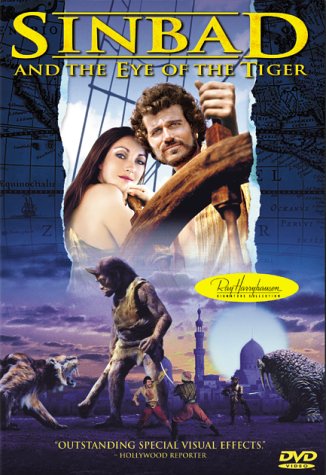
Harryhausen’s mastery is showcased in 1977’s Sinbad and the Eye of the Tiger, the third film in a trilogy about the legendary swashbuckler. Eye of the Tiger has its flaws, but the animation is still captivating after all these years.

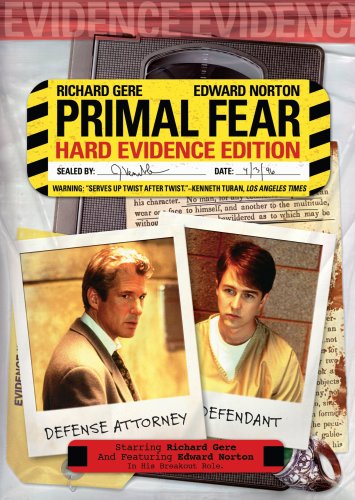
Actor Edward Norton first came to my attention in the heist film, The Score. I hadn’t heard a lot about the bright young actor, but I remember that he impressed me quite a bit. When you consider he was playing along with the likes of Marlon Brando and Al Pacino, that’s no small achievement. Somewhere along the way I missed the 1996 release of Primal Fear. Based on the William Diehl novel, the film would be the first major feature to star Norton. It was a breakout character and a breakout performance. He deservedly was nominated for an Academy Award for the role, one he likely should have received. Norton wears the skin of this troubled teen so closely and so effectively that it can be quite chilling at times to watch. Richard Gere might have been the bankable star for this movie, but Edward Norton walked away with the whole thing in his back pocket, and has never looked back. This was also the first feature for television director/writer Gregory Hoblit. Hoblit was best known then as the Steven Bochco protégé who worked on Hill Street Blues and NYPD Blue. His gritty attention to detail made him a perfect fit for these ultra realistic cop dramas, but perhaps it was his work on Bochco’s legal drama L.A. Law that better prepared him for the legal thriller Primal Fear. The combination would be a formidable one, and it makes me rather sorry I missed out on this one at the box office back in 1996.

Fortunately, the arrival of Blu-ray allows people like myself to visit these missed films in a format that brings out all of the detail and glory that the film enjoyed upon its original release. With a solid transfer and some care towards the print and transfer, you can take the trip you missed out on before. Primal Fear is one such missed opportunity brought to life in high definition.

Richard Gere is Martin Vail. Vail is an egotistical hot shot lawyer who is looking more for news cameras than an innocent client. The truth is, he doesn’t give a crap if they did it or not. His only concern is what the case can do for him. He thrives on front page magazine articles and sound bites on the 6:00 news. It’s no surprise that when Vail sees a headline making case unfold live on the television, he chases the case. The entire city of Chicago witnessed police chase 19 year old altar boy Aaron through the railroad yards. He was running, soaked in blood, from the brutal murder of the local Archbishop Rushman. Vail moves in on the case like a shark attracted to blood. Unfortunately for all involved, the case will test his own patience and motives. There’s evidence of corruption leading into a who’s who of city fathers. There’s the expected church sex scandal. There might even be ties to Vail’s most recent case where he got a client a $1.5 million settlement from the city. All of this just feeds Vail’s drive and ego. He sees it as a chance to stick it to his nemesis, Schaughnessy, the district attorney who was once his boss. Schaughnessy is played quite convincingly by John Mahoney, best known as father to the Frasier boys. What a difference a role makes. The opposing attorney is his former girlfriend and coworker, Janet Venable (Linney). Vail is so focused on these huge possibilities that he’s blind to what might be right in front of his face. He navigates these dangerous waters with relish. But he never saw the truth coming.

Actor Edward Norton first came to my attention in the heist film, The Score. I hadn’t heard a lot about the bright young actor, but I remember that he impressed me quite a bit. When you consider he was playing along with the likes of Marlon Brando and Al Pacino, that’s no small achievement. Somewhere along the way I missed the 1996 release of Primal Fear. Based on the William Diehl novel, the film would be the first major feature to star Norton. It was a breakout character and a breakout performance. He deservedly was nominated for an Academy Award for the role, one he likely should have received. Norton wears the skin of this troubled teen so closely and so effectively that it can be quite chilling at times to watch. Richard Gere might have been the bankable star for this movie, but Edward Norton walked away with the whole thing in his back pocket, and has never looked back. This was also the first feature for television director/writer Gregory Hoblit. Hoblit was best known then as the Steven Bochco protégé who worked on Hill Street Blues and NYPD Blue. His gritty attention to detail made him a perfect fit for these ultra realistic cop dramas, but perhaps it was his work on Bochco’s legal drama L.A. Law that better prepared him for the legal thriller Primal Fear. The combination would be a formidable one, and it makes me rather sorry I missed out on this one at the box office back in 1996.

The international horror market is becoming quite the money maker. It started with the Asian Invasion. We started seeing American remakes of these mostly Japanese or Korean ghost stories. They usually had a common thread that featured some type of technology. It started with Ring, the American version of Ringu. Here it’s a videotape that demands to be reproduced or you’re dead in 7 days. Eventually we’ve seen films where ghosts inhabit everything from computers to video games to cell phones and digital cameras. It seems the dead just can’t let go of their hi-tech toys. If you want to go ghost hunting today, stay away from the creepy mansions and ancient cemeteries. I’d try Best Buy. Those guys must have a hell of a ghost problem. Who you gonna call?

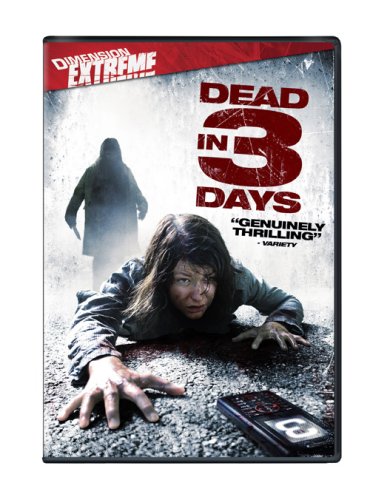
The latest country to get in on the fad is Austria. Dead In 3 Days is an Austrian, German language film, which hasn’t been remade for American audiences. Instead the film, originally titled, In 3 Tagen bist du tot, provides an English dub.

Dateline: Texas. Christmas Eve. Christmas carols are playing on the radio. And even though this is one heck of a hot day, the stores are decked out like the preverbal halls. It’s Christmas time in the city. But this isn’t going to be one of those White Christmas warm and fuzzy eggnog cozying by the fireplace stories. Don’t get me wrong. There’s going to be plenty of roasting by an open fire, but those aren’t chestnuts. Those are people.

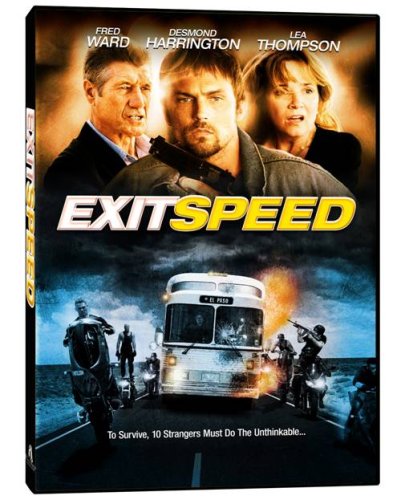
An eclectic mix of passengers are boarding a bus in Dallas to travel across the interior of the Lone Star State. They each have their own stories and reasons for taking a six hour bus ride on Christmas Eve. We’re treated to some of them. The most notable is Merideth Cole (Mond). She’s an American soldier who is AWOL during a time of war. That spells desertion, and she has a fed on her tail. Of course, she’s got military training and some mad skills that are going to come in handy before long. The trip has barely begun when a motorcycle gang, known as the Nomads, runs the bus off of the road. The resulting carnage causes the passengers to panic and the Nomads to smell fear…and blood, some of it their own. The gang pursues the bus once again. The bus leaves the highway and ends up at a dead end abandoned wrecking yard. They barricade themselves as best they can while the gang surrounds them and sends for reinforcements. Isolated, the group engages in a state of war with the Nomads. Many of the characters on both sides are simply cannon fodder for the bloodletting. The main characters are straight out of the Hollywood stock character store.

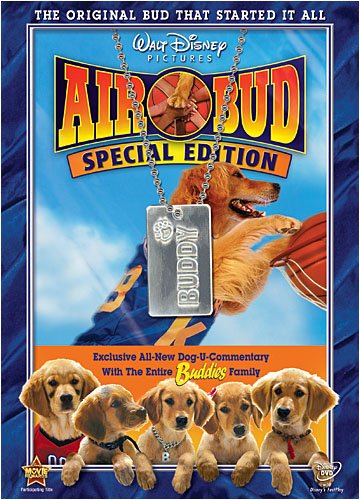
Athena here again. Yup, that’s me, the 13 year old Siberian Husky who sometimes “sub-woofs” for Gino. For some reason he only gives me these dog movies to review. Something about being an expert witness. ‘Cept there aren’t any Siberian Huskies in this movie. So, I settled into Gino’s theater, but almost got kicked out when I decided to pass a little Air Athena. Turns out that while we may share a taste in movies, Gino and I don’t share a taste in smells. Actually I was pretty excited to see this one. I’ve seen a couple of the Buddies movies now, and you can check out my reviews is the movie that started the whole ball rolling, the basketball, that is. Turns out that Buddy was the Buddies’ Papa. But, that’s another movie.


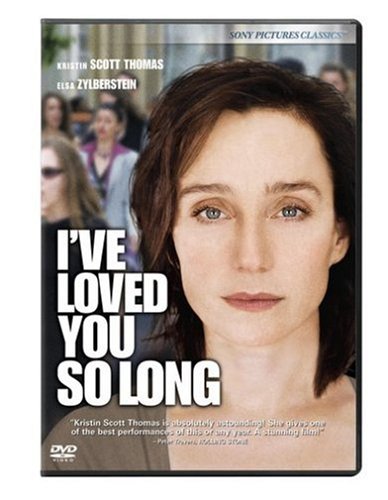
The highpoint of I’ve Loved You So Long is a rather brilliant performance by Kristen Scott Thomas. She is able to inhabit a character in ways I’ve rarely seen. You’ll be hard pressed to find any identifiable boundaries between the actor and the character. Now, usually, that’s the foundation for a solid film. The problem is that her character just isn’t that interesting of a person after a while. Of course, there are nuances to observe, and Thomas serves them up well, but after a short time we’ve really come to know this character pretty well. We just don’t find her all that interesting.

Juliette (Thomas) has spent the last 15 years in prison for the murder of her 6 year old son. She has been expectedly abandoned by her family while locked up. When it is finally time for her to be released, the only one willing to even talk to her is her estranged sister, Lea (Zylberstein) who takes her into her home. Lea has a family of her own now. She is married with two adopted Vietnamese children. The film pretty much follows no plot or story. It’s more or less Juliette’s journey to adapt to the outside world and deal with her own flood of emotions. If the movie is Juliette’s journey, then it is also a journey for Lea. Without revealing the ending, I can safely say the only destination here is understanding.

Juliette (Thomas) has spent the last 15 years in prison for the murder of her 6 year old son. She has been expectedly abandoned by her family while locked up. When it is finally time for her to be released, the only one willing to even talk to her is her estranged sister, Lea (Zylberstein) who takes her into her home. Lea has a family of her own now. She is married with two adopted Vietnamese children. The film pretty much follows no plot or story. It’s more or less Juliette’s journey to adapt to the outside world and deal with her own flood of emotions. If the movie is Juliette’s journey, then it is also a journey for Lea. Without revealing the ending, I can safely say the only destination here is understanding.

The highpoint of I’ve Loved You So Long is a rather brilliant performance by Kristen Scott Thomas. She is able to inhabit a character in ways I’ve rarely seen. You’ll be hard pressed to find any identifiable boundaries between the actor and the character. Now, usually, that’s the foundation for a solid film. The problem is that her character just isn’t that interesting of a person after a while. Of course, there are nuances to observe, and Thomas serves them up well, but after a short time we’ve really come to know this character pretty well. We just don’t find her all that interesting.

“Did you pick your feet in Poughkeepsie?... Have you ever been to Poughkeepsie?... When you were in Poughkeepsie, you sat on the edge of the bed, didn’t you? You put your fingers between your toes and you picked your feet…. If I can’t bust you on this other thing I’m going to bust you for picking your feet in Poughkeepsie.”

There can be no argument on this point. The 1970’s was a golden age for the cinema. When you think about the iconic characters and films the decade produced, it’s hard to contradict the point. Films like The Exorcist, The Godfather (both parts), Jaws, Dirty Harry, Star Wars, Superman The Motion Picture, The Sting, Rocky, Deliverance, Apocalypse Now, Alien, One Flew Over The Cuckoo’s Nest, and yes, The French Connection. They redefined film genres. The slasher film was born in the 1970’s. Their influence is felt on nearly every film today, and inspired nearly every new filmmaker to come along in the years since. Yes, there were golden eras before then, but I’m not sure there’s been one since. Of course, there have been truly great movies since, but can you remember a decade with that kind of a run?

The French Connection had one of the best film endings a show of this kind could ask for. There was absolutely no need for a sequel. Obviously the success of the first film laid the groundwork for another adventure. In reality the case was rather left open, so there was certainly room to follow up the action. The problem is that none of the elements from the first film remain in the second beyond Gene Hackman’s portrayal of Popeye Doyle and the return of Fernando Rey as the villain Charnier. Friedkin would not return to direct, and even though he was replaced by an even greater director in John Frankenheimer, not much of the original crew remained. Neither Egan nor Grosso were used to consult on the film, and of course, Grosso’s character along with the corresponding Roy Scheider were gone from this film. The gritty streets of New York were replaced by the streets of France. Even the Poughkeepsie line used in the film’s early minutes is a throwaway line meant merely as a wink to the audience. The film has none of the police procedural drive and passion that the original had. In short, this sequel lacks almost everything that made the first a great film. But in spite of all it did not have, it managed to at least be a good film.

None of this film occurs in New York. We begin with Doyle (Hackman) arriving in France to track down “Frog #1”, Charnier (Rey). He doesn’t attempt to hide his contempt for the French and so does little to endear himself with the local police here. Instead they’ve invited him merely to be a target to lure Charnier out of hiding. It backfires, and Doyle is captured instead and hooked on heroin so that Charnier can find out what they know. The film becomes far more of a personal journey for Doyle and less about catching the bad guy. Fortunately Hackman is up for the job and puts in a highly emotionally charged performance. He has to play Doyle, first as a forced junkie, then in the throes of detox. Here we find the film’s best moments. He has a rather long interaction with a French detective (Fresson). This scene is priceless and alone worth the price of admission. In the end it’s a film about obsession as large as the great white whale in Moby Dick.