Posted in: No Huddle Reviews by Archive Authors on February 27th, 2009
Posted by Ken Spivey
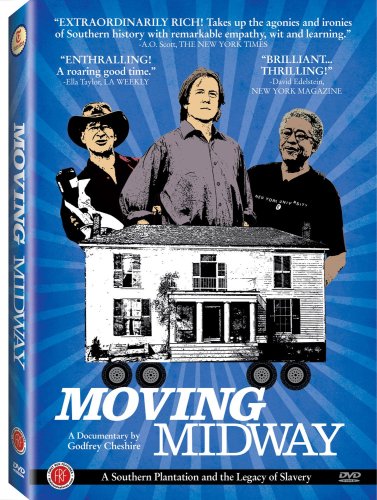
Filmmaker Godfrey Cheshire returned to his ancestral home, Midway Plantation, in 2003. When he arrived he found his cousin, Charlie Silver, about to move the southern mansion to make way for a shopping complex. “Moving Midway” is the story of Midway's past, present journey, and future home.
Posted in: Disc Reviews by Gino Sassani on February 25th, 2009
“They’re not leaving till they get dessert.”
Director John Gulager might be the son of famed cult B movie star Clu Gulager, but that’s not how he broke into the business. He was a Project Greenlight winner. Project Greenlight is a competition for up and coming directors. They compete in a reality show style setting for the opportunity to direct a major release film. Now, I didn’t say it was a big budget film, but it does get backed and released by a major studio. When John Gulager won, his reward film was the original Feast. The film did well enough that now a couple of years later we’re on the third installment of what has become a somewhat cult hit franchise. Nothing has changed in this third film; in fact, it could be argued that the three films could be cut together into one long epic piece and it would work just as well.
Posted in: Disc Reviews by Gino Sassani on February 25th, 2009
Posted in: Disc Reviews by Gino Sassani on February 19th, 2009
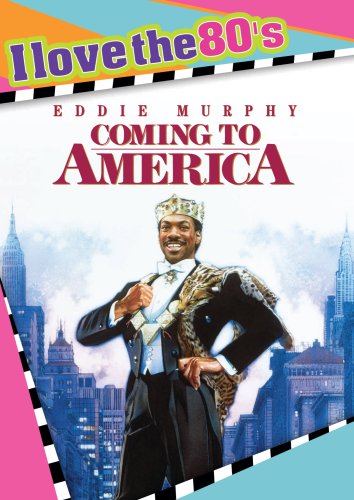
Remember when Eddie Murphy was funny? You know, before the fat suites and fart jokes. I guess many of you hadn’t even been born yet. Ronald Reagan was still president of these United States. CD’s were the latest thing. VHS was just catching on. The Rams were still in L.A., and it was the Cardinals that were playing in St. Louis. No one had ever heard about DVD, MP3, or Wi-fi. It was 1988 and Eddie Murphy was staring in Coming To America.
I’ve long considered this the last funny Eddie Murphy film. It just seems like he’d turned to gimmicks and quick physical humor. He got lazy, and you know what? So did I. I decided it wasn’t worth the effort to get my seat into those theater seats to see him clown around anymore. So journey with me back to a magical time when Murphy was still hungry and he let his talent shine.
Posted in: Disc Reviews by Gino Sassani on February 19th, 2009
Leslie Nielsen was once a serious actor. He starred in one of the most important science fiction films ever made, Forbidden Planet. He was a staple on the 1950’s television dramas. His unique features and voice made him a busy character actor all the way until the 1980’s. That’s when the cornball kings Jim Abrahams, David Zucker, and Jerry Zucker cast him as the “don’t call me Shirley” Dr. Rumack in Airplane. From that moment on Nielsen went from being a serious actor to becoming the face of an entire comedy genre of corny films. If there was a subject to spoof throughout the 80’s and 90’s, you could count on Leslie Nielsen having a prominent role. Two years after Airplane he had a television series, for all of 6 episodes. It was a cop show spoof called Police Squad. In the show he stared as Detective Frank Drebin, a modern day Inspector Clouseau. He would bumble his way through the show’s unique cases, always finding a way to stumble on the solution. The only case he couldn’t crack was how to get people to watch the show. The brand of humor that Nielsen is now famous for has a very narrow niche. You either get it or you don’t. You either like it or you don’t, and most of America decidedly didn’t.
So what do you do with a miserably failed television show that ran just 6 episodes? You make it into a series of major motion pictures, that’s what you do. Six years after the series was gone and forgotten, the Abrahams/Zucker team decided to take it to the medium they’ve had so much success in already. What didn’t work at all on television appeared to have new life at the box office. The film brought in an impressive $79 million, which was a phenomenal number for a comedy in 1988. It went on to become the 8th highest grossing film of 1988. With a production budget of only about $20 million, this was a cash cow Paramount couldn’t afford to milk. They did indeed go to the well twice more, with the bottom falling out on the third try. The audiences loved it, but they could only take so much.
Posted in: Disc Reviews by Gino Sassani on February 19th, 2009
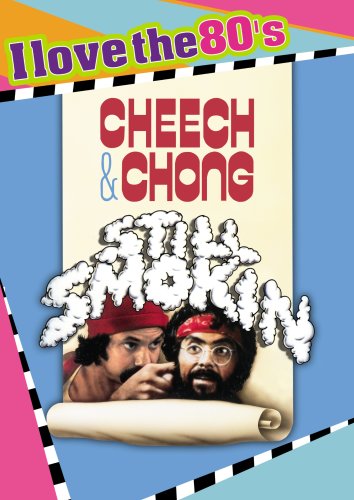
The series might be called “I Love The 80’s” and the film Still Smokin’ was indeed released in 1983, but when I think of Cheech & Chong I am brought back to the 1970’s. It was then that the pair had their first success with an iconic brand of “stoner” comedy. Their LP’s sold millions across the country. You didn’t have to be a stoner to appreciate the jokes. I was about as straight as they come, but I really loved listening to Cheech & Chong. The material was about more than just getting high. It was timely, at least it was then. It mirrored the culture that we could see from our own windows and like all inspired comedy, it was relevant.
In 1978 the boys ventured into the movies with Up In Smoke. While the film wasn’t a box office blockbuster, it did a fair amount of business, and before long the boys were in the big time. Unfortunately by the time of the release of Still Smokin’ things were already on the decline. By 1983 the world had changed enough that the humor no longer reflected popular American culture. By now the movies really were strictly for the stoners.
Posted in: Disc Reviews by Gino Sassani on February 18th, 2009
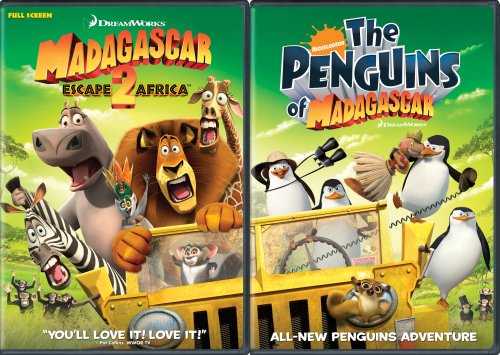
Everything you loved from the first film is back again. Dreamworks took the high road and brought all of the voice cast back. That means the wonderful chemistry these characters developed in the first film gets to continue. We don’t have to waste time setting up new bonds. We can get right to the adventure. Dreamworks also retained pretty much the entire animation team and added even more talent. The quality of this animation actually improves upon that of the original. Water, in particular, is startling on this film. It is as photo real as I’ve seen it in any animation feature to date. The characters are a little blocky, evidenced by Alex’s paws, but that’s really a style decision and not an animation flaw. Another stand-out rendering is the dust factor. Throughout the film dust plays an important role in the overall look of the picture. Again, you get incredibly photo real particles or clouds of dust in this film. Both of these achievements are milestones in animation technology. Of course, technology is only as good as what you do with it. We get lovable characters in very interesting situations. If you even liked the first film, I think you’ll love this film even more….Except for that pesky “Move It Move It” nonsense.
The film opens up with a quick recap of the events of the first feature. We also get to go further into the past for a very brief encounter with our zoo friends as babies. (Do I smell a cartoon series or prequel film coming our way?) After that quick recap, we join the zoo gang where we last saw them, in the wilds of Madagascar. The Penguins have repaired an old aircraft and set it up on a huge slingshot in preparation for a flight back to the New York Zoo. There’s tearful goodbyes all around, but unfortunately, King Julien decides to join the gang on their return home. The Air Penguin has a successful takeoff, but makes it only as far as the African mainland before it crash lands. Once in Africa, the zoo gang gets to meet wild members of their own kind. Alex (Stiller) discovers his parents and learns how it was that he came to be at the zoo. Gloria (Smith) finds that the African plains are just “raining” male hippos. She hooks up with the continent’s resident stud, Moto Moto (Am). Of course, that’s going to bring out the jealousy in Melman (Schwimmer). Melman also discovers that all giraffes are by nature hypochondriacs and usually crawl off to die at the first sign of illness. His vast knowledge of medicine earns him the rank of herd witch doctor. Mart (Rock) discovers that all zebra look and sound exactly alike. He gets depressed by his perceived lack of uniqueness. Zuba (Mac), Alex’s father, is the ruler of this particular part of Africa. His reign has been plagued by the conniving of fellow lion, Makunga (Baldwin). He’ll use the return of Alex to gain control of the crown. When Alex fails a coming of age ritual, Zuba abdicates and Makunga is in control. Unfortunately, his reign is soon threatened by the dry up of the watering hole. Alex, intent on proving himself, sets out to return the flow of water to the hole. With Marty by his side, they trace the problem to a dam, built by New York tourists that include the old lady who gave Alex a whoopin’ in the first film. Ninja Nana has organized the tourists who have been stranded by the penguins’ commando raids to salvage parts to repair the plane. While Alex and Marty set out to fix the problem, King Julien has another plan. He wants to sacrifice someone to the mighty volcano to please the “water gods”. Thinking he’s dying anyway, and has lost Gloria, Melman volunteers to be fed to the volcano. These events all converge into an ending very much a Madagascar adventure. For a running time less than an hour and a half, there is no wasted time at all here. If anything, the story all seems to happen so fast that it’s over before you start to sink your teeth into it.
Posted in: Disc Reviews by Gino Sassani on February 18th, 2009
“You may only see it once but that will be enough”
That was the marketing slogan for the first Friday The 13th film in 1980. Apparently they couldn’t have been more wrong, because most of us have seen the film countless times, and no, it was never enough. The franchise would thrive with over 10 sequels or affiliated films, taking us right up to the present remake/reboot of that very first outing at Camp Crystal Lake. No, my friends, once was never going to be enough.