1.85:1 Widescreen

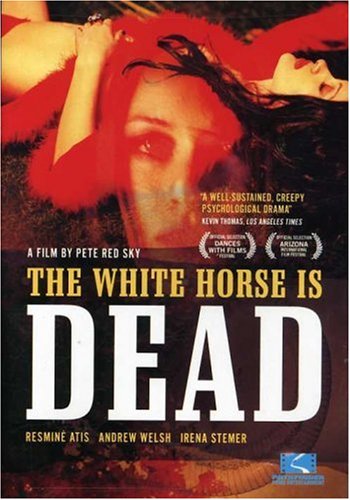
Director Pete Red Sky conducts a small, but capable cast in the psychodrama The White Horse Is Dead. Some bits of dialogue hit sour notes, but the cast, which consists of Resmine Atis, Andrew Welsh, and Irina Stemer, hold their own through the rough parts and truly elevate this flawed rendering of an otherwise intriguing – and sordid – tale. Atis plays Naya, daughter to Giselle (a domineering and beautiful hypochondriac), and at the film’s opening, we see she’s the kind of girl, who would do most anything to p...ease her mother. Inheritors of a rather large estate left to them following Naya’s father’s suicide, Giselle and Naya get along in quiet seclusion, so long as Naya does everything her mother says. Stemer injects a realistic sinister quality into the role of Giselle, but just how sinister she is, we never imagine until the film’s conclusion – a conclusion helped along by the arrival of sympathetic ex-con Vincent (Welsh), whom Giselle hires to upkeep the estate grounds. He does a lot more than that, striking up a relationship with Naya, and causing her to question everything about her past, which has been largely influenced by Giselle’s version of things. As Naya becomes more aware of her mother’s flaws, she starts to rebel and brings out the worst in Mommy Dearest. Atis is a revelation in the role of Naya, and it would be hard for me to imagine this young lady not having a long, fruitful career. Welsh shows some incredible range as well, and Stemer is a formidable antagonist for these two young lovers. As previously stated, there are some pieces of amateurish dialogue here and there, but even that is hard to detect under the guidance of these stars. And Red Sky’s direction rises above that of a typical first-time director. Out of the ordinary and sometimes over-the-top, indie fans will love what he’s done with his debut.

Video

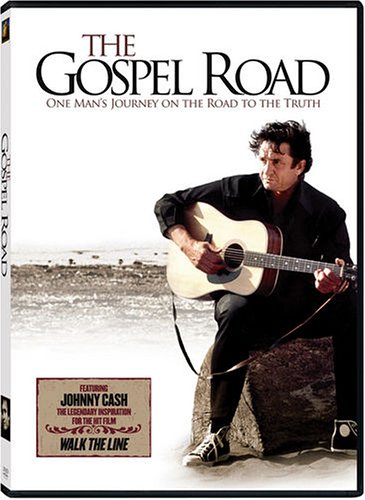
Johnny Cash’s dramatic road to Christianity is no secret to his fans and thanks to the recent biopic, Walk The Line, it’s no secret to the masses. Cash made this film, he explains, to show people why he is so drawn to the Passion of Christ. This is no doubt a sincere effort to bring this expression to life. The film is entirely shot in the Holy Land. The film is enhanced by the wonderful locations. Cash attempted to follow the actual path of Christ. There is no doubt that the care and conviction Cash felt is evide...t on the screen..

Gospel Road is basically the story of Christ’s life. Cash narrates the entire film which gives it more of the flavor of an educational effort. At times it feels like watching an A&E biography. When Cash isn’t speaking he’s singing. It is in the music that this film separates itself from the many Christian biopics out there. Unfortunately there really aren’t many complete songs. Instead he uses musical phrases to reinforce more powerful messages. The bad news is that the cast has a very difficult job. There is no real dialogue from the actors. The only notable exception is June Carter Cash, who plays Mary Magdalene. She has the only real speaking part in the film. While she does a good job I’m not sure it fits the message Cash was trying to convey. It seems strange that that role would be stronger than even Christ himself. The action takes place not on sets but rather out in the wilds of Israel. The style recalls the technique also used to great effect in Jesus Christ Superstar, coincidentally another musical depiction of The Passion..

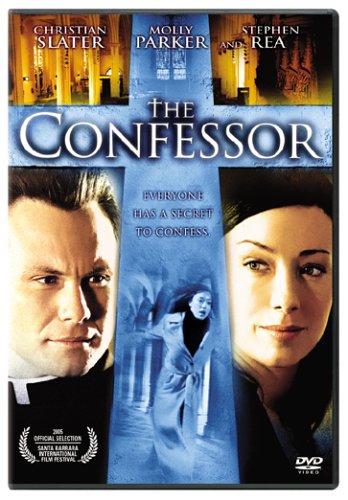
Take every Catholic movie cliché you can find, wrap them up in a weak and predictable murder-mystery, throw in Christian Slater and Stephen Rea as they struggle for some semblance of the glory their careers once held, release direct-to-DVD, and you have The Confessor. Slater plays a priest struggling with his own faith, to the point he hasn’t prayed in years. His primary purpose to the Catholic Church is as a fundraiser for whatever causes they deem necessary to support. Of course, all of his higher-ups are st...dgy old men more grounded in public relations than decent living, and he grows more at odds with them as he delves deeper into the death of a disgraced (but, of course, innocent) priest, who is accused of a murder he didn’t commit, which leads to his mysterious death while awaiting trial. When Slater takes over the priest’s parish, he comes to terms with his own human frailties and finds out all his suspicions about the dead predecessor’s innocence are true – but if he didn’t do it, who did? That’s an answer you shouldn’t have any difficulty figuring out.

While the film lacks entertainment value, it is a useful training ground for Molly Parker, the lead actress (or “actor in a female role” for you strict readers). As the love interest of Slater, she commands attention, more so than any of the rest of this washed-up cast. And as for the rest of the cast, it isn’t that their performances are awful – they are simply too bored with the script to inject any passion into it. Everyone but Parker is doing no more than collecting a paycheck, and I certainly can’t blame them, because the script – with its amateurish expository dialogue containing lines that reiterate exactly what you’re seeing through the characters’ actions – is too poor to secure a green-light for production, much less the attached talent’s hard work and ingenuity. Now grant it, with horror stories about Hollywood ruining good scripts being a dime a dozen, it may not have been the writer’s fault – but the fact remains, the script is the film’s greatest drawback.

Synopsis

First off, I never would have thought that a Comedy Central TV show featuring animated eight-year olds who curse like I used to (I still do, who am I kidding?), is transformed into a 94 minute movie with abundant musical numbers and (gasp!) an Oscar-nominated song performed by Robin Williams at said awards ceremony. Creators Trey Parker and Matt Stone created a dazzling, hilarious, and unpredictable movie, filled with musical numbers, and vocal cameos from George Clooney, Dave Foley and Eric Idle, ...o name a few.

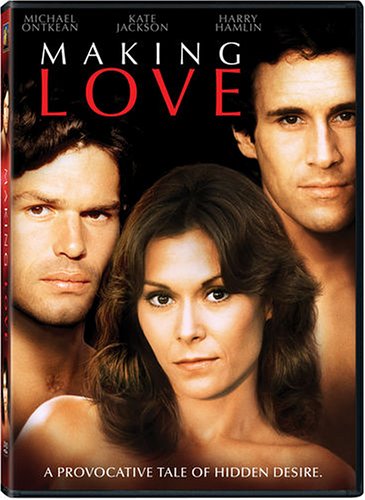
Michael Ontkean and Kate Jackson play a married couple dealing with the ramifications of the husband's newly discovered homosexual behavior. Right off, I'll say these two seem too happy from the beginning to make the sudden turn believable. Also, the ending [SPOILER ALERT, kind of] is too predictable and cliche to be the least little bit effective. The "I'm okay/You're okay" resolution, where everyone moves on and everyone's okay with who they are, and the world is once more a wonderful place, is pure Grade-A drivel ...hat simply got by with it at the time because it was one of the first movies to deal so openly with such a controversial topic.

With that said, the film's flaws really have nothing to do with its handling of the subject matter. Instead, it goes down - in flames - at the hands of two actors, who haven't learned a thing since they nabbed their first roles. Kate Jackson's wife is supposed to be a career woman, but she never stops whining and self-indulging into her own feelings long enough to step off your nerves and convince you she's any more than a cry-baby trophy wife. Harry Hamlin secured his rightful place in Lifetime movie hell with performances such as this one, where he's so convinced he's charming that all he really accomplishes is making the viewer want to punch him right in the mouth. As two-thirds of the triangle (Ontkean is actually quite good as the husband), the film was dead in the water, and nothing Arthur Hiller's direction could do was able to save it.

Synopsis

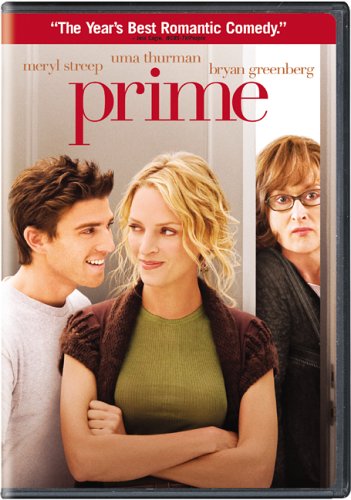
The recently divorced Uma Thurman is seeing therapist Meryl Streep as she tries to put her life back together. She meets Bryan Greenberg, sixteen years her junior, and falls for him. Streep encourages her to go for it, and then discovers that the object of Thurman’s affection is her son, whom she wanted to find a nice Jewish girl. Neither Thruman nor Greenberg know of their connection through Streep and carry on with their relationship, while Streep struggles to carry on with Thurman’s thera...y, forced to hear altogether more than she would like about her son.

Synopsis

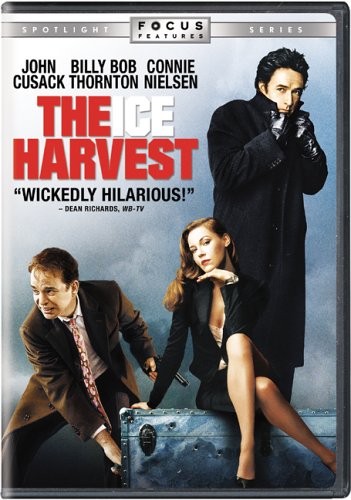
Christmas in Wichita Falls, but there’s not much comfort and joy going around. John Cusack and Billy Bob Thornton have just stolen two million bucks from mob boss Randy Quaid. If they can keep things together for just a few hours, they will be home free and off to warmer climes with their loot. But a huge thug is looking for them, Cusack keeps drawing attention to himself, and then there’s the question of whether these two can really trust each other.

Synopsis

Well, a Terry Gilliam children’s film might seem like a bit of an oxymoron, however writing a film with fellow Monty Python alum Michael Palin actually resulted in a funny, and even philosophical film, reflecting on themes of good and evil.

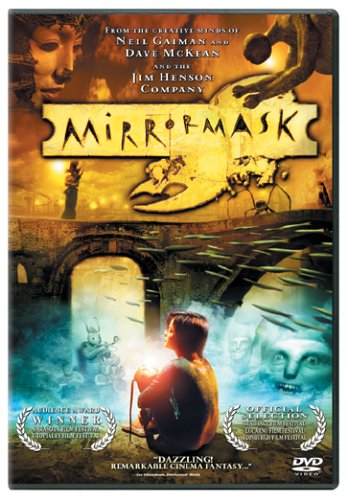
Neil Gaiman’s Mirrormask is just the sort of mixed bag I expected. While parts are mesmerizing and the performance of Stephanie Leonidas is a joy in itself, the plot fails to make room for credibility when it’s desperately needed. The holes left behind from this weak story cause the film to masquerade as art while carefully avoiding admission to what it really is – a product of sloppy writing. Gaiman is a talented scribe, but with Mirrormask, he’s dangerously close to believing his own hype. Judging fro... the work, it’s as if he’s looking back at his own accomplishments and thinking his minions of fans will like whatever he first puts down on paper; and for the most part, I think his hunch will prove correct. But that doesn’t mean it’s good just because his followers refuse to see the fault. It’s not that his words and sentences aren’t impressive. They are. No one can fault the man’s abilities with the mechanics of the language, but on issues of plotting, it’s as though he came up with three-quarters of a good story and refused to develop it to completion. Of course, the excuse for such disjointedness is that he’s attempting to create a dreamlike quality with the work. He does succeed, but he gives up too much ground when it comes to credibility.

Still, Mirrormask is not a bad film. The imagination, which goes into every aspect of the feature, is wild and vividly rendered. The effects are spectacular and proof an eye candy piece can be made for less than $5 million. The one-eyeball spiders, the black mass of destruction, the vicious four-legged riddle-loving creatures with human faces – all these characters are rendered beautifully, and do a great job of appealing to older children on the cusp of junior high or high school. And I admire the way Gaiman doesn’t underestimate his audience’s intelligence. At its core, the film has a positive and useful message for kids, and it’s able to relate it without talking down to them. Last but not least, Leonidas will hypnotize you with her grace and beauty. She emits a sexuality that will disturb older viewers until they discover she’s really in her early twenties. But that speaks even more of her talent. Here she is, playing a convincing adolescent, while still oozing sensuality. She’s a talented young actress, who will leave you with some bizarre feelings. To borrow a line from Steve Carrell’s sexually charged boss in The 40-Year-Old Virgin, she will haunt your dreams.

Echoes of Innocence calls itself an ultimate tale of good vs.evil. Don’t expect Exorcist level of evil quality in this one. Don’t even expect the good fight. Sarah (Simmonds) has a Joan Of Ark complex of sorts. She’s having religious visions, apparently inspired by the disappearance of a boy she once promised to save herself for. He publicly proclaims her commitment to virginity and frequently fasts to the point of near collapse. This is the film’s “good”. The evil is represented in the character of Alec (Vodvarka). He teases folks and is a bit of a womanizer but no head turns or horns to be found. Mostly Alec wants to break Sarah’s virginity vow. You can see how exciting this is going to be. Ho hum.

Put aside the forced religious symbolism and you have no film. The acting is absolutely horrid. Everyone is pretty much a one dimensional symbol. It might have been better to label them and save us two hours of film. That’s a long time for virtually nothing to happen.