1.85:1 Widescreen

Synopsis

After a very rough lovemaking session with her ethically dubious (to say the least) psychiatrist, KatieBird Wilkens (Helen Udy) knocks the sap down, chains him up, and proceeds to torture him, all the while recounting how she came to be a serial killer. Flashback to her childhood, and especially her adolescence, when her mild-mannered father (Lee Perkins) introduces her to the joys of killing. KatieBird (played in her teens by Taylor M. Dooley) develops her own unique way of dealing with her...victims: she wants them to hurt her, too.

I always hated Moonstruck… but don’t get me wrong, this is a positive review. See, it seemed like, back in my childhood, every time I wanted HBO or Showtime to play The Goonies, they were always in the middle of yet another airing of this Academy Award-winning romance. It was a boring movie about love with that lady Cher, who needed to stick to the radio, and stay off my movie screens. My, how a little age and maturity can alter perceptions. As a seven-year old boy, I just didn’t have the sensibility fo... this film. And while many would argue I haven’t grown up much in the years following, I gauge all such detractors wrong by the simple fact I now enjoy Cher’s shining moment thoroughly. I mean, there has to be some growth there. Right?

Moonstruck is a modern film, which uses the model of classical Italian comedies as its primary structure. In fact, some elements are directly lifted from the divine comedies of yore, but Norman Jewison’s direction, along with a top-notch script, and a terrific cast, lend a freshness not seen in the romantic by-products of today, which make the film more homage than rip-off. For one, the story centers on a 37-year old widow (Cher) – not your common leading lady role – whose superstitions dictate her happiness. She agrees to marry an older man, whom she admittedly doesn’t love, just to bring some structure and stability to her life. Then, she meets her fiance’s estranged younger brother, and a spark ignites that turns her world upside down… in a good way. The eccentricities of her Italian-American family are mined to perfection with both warmth and humor. The film explores how cruel the closest people can be to one another without wrapping viewers up in any negativity. I can finally see what the critics were raving about – a good, solid film.

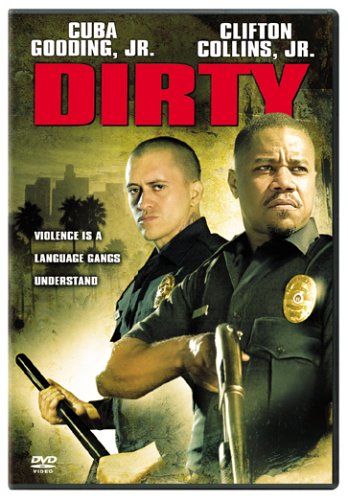
Can good acting make a film? Quite often it can. Dirty is a prime example of a film ending up better than it deserves to be by the powerful performance of a few good actors. Amando Sancho (Collins, Jr.) is an ex-gang kid from the mean streets of L.A. He thinks his street smarts and credibility can be an asset on the police force. Unfortunately we will never know, because he is partnered with corrupt cop Salim Adel (Gooding, Jr.). Both appear to require abject lessons in morality and loyalty, lessons that come too...late to be of any true value.

To say this is a disturbing film is putting it quite mildly. If you are at all sensitive to racial epithets being thrown about in casual fashion, this is not a film you want to view. If the depiction of cops as basically all corrupt with a few good eggs is offensive, this film will offend. It is a tragedy that the entire force is portrayed in these negative terms. We get no indication that there’s a clean cop in the film. This film is not so much about doing what’s right or not. The real question here is what is right or wrong. This is a gritty, stark world that reminds us in many ways of Vic Mackey and the Shield’s hopeless universe. The stark difference is that Adel has no respect for anyone. There is no distinction between the good guys and the bad guys. Mackey, at least, appears to believe he’s doing good. Adel simply doesn’t care. On the other hand, Sancho is more swept up with events. He aware of the ghosts that this kind of a life creates. This “day in the life” tale is all about the lack of redemption. I found it to be a pessimistic, dim view of society. While some might claim that perhaps this is reality at its core, what value is a film that has no hope at all? What good is a morality tale if there is no moral? The film is entirely too self-indulgent and a waste of some fine actors.

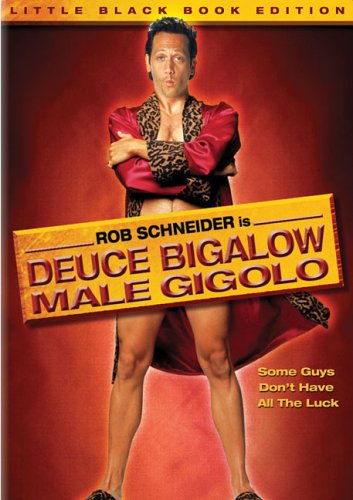
Certainly a surprise upon its initial release, Deuce Bigalow: Male Gigolo exceeded so many box office expectations a sequel was inevitable. From what I've heard, European Gigolo represents everything wrong with movies today; however, I did not let that abysmal word-of-mouth prevent me from giving the first installment a chance. Unfortunately, after viewing the original, I can't see how the sequel could be any worse.

This film has its share of supporters, and I can't really come down on anyone ...or personal taste. I can only gauge the film as a comedy based on how often it broke me down to laughter. I can honestly say the only chuckle derived from me was during the scene that involves the young lady and Deuce at a baseball game - hardly enough of an impact, however, to recommend this film to the uninitiated. Most of the "laughs" retread territory already ventured by both superior comedies (or, the equally crappy). Watch it if you dare - just, for Pete's sake - don't buy it.

The Greatest Game Ever Played?
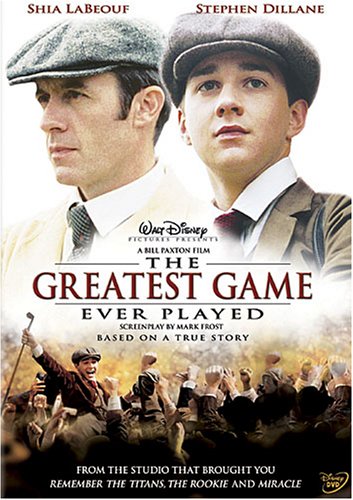
When I saw that title on the DVD case my immediate thought was: “How did Disney find out about my 1981 Marathon game of RISK where I took out Mark “Trip Sixes” Shreader in 9 hours of battle? Of course, I soon decided they meant professional sports. This film would be about the Minnesota Viking playoff whoopin’ of the Green Bay Packers at Lambeau Field. Turns out that wasn’t it. Point of fact, not one game of the 1980 World Series victory of the Phillies made the cut. Sudde...ly it hit me. Disney does ice hockey films. They must have made one about the Tampa Bay Lightning’s Game Seven beat down on some Canadian boys to win the Stanley Cup. Wrong! Apparently long before my boy Abner picked up a bat or Dr. Nesmith was shooting soccer balls into his trashcan, some funny looking fellas in Scotland had come up with their own game. Golf. Don’t get me started. Still ESPN says it’s a sport, so who am I to argue?

So let’s talk about the film. It’s an old formula, and no one tells them better than Disney. Let’s face it who can tell a Cinderella story as well as the folks that brought you… well, Cinderella. Disney sprinkles enough of their traditional family movie magic to at least make this film somewhat interesting to those of us who do not enjoy golf. The opening credits hark back to Monty Python with clever use of cut-out animation mixed with period film. The screenplay was written by Mark Frost from his own novel.

Cecil B. DeMille’s The Ten Commandments hits store shelves in a new three-disc special edition, just in time for the release of the new made-for-TV mini-series. While the film classic is no stranger to DVD, it has yet to be released with this kind of gusto. At over three-and-a-half hours long, the film is simply too much for one disc to hold. The first disc contains the first 140 minutes, while disc two finishes up with the last 80. Plus, as a bonus, we get the original 136-minute silent version (also a DeMill... picture) on disc three. Since the later version is the most famous – and the centerpiece of this release – I will treat the inclusion of the silent version as a bonus feature.

Unless you’ve been living under a pyramid for the last 5000 years, you’re probably familiar with the story. Moses (Charlton Heston) grows up in the Egyptian palaces as a brother to Ramses (Yul Brynner). He discovers his true heritage as a Hebrew and forsakes all the riches and comforts of his childhood for the harsh life of a Hebrew slave. After killing an abusive Egyptian overlord (Vincent Price) in defense of a fellow Hebrew, he flees into the wilderness for about thirty years, until God decides it’s time for Moses to deliver the Hebrews from their plight. At first reluctant, Moses embraces the task at hand, and boldly marches back to Egypt for the famous showdown with the man he once called “brother.” Of course, the film takes certain liberties with the source material, but not so much to fall beyond the realms of reason. Moses really did grow up as an Egyptian, or so historians tell us, and so he must have had some deep ties to that people. DeMille does a fine job of honoring the text, while parlaying it into a compelling story of a house divided.

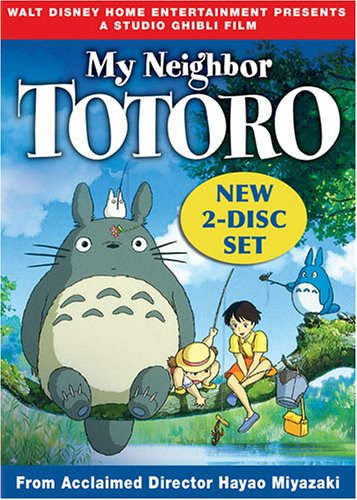
It’s rather stunning to discover that My Neighbor Totoro was made way back in 1988, long before the days of CG and all automatic illustration. And perhaps that animation does detract from the overall experience from the film, but if that’s the only reason that it would be a problem, then people simply need to get their taste in order.

In another film from legendary Japanese film director Hayao Miyazaki (who made the Oscar-winning film Spirited Away), the film follows sisters Mei and Satsuki, w...o move with their father to the countryside, to spend more time with their mother. They do some exploring and encounter Totoro, a mystical being in the woods that can only be seen by children. Totoro helps the children experience a world of wonder that they never would have previously seen.

Synopsis

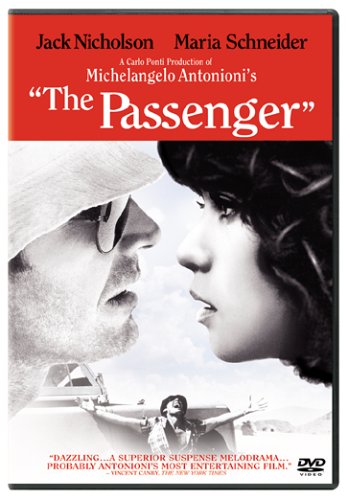
Jack Nicholson is a journalist in Africa, fed up with his job and his life. When an acquaintance in an adjoining hotel room dies, Nicholson, struck by the other man’s physical resemblance to himself, switches identities, allowing everyone to believe that he is the one dead. But his new self doesn’t turn out quite to be the escape he had hoped for, as the man he has now become turns out to be an arms dealer.

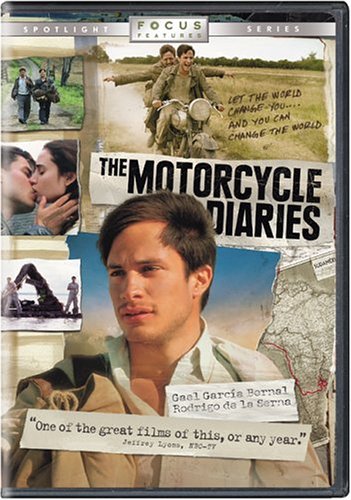
The Motorcycle Diaries tells the story of an 8,000 mile trip by either motorcycle (hence the name of the film), raft, truck or foot from Argentina to Peru in the year of 1952. Friends Ernesto Guevara de la Serna and Alberto Granado take this journey to travel across the continent. It’s important to note that Ernesto eventually became “Che” Guevara, a man who was involved in the political world. According to wikipedia, “Che” is mostly referred to as a Fidel Castro type figure, which is interesting especially co...sidering Castro was his friend. “Che”, like Castro, claimed to fight for his people, yet never truly did much for them. But this is an extreme side-note as the film focuses on when “Che” was younger.

The two friends climb on their trusty motorcycle and speed away to a world full of adventure and excitement. Sounds like a type of action film right? Well, The Motorcycle Diaries is far from an action film. The film is more an adventure type film that looks very deep into the lives of these two during this time period. Guevara is a medical student while Alberto is a biochemist. Both have a few years left in their education path. During their journey, they make many stops, some of which have deep meaning (One key moment is explained later). The first stop on their adventure is to visit Guevara’s girlfriend whose father disapproves of Guevara. Chichina, Guevara’s girlfriend, loves him so dearly that she’ll apparently wait for him to finish.

I am unsure of what the greater tragedy is: a man losing over ten years of his life for a crime he didn’t commit (and very nearly being executed for said offense), or the fact “documentaries” such as Fahrenheit 9/11 enjoy more commercial success than the excellent Errol Morris work The Thin Blue Line. On the surface, the former may seem far worse than the latter, but consider that it’s so-called journalism like that found in F 9/11 that colors false perceptions of reality and bears blame for guys...like Line’s Randall Adams staying incarcerated and unnoticed for over ten years. (I’m dealing in principles here, of course.) But when the impact of the media and its devotion to crap before truth is considered, the success of Moore’s film to Morris’s is disturbing – even frightening. And while Morris’s documentary was released in 1988, it still holds relevance today. I need to think only of the state trooper in Arkansas, who will probably get off Scott-free for murdering an unarmed mentally handicapped boy because he “thought” he was an escaped convict from Michigan – despite the fact that one brief comparison of photos calls to the contrary. People don’t like to admit the authorities watching over them at night are capable of the atrocious behavior presented in Morris’s documentary. And it’s that kind of indifference and lack of caring for facts that allow people like Adams to experience injustice to the extent he did from 1976 to 1988, as detailed in the film.

The Thin Blue Line played a large role in Adams’ eventual release. In the world of documentaries, that would make it the go-getter brother that rises from obscurity to achieve great things. F 9/11, much like its director, is the big fat disgusting slug that does nothing, but finds more favor with Mom and Dad because he refuses to get a job and move out of the house, thus delaying Empty Nest Syndrome, where they actually have to face the reality of life instead of the fantasy. With that said, I think Line fails on one front. Morris wants this to be an argument against the death penalty, but it isn’t. An argument against injustice perpetrated by the system? An argument against police and judicial corruption? An argument against quack doctors and faulty eyewitness testimony? Yes, on all counts. But to say the death penalty should be abolished for what Adams endures is like saying we should stop sending people to jail for fear of locking up the wrong guy. No, Line is effective and expertly crafted, but it’s more about questioning authority than altering punishment.