Posted in: Disc Reviews by Archive Authors on April 5th, 2006
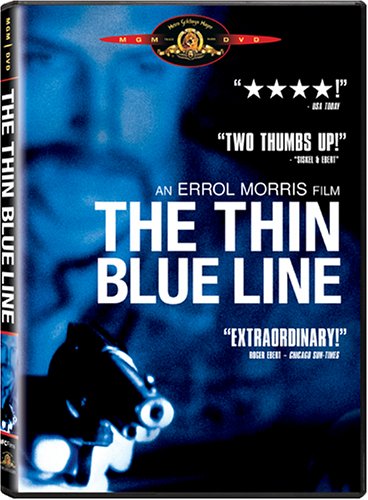
I am unsure of what the greater tragedy is: a man losing over ten years of his life for a crime he didn’t commit (and very nearly being executed for said offense), or the fact “documentaries” such as Fahrenheit 9/11 enjoy more commercial success than the excellent Errol Morris work The Thin Blue Line. On the surface, the former may seem far worse than the latter, but consider that it’s so-called journalism like that found in F 9/11 that colors false perceptions of reality and bears blame for guys...like Line’s Randall Adams staying incarcerated and unnoticed for over ten years. (I’m dealing in principles here, of course.) But when the impact of the media and its devotion to crap before truth is considered, the success of Moore’s film to Morris’s is disturbing – even frightening. And while Morris’s documentary was released in 1988, it still holds relevance today. I need to think only of the state trooper in Arkansas, who will probably get off Scott-free for murdering an unarmed mentally handicapped boy because he “thought” he was an escaped convict from Michigan – despite the fact that one brief comparison of photos calls to the contrary. People don’t like to admit the authorities watching over them at night are capable of the atrocious behavior presented in Morris’s documentary. And it’s that kind of indifference and lack of caring for facts that allow people like Adams to experience injustice to the extent he did from 1976 to 1988, as detailed in the film.
The Thin Blue Line played a large role in Adams’ eventual release. In the world of documentaries, that would make it the go-getter brother that rises from obscurity to achieve great things. F 9/11, much like its director, is the big fat disgusting slug that does nothing, but finds more favor with Mom and Dad because he refuses to get a job and move out of the house, thus delaying Empty Nest Syndrome, where they actually have to face the reality of life instead of the fantasy. With that said, I think Line fails on one front. Morris wants this to be an argument against the death penalty, but it isn’t. An argument against injustice perpetrated by the system? An argument against police and judicial corruption? An argument against quack doctors and faulty eyewitness testimony? Yes, on all counts. But to say the death penalty should be abolished for what Adams endures is like saying we should stop sending people to jail for fear of locking up the wrong guy. No, Line is effective and expertly crafted, but it’s more about questioning authority than altering punishment.
Posted in: Disc Reviews by Archive Authors on April 4th, 2006
Synopsis
I’ve gotta admit that for a long time, Four Weddings and a Funeral was in a category of movies that I had no intention or curiosity to see because of the title, the cast and the story. Hugh Grant was a significant step down towards the emasculation of man, where are start wearing large sweaters, hang out in pseudo-Starbuck coffee shops and talk about what happened on American Idol or some lame thing along those lines.
Posted in: Disc Reviews by Archive Authors on March 31st, 2006
Synopsis
Lie With Me is proclaimed in its trailer to be a film in the tradition of Y Tu Mama Tambien and Sex, Lies and Videotape. But at its core, it’s more along the lines of another one of director Clement Virgo’s film influences, Bertolucci’s Last Tango in Paris. The characters in Lie With Me experience each other rather provocatively at the start of their relationship, and work their way outwards.
Posted in: Disc Reviews by Archive Authors on March 31st, 2006
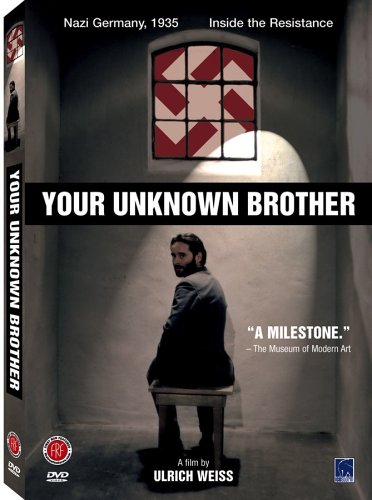
Arnold Clasen reenters society after time away in a Nazi prison camp, and returns to Hamburg and a life of quiet solitary resistance, in the 1981 war-time drama Your Unknown Brother. Clasen immediately reconnects with his old love Renate, and embarks on a turbulent, dangerous friendship with resistance leader Walter, a man of ulterior motives, who is also in bed with the Nazi regime. Clasen starts to suspect Walter when many of his old comrades are seized by authorities. It seems everyone in the resistance, wh... comes into contact with Walter soon become property of the State, yet he remains suspiciously unscathed.
The film deals with themes of stark isolation and hopelessness, as well as an individual’s efforts in facing widespread fascism. It’s always at the top of its craft, but the action lacks that extra something to make it all seem interesting. On paper, the film will have foreign drama buffs salivating, but in execution, it fails to make its premise as intriguing as it sounds. With that said, I am hard-pressed to find any fault in the performances, and Director Ulrich Weiss really does know how to use camera, lighting, and sound effects, to his advantage. It just seems like the intangibles are missing – those unexplainable qualities, which pack all the emotional power, and allow a movie to transcend the average film within its genre.
Posted in: Disc Reviews by Archive Authors on March 28th, 2006
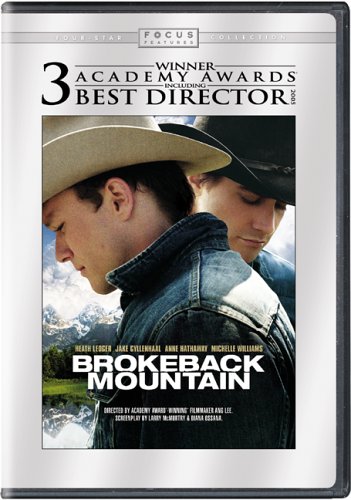
Brokeback Mountain tells the story of star-crossed lovers Ennis Del Mar (Heath Ledger) and Jack Twist (Jake Gyllenhaal). Both are young men, not even twenty, working in the year of 1963. They meet and fall in love on a sheep-herding job in Signal, Wyoming. The film chronicles the next 20 years of their lives from Ennis marrying Alma Beers (Michelle Williams) to Jack marrying Laureen Newsome (Anne Hathaway). The 20 years that the film takes place over show Ennis and Jack trying to lead a normal life without see...ng each other, but shortly before realizing that they both have a deep connection to one another.
There’s a scene in Brokeback Mountain where Ennis tells Jack about something he saw as a boy. Ennis tells Jack that there were two old guys who were shacked up together. The whole town knew of this. Then one day, they were found beaten to death. Ennis’s father made sure Ennis and his brother saw this possibly as an idea that this is what may occur if you chose this type of life. This scene is quite important because it really shapes and defines the kind of character that Ennis is. Ennis is the kind of character that wants to let his emotions for Jack out but we learn that he was taught to hate his own feelings. Years after first meeting Jack, Ennis tells Jack “Why don’t you let me be? It’s because of you, Jack, that I’m like this—nothing, and nobody.” Ennis blames Jack for his problems, but the center of his problem is that Ennis loves Jack but can’t find a way to deal with that fact.
Posted in: Disc Reviews by Gino Sassani on March 28th, 2006
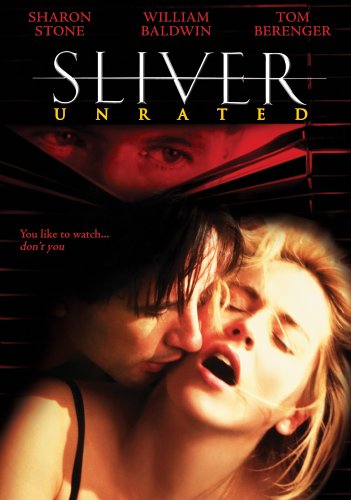
Sliver is a sexy thriller that is neither sexy or at all thrilling. Filmed in the wake of the hugely successful Basic Instinct, Sliver has all of the elements but none of the passion. Call it Basic Instinct lite. Less filling without the great taste. Sharon Stone sleepwalks through her role of Carly. Carly works at a publishing house and has recently moved into one of New York’s plush apartment buildings. She was trying to ride her Basic Instinct wave here, but the truth is she has never really lived up to the pote...tial. William Baldwin tries at least a little harder as Zeke, who happens to own the building where tenants seem to end up dead, particularly young attractive women. Zeke loves to watch the private moments in his tenants’ lives. He is likely intended to represent the audience. Filling out the cast is Tom Berrenger as Alex, a self-absorbed writer who is obsessed with Carly. Martin Landau is underused as the fatherly owner of Carly’s company. Red herrings abound. Twists are nothing more than cheap thrills.
This “unrated” version promises scenes too hot for theatres. All you really get is a little more moaning from Sharon Stone and not anything remotely steamy. The final product is a film that will leave you unsatisfied whatever your intention going in. The new scenes serve simply to slow down an already hopelessly bogged down premise.
Posted in: Disc Reviews by David Annandale on March 27th, 2006
Synopsis
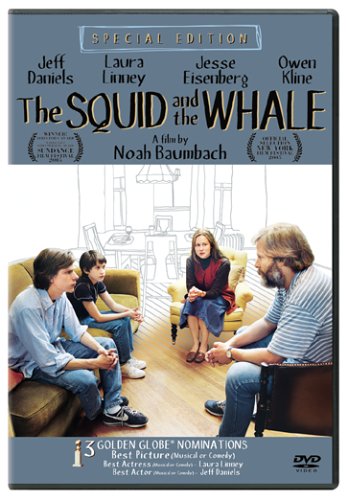
We begin with an ending: the final collapse of the marriage between Jeff Daniels and Laura Linney. He is a formerly renowned author who now can’t get himself arrested, let alone published. She is suddenly coming in to her own as a writer. He is pathologically self-obsessed. She is deeply insecure. Together, they spell bad news for their two sons, 16-year-old Jesse Eisenberg and 12-year-old Owen Kline. Both parents are a bit of a mess, but daddy is easily the worst offender, and is an absolut...ly poisonous influence on Eisenberg, who worships his father and viciously blames his mother for the split-up. What follows is primarily Eisenberg’s coming of age, where he must learn to see both of his parents (and, for that matter, himself) with real honesty.
Posted in: Disc Reviews by Archive Authors on March 22nd, 2006
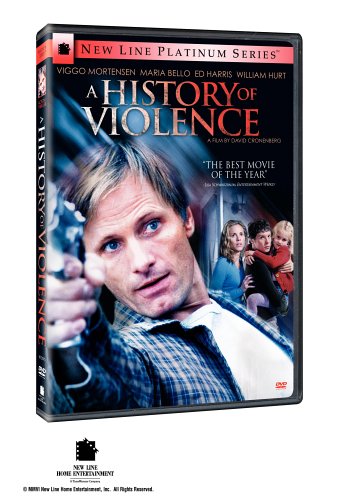
As I see more and more film’s from 2005, I realize that a majority of the best films are those that aren’t huge financial successes. Films like Capote, Munich and now David Cronenberg’s latest film A History of Violence weren't huge successes but have earned praise due to the themes and stories they present. Containing a well crafted story, with interesting characters, A History of Violence is one of those rare films that you see that has a latest impact on you.
As the film <i ...A History of Violence opens up, we met two characters, Leland Jones (Stephen McHattie) and Billy Orser (Greg Byrk) who have just come out of a motel apparently killing the two clerks inside. The film then flashes forward and we meet the Stall Family. Father Tom (Viggo Mortensen) and Wife Edie (Maria Bello) have two children, teenager Jack (Ashton Holmes) and young daughter Sarah (Heidi Hayes). Tom runs a small family diner in Indiana that gets steady business. Edie is a lawyer while son Jack hates gym class and is bullied by Bobby Jordan (Kyle Schmid) and daughter Heidi seems to have nightmares about monsters coming out of her closet. The town is very quiet and everyone looks out for each other as Sheriff Sam Carney (Peter MacNeill) informs us.
Posted in: Disc Reviews by David Annandale on March 20th, 2006
Synopsis
Set in an imaginary European country on the verge of war, in a vague time period that is approximately Edwardian, this is the story of Sophie, a young girl who encounters Howl, the handsome wizard who lives in a gigantic, clattering contraption of a mobile castle. The interest Howl has in Sophie arouses the angry jealousy of the Witch of the Waste (voiced by Lauren Bacall in the English dub), who curses Sophie with instant old age. Sophie, no longer recognized by Howl, takes up residence in ...is castle and sets about transforming all within, perhaps ultimately freeing Howl of his own curse.
Posted in: Disc Reviews by Archive Authors on March 17th, 2006
Anthology films are a good training ground for young filmmakers to flex their muscles and really get creative. However, with Eros, the three filmmakers have already been around the block a time or two, and on the surface, that could be considered a good thing. But when you consider what Michaelangelo Antonioni, Steven Soderbergh, and Kar-Wai Wong, are already capable of, these shorts seem a bit of a letdown. The best segment is Soderbergh’s “Equilibrium,” with its symbolic stylistic effects and wry sense of hu...or. It was the only one of these vignettes, which seemed neither cliché (“The Hand” – Kar-Wai) nor pointless (“The Dangerous Thread of Things” – Antonioni). In “Equilibrium,” Robert Downey Jr. plays a man caught up in an ambiguous dream world, who explains his situation to an eccentric psychiatrist (Alan Arkin). Arkin’s psychiatrist is a capable man, but he often uses his patients’ discussion time to do other less constructive things (i.e. stare out the window with binoculars, fly paper airplanes to the street below, etc.). The whole time, he is equally capable of dispensing advice and helping his patients get to the root of their issues. There are three color schemes in this segment (black-and-white; all blue, natural), all of which add artistic flare by making each portion a genre in and of itself. And in the blue portion (Downey’s recurring dream), the camera bobs slowly from side to side, giving an off-equilibrium effect, which is contrasted in the other two portions.
In “The Hand,” Kar-Wai proves himself a quality director, while the story of fading love and devotion rekindled for one final farewell lacks the intrigue of similar – and better executed – works. However, the performances by the two lead stars are solid. Unfortunately, even that perk is missing from the uninspired Antonioni contribution. “The Dangerous Thread of Things,” meanders about with all the importance of a porno (but without the excessive sex and nudity those, who might find such fare entertaining, are interested in seeing). It’s not a flattering introduction to the works of the great Italian director. As for storytelling, I’m not sure he even attempted to dabble in it here. Stick with Blow-Up, if you want a primer on Antonioni.