Posted in: Disc Reviews by Gino Sassani on May 17th, 2010
I've seen quite a bit from Steven Seagal of late. There was his reality series from his deputy job, and many of his numerous catalog titles are finding their way to Blu-ray. All in all, it's a pretty good time to be a Steven Seagal fan. The latest of these earlier films to reach high definition is the 1990 entry Marked For Death. It pretty much follows the established Seagal formula here, combing martial arts with the vendetta theme, that he has come to personify for so long. It has a little of what the fans are looking for, including the social messages that are a huge part of Seagal's films. I'll give him a lot of credit here. He does appear to have a huge heart, particularly for kids, and tends to press issues of importance to them in many of his films. He also manages to accomplish this without getting too preachy.
John Hatcher (Seagal) works for the DEA. He's in the middle of an undercover operation in Mexico that goes sideways. That means that people are going to get killed, and you can bet your bottom peso that one of those people is going to be someone that Hatcher cares very much about. Playing a family member or partner in a Steven Seagal movie is like putting on a red uniform and beaming down to a hostile planet with Kirk, Spock, and Bones. You'd be safer with a three-pack-a-day smoking habit topped off with a 5th of Scotch and a heroin chaser. No one's going to be selling you any life insurance. So naturally, since we don't see any family members running about, Hatcher's partner is not long for this script. When his partner does die, Hatcher rethinks his job and decides to quit.
Posted in: Disc Reviews by Gino Sassani on May 12th, 2010
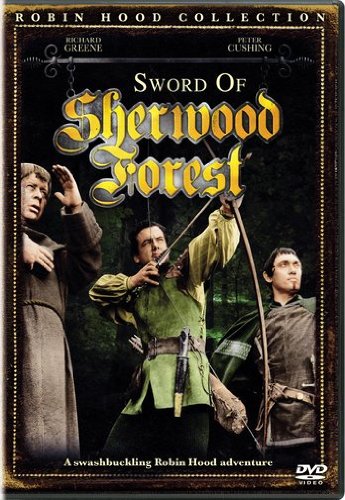
"Comrades, I've called you together again because the people of England face a grave crisis. Many years ago as Robin Hood, I led you as an outlaw band. Here in Sherwood Forest, together we resisted the tyrant King John. When he died, we dispersed because we believed that tyranny had died with him. But tyranny did not die. It merely slept. And now it has awakened again."
Speak the name Robin Hood and one immediately conjures images of the swashbuckling hero of medieval England. The character's origins go back as far as 15th century ballads that herald the daring deeds of an outlaw who fought against tyranny and injustice. In some texts the man is given a dual identity as one of the very noblemen that he had most of his fame defending the people against. The most popular modern notions have the figure in tights with a bow and arrow, equally talented with his sword. He robs from the rich to give to the poor. Such populist notions have been a part of the legends in whatever forms they have taken over the centuries. While the early legends and ballads place him at several locations in England, it is the famed Sherwood Forest dwelling that survives the telling to this day. Believe it or not, one of the earliest mentions of the character, Robin Hood And The Monk from around 1450, is actually a story of Little John as the prominent one, and Robin is merely a fanciful supporting character. He was considerably more religious during those days, dedicated to the visage of The Holy Blessed Mother. By the 16th century Robin Hood was the subject of a series of plays written by Anthony Munday. Here Robin's nobility origins are made clear, as is his hatred of tyranny. The character we know today, however, didn't begin to take shape until the 17th century and Martin Parker's The True Tale Of Robin Hood. Still, with all of this rich literary history, Robin Hood's iconic image owes much to the introduction of the motion picture. It is here that the flights of fancy were given free rein, and Robin Hood became one of the world's first superheroes.
Posted in: Disc Reviews by David Annandale on May 9th, 2010
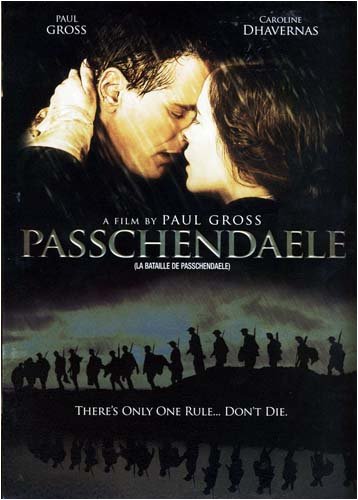
We are in the midst of the Great War. Michael Dunne (Paul Gross) is a Canadian solider recovering from physical and psychological wounds. He falls in love with his nurse (Carline Dhavernas), and when her asthmatic brother enlists, Dunne heads back to the trenches to protect him, and the two men wind up at the gigantic, murderous battle that gives the film its name.
Writer/director/star Gross has an almost messianic commitment to Canadian film and Canadian history, and here he combines his obsessions in a 20-million-dollar effort that is, by the standards of the Canadian film industry, nothing short of gargantuan. And to his credit, the battle scenes are impressive. The editing is frequently startling and brutal, in keeping with the events themselves. On the other hand, the romance is painfully hackneyed, and the naked appeals to national pride can be rather wince-inducing.
Posted in: Disc Reviews by Gino Sassani on May 4th, 2010
These last couple of years have seen a resurgence of a particular kind of character study. For me I think it started with The Wrestler. For Mickey Rourke, it was a powerful comeback and led to an example of grand theft at that year's Oscar celebration. Now, I wouldn't exactly say that Jeff Bridges was in any particular need of a comeback. He's had some pretty steady work over the years. Still, you just can't watch Crazy Heart and not be reminded of The Wrestler. These characters could not be more different in a lot of ways. But they are also cut from the same cloth. Both have already seen their glory days behind them. They've each indulged in some pretty self-destructive behavior. In The Wrestler, it could be argued that the abuse he put on his body was a necessary part of the life he chose. With Crazy Heart, we're talking alcoholism, pure and simple. Still, any of those old cowboys might make the argument that booze is as much a part of the life they choose as the drugs and physical punishment are for a wrestler. It's a pretty good point. Both characters are looking for some kind of redemption with a past child. In this case it's a son. Both are attempting to find healthy relationships, perhaps for the first time in their lives, with single moms who have had some bad luck in the romance department. Finally, both characters are looking for a comeback. Here is where the stories truly diverge. For Mickey Rourke's Ram, he returns because it's the only thing he knows. His job defined him. His comeback will likely mean the end of his life. For Bad Blake, the new career in music could well be his salvation and a chance at a longer life. Whatever the comparisons, both are strong character-driven pieces.
Bad Blake (Bridges) was once on the top of the country charts. But that was a long time ago. Today, he's driving around in his Suburban from gig to gig with about 10 bucks to his name. He's gone from great arenas to bowling allies and small-town dives. He still has a small core group of fans that make even this life possible. The trouble is that Bad chain smokes and drinks his health away. He can barely stand for one gig. His old guitar player Tommy Sweet (Farrell) has offered him the chance to open for his act. More important, Sweet wants him to write some new songs for him, and is willing to pay well for them.
Posted in: Disc Reviews by Gino Sassani on April 28th, 2010
"Every town has a story... Tombstone has a legend."
Posted in: Disc Reviews by Gino Sassani on April 28th, 2010
Cocoon was based on a somewhat obscure novel by David Saperstein. It was also an unlikely film for beginning director Ron Howard. He had made it known since his career began that he had little respect for the science fiction genre. In an interview provided on this very release, he condemns the genre as not being about character or story. I'd say that Ron Howard just hasn't watched the right science fiction. I beg to differ with his assessment. Science fiction has been a remarkable tool to discuss some of the most important issues facing our society. When issues can be couched in aliens and other worlds, the censors and those who avoid socially conscious messages tend to make certain allowances, which has made it a very powerful genre over the decades. Still, that's not the way Howard sees things, and that's why he was likely a bad fit for Cocoon.
The movie has a lot of great actors and some very memorable characters. But Howard left the story somewhere else. Was it the cutting room floor? I don't know, but it never really appears on the screen. What we end up with is a movie with a ton of emotion and charming characters and moments, but it never quite comes together in a memorable film. It did well in 1985, pulling in a respectable $76 million at the box office and earning itself the number 6 spot for the year. There were Oscar nominations, and even a win. These are all impressive accomplishments. Still, Cocoon very swiftly passed out of interest and revealed itself as more a fad than an enduring film. To show just how far and how quickly the film fell, you need look no further than the 1988 sequel. While Ron Howard was not a part of Cocoon: The Return, most of the exceptional cast was back. The film bombed, pulling in just about $18 million, not enough to cover its budget.
Posted in: Disc Reviews by Gino Sassani on April 27th, 2010
"This is the Earth at a time when dinosaurs roamed a lush and fertile planet. A piece of rock just six miles wide changed all of that. It hit with the force of 10,000 nuclear weapons. A trillion tons of dirt and rock hurtled into the atmosphere, creating a suffocating blanket of dust that the sun was powerless to penetrate for a thousand years. It happened before. It will happen again. It's just a question of when."
When was 1998 with the summertime blockbuster movie Armageddon. This film was the poster child for summer tent pole movies. It had everything to combat any of those summertime blues. There was adrenaline-pumping action and adventure. We got to witness groundbreaking, for the time, special effects. Who can beat the threat of global devastation and a ragtag team of unlikely heroes sent to save the day? There's space travel and plenty of explosions. The movie sported an all-star cast. There's even a classic red or blue wire moment. And, of course, there were computer generated lifelike dinosaurs munching on the panicked citizenry. Okay, so I made that last part up. There were no dinosaurs. But, who would dare to deny this was a film loaded for box office bucks? It was often hounded by the critics for being somewhat unbelievable. There were also the usual complaints of a thin plot covered over by a huge spectacle. And every one of those accusations is dead on true. Who cares? This was an imaginative amusement park ride from beginning to end. It was never intended to do anything more than entertain. And entertain it did in the summer of 1998. And, entertain it continues to do today on a sweet Blu-ray high definition release. The theatergoers agreed with me then to the tune of $201 million at the box office and $350 million worldwide. Consider that this reviewer accounted for about 8 bucks of that money. If I hadn't gotten an advance copy of the Blu-ray, I would have been in line to relive the fun in glorious high definition. Since I already have mine, it means I saved you a place in line. Don't blow it.
Posted in: Disc Reviews by Michael Durr on April 26th, 2010
The first District 13 movie was considered a modern day cult classic. It featured a number of meticulous and daring stunt scenes that were worked without the use of wires or computer generated effects. It was written and produced by Luc Besson famous for Fifth Element & Leon. But would the sequel set in the future 3 years later be able to hold the same interest?
It is France in the year 2013. Gang overlord, Taha Bemamud has been dead for three years leaving chaos in the streets and at the political level. Five territorial gangs are fighting for control and none are willing to back down to usurp control. The government is working on establishing peace and harmony to the troubled sector stationed firmly in the heart of Paris but is having considerable difficulty with the 2 million plus people stationed there.
Posted in: Disc Reviews by William O'Donnell on April 26th, 2010
A first-year film student named Yannick crosses paths with a black cat (literally) and crashes his bicycle, then knocks on the door of a family home in a nice neighborhood looking for assistance. A few minutes later he is held captive by a psychotic family, led by a patriarch who is convinced it is his life's duty to rid the world of those who are “not righteous.” As our hero Yannick slips between clawing desperation and clever tact in his attempts to escape he is offered a chance at freedom. Jacques, the head of the household, is an undefeated, nation-wide renowned Chess champion, and if Yannick can beat him once, he will be released.
This French-Canadian thriller grips you immediately and holds your attention captive throughout its duration. This film relies heavily on the performances of its leads and they deliver splendidly. Jacques does not appear strange in his psychosis, but calm for his character is convinced of his self-righteousness and his mission. His daughter, whom he is grooming to take over his work, acts out violently when her family is threatened but cannot bring herself to kill in the name of God. The mother has a soft-spot for their prisoner for he displayed great kindness to the youngest child, a small mute girl who quietly loathes her father.
Posted in: Disc Reviews by David Annandale on April 25th, 2010
We are in the mid-60s, when, during the glory days of the Stones, the Who, and other colossi of British rock, the BBC allows almost no airplay of said music. To the rescue comes a group of commercial pirate radio stations, broadcasting from ships off the coast. Priggish minister Kenneth Branagh is determined to shut them down, and our focus is on one particular ship, run by Bill Nighy, and boasting such luminaries as Philip Seymour Hoffman and Nick Frost as DJs. Onto this ship of counter-culture rebels comes a young Tom Sturridge, and this wet-behind-the-ears youth becomes the eyes through which we watch the various eccentric goings-on.

Director Richard Curtis is a dab hand at ensemble romantic comedies, as the sterling likes of Four Weddings and a Funeral and Love Actually more than demonstrate. But though he has a terrific cast here, including such regulars as the always watchable Nighy, this is a misfire. It is surprising, given some of the indelible characters in Curtis' previous films (notably Emma Thompson's role in Love Actually) that the female parts here are so woefully underwritten (the women in this film are little more than disposable sex objects). As well, would-be funny scenes of the farcical, slamming-door variety (such as the scene where Frost tries to get the virginal Sturridge to replace him in bed) are older than the hills and eroded completely flat. So the comedy, the odd line here and there notwithstanding, barely raises more than a mild grin. And the tone is so light and unconcerned that it robs the context of any real rebellion or vitality. This radio station might as well be a standard classic-rock denizen of the FM band for all the edge we feel. Then there's some laziness to the writing. If we are to believe this is circa 1966, why have someone anachronistically talk about “thinking outside the box”?