2.35:1 Widescreen

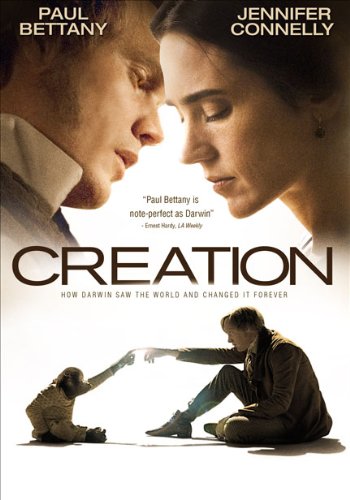
If one were to ask my theory on creation or what role God plays in this wonder we call life, I probably couldn't give you a definitive answer. Since I possess both a creative and analytical mind, I often find myself going back and forth on thoughts that for the most part have stuck me in the middle of the belief ideology. It was only fitting that I was able to review Creation, a movie where Darwin was having many of those same conflicts before he wrote his legendary book.

Charles Darwin (played by Paul Bettany) is a renowned English naturalist. He lives south of the small village of Downe in the parish of Kent in London. He is a devoted family man and is married to Emma (played by Jennifer Connelly) and has a loving daughter named Annie (played by Martha West) among many other fine children. In addition to developing his theory, he spends many of his days telling stories to his children of his travels.

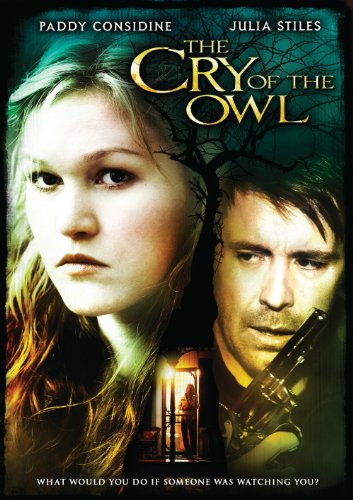
You may not know the name Patricia Highsmith, but you do know her work. She penned the novel that brought us Alfred Hitchcock's excellent thriller Strangers On A Train. You might also know her character Thomas Ripley, who was the subject of several of Highsmith's novels including the famous The Talented Mr. Ripley. Most of these works appeared in the 1950's and 1960's. Still, her work has been tapped for motion pictures right up through the most recent film The Cry Of The Owl.

Now see if you can follow any of this. The film is a cooperation between an American company and Britain's BBC as well as a French company. The lead is Paddy Considine, a Brit. Of course, he's playing an American in the film. The film is set in some undisclosed, but presumably New York, American big city and a surrounding small town. But, the film was lensed in Ontario, Canada. Got that? It's very much an independent-feeling film and is a direct-to-video release.

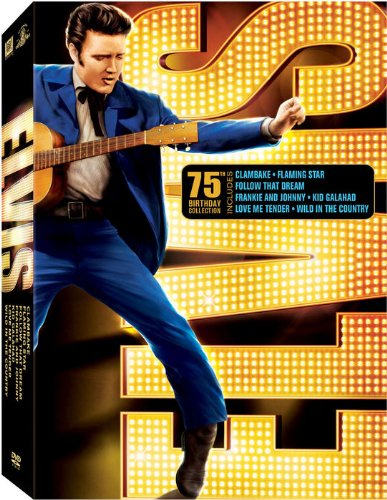
Elvis Presley is often referred to as The King Of Rock And Roll, at least to his fans. There's no denying the impact that he had on the music scene. He was the first rock and roll star, to be sure. Colonel Tom Parker, his long-time manager and partner, created many of the marketing traditions that are commonplace in the industry today. He knew the value of his star, not only as a performer, but as a brand. For the first time, a musician's image and name started to appear on everything from bath towels to women's underwear. Fans are often split on their feelings for the self-styled Colonel, but Elvis would not have become the name brand he still is today, without him.

One of those brand expansions tapped into Elvis's own boyhood fantasy. Elvis had worked as an usher at a local movie theater as a teen. He's often related that he would linger in the auditoriums, watching those movies and fantasizing that he was James Dean or Marlon Brando, two of his idols. With the help if Colonel Parker, Elvis would get to see that dream become a reality. The King was to expand his realm to include the movie business and Hollywood. No experience? No problem. After all, if Elvis could go from failing music in high school to becoming the highest paid musician on the planet, he could certainly tackle the world of acting. And he did just that.

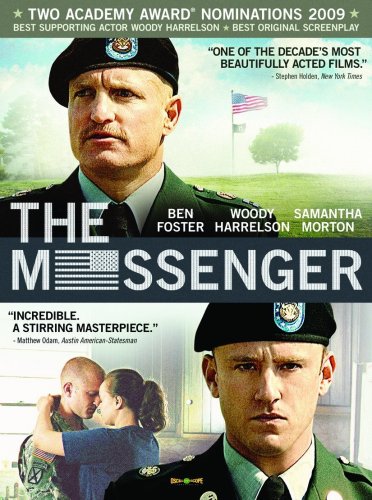
Staff Sergeant Will Montgomery (Ben Foster), a decorated solider just back from Iraq and having difficulty re-adjusting to life on the home front, is understandably less than thrilled with his new assignment: working with Captain Tony Stone (Woody Harrelson) in the Casualty Notification Service. These two have what must surely be one of the worst jobs in the history of history: knocking on doors and informing people that their loved ones have been killed. It is important that they deliver the news and leave, and have no further involvement with the bereaved. If only life were that simple...

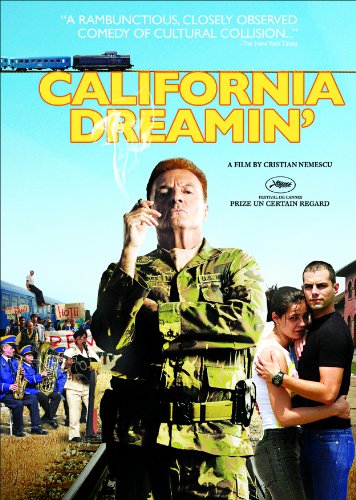
In 1999, a troupe of US marines must transport some equipment across Romania. Leading them is Captain Doug Jones (Armand Assante), a man so committed to his duty that he does a pretty convincing job of appearing passionate and proud about what is, on the face of it, a rather dull, two-bit assignment. As matters develop, the mission is far from dull, though it is not interesting in the way Jones might have hoped. The train is waylaid in the small town of Capalnita by the corrupt stationmaster, and a comical clash of cultures ensues.

Director (and co-writer) Cristian Nemescu was killed in a car accident before he had finished editing the film, and it is likely that his final version would have run less than the current 154 minutes, which is long for a comedy. Nonetheless, there has been no second-guessing of his artistic intent, and the film is presented as he left it, and if it isn't as tight as it probably would have been, had Nemescu been able to complete it, it's still a remarkable piece of work, with wonderful, finely observed (and performed) characters, and a sharp, wry sense of humour.

My relationship with romantic comedies has not been one of wedded bliss. More often than not, it is something I get forced into. Once you are forced into something, then you automatically have a pre-disposed attitude against the movie. Hence, I haven’t liked too many of these things. Thankfully in the last few years, if I see a romantic comedy it’s been mostly because it ends up in my review queue. This in turn has given me a softer approach to these movies but don’t think I’m going all sentimental just yet.

Beth (played by Kristen Bell) is a successful art curator for the Guggenheim. After a great art show, she is talking to her friends and mentions how she hates her ex-boyfriend: Brady Sacks’ guts (played by Lee Pace). Of course, he’s standing right behind her. They talk for a while and it appears that Brady is bitter over the fact that he got dumped at Applebees (he probably wasn’t allowed to get the Riblets, I hear they are divine). Brady then mentions he is engaged.

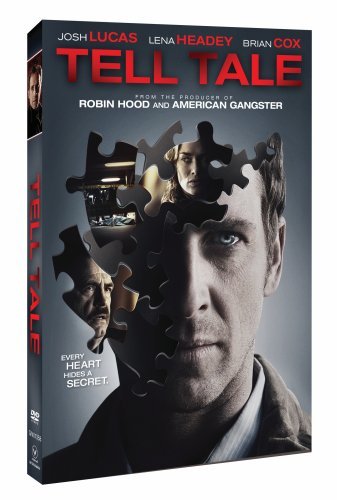
A man dies during what appears to be a botched robbery, and his heart winds up in the needful chest of Josh Lucas, single father to a young daughter with a rare bone disorder. This is obviously a man with more than his share of troubles, but things appear to be turning around. He has a new heart, and his daughter's beautiful doctor (Lena Headey) really likes him. But then, when he crosses the path of a certain paramedic, his heart begins to beat furiously, deafening him. Before long, Lucas realizes that his donor was murdered, and the vengeful heart is leading him to the killers.

Produced by the Scott brothers, Ridley and Tony, this is, as one would expect, a handsome-looking piece, but has none of the editing frenzy that characterizes Tony's work, and for that matter is more of a moody tone poem than is typical of the work of either brother. So director Micheal Cuesta is forging his own identity here, and is aided by genuinely moving performances, especially from Lucas, an actor who seems to be able to move effortlessly between hero and villain roles. Also on hand is Brian Cox, as the detective who realizes what is going on, and for reasons of his own encourages the heart's vendetta. He's always fun to watch, though his hard-boiled character here isn't much of a stretch.

"We're all put to the test. But, it never comes in the form, or at the point, we would prefer, does it?"

When The Edge made its debut in September of 1997, you would have thought it had a lot going for it. The idea of putting Alec Baldwin and Anthony Hopkins together in a winter wilderness sounds like a pretty good idea. Audiences didn't seem to think so. The film was gone after just 5 weeks and less than $30 million box office receipts. It lost nearly half of its screens in just 2 weeks. So, what went wrong with this movie? The answer is nothing, and everything.

"Even in the most primitive man, the need to create was part of his nature. This need, this talent, clearly separated early man from animals who would never know this gift. And here, in a cave somewhere in the North American Continent, about two million years ago, the first artist was born. And, of course, with the birth of the artist came the inevitable afterbirth ... the critic."

That's me. Afterbirth here. Brooks always did love to poke fun at the critics. And why not? Unfortunately, this was not one of his better films and likely received a lot of poking from the brethren. It was one of his worst films at the box office, pulling in only $31 million. Compared to many of his hits, it must have been a disappointing take for Mel at the time. Now out, along with some other of his films, on Blu-ray, this rather forgettable film looks even more dated and overindulgent than ever. Certainly, there are some classic moments. Mel, is, after all, Mel. But he never could string enough of them together to meet expectations. Too bad, really. It was a grand idea.

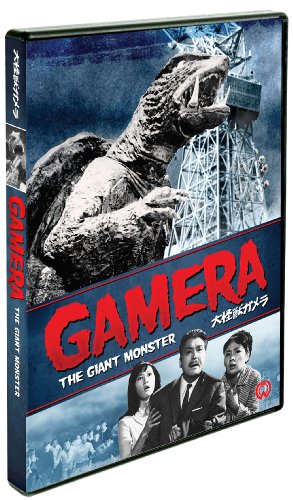
"In our findings on Gamera, we've ascertained that: Firstly, it is attracted to and consumes fire. Secondly, it also seems to possess an internal power plant, of sorts. This emits a signal frequency that can jam radio communications. In order to store up energy reserves, Gamera consumes inorganic resources. Not only does it consume petroleum as well as other mineral and fossil fuels, but Gamera may also seek out atomic bombs."

Ask anyone about Japanese monster movies and Gamera usually won't be the first name that comes into their minds. Godzilla would likely dominate the conversation, and for most of the last 60 years the folks at Toho have been synonymous with large monsters. But they didn't exactly hold a monopoly on the big beasts. Kadokawa Pictures had their own little monster franchise going on. It all started in 1954 with Gamera: The Giant Monster. From 1965 through the 1970's the studio would produce 8 Gamera films in all.