2.35:1 Widescreen

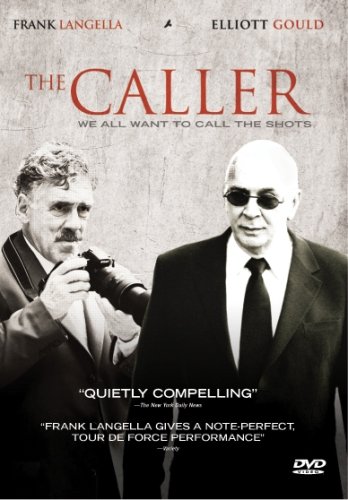
The Caller is a film starring Frank Langella and Elliott Gould. It is a tense thriller about corporate foul play and voyeurism, wait, what year is it?  With the recent critical acclaim of Langella, it seems only fitting to market his name on a low-budget film. Unfortunately for the film, Langella’s performance is one of the only shining moments. Langella plays an aging VP of an energy company that decides to blow the whistle on the corporate wrong doings that are going on. Understanding that he’s written his own death certificate, Langella hires a private investigator (Gould) to follow him to help catch his eventual killer.

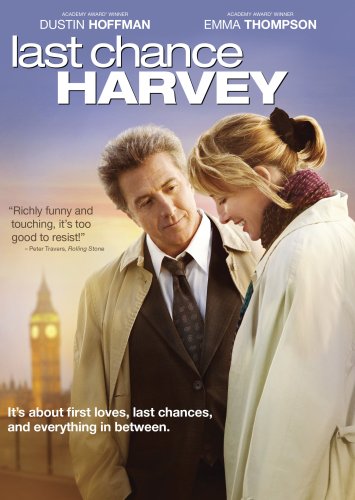
Dustin Hoffman is the titular Harvey, a morose jingle composer who, with his job hanging by a thread, arrives in London for his daughter's wedding. He is a complete outsider at the rehearsal dinner, and feels even more cut off when his daughter informs him that she wants her stepfather to give her away. Meanwhile, the scarcely more cheerful Emma Thompson spends her time being set up for disastrous blind dates and being constantly harangued on the phone by her mother. These two losers at the game of love meet, and something blossoms between them.


And that is really about it as far as plot goes. The script is so insubstantial that it threatens to waft away on the first gentle breeze. The film is quite watchable, however, and that is due to the sheer force of its leads. They make the enterprise seem considerably more substantive than it is, their pained expressions conveying worlds to us. The film is at its strongest when it sits back and lets the two banter, and the relationship that develops feels easy and natural. It is all the more disappointing, therefore, that writer/director Joel Hopkins feels it necessary to shoehorn in the obligatory Romantic Comedy Third Act Falling Out by the most contrived and Deus Ex Machina-like of means. This is a turn of events that is a poke in the eye to any viewer who thought his/her intelligence was going to be respected.

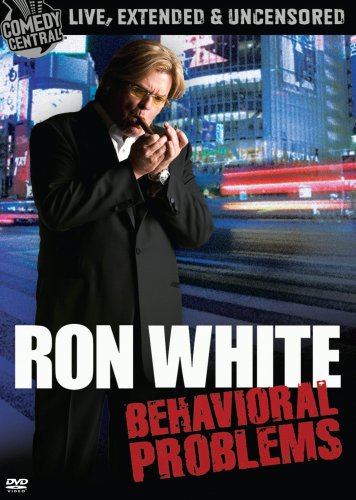
With the gigantic success that the Blue Collar Comedy Tour has accumulated, it was only a matter of time before each one of the comedians received their own HBO or Comedy Central special.  Jeff Foxworthy is associated with the “Are you smarter than a 5th grader?” game-show. Larry the Cable guy is showcasing his acting range with box office phenomena (i.e. Witless Protection and Delta Farce). Bill Engvall has struggled to find his niche and seems to be on every sitcom pilot that has come out in the last two years.  And then there’s Ron White, if you’re anything like myself, this is your next question, who?  

Ron White is a stand up comedian that gained notoriety with his red neck self-deprecating genre of comedy. White did not want to be associated with Blue Collar TV because he was not interested in being typecast as a blue collar comedian. Unfortunately, his routine begs to differ.  His set is riddled with low brow humor and a genre of observational comedy.  There are still a few laughs and his recounting of his recent drug arrest is well told.  However, multiple times throughout the set, his rants feel forced and the result is tiresome.  There are similarities between this set and Lewis Black’s newer material.  At least Black’s comedic performances take firm political and social stances.  Any political or social stances that White takes are buried beneath piles of profanity, ethnic slurs and sexual humor. The high points of this set are when he struggles with his material. White stammers on his own words and laughs it off. The audience gets to see the natural, unforced side of his humor and these are true comedic moments. If low brow, uncouth and foul mouthed comedy is your interest, this DVD is for you.

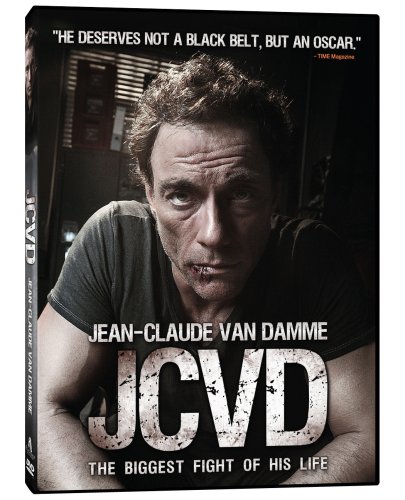
Sometimes I feel like a broken record. Once upon a time, I adored the likes of Steven Seagal and Jean Claude Van Damme. I would spend many hours watching Above the Law or Bloodsport until I had nothing else better to do. When I matured, I left many of those movies behind. However, the spirit of those movies was still within the type of movies I would typically watch. The problem is that both of these starts pretty much went from feature film to direct to DVD. But Jean-Claude has tried to change his image by taking on more serious roles. His newest, JCVD; he takes on the role of himself the actor.

Jean-Claude Van Damme (playing himself) is an aging 47 year-old action movie star. His agent can not find him anything decent. JCVD has no money and worst of all, he is fighting a losing battle in the custody of his daughter with his ex-wife. He decides to return to Brussels, his childhood home. Here, he is still considered a national icon and with that comes some sense of worth and peace.

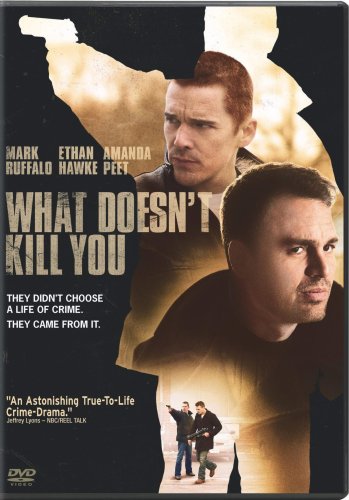
Every once in a while a movie comes along that has a very strong social message, but never comes across as heavy handed or preachy. What Doesn’t Kill You is one of the best of those movies that I’ve seen in some time. It’s based upon the real life struggles of Brian Goodman, who wrote the screenplay while he was in prison. Goodman was a lifelong criminal who was also addicted to booze and drugs. With the inspiration he gained from his two young sons, Goodman turned his life around. He got himself sober and avoided the temptations that would lead him back into a life of crime and ultimately prison. Another danger sign in these kinds of films is when you have one man who wrote, directed, and stars in a movie. These “one man band” types of films more than not fail on almost every level. Again, I have to say that What Doesn’t Kill You manages to rise above these trappings. Goodman manages an almost impossible feat here. He tells a socially powerful story, from his own personal experience, and never forgets that ultimately the end result must entertain above anything else. The most important of messages falls completely ineffective if ultimately no one ever sees the movie. And, trust me, when I tell you. More people need to see this movie.

Brian Reilly (Ruffalo) (Goodman’s character) and Paulie McDougan (Hawke) are practically brothers. They grew up together in the same south Boston Irish neighborhood and were inseparable since they were in elementary school. They admire the local crime boss and neighborhood protector Pat Kelly, played here by Brian Goodman. Kelly runs the local criminal activities out of a corner bar. He gets a piece of anything that goes on in the hood. The boys start out as kids running envelopes and other errands for Pat. Fifteen years later, they’re still doing small jobs for the boss. They’re beginning to get frustrated that they haven’t graduated to better things and more money. They soon break the cardinal rule and start to go on their own. Mostly it’s small time stuff. They roust drug dealers and take down a few trucks. But their cowboy antics are about to get them in trouble. They risk making an enemy out of the still powerful Pat, but more importantly they have brazenly taken down quite a few punks. Brian is also beginning to drink too much and is eventually introduced to crack cocaine. He’s messing up. His wife is getting frustrated with him, and he’s making mistakes “on the job”. Those mistakes end up getting him shot. Miraculously, he survives, even though he leaves the hospital against medical advice to get high. The mistakes eventually lead the two friends to get busted and do five years in prison. Brian gets out first. He makes an attempt to stay sober and away from criminal activity. He’s helped by an AA mentor he befriended in prison, named Sully (Lyman). But when Paulie gets out, his need for money and his frustration at playing it straight threaten to bring him right back into those activities that put him in prison. What will he do? Will he repeat the mistakes of the past, or will he be strong for his wife and sons, who waited for him for five years of prison?

I’m not a wrestling fan. There is very little about that world that holds any charm for me. I find the grandiose posturing to be rather dull. The characters aren’t all that interesting to me, and I don’t find myself compelled to spend 100 bucks on a “free for all” pay per view event. With that said, this film did bring back a flood of memories for me. When I was a kid, perhaps 11 or 12, I looked at wrestling a little differently. I had an uncle who would watch it from time to time, but the television version never held much for me even then. I grew up in a relatively middle sized town in eastern Pennsylvania. If you play Monopoly, you’ve heard of the Reading Railroad. I grew up in Reading. By the way, it’s pronounced Red not Reed (ing). Nearby in a place called the Hamburg Field House, the regional wrestling federation of the time would film a month’s worth of television episodes in one night. Our parents found out that for about 5 bucks they could drop us off for 5 hours or so and we would be entertained. It didn’t hurt that the place featured 25 cent hotdogs. So my friend David and I would hang out at the joint every second Tuesday and watch live wrestling. To an 11 year old kid, it was as much about being trusted out on our own than it was the event. Still, we did become familiar with the regional names and characters. I even got smacked upside the head by one ranting wrestler’s shoes. It hurt, but it was a bump I wore with some kind of twisted feeling of honor for three days. I don’t even remember the name of the wrestler, but I remember that bump. Times have changed and Championship Wrestling has been gobbled up by the Vince McMahon empire that most of those regional outfits have succumbed to. I haven’t talked to Dave in years, and honestly I haven’t even thought of those summer Tuesday nights at the Field House in a long time, filled up with quarter hotdogs and plenty of soda. Then came The Wrestler.

Randy “The Ram” Robinson (Rourke) is at the end of his career as a superstar wrestler. He’s known for his trademark move, the Ram Jam, where he climbs up on the ropes and leaps down on his helpless opponent. You can feel the pain, not only of his current bout, but the decades of abuse he’s put his body through. In the ring he’s beloved by thousands and respected by his peers. Outside of the ring he’s alone. He seeks comfort in the guise of stripper, Pam (Tomei). Pam is also at the end of her career, finding it harder to compete with the younger girls at the club. She’s drawn to Randy, but resists hooking up with one of her clients. When Randy finally pushes his body over the edge, he has a heart attack. The doctors warn him that he’s got to stop pumping the steroids and growth hormones into his body, and worse, that he has to stop wrestling. Randy tries to acclimate himself to the outside world. He increases his hours at the Acme by working the meat counter and attempts to reconcile with his college age daughter. He even has hopes of breaking through Pam’s resistance. Perhaps it’s too late and he’s too old, but he learns that the only place he was ever really good at anything was in the ring. There he’s accepted and loved for what he is. Randy accepts a rematch, celebrating the 20th anniversary of one of his most famous matches. He’s determined to go through with it and please the crowd, if it kills him.

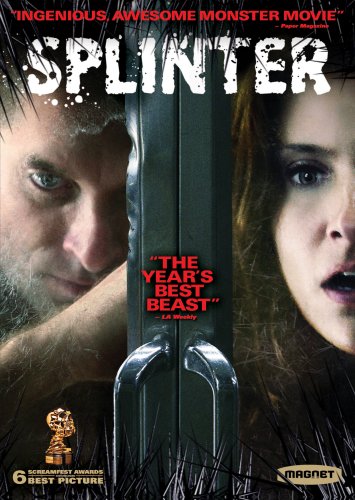
So Toby Wilkins will be helming The Grudge 3. That's a bit of a shame. Not because I think he's the wrong man for the project. Rather, it's the wrong project for the man. Or, less glibly but more precisely, he is showing real promise as a filmmaker, and it would be a shame to see more talent squandered on a franchise that should definitely be put out to pasture. I base this evaluation on the evidence presented in Splinter, a nifty little creature flick .

The film begins with the collision of seriously two very different couples. Seth and Polly (Paulo Costanzo and Jill Wagner) are young urbanites on a camping trip. He's working on a PhD in biology, which becomes important later. Meanwhile, Dennis and Lacey (Shea Whigham and Rachel Kerbs) are on the run (he's an escaped con, and she's his twitchy, detoxing girlfriend). The latter two carjack the former, but the situation becomes much more complicated when they stop at an isolated gas station (is there any other kind in horror movies?) and are attacked by the titular creature.

The Last Kiss is based on the internationally acclaimed Italian movie L’ultimo bacio which was written by Gabriele Muccino and adapted for this American version by screenwriter Paul Haggis. From all reports the movie is remarkably similar to the Italian classic with only the ending modified. Haggis tells us in the extras of this release that he attempted to merely translate the original work and performed little in the way of modifications. From the looks of things, the ending was a bit of a struggle for these filmmakers, as there are three different versions available on the release. I think it’s safe to say that the more open-ended version which was ultimately used was probably the best of the choices I’ve seen.

The plot of the film is a rather difficult one to summarize. The movie is less about plot points or beats and is more about the emotional journey of many of the characters. The main story is about Michael (Braff). He’s 29 and fast approaching 30, a time when many people begin that introspective examination of their lives. He’s been with his girlfriend, Jenna (Barrett) for some time but has avoided the ultimate commitment of marriage. We quickly learn it’s a four letter word in their relationship. Now she’s pregnant, and Michael is facing fatherhood. He’s worried that his life is now set out before him with no more “surprises” or diversions left to him. While at the wedding of one of their friends, Michael meets Kim. She’s much younger and is attracted to Michael. Of course, this gives his ego a boost, and he begins to spend inappropriate time with the girl. While he resists actually having an affair until after his secret is out, it damages his relationship with Jenna. Suddenly faced with the loss of his “safe” and “predictable” life, he realizes he had it pretty good and wants it back. All of this doesn’t happen in a vacuum. Around him, Michael’s friends are also going through major life crises. One friend is married with a young child and but wants out. Another friend appears to be happy. He’s on his own and sleeps with a different chick every day. But even he’s beginning to tire of his “carefree” life. Even Jenna’s parents are struggling with the ins and outs of their own “routine” life. Strangely, each character sees another’s life as far better. It’s a perfect example of the old “grass is greener” axiom.

Everybody who is old enough remembers Mutual of Omaha’s Wild Kingdom. It was once one of the highest rated shows on television. On NBC it ran from 1963 until 1971. It would continue to run in syndication for decades. An elder Marlin Perkins would host the show, while a young Jim Fowler would be out in the field. Every week they would show us animals in the wild from all over the world. Long before there was a Crocodile Hunter or Nigel, there was Wild Kingdom. Strange Wilderness attempts to urinate all over our fond memories, all the while trying to tell us that it’s funny. As Terry Bradshaw is fond of saying, “That ain’t funny.” Say it again, Terry. “That ain’t funny at all”.

Peter (Zahn) is the son of a world renowned naturalist and star of the classic television show, Strange Wilderness. He’s gone now, and Peter has taken over the show. No longer an educational platform, Peter doesn’t let things like facts or work interfere with his version of the show. It doesn’t take long before he’s destroyed the show’s credibility and lost any following the show might still have. He’s been relegated to the 3 A.M. timeslot. He’s about to get cancelled when a rival nature show producer, Sky Pierson (Hamlin) pitches his program to the station. He has two weeks to turn the series around, or it’s gone. Enter Bill Calhoun (Baker) an old friend and colleague of Peter’s father. He claims to possess a map that reveals the lair of Bigfoot. So, in an entirely unlikely series of events, the incompetent crew heads off to South America to capture Bigfoot on video and save the show.

Alan Rickman, in a stunningly unexpected bit of casting, plays an arrogant, womanizing SOB of a chemistry professor who has just been awarded the Nobel Prize. While he and wife Mary Steenburgen jet off to Sweden, their son (Bryan Greenberg) is kidnapped. Before long, the parents receive are sent a severed thumb as proof of the kidnapper's serious intent. But nothing is quite what it seems.

What we have here is a blackly humoured cross between farce, caper and revenge story. The name-studded cast also includes Bill Pullman as the detective assigned to investigate the kidnapping, Elize Dushku as Greenberg's love interest, and Danny DeVito as a gardener recovering from an obsessive-compulsive disorder. Ernie Hudson and Ted Danson also show up in small roles. DeVito doesn't have much to do in the film, but then, in the end, neither does just about anybody else. Rickman, though top-billed, isn't asked to do more than his patented bastard shtick, which he can do in his sleep. There's a creative heist scene, and plenty of twists, but these latter have a merely academic interest. There is no emotional attachment to anyone in the film, which means that the OTT flash and dazzle of the editing becomes pure surface distraction. Then there's the soundtrack, partly the work of electronica deity Paul Oakenfold. Too often, it has no relation to the action on screen, and is so loud that, fine as it is in and of itself, it becomes irritating. End result: a slick but empty, only fitfully engaging effort.