Video

"So far every person I've met in this strange place suffers from the most florid delusions, chasing green mists and looking for lost lords. I can only assume that this is the result of poor diet, or they're all just barking mad."

C.S. Lewis created an incredibly imaginative world when he wrote his Chronicles Of Narnia. The stories were an escape, of sorts, from a war-torn Europe. They integrated elements of Christianity in an effort to provide a semblance of hope in the form of a children’s fairy tale. And like all such tales, the world of Narnia was first and foremost a place of magic and bewilderment. It was a place where fantastic creatures of both good and evil thrived, living out epic lives of adventure. It was also a world where only children could enter. The stories became hugely popular, first in England, and eventually around the globe. Since that time we live in a different planet than the one Lewis was attempting to offer a respite from. Still, the images and ideals are remarkably relevant today. With such sweeping grand adventures and marvelous creatures, it’s no surprise that the franchise has found its way into films. The only real mystery is why it took so long. Perhaps it was necessary for the technology to finally catch up, providing a far more realistic and captivating experience. Some credit must also go to the enormous success of the Harry Potter and even the Lord Of The Rings films. With the investment of time and money required to bring such a world into existence on celluloid, there must be some reasonable assurance that, if done correctly, there was a large enough profit to be found. These earlier, and continuing, franchises have overwhelmingly proven that point. It was only a matter of time before the studio that practically invented movie magic would find such a place as Narnia and claim it for their own. When you combine these extraordinary histories together, can there be any question as to the results?

"I guess every town has their own boogeyman stories... There's always a moral, mainly don't pick on the nerdy kids, don't have pre-marital sex, don't do drugs."

"A trip down memory lane and right into harm's way."

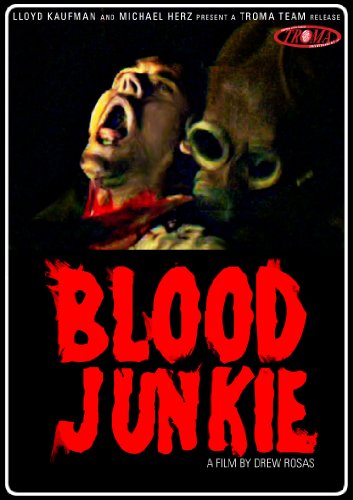
From the first frame to the final credit sequence, you will at once feel like you're watching some lost 1980's slasher film that was somehow misplaced among the entire generation of low-budget formula horror films. The music sounds almost like a direct rip-off of John Carpenter's Halloween theme, and that's not intended as an insult. The cheap synth track was the soundtrack for an entire generation of late-night-date movie-goers from the mid 1970's until the 80's ended. Director Drew Rosas is obviously a true fan of the era and genre. I've seen too many attempts to capture that look and feel before. But there's something a little different about this one. Rosas has more than just a sound-alike score going for him. The film stock looks like it was lifted right out of a time warp stuck in 1978. There are even well-placed scratches and dirt artifacts to give the film an aged look. Beyond that, there is a texture to it all that defies coherent description. You know it when you see it, and Drew Rosas apparently knows it, because I saw it on Blood Junkies.

Urine jokes. Fart jokes. Breast and penis jokes. What could be more tasteless? How about telling them all in a place where people are trying to eat? That’s the unappetizing summary of Still Waiting …, one of those unnecessary, straight-to-video sequels designed to make a quick payoff before the first film’s fans catch on.

The 2005 original Waiting . . . was, well, fairly original. Writer-director Rob McKittrick based it very loosely on his own experiences working in typical franchise restaurants – think Bennigan’s, Chili’s or TGIFridays. That ensemble comedy, set in a place named Shenaniganz, starred Ryan Reynolds and Anna Faris, who wisely avoided this tacky follow-up. Returning cast members include Rob Benedict as a horny manager and Alana Ubach as an exceptionally testy hostess. Others, including Justin Long, Chi McBride and Luis Guzman, show up in extended cameos, as do Max Kasch and Andy Milonakis as the white boys who pose as gangsta rappers.

(checks calender) “my goodness its been a few days...time to review another Michael Madsen film”

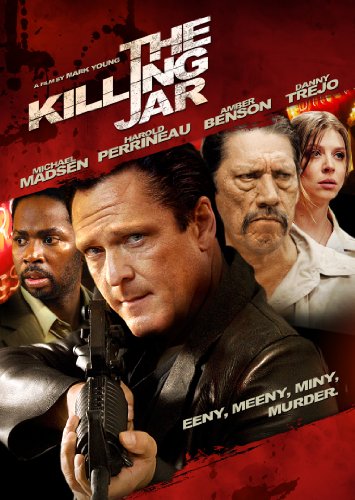
Michael Madsen goes WAY outside of his normal acting niche and plays a badass killer. Really different from his previous roles (please refer to my two month old review of Madsen's Brazen Bull to reveal just how sarcastic this opening paragraph is https://upcomingdiscs.com/2011/02/23/the-brazen-bull/#more-15588).

When the WB merged with the UPN to form the hybrid CW, a lot of good things happened. The new network stepped away from the twenty-something shows that began to all look the same after a while. The network began to take on cutting edge genre shows like Supernatural and Smallville. But deep down inside there was still that family drama mentality that drove at least one of the parent networks. Life Unexpected is, unfortunately, a totally expected result of that dark place.

The premise is actually pretty interesting. Lux (Robertson) is a 16-year-old girl who has spent her entire life in foster care. She has been bounced from home to shelter to home again 7 times in those 16 years. She's lived with drug addicts and abusive situations. She's had it, and so she decides to seek legal emancipation. Because her parents are still alive and somehow never gave up their rights, she needs their signatures on the court documentation. She finds her father first. Nate Bazile or Baze (Polaha) is a guy who's refused to grow up. He lives in a loft above a bar he runs primarily so he can drink for free. His father (Thomas) owns the building, and the bar is just one of many unresolved issues between them. He lives with two roommates who are only slightly more mature than he is, including English teacher Math (Basis). He's shocked when Lux shows up, because he didn't even know she existed. Together they contact her mom, Cate (Appleby), who is a popular radio talk show host with her partner and soon to be fiancée Ryan (Smith). Cate gave Lux up for adoption unaware that she had a heart condition that required her to remain in the hospital until she was three. That made her a tough adoption candidate. So, when Lux shows up she is just as surprised, believing she was happy and in a family. The emancipation doesn't happen, and Baze and Cate are given joint custody of Lux.

A Spring Break whale-watching cruise goes off-course and then blows up, thanks to the stupidity of the popular kids, and two groups of high schoolers find themselves washed up on a deserted island. The aforementioned populars, led by the egomaniacle The Rog (Robert Adamson) immediately establish their dominance, squandering supplies and tormenting the unpopulars. These unfortunates turn to reluctant leader Flynn (Gary Entin), who begins planning a revolution. Pulled between the two groups is Peggy (Lindsey Shaw), cheerleader and girlfriend to Rog who nonetheless has too much intelligence and self-respect to remain satisfied with either role.

The feature-length directorial debut of Severin's own John Cregan sheds new light on that company's interest in 80s teen comedies. But Cregan's touchstones go deeper than that. Obviously, the proceedings are very Lord of the Flies, but there is also a hint of Massacre at Central High (1976) with the idea that deposing one tyrant might simply lead to the rise of another. Devolved doesn't go all the way in plumbing those depths of darkness, though. It is, first and foremost, a comedic satire, and its touch is quite assured. The writing is sharp, and the action is frequently interrupted by a reality-TV-style narrator who portentously comments on the events, occasionally providing helpful animated diagrams.

Adapted from the hit stage musical, Norman Jewison’s film version of Fiddler on the Roof has established itself as a classic over and over again since its release in 1971.

“He loves her. Love, it’s a new style… On the other hand, our old ways were once new, weren’t they?” I’ll hardly be the first to write it, but the reason Fiddler on the Roof, a story about Jewish people and their culture, is so popular, is that its themes have universal appeal. In fact, in a way it hardly matters that the characters are Jewish. As we learn from a famous anecdote, when the first Japanese production of the stage musical opened, the show’s creators traveled to Japan to meet the producer. He said to them, “I don’t understand, I don’t know how this piece can work so well in New York. It’s so Japanese!”

"Jonathan Brisby was killed today. It is four years since our departure from NIMH, and our world is changing. We can not stay here much longer. Jonathan was a dear friend. I am lost in knowing how to deal with his widow. She knows nothing of us or the plan."

When Don Bluth left Walt Disney, he led an exodus of some of the studio's top talent. They were becoming disenchanted with the product Disney was producing at the time, and it is generally accepted that this was the dark ages of the studio. The group of animators joined Bluth and formed their own company, and the first film to come out of that collaboration was The Secret Of NIMH.

Rory Gallagher was somewhat of an enigma in the British music scene. While he never did have the breakout hit or career that he worked so hard to achieve, he has managed to develop quite a cult following over his troubled career. His roots went deep into the British blues scene where he first received some notice in the band Taste. But Rory was a force of nature and couldn't be contained in the local scene. He grew up in the small town of Cork in Ireland and managed to fight his way onto a world stage by the time he reached his 20's. His music was a unique blend of blues and hard-edge rock and roll. His voice wasn't ever described as smooth. He belted his words out in screams and shrieks. He was all about the energy, connecting with the audience live far more effectively than he did through his recordings. He was the kind of guitarist that flew across a fret board like a supersonic jet flying over clear calm skies.

Rory Gallagher died of liver failure in 1995. He lived hard, and it obviously took its toll on his heath. He didn't really get into the drug scene, but he could put away the ale. He was a man forever in motion. This concert/documentary from Eagle Rock is a perfect window into the lifestyle and music that was Rory Gallagher.