Video

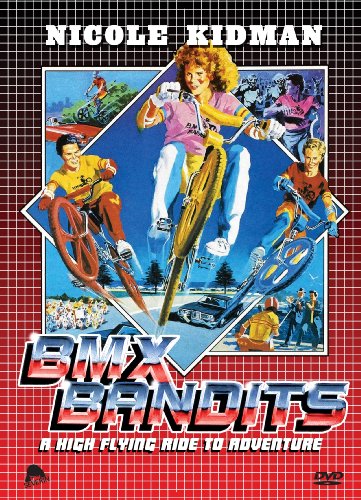
The more famous a star, the more curious their early, pre-icon efforts become. Thus, we watch agog as Humphrey Bogart plays a murderous, blood-thirsty zombie in The Return of Doctor X (1939). And here, a 16-year-old Nicole Kidman makes her debut as a BMX-obsessed teen who runs afoul of a group of not-very-competent gangsters. Once again, one watches agog.

Kidman, Angelo D'Angelo and James Lugton are the trio of teens who need to raise funds to buy new bikes. They happen across a cache of walkie-talkies that are supposed to allow a gang of bank robbers to hear the police while being unheard themselves (though, as matters develop, the opposite is true), and sell them. Understandably irked, the thieves pursue our heroes, and all sorts of car vs BMX chase scenes ensue.

The Virginian set itself apart from the others in two ways. The first was found in the source material. The series was based on a 1902 novel by Owen Winsler, a man who actually lived in the Wyoming badlands during the time the series was set. The source material helps to add a sense of authenticity that might well have been a slight step ahead of the rest. It wasn't as violent as the others, again reflecting a more realistic sense of direction.

Thus was the heart of the original novel. The stories were less about gunfights and more about the obstacles and challenges that these earlier settlers faced. Each, with different interests, tried to carve out a home in the vast wilderness of the open West. These challenges came from many places, and often from his fellow man, but not always. That's the type of tale captured in this long-running western series.

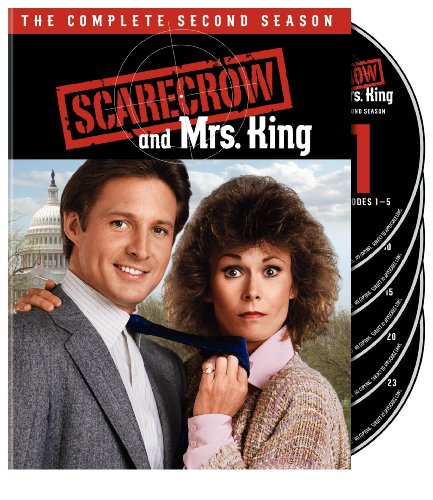
While Scarecrow And Mrs. King first aired in 1983, this show is really one of the last of the 1970's crime dramas. It was an early attempt to bring in more of the female audience that seemed reluctant to join the popular detective shows of the era. While not really a "detective" show (they were spies), it employed a lot of the 1970's conventions. Even the film footage has that distinct style from those days and type of shows. The idea worked, and the series did bring in a sizeable female audience, but it never really caught on with the guy crowd who found it a bit too relationship-heavy. The two leads were chosen less for their character appeal than for their apparent "easy on the eyes" look. Again more fodder for the chick crowd. The show was always rather lighthearted, even if the material was somewhat serious cold war espionage. The two shared a banter that revealed a kind of love/hate relationship and the expected sexual tension that would eventually lead to the two getting hitched. And while the series only lasted four seasons, the formula would end up being tweaked to bring us the more successful Moonlighting with Bruce Willis and Cybill Shepherd, which took the idea into the 80's with slicker production values but still a mainly female appeal.

Amanda King (Jackson) is a recent divorcée with two sons and a nosy mother (Garland) who lives with her. She has a boyfriend named Dean who works as a meteorologist at a local Washington DC television station, whom you never actually get to see. While at the train station, she suddenly finds herself embroiled in an espionage plot when a package is handed to her on the platform. Then she meets government agent Lee Stetson (Boxleitner) who works under the codename Scarecrow. She's intrigued by Scarecrow and agrees to help him in his current case. Of course, she ends up in a more permanent role with "The Agency", taking a job at their cover corporation The International Federal Film Company. Every week we find Amanda trying to balance her new role as a spy with trying to raise her kids, have a normal dating relationship, and keep her cover safe from her particularly prying mother. The results are often quite funny. There is also Scarecrow's partner, Francine (Smith), who is somewhat jealous of Amanda and Lee.

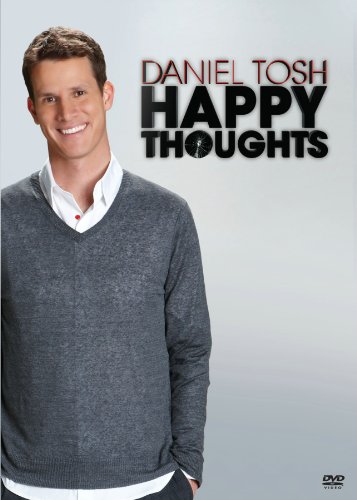
I have a penchant lately for reviewing stand up comedians. This is mostly a good thing. After all, stand up specials aren't usually that long, have few extras and will hopefully provoke a laugh from yours truly. But lately, it seems that the comedians I get to review aren't really that funny. Hopefully that trend changes with Daniel Tosh, star of the tv show Tosh.O. Heck, I wasn't even aware he did stand-up. Well, here goes nothing.

We open to stand up comedian Daniel Tosh who receives a smattering of applause. His line to open the show is “Thank you for clapping what my parents are ashamed of”. Indeed. We can’t exactly boo what we haven’t even heard yet. Such actions are reserved for prop comics and mimes. As many comics do, he admits he sucks live which shows some social anxiety on his part.

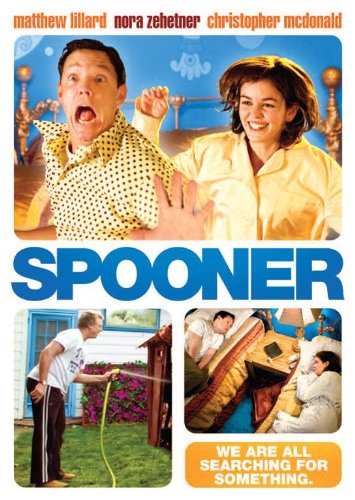
Most people know me to be a little bit quirky. *laughter comes from the back of the room*. Okay, very quirky. As to be expected, there are a lot of quirky movies out there for me to watch. But more often than not, most of those movies go way beyond anything I've ever thought was entertaining. Now here I am on the cusp of another review and I get a quirky romantic comedy called Spooner. I just hope that the movie I'm about to watch doesn't involve cutlery and other assorted kitchen gadgets.

Herman Spooner (played by Matthew Lilliard) is a salesman at Manfretti Auto. He's unfortunately not very good at what he does. Dennis & Alice, his father & mother(played by Christopher McDonald and Kate Burton)love him but want him out of the house by the time he turns 30 (which is just a few days away).

Connections between Eastern and Western cinema aren’t new, but they do seem to be proliferating. Back in 1964, Italian maestro Sergio Leone borrowed from Japanese genius Akira Kurosawa, turning Yojimbo into A Fistful of Dollars. Just last year, Korean writer-director Lee Jeong-Beom looked to the West for multiple influences, and the result is The Man From Nowhere, a psychological action-thriller that alternately engages, confuses and kicks major butt.

The film was a late-summer hit in its homeland, but it’s probably OK that the rest of the world had to wait until now for this technically superb Blu-Ray release. Subtitled gangster yarns don’t sell well in the American market – at least not the ones that rely on gritty plotting instead of high-wire special effects. In other words, this is no Crouching Tiger, kids. That’s more of a Chinese development. Like Leone’s Man With No Name, The Man From Nowhere is an enigmatic antihero, and the main reason you root for him is because everyone else in the picture – rival gangs and creepy cops – is more disturbed than he is. The exception is an innocent young girl who becomes a kidnap victim whom our hero vows to rescue.

Some of you might remember my review of Batman: The Brave and the Bold, the first thirteen episodes which can be found here. I found it to be a great little series that was rich in its roots. Well, six months have passed and we finally get a chance to look at the next thirteen episodes. With a little bit of luck, maybe they will be just as good if not better than our first look into the series.

When we last left the Batman, he had taken part in a two part episode where he was having a lot of trouble with the villain known as Owlman. In order to restore balance to the world, Batman had to not only become Owlman but then turn around and partner with the Joker to defeat Owlman who had donned the cape of Caped Crusader. Wrap your head around that one. Anyway, all is safe and we continue on to the next set of thirteen episodes.

The American Girl series appears to have started as a collection of dolls. The collection featured various girls from a wide range of historical periods. The dolls came with rather unique histories that provided both a chance to bring the doll to life in the imagination of the child and also teach a little of what life might have been like for girls that lived in these different eras. Of course, the collection had to have accessories, and before long an entire industry was born. The dolls led to a series of books that fleshed out the adventures these characters might have had in their time periods. The books managed to sneak in some wholesome values along with the romantic adventures. The books became quite popular with young girls, and so it was inevitable that this would all lead to films.

The films would come in a series of made-for-television movies on the CW. Each movie centered around a different girl. All were ten years old and lived in a particular time of American history. The second of these movies was Felicity.

The cover of this DVD is, depending on which signals you pick up on, either misleading or perfectly accurate. If all you see is George Clooney running with a gun, and you therefore come to the conclusion that this is going to be some action-packed thriller, and that is what you're hoping for, then you're going to be disappointed. If, on the other hand, the orange colour and the rather retro look to Cloney's image, not to mention the rather uninformative title, makes you think of the 1970s, then you're on the right track.

Clooney plays the titular American, an intelligence operative whose last job results in rather more bloodshed than it should, and people are clearly after him. Nonetheless, he is given a new assignment, and he takes it. He is to craft a specialized assassination rifle, and he does so while holed up in a hillside Italian village. There he meets a priest and a prostitute, encounters that will alter the course of his life.

There have been very few films of this stature that I have not had the chance to see over the years. Even if I don't think I might enjoy a particular movie, there are those titles that have become so well known or a part of the culture that one feels a sense of obligation to take in. For years The Last Tango In Paris was one of those films for me. Thanks to a new Blu-ray release by MGM, I was finally afforded the opportunity.

The plot of the film is almost irrelevant. It's not about a story at all. Marlon Brando plays a man who has just lost his wife to suicide. But we quickly learn that he had lost her really long before she took her life with a razor blade. She was having an affair with a man who lived in the hotel they ran. It was an odd affair. She insisted that her lover take on the habits and appearances of the husband she was running away from. She required that he wear an identical robe and drink the same booze, or at least have the bottle on hand. She went so far as to tear the wallpaper from the bedroom walls with her fingernails so that the room would appear as hers. One gets the impression that this would have been the more compelling story. Alas, that is not meant to be.