Video

Billy Bob Thornton got himself a well deserved Oscar for the film Sling Blade. If you’ve ever seen the film, or anything else by the man, there’s no surprise that he took home one of the coveted statues. What is a bit surprising is that he took the Oscar home for the screenplay for Sling Blade and not for the masterful performance. Now don’t get me wrong. The screenplay is a brilliant one. He certainly deserved that award, but there hasn’t been a performance as riveting as his portrayal of Karl Childers in a decade or more. It was this performance that made Thornton the household name he became.

The Soloist is based on a book written by Los Angeles Times columnist Steve Lopez. The book was based on a series of columns the writer assembled involving his relationship with a street musician he happened upon while searching for material. Lopez was touched by the musician, Nathaniel Ayers, who was playing a violin with only two remaining strings. Still he was able to produce music that made the writer do a double take and begin to wonder what he was doing out on the street. Ayers’ ramblings made it immediately obvious that the man was suffering from mental illness. Their first contact revealed that the street performer was once a student at Juilliard.

Why does every Adam Sandler character seem to be Happy Gilmore? I don’t know if there’s an actor out there, comedian or otherwise, who has made so many movies essentially playing the same character. If it seems at times like I really hate Sandler, believe it or not, I don’t. The guy has a charm and natural ability that can, when he works at it, come off as a very entertaining couple of hours at the movies. Unfortunately, he’s not willing to work at it, and so continues to bombard us with new versions of the same character and story.

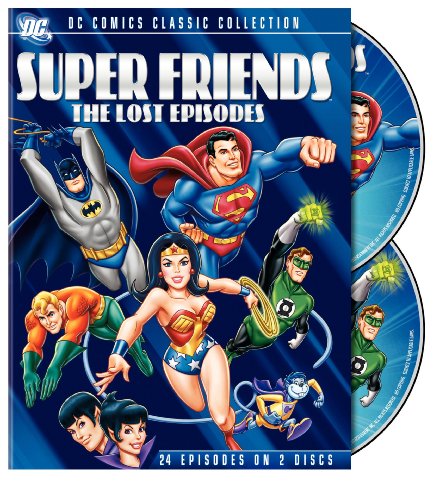
The Super Friends as a cartoon show had a long and sketchy past. It started out in the 1970’s and ran in nearly a dozen different incantations and over a hundred episodes until 1986 when it was put down for the last time. In the 1983-84 season, the series had been cancelled officially for a second time. This was due to the fact that they did not wish to compete with the syndication run of the original episodes that was already on air. Hence, the new episodes were dropped and didn’t appear until many years later. Here, the people at WB have compiled these 8 episodes (24 shorts) into a 2-disc set and dubbed them the “Lost Episodes.”

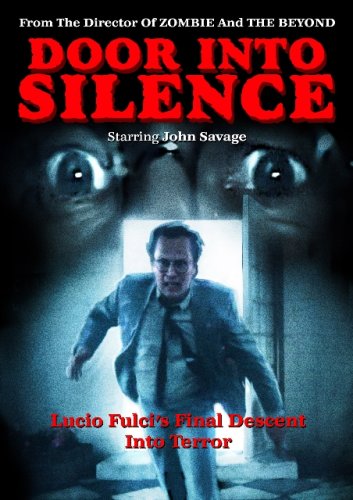
After an opening, fragmentary montage of a traffic accident, we encounter Melvin Devereux (John Savage), standing in front of his father's grave, making a few cynical remarks apparently in the wake of dad's funeral. Then, after a strange conversation with a mysterious woman (Sandi Schultz), Devereux begins to make his way home. But his route is blocked by one obstacle after another, and his journey becomes ever longer and ever more frustrating as he drives down the empty roads of the Louisiana countryside. He is then plagued by a hearse, which will not let him overtake, and that turns up wherever he goes. Soon he becomes obsessed with catching the hearse, after seeing his name on the coffin inside.


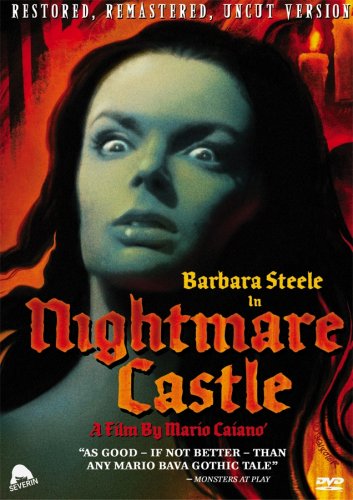
Dr. Stephen Arrowsmith is a haughty scientist who sees himself above such petty concerns as ethics. He has married his wife Muriel (Barbara Steele) for her money, and when he catches her in the arms of one of the servants (Rik Battaglia), he tortures and kills them both, cuts out their hearts, and uses their blood to create an elixir of youth for the maid/co-conspirator Solange (Helga Liné). He then marries the psychologically fragile Jenny (Steele again, now blonde), Muriel's heiress, planning to drive her insane and take control of the his dead wife's fortune. Sure enough, Jenny starts seeing things, but the ghosts she is seeing are real.

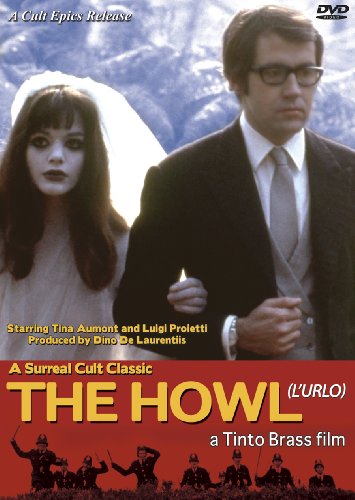
Cult Epics continues its love affair with director Tinto Brass, and here once again delves into one of his early works. For my money, for all that his later erotica is handsomely shot and produced, what I'm seeing of his 1960s output (so far Deadly Sweet and this) is far more interesting. If 1967's Deadly Sweet was demented, it at least followed a semi-recognizable mystery plot. The Howl (1969), on the other hand, defies description. It is basically a surreal picaresque, as a young woman (Tina Aumont) flees her wedding with a stranger (Luigi Proietti) who gives her a come-hither look. Already, this sounds far more sensible than the film really is. The couple race from one lunatic encounter to the next: a resort hotel apparently designed by Sade; a naked, cannibalistic philosopher and his family, and on we go.

Who doesn’t remember the original Witch Mountain films from Disney back in the 1970’s. They were clever family films. They were camp, to be sure. But, most of us remember them fondly, if not as particularly outstanding films. While Disney’s reimagining of the franchise doesn’t have a great deal in common with those earlier films, you can pretty much describe the reaction as being spot on. Race To Witch Mountain isn’t going to be breaking any box office records, but it is the kind of film you get a pretty warm feeling for, and like its predecessors, you’ll end up remembering it with fondness.

An ancient facility beneath Antarctica becomes the launching platform to the lost city of Atlantis. Atlantis is buried beneath an ocean in another galaxy and can only be reached with an additional symbol on the Stargate. Because of power limitations this trip, at least for the time being, is a one-way adventure. A crew of scientists and military officers from many countries assemble to explore the Pegasus Galaxy from the Atlantis gate. Led by scientist Dr. Weir (Higginson) and Maj. John Sheppard (Flanigan) they take over the Atlantian command center and begin to explore. In their initial investigations they accidentally awaken the area’s top bad guys, The Wraith. These vampire-like beings suck the life-force out of humans.

This film is rooted in the activism of the Poor People's Economic Human Rights Campaign. Within the film are the stories of several Philadelphia residents, told in sporadic vignettes that are loosely tied together by a mysterious flier that is being handed out in the neighbourhood. While some characters cross into other's stories they mainly stay separated until the very final scene which reveals that the flier was out promote a rally on behalf of the aforementioned Campaign.