DVD

It is cartoon review time boys and girls. We have a very special guest today, he is the president of the The More Angry Beavers in Cartoons Today Thingy club. He is going to show us a cartoon today called, wait for it. *Waiting* *Random children start to flic boogers at each other* It's the Angry Beavers! *One kid cheers and the others throw paper wads at him* Wait, you don't know the Angry Beavers?! Well, then let us start the show and we will introduce to these two, Daggert and Norbert who live in a bachelor dam (not under the sea but above it!).

The Angry Beavers was a very successful cartoon for the Nickelodeon network that ran from 1997 to 2003. They did a total of sixty three episodes over four seasons and were nominated for eleven awards, four of which they actually won including a Daytime Emmy for Sound Editing and an Annie Award for Production Design. But enough about how wonderful this show and let us move on to the main characters.

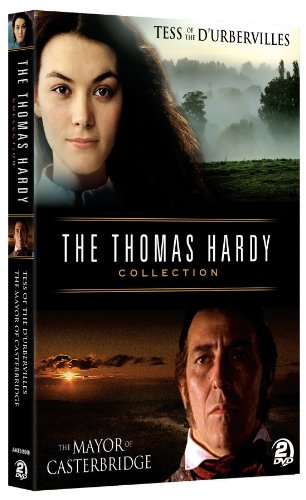
A Mini-series is probably the hardest thing to review for me. Movies are fairly easy, even the ones that exceed two hours. Television series since they are episodic in nature, one can watch a few, come back and watch a few more. Video Games despite taking triple the effort of an average movie are easy because they are interactive. But most mini-series are usually 3-4 hours long and really can not be broken up. Well for today’s review, multiply that duration by two and we have the Thomas Hardy Collection.

There are two tales contained in the Thomas Hardy Collection. There is Tess of the Dubervilles and The Mayor of Casterbridge. Each of these run over three hours long and are split up in two parts a piece. So theoretically you could watch these in at least four parts but most will want to watch Mayor in one sitting and Tess in the next. Our chariot awaits and may we not fall asleep on the way.

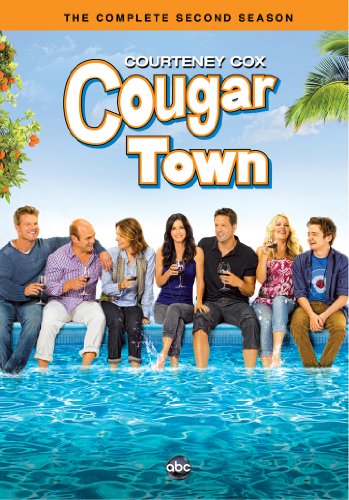
In many ways Cougar Town appears to be Friends 20 or more years later. It's not just the fact that the former Friends star Courtney Cox heads the call sheet on the new situation comedy. There are a ton of other elements that appear to tie the shows together. Like the old NBC show, the core of this show is a tight group of friends. They have a lot of the same kinds of adventures and conversations as the old gang used to have. The big difference here is that the adventures and the talk come from an older, if not more mature, perspective. They still talk a little too much about sex, except now the characters are in their 40's, so the tone of that conversation has changed up a bit. Call it a 40's version of Friends meets Sex And The City.

I actually hadn't been familiar with the term Cougar until recently. I listen to Minnesota sports radio so that I can keep up with the Vikings even here in Tampa. One of the hosts a year or so ago got in trouble at a club event when he referred to the ladies in the audience as Cougars. He later did a show segment where he was trying to find out from listeners if the term was an insult or not. The audience was divided, so I still don't know if most women in this position consider the term derogatory or not. It basically refers to a woman at least in her 40's who dates men younger than herself. But there does appear to be some controversy over the show's title. Apparently there was a rumor that the series was going to change its name for season 2. I'm not sure if the show's runners had seriously considered the move, but that doesn't stop them from having a blast with the idea. Each episode features a comic remark above the title. The remarks include: "It's okay to watch a show called..." or "Titles are hard".

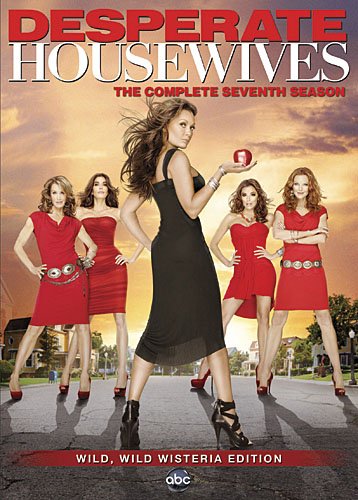
"It's a question we all ask ourselves. Do I trust the people who live next door? Will that couple across the street be there when I need them? Can I count on the woman who lives down the block? Yes, good neighbors are people we can rely on. But if we discover our neighbor can't be trusted, then it may be time to move."

What you can count on from the neighbors of Wisteria Lane is another season of secrets, betrayals, and fashionable housewives.

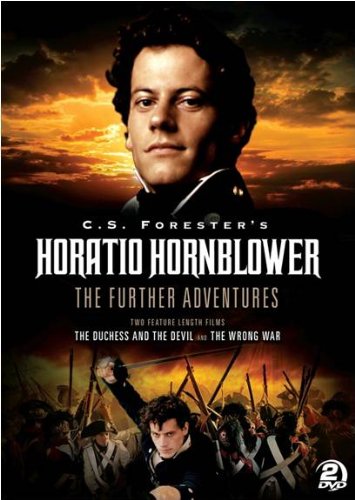
"He is the unique high-seas hero. A man of unshakable courage, unwavering principles, and extraordinary skill. Joining the Royal Navy at the outset of the bloody Napoleonic Wars, Horatio Hornblower rises quickly from new recruit to seasoned sailor, and his exploits become the stuff of legends."

When Gene Roddenberry was preparing his "Wagon Train to the Stars" that would become Star Trek, he turned to the historic hero from the books of C.S. Forester. Horatio Hornblower would be the inspiration and genesis for Captain Kirk. Like Kirk, Hornblower became one of the youngest officers in the fleet and rose quickly to the point where he was commanding the flagship of the Royal Navy. His adventures have been the stuff of radio drama and feature films. Now A&E brings us two of their film series.

The series was previewed in a two-part episode of NCIS entitled Legend. A dead Marine in Washington led to a terrorist cell in LA, where Gibbs and McGee join the LA branch to bring down the bad guys. Here we meet the new characters and get a chance to get comfortable with them. However, by the time the show aired its first episode, there were some pretty major changes for the show already. It's not uncommon, and the Legend episode was really a back-door pilot. The location would be completely scrapped. The show would get new digs in a covert building that appears to be a condemned water plant on the outside. I'm not quite sure why a public agency needed a secret hideout, but there it is. The show retained its high-tech look. They have a Minority Report-style computer system which remained the centerpiece of their operations room.

The show differed in several ways from its sister show. While LA was still a military show, that angle is downplayed here. The atmosphere for the team is more civilian-looking all the way around. There are seldom folks walking around in uniforms. The operations utilize more of the standard surveillance and undercover work. In the back-door pilot, the leader of the group was an agent who had history with Gibbs. Her name was Macy, and she was played by CSI alum Louise Lombard, who was gone when the series premiered in its own right. Later we are told she was killed. There's a lot more street work to be found here. That means car chases and lots of shootouts. The cases often deal with terrorists, so these guys break a lot of the rules. They don't let any silly Constitution stand in their way.

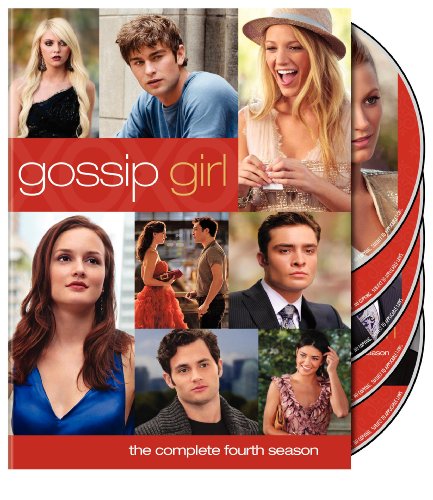
“Unlike the rest of us, sex, lies, and scandal never take a vacation. Instead they take the Long Island Expressway and head East to the Hamptons. Some would say summer is their busiest season. Think Park Avenue, but with tennis whites and Bain de Soleil. The players change, but the game remains the same.”

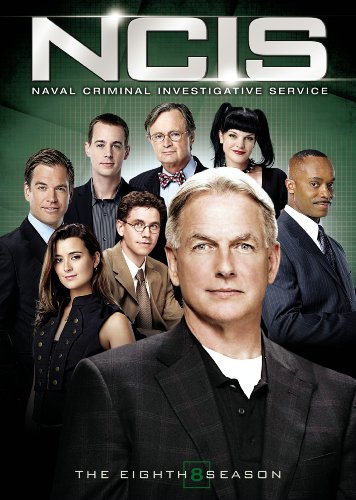
NCIS is a spin-off, of sorts, from the popular military lawyer show JAG. You could say that NCIS is the Order to JAG’s Law. The NCIS is a real government agency that deals with criminal activity inside or involving the US Navy or Marine Corps. The series has an incredibly global feel and honestly looks damn good for television. Production values are high, and the location stuff is out of this world, or at least all over it.

Special Agent Gibbs (Harmon) heads up this group of criminal investigators. Harmon has always been good, but I dare you to find a character he’s played better. He just eats up the part. You won’t have any trouble believing that Gibbs is the seasoned veteran investigator leading this team. Special Agent DiNozzo (Weatherly) is a former Baltimore homicide detective who often lets his determination run his investigation into trouble. He’ll bend a rule or throw a punch, whatever it takes to bring down the bad guy. The newest member of the team is Israeli Mossad Agent Ziva David, played by Cote de Pablo, a newcomer to television. She has the unenviable task of replacing popular actress Sasha Alexander, who exited the show after two seasons. She is, perhaps, one of the most complicated characters I’ve yet to encounter in ensemble television. She’s difficult to read and shows a performance level beyond the scope of a beginner. Rounding out the cast are two very nice characters. Pauley Perrette plays the goth chick/forensic specialist Abby Sciuto. She reminds me a ton of the Penelope Garcia character from Criminal Minds. She’s flirty, far too informal for Gibbs, but is a lot smarter and tougher than she appears. Making himself more visible in this series is David McCallum as pathologist Ducky Millard. Ducky is the Quincy of the group as he checks out the bodies. His dry wit makes him my favorite character on the show.

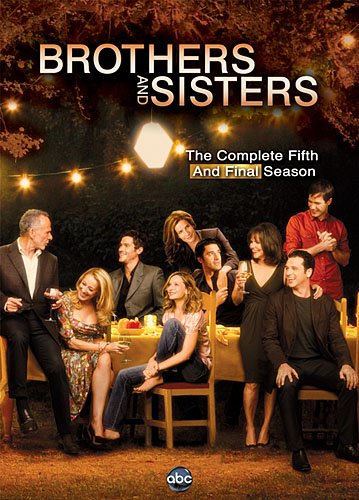
"I never thought we'd get back to this table. I can't tell you how good it felt to have dinner together again. We hadn't done that since the accident. To be honest, sometimes it felt like we'd never get over it. But somehow we did."

But will we ever get over the Walker family? This was to be the final season of the series, and the network wasn't exactly kind in its last days. The budget was slashed so that most of the characters appear in limited episodes. You won't find near so many of the Walker family gatherings as you did in previous years. This plays out very much like a series that is winding down. There are still some nice moments, and most characters get closure.

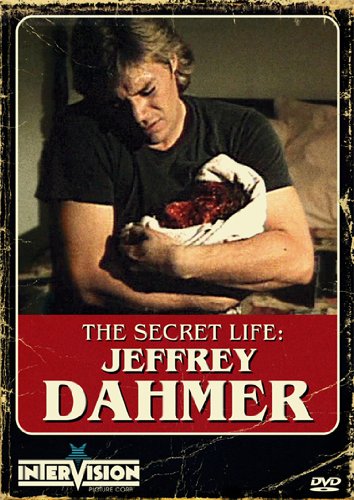
The grindhouses may be long gone, but their memory lingers on, thanks to releases like this one, which, being released in 1993, is from the twilight years of theatrical exploitation, and thus more accurately from the second, virtual life the grindhouse aesthetic found on home video. This is the life of Jeffrey Dahmer, narrated in retrospect by the serial killer (screenwriter Carl Crew). Dahmer recounts his obsessions and growing need to kill, and a fair bit of the film’s running time consists of Dahmer hooking up with young men and murdering them.

The film has, then, a very episodic structure, with very little clear narrative progression. Text on the screen fills us in as to dates and locations, and that is about it. The insights into the mind of a serial killer are of the most obvious kind. There is a bit of restraint present when it comes to the killings, in that there could have been a lot more gore, but they are certainly unpleasant, and I don’t necessarily mean that it a good way. No, they shouldn’t be fun, but the endless parade of murders becomes the film’s reason for being, and the lack of any connection between the audience and the victims is a problem. Given how recent the killings were when the film was made and released, it’s not too surprising that the victims’ families were a little upset. So this is an exploitation film in the purest sense, and interesting for that reason, and rather off-putting for the same reason.