DVD

I grew up on the Peanuts creations of Charles M. Schulz. Most of us have, in some way or another. His newspaper comic strip is one of the longest-running and most successful strips of all time. The work has been translated into every language currently spoken on the planet. The images of Charlie Brown, Snoopy, Linus, and the rest of the Peanuts gang have appeared on just about any kind of product imaginable. Our pop culture contains too many references to the strip to mention briefly. For me, it was the television specials starting in the mid 1960s that brought the gang into my life. The classics are running annually, still after nearly 50 years. A Charlie Brown Christmas and It’s The Great Pumpkin, Charlie Brown are the most mentioned and certainly beloved by generations of children and adults. I thought I never missed an airing.

Now Warner Home Video has brought together a special collection of the cartoon specials that started it all. It includes a couple annual greats and a few that I don’t really remember so much. Now we get into the second volume of the 1970’s specials. The two discs include the following Peanuts specials:

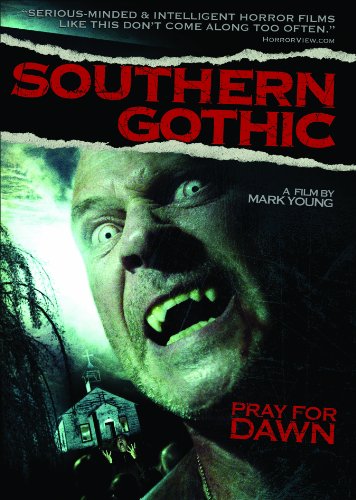
"Pray for dawn."

Mark Young is a bit of a one-man band in the short list of films that he's done in his decade-long career. Southern Gothic is no exception. Mark Young is credited as: producer, director, writer, editor, chief cook and bottle-washer on the film. I have to say that I'm more often scared when I see that sort of thing than anything that ends up coming at me from the screen. Too many cooks may, indeed, spoil the broth, but only one cook tends to mean someone's going to end up eatin' out tonight. This was the first of these multi-tasking films I've seen from Young, and I have to say none of it was as bad as all that. I even caught myself enjoying the movie after a short while. The trick here is not to look at Southern Gothic so much as a horror film. It's pretty evident that Young absolutely did not. This is camp. It's the kind of dish you might expect served by Bruce Campbell and Sam Raimi. That's how you'll need to approach the movie. If you're looking for something a little more serious or straight-out horror, move along, because there's nothing to see here. If you're a fan of camp horror, you just might be able to scrape a little entertainment out of this one.

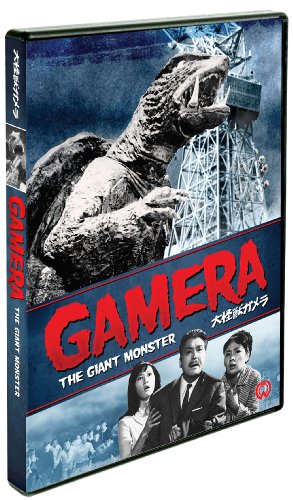
"In our findings on Gamera, we've ascertained that: Firstly, it is attracted to and consumes fire. Secondly, it also seems to possess an internal power plant, of sorts. This emits a signal frequency that can jam radio communications. In order to store up energy reserves, Gamera consumes inorganic resources. Not only does it consume petroleum as well as other mineral and fossil fuels, but Gamera may also seek out atomic bombs."

Ask anyone about Japanese monster movies and Gamera usually won't be the first name that comes into their minds. Godzilla would likely dominate the conversation, and for most of the last 60 years the folks at Toho have been synonymous with large monsters. But they didn't exactly hold a monopoly on the big beasts. Kadokawa Pictures had their own little monster franchise going on. It all started in 1954 with Gamera: The Giant Monster. From 1965 through the 1970's the studio would produce 8 Gamera films in all.

"In the West there lives an animal that runs wild and free. Its strength and courage symbolize our pioneering spirit. That magnificent animal is the wild mustang."

In 1943 a very young Roddy McDowall played a young boy in the perennial classic My Friend Flicka. The film was about a rebellious boy who is given a colt to teach him responsibility. He eventually bonds with the horse and learns the necessary lessons. The film was followed by a 1956 television series that followed the adventures of Gus and Flicka and lasted but one year. In 2006, the story was revived in a remake filmed under the same name but shortened to Flicka before it was released. While the character’s last name was retained, the film went the route of a young girl instead of a boy. It was probably a natural choice. My wife stands as a perfect example of how much every little girl appears to like horses. When I was that age I was more interested in the tough-as-nails cowboys who rode them. The film didn't manage to excite a very large audience and pulled in the small sum of $21 million. You might have expected the story to end there. It hasn't. 20th Century Fox has brought back the friendly spirited mustang in a direct to video release, Flicka 2.

"Step 1: Reconnaissance. First you need to identify your target."

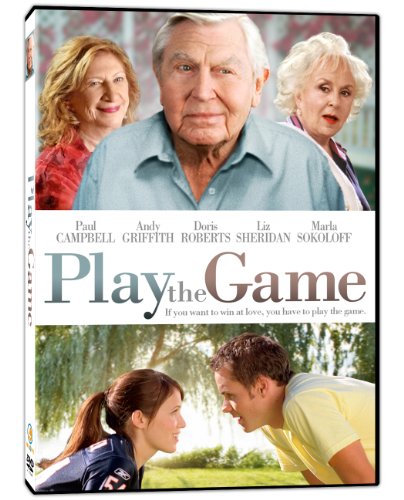
If you are a regular reader here, you likely know that I have a fondness for Andy Griffith. I recently watched and reviewed in these pages one of his earlier comedy films, and rather enjoyed the old simple rural comedy. That's what makes this one so painful to write about. I think that Andy Griffith missed the boat when he was targeting the audience for his latest comedy, the sexually charged Play The Game. I'm going to just admit up front that this movie made me feel very uncomfortable. I think that many of Griffith’s fans might have the same problem. There are just some actors, particularly ones in their 80's, that I don't want to hear talking about their sexual function, let alone watch having sex. Andy Griffith would be at the top of that list, and I suspect I'm not alone there. But, that's exactly what you're getting into if you decide to pop this one into your DVD player. This will not be like anything else you've ever seen this particular actor do before, and hopefully I never will again. This is strictly for the adults. I'd say the over 95 crowd.

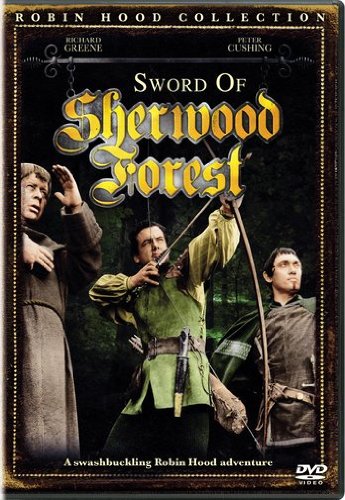
"Comrades, I've called you together again because the people of England face a grave crisis. Many years ago as Robin Hood, I led you as an outlaw band. Here in Sherwood Forest, together we resisted the tyrant King John. When he died, we dispersed because we believed that tyranny had died with him. But tyranny did not die. It merely slept. And now it has awakened again."

Speak the name Robin Hood and one immediately conjures images of the swashbuckling hero of medieval England. The character's origins go back as far as 15th century ballads that herald the daring deeds of an outlaw who fought against tyranny and injustice. In some texts the man is given a dual identity as one of the very noblemen that he had most of his fame defending the people against. The most popular modern notions have the figure in tights with a bow and arrow, equally talented with his sword. He robs from the rich to give to the poor. Such populist notions have been a part of the legends in whatever forms they have taken over the centuries. While the early legends and ballads place him at several locations in England, it is the famed Sherwood Forest dwelling that survives the telling to this day. Believe it or not, one of the earliest mentions of the character, Robin Hood And The Monk from around 1450, is actually a story of Little John as the prominent one, and Robin is merely a fanciful supporting character. He was considerably more religious during those days, dedicated to the visage of The Holy Blessed Mother. By the 16th century Robin Hood was the subject of a series of plays written by Anthony Munday. Here Robin's nobility origins are made clear, as is his hatred of tyranny. The character we know today, however, didn't begin to take shape until the 17th century and Martin Parker's The True Tale Of Robin Hood. Still, with all of this rich literary history, Robin Hood's iconic image owes much to the introduction of the motion picture. It is here that the flights of fancy were given free rein, and Robin Hood became one of the world's first superheroes.

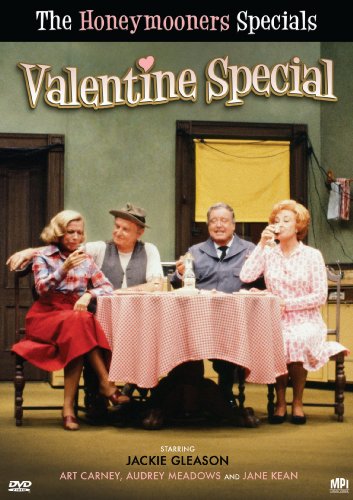
It's hard to believe that one of the most popular comedy shows of the 1950's was not really a show at all, at least not in the way that we think of a television series today. The show began its life in 1951 as a segment on the popular Cavalcade of Stars. At that time only Jackie Gleason and Art Carney starred in their familiar roles. Alice was played by Pert Kelton.  The series took its more recognizable look when it became part of The Jackie Gleason Show in 1955. That's also when Joyce Randolph joined the series as Trixie Norton. The series would take up a half hour of the slot. The second half was taken up by a larger variety of pieces, usually a series called Stage Show. The show would come and go, with other cast members coming and going over time. Even Art Carney had left The Jackie Gleason Show at one time, only to return in 1957 to the role. The show's history is a complicated one to which entire books have been devoted over the years. It wasn't until syndication that the series was really a show unto itself. The original 39 episodes were joined with nearly 70 re-edited versions of the other various incarnations of the show have made up what most of us today think of as The Honeymooners. The final original versions of the show ended in 1971; both Audrey Meadows and Joyce Randolph were gone by then, replaced by Sheila MacRae and Jane Kean respectively.

But this show that wasn't really a show had legs. The syndicated versions became hugely popular, and new generations of fans were being indoctrinated with each new package. The show even survived on pay television at Showtime for a while in the 1990's when the 70 newly-formed "Lost Episodes" first aired. But the fever just never died. The show would influence a large number of series that would follow. Even the animated world of cartoons wasn't safe. The Flintstones would come along and become a prehistoric cartoon show that was basically the same down to the characters. Fred and Barney couldn't have been closer to Ralph and Norton if their names had been the same. Today, comedians constantly recall The Honeymooners and Jackie Gleason as their inspiration. To more than one generation of television viewers, Gleason really was "The Great One".

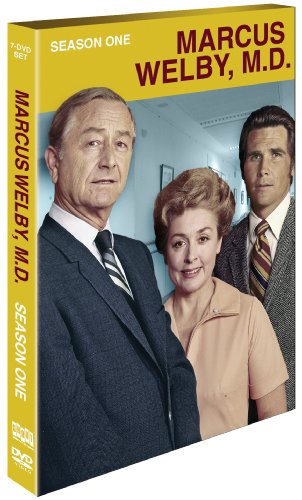
Perry Mason did it for lawyers. Marcus Welby did it for doctors. From 1969 to 1976 and beyond Robert Young was the face of the television doctor. The actor was so identified with his part that he dealt with fans and their medical questions his entire life following his portrayal of Marcus Welby. In those days there wasn't a medical doctor on the planet, real or fictional, who was more recognizable than Welby. The show pretty much wrote the book on the television medical drama. It doesn't matter if your a fan of House, ER, Grey's Anatomy, or any of a hundred other medical dramas that have come and gone since that time, each of those shows owes more than a little of it's existence to Marcus Welby, MD.

In the 1950's Robert Young was that model parent in Father Knows Best. It's likely that audiences first fell in love with his wise and caring style. There was something about both the character and in the man himself that just caused America to trust him. It was no surprise that when the Marcus Welby creators were looking for a doctor that could, above all, exhibit those same qualities that Robert Young would get the call. And it didn't matter that Young considered himself retired from show business for the last 6 years. But Marcus Welby was a role he just couldn't turn down. It was another gentle character with wisdom and common sense beyond his years. The Doc was a general practitioner in California. To him his patients were people. He would treat the individual as well as whatever ailment was proving to be the problem. He took the tough cases, often seeing some slight symptom that others would miss. That's because he paid attention to his patients, and they couldn't help but trust him with their lives. More times than not, that trust was rewarded with a full recovery. But, even when Welby couldn't beat a disease or injury, he always added something to the patient’s life. It might be helping them to come to terms with their own mortality. He might heal a family rift. Sometimes he just offered a kind word at just the right time.

In September of 1993, an animated series using the wonders of stop-motion animation was broadcast on ABC. The name of the series was called Bump in the Night. It would run for twenty six episodes, spanning over two seasons. It was created and directed by Ken Pontac and David Bleiman. It also featured the vocal stylings of Jim Cummings, a man perhaps most famous for his Winnie the Pooh performance.

Mr. Bumpy (for his warts) is a small, green and purple monster who lives under the bed of a ten year old boy. He loves to eat socks, dust bunnies, snot filled tissues and other assorted things most people would consider disgusting. His disposition can be easily described as vile but yet easy going. Oh yeah, if you haven’t figured it out yet, he doesn’t brush his teeth.

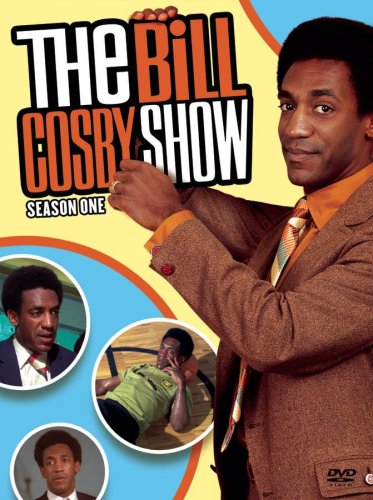
I grew up on Bill Cosby. He was everywhere when I was a kid. Fat Albert And The Cosby Kids were on my television every Saturday morning. My parents had all of his records, and I can remember borrowing them when I finally got a player of my own. I played Chicken Heart so often I think I wore away the grooves on the track. Of course, you youngsters out there have no idea what I'm talking about when I mention grooves and wearing them out. That also means that you remember a very different Bill Cosby show. Most of us think about that huge hit in the 80's. Cosby played a doctor, and he was married to a lawyer and this wealthy family had a ton of kids. The show was an instant hit. But it wasn't the first attempt at situation comedy from Bill Cosby. Back in 1968 he was the star of a very different comedy series on television. It was The Bill Cosby Show.

In this series Cos played Chet Kincaid, a high school gym teacher and athletic coach. It wasn't really a stretch, you see, because The Cos actually studied PE at Temple University with his eye toward just such a possible career. Of course, stardom interfered with those plans, and I don't think anyone has been complaining too much. The series is too eclectic for its own good. While Chet's career should be the focus, many of the episode take him out of the school and place him in oddball situations. Episodes deal with his aunt's will and a missing Abe Lincoln letter, a flood while Chet deals with a neighbor in labor, and Chet leading a group of inner-city kids on a failed attempt to get out and camp in nature. From the start, you can see that Cos is trying to bring a more intimate approach to his comedy, but it usually misses the mark completely. His natural charm and demeanor carry the day, but there's a reason why the series only lasted three seasons. He would hone those skills later to deliver one of the biggest shows in television history.