Posted in: Brain Blasters by David Annandale on April 5th, 2008
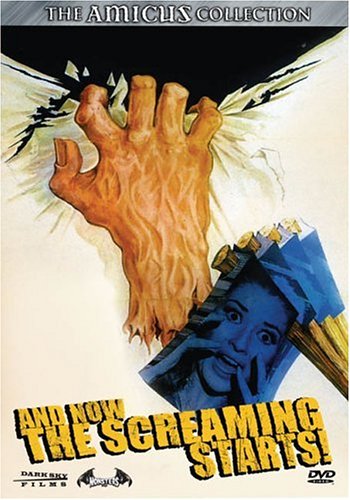
Severed hand films. Gotta love 'em. Not because they're necessarily good, as such. The ones that have been (the various versions of The Hands of Orlac, or The Beast with Five Fingers) have been, ultimately, psychological thrillers. There have been honest-to-god crawling hands, of course, in wonders such as Evil Dead 2: Dead By Dawn, but Bruce Campbell's misbehaving limb was a supporting character, rather than the central menace. But I return to my initial statement. Even if the film isn't that good (or good at all), you have to love it for the crawling hand.
Posted in: Brain Blasters by David Annandale on March 28th, 2008
Let’s consider today’s exercise a companion piece to my colleague’s excellent Dare to Play the Game column. That’s by way of saying to that I’m going to risk slightly poaching on his turf by considering a tangentially game-related topic.
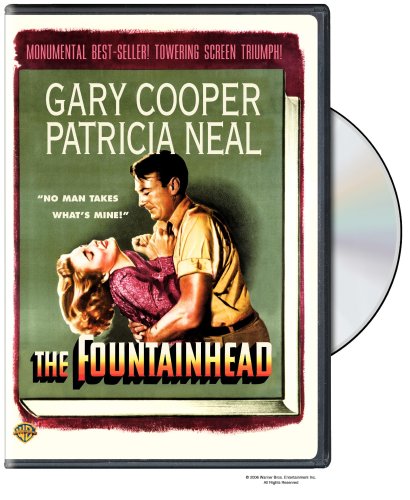
I’m probably not going too far out on a limb to assume that just about anyone with access to an Xbox 360 or a sufficiently powerful PC played Bioshock at some point in the last year. Among its many qualities, Bioshock is one of the best-written games to have come down the pike, and one of its not-inconsiderable delights is the dialogue it engages with the ideas of Ayn Rand. Specifically, it is her magnum opus Atlas Shrugged that provides most of the game’s philosophical fodder. Anyone with the time to slog through the book’s utterly lunatic thousand-plus pages will surely find their appreciation of the game increased (and this is one of those rare cases where the writing, characterization and ideas of a game are consistently better than the work of literature it is bouncing off). And the book is so insane that is has an absolutely compulsive, Biggest Train Wreck Ever appeal. But let’s pretend you don’t have that much of your life to give up to an experience that can best be described as the philosophical equivalent of high camp. There is a more time-efficient alternative.
Posted in: Brain Blasters by David Annandale on March 21st, 2008
Time to praise another journeyman performer, another unsung hero of the heterodox film scene. Today: Robert A. Silverman. He’s been kicking around the scene for ages, popping up in everything from Prom Night to Waterworld to Jason X. But his most memorable work consists of the sterling character turns he has done for David Cronenberg.
Silverman has been appearing in Cronenberg’s world since Rabid (1977), where he is an unconcerned hospital roommate to Marilyn Chambers’ first contaminated victim. His role is short, but is one of the rare genuinely comic moments in a very black film, and Silverman would continue to bring a dash of off-kilter humour to his roles for Cronenberg.
Posted in: Brain Blasters by David Annandale on March 14th, 2008
So last week, I looked at Universal’s latest collection of their vintage SF movies, a set unfortunately limited to a Best Buy exclusive. We have another one of those today: the Universal Horror Classic Movie Archive. It, too, can be tracked down pretty easily through the Amazon marketplace.
Back in the mid-90s was when the films on all of these collections were first showing up in a home video format. It was a great time for collectors (barring that chilling moment when, for a little while, the only version of the original Dracula available was the one with the new Philip Glass score). Now, there are only so many films from that era (30s and 40s for horror, 50s for SF) that legitimately qualify as classics, so more and more B-level pictures followed in the wake of their more famous brethren. There is nothing wrong with this, as the opportunity finally came for many of us to see these things for the first time, and minor gems would inevitably crop up.
Posted in: Brain Blasters by David Annandale on March 8th, 2008
A while back, I nattered on about The Classic Sci-Fi Ultimate Collection, a Best Buy exclusive from Universal of films long overdue for DVD release. That collection ranged from the top-flight classic (The Incredible Shrinking Man) to the mid-level classic (Tarantula, the official Second Best Big Bug Movie after Them!) to the unsung gem (The Monolith Monsters) to the middling programmers (The Mole People and Monster on the Campus). Today, Volume 2. It’s another Best Buy exclusive, but can still be found quite easily being resold on Amazon.
The first volume was an eclectic mix, as far as quality was concerned. The second one is a bit more consistent, but that doesn’t mean these are the best of the best. Far from it. On offer here: Dr. Cyclops (1940), Cult of the Cobra (1955), The Land Unknown (1957), The Deadly Mantis (1957) and The Leech Woman (1959). We’re talking the B-list players here, people. The most highly regarded of this bunch is Dr. Cyclops, wherein Albert Dekker shrinks human beings to doll size. Fine mad doctor stuff, and the first SF/horror film to appear in full Technicolor. The FX are pretty solid too. It’s a little odd to find the film, very much a 40s effort, grouped with lesser 50s works, but hey, here it is on disc, so who am I to complain?
Posted in: Brain Blasters by David Annandale on February 29th, 2008
One of the most devious, and delightful, films I’ve encountered in recent years is Incident at Loch Ness, a film that, if it isn’t the subject of a cult, should be. I mean, my gawd, it has Crispin Glover in a microsecond cameo. The real brilliance of this fake documentary is having Werner Herzog in the lead, a man whose filmography reveals a constant violent collision between fact and fiction, with the relationship not always moving in the direction you might think. Anyone wanting to see just how utterly bizarre things are in Herzogland should look no further than My Best Fiend, his 1999 documentary about his working relationship with actor Klaus Kinski.
The film opens with unexplained footage: Kinski performing before a huge audience, ranting maniacally, going out of his way to alienate everyone within sound of his voice. What this is (which is never mentioned in the film), is part of a tour Kinski did playing Jesus Christ as a psychopathic megalomaniac. Based on the evidence of the rest of the film, Kinski might as well have been playing himself. The picture Herzog presents us with is of a man given the rages that could last days and be triggered by the tiniest of imagined slights, of a character so volcanic he threatened to destroy all around him. And then there’s Herzog, unflappably filming Aguirre, the Wrath of God and Fitzcarraldo, movies whose production and ambition were as insane as their protagonists. In other words, Kinski appears to be playing extroverted versions of Herzog himself in these pics. One understands, therefore, why the Peruvian natives who were extras in the latter film hated Kinski but feared Herzog, reasoning that, as the quiet one, he was probably more dangerous. But one also understands why they offered to kill Kinski for Herzog, and why he later regretted not having taken them up on it.
Posted in: Brain Blasters by David Annandale on February 22nd, 2008
As everything under to sun sooner or later makes it do DVD, hope turns again to those films that are long, long overdue for the deluxe treatment. Consider this another installment of the Wish List, but with an asterisk. The film in question in Seven Footprints to Satan (1929). I’ll get to the asterisk in due course.
Seven Footprints to Satan was a variation on the Old Dark House film that was so popular in the late-twenties and early-thirties. Here a bored young heir finds himself swept up in a convoluted adventure with menacing figures (human and otherwise), disappearances, abductions, and a sinister conspiracy. SPOILER ALERT: STOP READING THE COLUMN NOW IF YOU DON’T WANT TO KNOW ABOUT THE ENDING. But then comes the twist: the entire adventure was a fake, mounted by our hero’s friends to give him the excitement he craved.
Posted in: Brain Blasters by David Annandale on February 15th, 2008
Having just watched 30 Days of Night again in order to review the DVD, I find myself thinking about vampires. They are, of course, among the most frequent of horror movie monsters (perhaps only zombies, in their various forms, offer stiff competition in this regard). They also take up far more than their fair share of shelf space in the horror section of your bookstore, thanks to the likes of Anne Rice, Laurel K. Hamilton, and their legions of imitators. A brief scan of the literary and celluloid incarnations of the vampire reveal to principle archetypes. The first, and by far the most common, is the vampire as sexy beast. The other, is the vampire as beast, pure and simple. Interestingly, both cinematic versions, it seems to me, find their models in the first adaptations of the same novel: Dracula.
Nosferatu (1922) and Dracula (1931) were both firsts. Nosferatu was the first film version of Bram Stoker’s novel. Tod Browning’s film was the first legal version. The earlier film gave us Max Schreck as creature as much rat as he was human, and the make-up’s suggested link was underlined by the actual rats that accompanied the vampire on his journey and the plague that descended on the town. Browning offered audiences Bela Lugosi in evening wear, and the film was released on Valentine’s Day. So one vampire to make you faint, the other to make you swoon.
Posted in: Brain Blasters by David Annandale on February 8th, 2008
This may be a bit perverse, but I’m going to talk about a film that not only is not currently available on DVD, there is no release date for that format as yet. Fear not, though, as it will surely not be long in coming. The film is Guy Maddin’s Brand Upon the Brain!, and it is currently on tour, proving that there is still enormous creative life in the silent film, especially presented when presented in the fully live format. The DVD, inevitably, will be a reflection of the theatrical experience, and while that won’t be as optimal as the live version, it will still be essential viewing for all lovers of the brilliantly bizarre.
As with Maddin’s Cowards Bend the Knee (2003), the protagonist shares the director’s name, which adds a weird layer of god-knows-what to the proceedings. The story sees Guy (Erik Steffen Maahs) returning to the now-deserted island where he grew up. He has come, at his ailing mother’s request, to put a coat of paint on the lighthouse that was: a) the family home; b) the orphanage run by his tyrannical mother; c) the laboratory of his obsessed father. Once there, Guy lapses into memory, and the bulk of the film is traumatic flashback. A young Guy, on the cusp of adolescence, and his older Sis (the only name the film gives her) strike up a friendship with Wendy Hale, one of the Lightbulb Twins, a pair of teenage detectives in the vein of the Famous Five or the Hardy Boys. Wendy has come to investigate Guy’s parents. Guy falls in love with her, but she falls in love with Sis. She then disguises herself as her brother Chance, in order to better seduce Sis, and what follows is a typically Maddinesque nightmare of contorted Freudian sexuality, hilariously melodramatic subtitles (liberally sprinkled with exclamation marks) and comically gothic horror. The style can best be described as a mixture of German expressionism, D.W. Griffth-style adventure melodrama and Eisensteinian editing filtered through a 21st Century sensibility. As with so much of Maddin’s work, the film is an almost indescribable fusion of the cinema’s past and its future, and as such is, in a odd way, timeless.
Posted in: Brain Blasters by David Annandale on February 2nd, 2008
Every few years, word arrives that the much-lamented Hammer Studios will shortly rise from the ashes. Back in the 90s, for instance, Richard Donner was supposed to be behind a resurrection of the Quatermass films. Well, the word has arrived again, and the revived Hammer has gone at least as far as releasing a teaser trailer and a set visit for its first production in decades: a vampire tale called Beyond the Rave.

You’d think I’d be ecstatic. I love the old Hammer films. When I was a wee tyke, I read about them in my first horror film book. Denis Gifford was writing in 1973, did he but know it very close to the end of the Hammer era. Some of his comments are ironic in one sense or another today. In his introduction, he speculates that “Perhaps time will add its own patina to the Hammer horrors of today.” Very true. But: “In quantity Hammer films are fast approaching Universal, but in quality they have yet to reach Monogram.” Harsh, and history has certainly reached the contrary conclusion, elevating Hammer’s efforts far above those of that poverty row studio. Something else Gifford says has bearing on today’s subject: “The new age of horror was geared to a new taste. Where the old films had quickly cut away from the sight of blood, Hammer cut in for a closeup.” Well, The Curse of Frankenstein and its ilk look pretty tame today, but they were strong meat in their day, and yes, Hammer offered much that was new even as it revived classic gothic horror, which had effectively vanished from the face of the earth from 1946 until 1957, when Hammer stepped up to the plate.