Posted in: Brain Blasters by David Annandale on January 25th, 2008
As promised last week, this monster-lover’s thoughts on Cloverfield. In a word: joy. In the pantheon of giant monster rampages, this one should find a place of honour. There have been a few good such films in the last while (most notably The Host, though one could argue that its creature is too small to make it a proper Giant Monster Movie), but this is the first really fine example to emerge from Hollywood in decades. Among other accomplishments, it washes away, once and for all, the sour taste left by the Emmerich/Devlin Godzilla (partly by taking some similar moments and showing how they should be done).
Posted in: Brain Blasters by David Annandale on January 18th, 2008
And so here we are, on the opening night of Cloverfield. This is a film that, as a huge fan of creature features, I devoutly hope will be good. So my thoughts on that perhaps next week. But with the possibility of the first original giant monster movie to come out of Hollywood since... since... Tremors?... being worth seeing, an unfortunate screening experience last night has moved me to reconsider some remarks I made here some time ago. At the time, I was mounting a defense of cheap CGI creature-featrues (of the sort that inevitably winds up on the Sci-Fi Channel) by making the case that they were analogous to the B-level monster movies of the fifties.
Posted in: Brain Blasters by David Annandale on January 11th, 2008
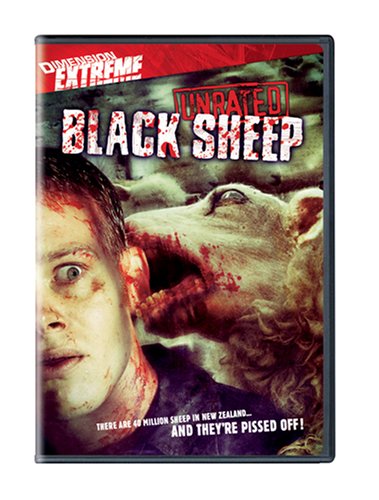
Some films have the sort of subject matter that just screams “cult in the making.” Sometimes, the attempt at cult status is so blatant that the sense of the film trying too hard is off-putting. On other occasions, said status is a by-product of a filmmaker simply having assured fun with torqued material. Bubba Ho-Tep is one such example. A brand new one is Black Sheep.
Posted in: Brain Blasters by David Annandale on January 4th, 2008
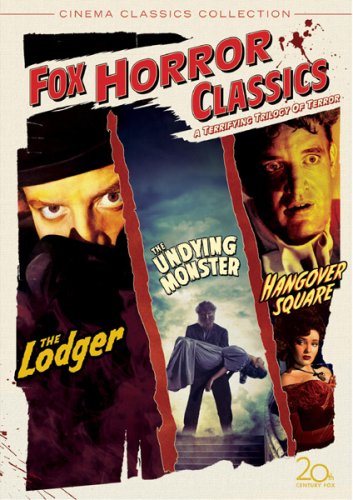
All right, after a longer delay than expected (my apologies), here with go with John Brahm’s The Lodger (1944). This is actually a remake of Alfred Hitchcock’s 1927 effort, but Brahm’s film stands just fine on its own, thank you very much. Laird Cregar plays the title character. He is none other than Jack the Ripper, renting an upstairs room in a fashionable district. There he performs some rather dark medical experiments and obsesses over his deceased younger brother. Meanwhile, the family (pater familias Sir Cedric Hardwicke, mother Sara Allgood and singer/dancer daughter Merle Oberon) have more and more unanswered questions about their tenant. Hardwicke holds his suspicions at bay, but Allgood and Oberon become more and more nervous. Oberon has every reason to be, as her profession marks her as a likely Ripper target (so, yes, the fact that the actual killer’s victims were all prostitutes is rather glossed over). George Sanders shows up as the Scotland Yard detective assigned to the case, and also as Oberon’s love interest.
Posted in: Brain Blasters, Regular Columns by David Annandale on December 21st, 2007
Last week, I said I’d talk about John Brahm’s The Lodger this time around. I want to hold that off for another week, in order to put in my two cents’ worth on I Am Legend.
So here we are with the third adaptation of Richard Matheson’s classic novel, and the first to actually use the title. There was certainly room for improvement on the other two. The Last Man On Earth (1964) is still the closest to the book, but Matheson himself was sufficiently displeased with what was done with his original script that he had his name replaced in the credits with a pseudonym. The Omega Man (1971) has some great early mood stuff and neat makeup for the creatures, but descends into risibility by the end. So is the third time the charm?
Posted in: Brain Blasters by David Annandale on December 14th, 2007
As I’ve indicated in this space before, one of the joys of the DVD age is the chance to see, at long last, films that one might have heard about since childhood, but that were unavailable until now. A recent addition to Fox’s Cinema Classics line is a case in point. Fox Horror Classics consists of three movies directed by John Brahm, and the one I want to talk about today is The Undying Monster (1942), which I first read about over thirty years ago.
Posted in: Brain Blasters by David Annandale on December 7th, 2007
So I was musing over the last couple of days once again on the nature of the appeal of what I’m (extremely) broadly defining as cult movies. I’m not explicitly looking for a Grand Unification Theory here, though I wouldn’t turn my nose up at one if it turned up. There are some easy answers, but they’re very much only partial ones.
Posted in: Brain Blasters by David Annandale on December 1st, 2007
The wonderful thing about cult film fandom is the peculiar obsessions that typify it. I’m thinking specifically here of the enthusiastic loyalty fans have for a given director or performer, whatever said person’s standing in the mainstream film community might be (and very often in defiance of such). Hence, for instance, the following that Joe D’Amato commands. As for performers, let’s think for a moment about character actors. I’ve already documented my great fondness for Michael Ripper, he of the bulging eyes and multiple bit parts in Hammer films. Well, I have in my hands a delightful little tome that does me one better.
Posted in: Brain Blasters by David Annandale on November 24th, 2007
Time for another entry in the Wish List, my lament for sorely absent DVD releases. Today: Paperhouse, to date available only in Region 2 and 4 imports, which is a real tragedy. Allow me to explain.
Posted in: Brain Blasters by David Annandale on November 17th, 2007
So I’m in the middle of working my way through Severin’s latest Black Emanuelle box set, and a screening of Black Emmanuelle/White Emmanuelle (actual title Black Velvet) has prompted these musings, which I inflict on you here rather than in the review itself. Now, European sexploitation movies from the 70s aren’t exactly the deepest experience going, but there’s plenty of food for thought in this film, even despite (or because of) its flaws.