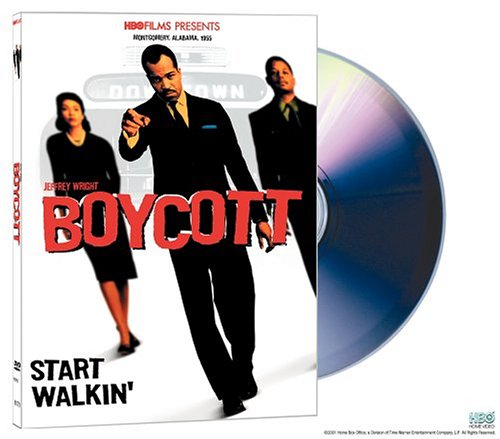
Intro
Now this is a pretty rare achievement: a film that has an educational goal, but reaches that goal while being exciting cinema. And once the film has you wanting to know more, the DVD obliges.
Synopsis
We are in Montgomery, Alabama, in 1955. Rosa Parks has just been arrested for refusing to give up her bus seat to a white passenger. This incident sparks the civil rights movement, and a young pastor named Martin Luther King, Jr. is about to begin his rise to prominence. The respons… to the Rosa Parks case is a boycott by the African-American population of the transit service. The boycott is originally planned to last only one day, but it goes on for month after month, bringing Montgomery to its knees. Powerful filmmaking.
Audio
Perhaps the rear sound effects could be a bit louder, and perhaps the left-right separation could be more pronounced, but the music (which plays a big role) sounds wonderful, the voices ring out loud and clear, and the overall effect is crystal clear and very rich. There is no distortion.
Video
The transfer, preserving the 1.85:1 widescreen format, is very sharp. Boycott uses multiple film types, jumping around from colour to black-and-white to grainy hand-held to razor-sharp colours, and these shifts all come through perfectly. The colours are strong when they should be, and muddy when they should be. Fine work.
Features
The features are thoughtfully aimed at those of us who might not know as much as we should about this event in American history, but would like to know more. Director Clark Johnson’s commentary is lively, and while he ranges over such subjects as the cast, the film’s background, and the film’s goals, he also pays special attention to explaining the historical context. The “Historical Background” features consists of a series of six short essays, giving us a chronology of events, bios of the leaders of the movement, a Time magazine article from 1956, and so on. “References” directs us to books and videos about the subject, and “Web Links” suggests useful sites. Finally, there are bios of Johnson and cast members Jeffrey Wright, Terrence Howard and Carmen Ejogo. The menu is no-frills, but the purpose here is to be functional, not flashy.
Closing Thoughts
In his commentary, Clark Johnson states that he wanted to make a film that would educate without being boring. He has more than met that goal.
Special Features List
- Director’s Commentary
- Historical Background
- References
- Web Sites
- Cast and Director Bios