



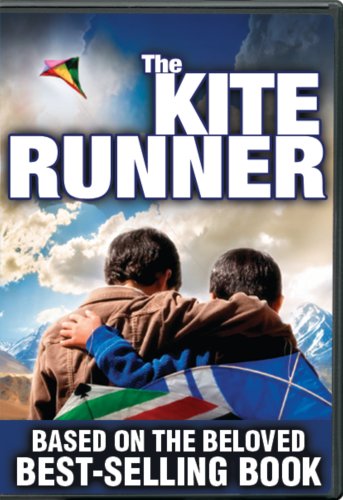
The Kite Runner is one of those films that is extremely hard to pin down. On the surface it’s a moving story about friendship and redemption, but I have to wonder if that is really the collection of themes intended by either the original novel’s writer Khaled Hosseini or the film’s director, Marc Foster. The story begins with two young Afghan children who appear to be friends, but they are from different worlds. Hassan (Mahmoodzada) is the son of household servants. Amir (Ebrahimi) is the son of the household’s masters. Yet they appear to share a common bond and fondness for one another. We quickly learn that the friendship is one sided. Hassan pledges that he would do anything for Amir. He vows he would eat dirt if Amir asked, but adds the belief that Amir would never ask him to. Even a look at Amir’s guilt tells us that’s certainly not true. Soon Hassan is approached by bullies and asked to give up a kite he captured and promised to Amir. Rather than break his promise to his friend, he is savagely beaten and sexually molested by the bullies. We are shocked to see that Amir is witness to the entire event and does nothing. To make his sin worse, he decides he can no longer be friends with Hassan because to see him reminds him of his shame, so he accuses the boy of theft. To complete his unconditional loyalty Hassan admits to the fictional theft to allow Amir to save face. Amir eventually flees
I question the idea that Amir’s actions have earned him redemption. I’m led to believe that this is a journey of courage, but I find Amir’s motives to be selfish even to the end. There can likely be no redemption for what he had done to his friend, and I find the rescue to be more about making him feel better than doing anything to make up to Hassan. It is because of this belief that I do not get the wonderful feeling that so many claim to get from The Kite Runner. The film would serve more of a purpose if it had lingered more on Hassan and allow us to see what his life was like leading up to his own death. Perhaps we could have bonded more with his son, and then the rescue would have meant more to us. Instead we are given far more attention to Amir and his rather dull life after fleeing his homeland. It is here that the film loses its focus and, for me at least, its interest.
To be sure the film’s location shots were extremely convincing. The film was shot in
Video
The Kite Runner is presented in its original 2.35:1 aspect ratio. I was overall very disappointed in the film’s visual presentation. The picture is often muddy and offers poor detail throughout most of the film. I understand part of this might have been to present the drab earth toned quality of
Audio
The Dolby Digital 5.1 track was far more impressive than the video. The dialog was always very clear: however, unless you can speak Dari which is what most of the dialog is spoken in it doesn’t really matter. Of course, there are English subtitles so that actually catching the words isn’t as important. There are some fine moments of subtle uses of surrounds that become not so subtle during the Soviet invasion. The music appears reserved most of the time, making the overall quality appear rather undynamic, but for the most part the audio fits the atmosphere quite nicely.
There is an audio commentary with novel writer Khaled Hosseini, director Foster, and screenwriter David Benioff. They engage in some very serious discussion that makes it impossible to listen and still follow the film. If you liked the film this track is certainly worthwhile, as they go very much in-depth in all aspects of the story and filming.
Special Features
Words From The Kite Runner: The same three from the commentary talk more about their feelings for the story and what it meant to put it on the screen. There is a lot of overlap here with the commentary. Much of it is verbatim from the commentary.
Images From The Kite Runner: This works pretty much as a companion piece to the previous feature. Here the story isn’t so much the focus as are the locations and actually filming.
<>
<>
Final Thoughts
I started out by liking the film, a lot. There is so much about the beginning story that makes it such great filmmaking. The actors were wonderful and the cinematography just sucked you into the world they were attempting to create. The story itself was a moving one, although it did make it impossible for me to ever like let alone actually root for Amir. He’s a despicable person, and there was no way this film was going to get me to like him. My feelings were so strong here that once that part of the story ended, the film itself really ended for me, and I was unable to enjoy the rest. Betrayal like that is one of the few things in life that I believe to be nearly unforgivable. Try renting the film for yourself “and leave the judging to Allah”.





2 Responses
I think your review is solid. I read the book and it does a better job getting into the redemption factor that you had problems with in the film. The movie moved so quickly, it never hovered on any one theme to really drive it home to the viewer. Keep up the good work!
I really need to check out the book. I’m sure you’re right.
I would really have liked to have seen more of Hassan after the invasion.
Thanks for the kind words
Gino