Posts by David Annandale

A nunsploitation box set was always an inevitability, and here the good people at Cult Epics chime in with just such a collection, one limited to 2500 copies. There are only two films here, but they are two good ones, the works of strong directors. One is a distinctively idiosyncratic work, showing the unmistakable hand of its filmmaker. The other will quite simply knock you out the back wall.

Behind Convent Walls is Walerian Borowczyk's contribution to the subgenre. A repressive abbess rules her convent with an iron fist (not to mention the blade concealed in her cane), but the sexuality of the nuns will not be repressed, and it will make its presence known, whether through rebellion or madness. The film defies any linear summary, given that it is almost impossible to tell the nuns apart, and the various incidents are not only disconnected, they take place with very little motivation or logic. Instead, we have a strikingly beautiful exercise in pure cinema. The Aurum Film Encyclopedia: Horror, on the subject of Borowczyk's Docteur Jekyll et les Femmes, notes, “Borowczyk's imagery, here fed by his fetishistic fascination with all things antiquarian, is often stunning and the film becomes a sort of still life in which familiar yet alien objects … seem imbued with a secret significance all their own.” Exactly the same is true for Behind Convent Walls. While nowhere near as powerful a film as The Beast, it is nonetheless well worth one's full attention.

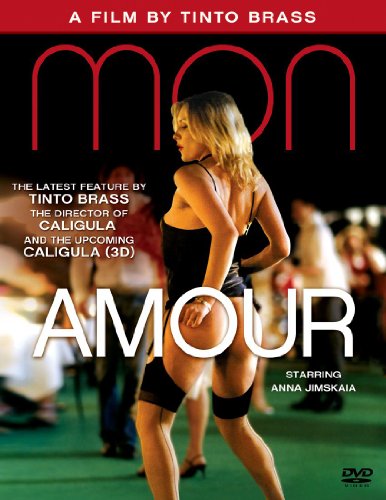
After a series of releases from erotic cinema specialist Tinto Brass's early career, Cult Epics now gives us one of his latest works. Marta (Anna Jimskaia) loves her husband Dario (Max Parodi), but he has become inattentive and selfish in bad, when he shows any interest in sex at all. Feeling lonely and unappreciated, Marta takes in the sights of Mantua, and in a museum she encounters Leon (Riccardo Marino, who is no more French than I am Martian), a sexually aggressive alpha male with whom she begins a passionate affair, with an eye (of course) to re-igniting Dario through jealousy.

As one would expect of a Tinto Brass film, this is a very handsome, lush affair, with some striking compositions and sets. There are moments at a swanky outdoor party that bring to mind the likes of Peter Greenaway. At this party, various characters (including Brass himself) get into a brief philosophical discussion on pornography and sex, and this moment encapsulates the Achilles' Heel of Brass's oeuvre. He has always struck me as a filmmaker who is nowhere near as clever as he thinks he is. His early work, especially Deadly Sweet, is, I think, the most interesting, because its self-indulgence is married to an insanely excessive cinematic frenzy. Bored with what's on screen? Wait five seconds. Here, though, the more disciplined technique is accompanied by a deeply pedestrian story. Revive your marriage through an affair? Ye godz, that's a storyline that dates back to the Triassic period. Meanwhile, Brass gives his obsession with rear ends free rein. He's certainly a filmmaker who is true to his passion, but the drooling male fantasy can get a bit embarrassing.

We begin in Vietnam, where the unit of which Jacob Singer (Tim Robbins) is a member comes under attack. Jacob is bayonetted, and as he struggles with his wounds, the film flashes forward to his post-Vietnam life in New York City. He works for the post office, is divorced, is still grieving over the death of his youngest son (Macauley Culkin), and is living with his new girlfriend (Elizabeth Pena). He is also being tormented by visions of demonic figures. And then suddenly this life turns out to be a dream, and he's at home with his wife and all of his kids are alive. Or is that a dream? And what really happened in Vietnam?

I'm going to assume that most people who are interested in this film have, in fact, already seen it. But in case you haven't, spoilers follow, and should you wish to avoid them, skip to the Video evaluation. Now I'm going to waste another sentence just in case your eyes drift. You're all gone? Good. The last time I saw this film was twenty years ago, during its initial theatrical run, and I was left feeling bitterly disappointed: after all the build-up of conspiracy and mystery, we're left with the he-was-dying-all-along gambit? In other words, my sense was of a horror film that was compellingly original and frightening for most of its running time, and then squandered that good will by a hackneyed conclusion.

Manchuria, the 1930s. The Japanese army has just acquired a treasure map, and are transporting it across the desert wastes by train. But the man who sold the map wants it back, and engages a snappily dressed killer (Byung-hun Lee) to steal it back. He is, of course, the Bad. He stages a spectacular (and spectacularly violent) train robbery. As fate would have it, at precisely the same moment, the Weird (Kang-ho Song) is also robbing the train, and the Good, in the form of a bounty hunter (Woo-sung Jung) is on board, too. The Weird makes off with the map, and what follows is a series of chases as the various factions scramble to get that map.


Director Ji-woon Kim's tribute to Serio Leone's The Good, the Bad and the Ugly follows its model's characterization, with the leads' cold-eyed killer, wacky scoundrel and cold-eyed hero clearly standing in for Lee Van Cleef, Eli Wallach and Clint Eastwood, only much prettier. The financial motivation and the setting of a country in chaos is similar, too. But while the film was a huge hit in Korea (outgrossing, it seems, the likes of The Dark Knight), it lacks the heart and brilliance of Leone's film. There are some wonderful moments during the train robbery and other set pieces, but the film gets draggy in between. The tone is a little uneven, too – the intent seems to be entertaining, cartoonish violence, but the dismissive ways in which women are killed smacks rather uncomfortably of genuine misogyny. There's a lot of visual pleasure to had here, but to ultimately mixed effect.

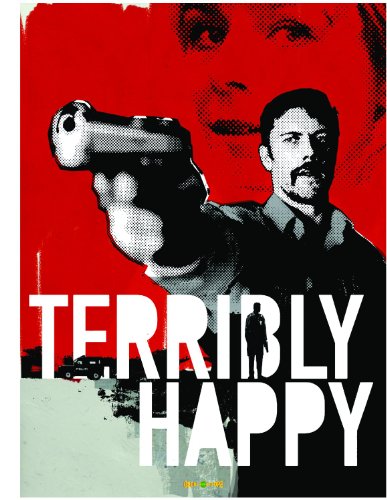
Robert (Jakob Cedergren) is a Copenhagen police officer exiled from the big city for a misdeed that is initially mysterious. His new position is as marshal in a small town in the marshlands. Though it seems at first as if he won't have much to do here, things are looking more than a little weird. The locals all have their assigned seats at the pub, and resent any deviation from the way things are done locally. Shoplifting kids are expected to be beaten. The bicycle merchant has disappeared, but no one seems interested. A little girl in a red coat pushes a squeaky pram through the streets at all hours of the night. Then there's the girl's mother, the extremely flirtatious wife of the local bully. Robert is attracted to her, wants to protect her from her husband's beatings, and one night succumbs to temptation. The consequences are deadly.

The jacket copy compares the film to the work of the Coen brothers and David Lynch, and rightly so. This would be Coen and Lynch at their darkest, though, and if there is some leavening humour here, it is low key and never breaks the mood of unease and imminent doom. The town and its flat, desolate, boggy countryside are uncanny: there is enough recognizable here to be familiar, and to connect (at some level) with the real world, but there is enough that is twisted out of true to make one very anxious indeed. An excellent noir.

Michel Gondry is a director whose work has been characterized by its originality and personal vision. The likes of Eternal Sunshine of a Spotless Mind and The Science of Sleep have marked him as a filmmaker with a distinct vision. Here he makes what must be his most personal film yet, as it is a documentary about his family. More precisely, it is about his aunt Suzette, a strong-willed, redoubtable matriarch who worked as a schoolteacher in some of the most remote regions of France. Gondry and crew follow Suzette as she revisits her former schools, working her way through the decades and chronicling her life, that of her family, and, along the way, that of France.

As personal and culturally specific as the movie is, I fear that it might not translate very well for a North American audience. Some minimal familiarity with the context might be necessary to really get into the movie. Granting that, the film, with its mixture of new footage, model train transitions, and super-8 family movies, is fascinating and moving.

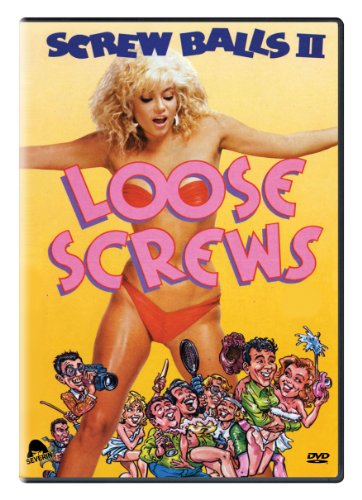
The biggest troublemakers at Beaver High (get it?) are sent to a remedial school for the summer. There (wait for it), they make life miserable for the principal while (you're not gonna believe this) finding various ways to see the female students naked, not to mention getting it on with the (but of course!) sexy French teacher. It's hijinx and nudity, 80s style.

What we have here is a sequel to a cash-in on Porky's, which means there is hardcore porn out there that is more artistically ambitious. But having just made and argument (in my review of Joy) for the preservation of 80s travelogue erotica, I can hardly then turn my nose up at the teen sex comedy from the same period, now can I? Having said that, this is far from being the funniest or most interesting of that species. If you came of age in the 80s, you'll know every beat of this movie, and every tired punchline, by heart, even if you've never seen it. And if you didn't grow up then, you'll still see everything coming.

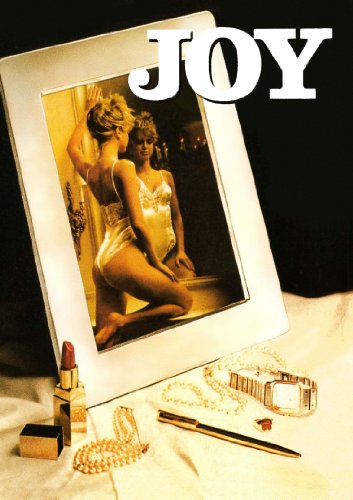
Supermodel Joy (Claudia Udy) flits from man to man, never satisfied. There's the photographer who loves her, but he, it seems, is too much of a boy. Far more intriguing for her is the older man (Gerard Antoine Huart) she falls for, and keeps returning to, moth to a flame, despite his refusal to give up the other woman in his life. The root of Joy's problem seems to be twofold: she is haunted by the memory of having caught her parents in flagrante as a young child, and she is obsessed with her father, who left her when, again, she was very young.

So yeah, nothing creepy about the older man fixation at all, now is there? At any rate, this is glossy erotica cut very much from the same cloth as Emmanuelle, complete with pointless travelogue footage to show off all the location shots and half-baked philosophical musings about sex (or, more specifically, female sexuality). There is also a minor subplot involving Joy's nude shot as part of a campaign for the liberation of the aforementioned female sexuality, though this gesture towards feminism feels rather dubious, serving only as an excuse to get the heroine naked again. Well-produced though the film is, it lacks the narrative drive of something like The Alcove, meandering gently along to a rather abrupt conclusion. It is an interesting, semi-nostalgic reminder of the lost days of theatrical soft-core, but for sheer entertainment value, a dollop of Joe D'Amato-style sleaze will get you farther.

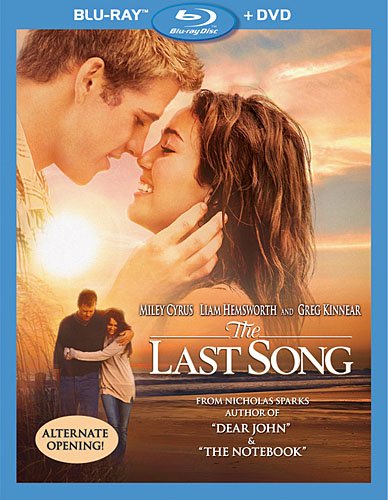
Miley Cyrus is displaced from New York to spend the summer by the sea in Georgia with estranged father Greg Kinnear. While younger brother Bobby Coleman thinks the set-up is just keen (especially former composer dad's work restoring the stain glass windows of a burned church), Cyrus stomps around in full Resentful Teenage Girl mode, until two things make her begin to open up: the need to protect a nest of sea turtles, and the attentions of the impossibly hunky Liam Hemsworth. Since this is a Nicholas Sparks story, true love and happiness will have to run the gauntlet of class snobbery, Disturbing Revelations ™, and the inevitable Third Act Fatal Illness That Brings Out The Best In Everyone (also a registered trademark).

Oh dear, am I waxing cynical? I suppose I am. Fans of Cyrus and Sparks will, of course, see this no matter what, and will probably get what they're hoping for. For everyone else, well, Kinnear does what he can, and should be congratulated for making his scenes as watchable as they are. But otherwise, we have a charmless lead, and a script so hamfisted, so filled with contrivances as predictable as they are overblown, that the film would be hilarious if it weren't so dull.

Jody Balaban (Leelee Sobieski) is a newly minted film school grad who, heady with the success her student film has brought her (an award presented by Garry Marshall!), heads off to Hollywood to find fame and fortune. Instead, she finds doors shut to the newcomer, the closest she can get to a major studio job being a stint directing traffic. But then she is offered a job as an editor. The only problem is, the studio in question is a porn outfit. Her dismay is all the greater since she has been put off sex due to the enormous childhood traumas of having been spanked for asking what a blow job was, and not being able to kiss the boy she had a crush on while playing Spin the Bottle. She takes the job, though, her plan being to shoot her own dream film, a romantic comedy called “On the Virge” (ouch!) on the sly, using the company's resources at night. Romance, meanwhile, might bloom in her real life, as she finds herself working with porn-director-who-once-aspired-to-something-more-and-is-devastatingly-handsome Jeff Drake (Matt Davis).

Writer/director Julie Davis's film is, apparently, rather autobiographical, drawing on her own early experiences in the industry. One hopes that she has maintained a healthy artistic distance from her protagonist, because Jody is hard to like. Her naiveté approaches a diagnosable condition, and it is coupled with a prodigious sense of entitlement, artistic self-regard, and snobbery. Though we see her learn to see the porn stars she works with as people and friends, she is so off-putting that it is hard to care enough to be interested in her emotional education. As well, the film itself presents the porn stars as lovable idiots, and so its own point of view doesn't seem far removed from Jody's. Furthermore, the look of Finding Bliss is simply not that interesting, making it hard to believe that Jody and Jeff are themselves unsung cinematic geniuses. On the other hand, Kristen Johnston as the porn studio's upbeat executive is good fun, and brings some snap to every scene she's in. Overall, though, the piece is simply too smug for its own good.