Posted in: Disc Reviews by David Annandale on July 31st, 2010
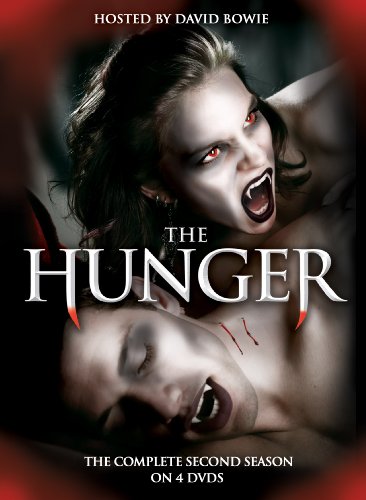
The second (and final) season of this erotic horror anthology series follows the pattern set down by the first. David Bowie replaces Terence Stamp as host, and takes up the job of briefly uttering portentous statements before each story rolls. These stories star such luminaries as Giovanni Ribisi, Eric Roberts, Jennifer Beals and Lori Petty, and are based on tales by a pretty impressive line-up of line-up of writers: Poppy Z. Brite, Kim Newman, David J. Schow, Gemma Files and Ramsey Campbell, to name but a few.
As before, the erotic fixations give the series a clear identity, but also narrow its focus so that a marathon viewing of episodes would be a bit tiresome. But again, as before, the talent involved means horror fans would be remiss to pass the series up without giving it a serious look.
Posted in: Disc Reviews by David Annandale on July 31st, 2010
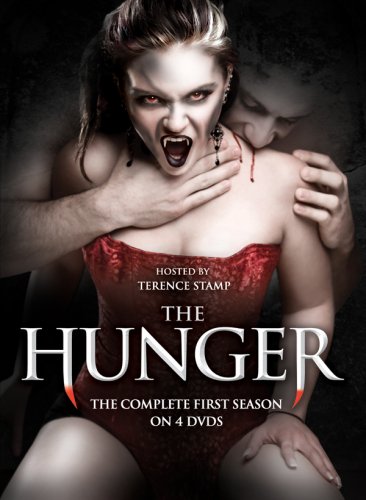
In 1983, director Tony Scott wasn't quite as prone to self-caricature as he is today, but he was already enamored of glossy, pretty surfaces, and if nothing else, his vampire movie The Hunger was glossy and pretty. The film arguably remains the most high-profile mixture of eroticism and horror, its place in libidinal history cemented by the love scene between Susan Sarandon, Catherine Deneuve, and Deneuve's body double. The film's lasting cult appeal resulted in a short-lived TV horror anthology series, presented by brothers Tony and Ridley Scott, and running two seasons (1997-8 and 1999-2000). Here we have Season 1, hosted by Terence Stamp.
The series' mandate was to present glossy sex-and-horror tales in a half-hour format. In this respect, it follows in the footsteps of The Hitchhiker (1983-91), but the intervening years mean generally better production values for The Hunger. An annoyingly long opening credit sequence leads to an enigmatic 30-second intro from Stamp (everything set to the sort of flashy cutting and visual excess that sure feels like it was directed by Tony Scott, even if it wasn't). The actual stories are notable for their talent on both sides of the camera – directors such as Russell Mulcahy, Patricia Rozema, and Tony Scott; actors like Daniel Craig, Karen Black, and Jason Flemyng. Even more interesting is the fact that just about every story is either adapted from a short story by a notable writer (Robert Aickman, F. Paul Wilson, Brian Lumley, Edgar Allen Poe) or scripted by one (Harlan Ellison, David Schow). The limitations of TV and budget are still present (beware some extremely ill-advised CGI), and the centrality of sex to the narratives mean that things can feel repetitious if you watch many episodes back to back. On the other hand, there is also some genuinely disturbing imagery here (check out the climax to “Necros”). In small doses, then, worth watching.
Posted in: Disc Reviews by David Annandale on July 28th, 2010
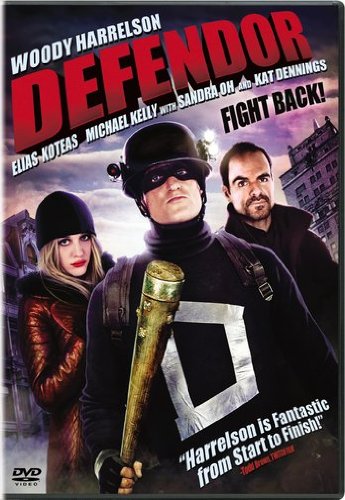
Woody Harrelson is Arthur Poppington, a child-like adult who fights crime by night in the guise of Defendor. His costume and weapons are DIY: a helmet that records his adventures on VHS, a duct tape “D” on his black turtleneck, a trench club, a slingshot, marbles, lime juice. He is obsessed with tracking down “Captain Industry,” a mythical figure whom he blames for the death of his drug-addicted mother. He runs afoul of corrupt cop Dooney (Elias Koteas at his scuzziest best), beating him and “rescuing” prostitute Kat (Kat Dennings), and the latter convinces him that the crime boss Dooney works for is, in fact, Captain Industry. Arthur sets out on his crusade, and the question is whether his naiveté will triumph, or get him killed.

A quirky, charming take on the super-hero genre, Defendor deftly mixes pathos and laughs. There is enormous fun in seeing Koteas taking one improbable beating after another, but there is also real sadness and drama in Arthur and Kat's stories. For all its “real world” patina, Defendor is ultimately no more realistic than The Dark Knight, but that in no way detracts from the deeply human, deeply moving, character-driven tale that unfolds. Quite the wonderful little movie.
Posted in: Disc Reviews by David Annandale on July 26th, 2010
As the name suggests, this is a collection of ten movies on LGBT themes. In chronological order, here's what we have:
The Children's Hour (1961): Shirley MacLaine and Audrey Hepburn are the headmistresses of a girl's school, and their lives are turned upside down when one ghastly little child accuses them of being romantically involved. It is clear, though, the MacLaine would very much like to be. This was director William Wyler's second stab at adapting Lilllian Hellman's play, and this time was able actually to deal with the play's central issue, rather than disguise it as he had to
Posted in: Disc Reviews by David Annandale on July 21st, 2010
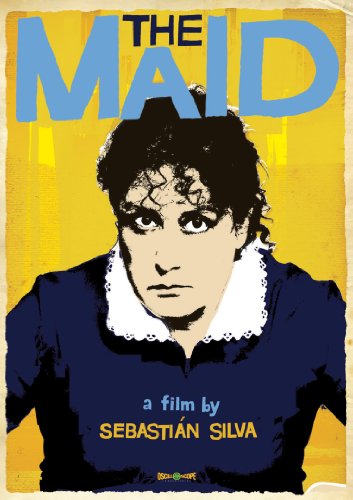
Raquel (Catalina Saavedra) has been the maid for the family run by matriarch Pilar (Claudia Celedón) for 23 years. Those years have taken their toll, and Raquel looks worn far beyond her 41 years. She is clearly unable to look after the household on her own, and Pilar tries to hire another maid to help out. Raquel takes this the wrong way, imagines she's being eased out, and treats each new maid as an invader who must be repulsed.
Saavedra is extraordinary in the title role, her exhausted, pained, but determined look invoking a sullen bulldog who is on the verge of going feral. But this is not the story of a maid's psychotic break, nor is it one where the family she works for is made up of monsters. Everyone in the film is very human, and the story is a very human comedy. The comedy is not of the slapstick nature (though there are some pretty physical moments), but rather grows out of the finely observed characters, and is shot though with genuine drama. A find, deeply sympathetic piece.
Posted in: Disc Reviews by David Annandale on July 6th, 2010
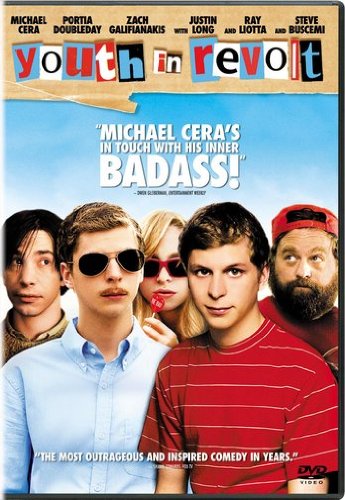
Nick Twisp (Michael Cera) is a 16-year-old in terminal virgin mode. His home life with his mother and piggish boyfriend (The Hangover's Zach Galifianakis) is a nightmare, but when said boyfriend runs afoul of a trio of sailors, an enforced vacation is mandated. At the trailer park, Nick meets Sheeni (Portia Doubleday), a girl who not only speaks to him but shares his tastes. But Nick has a rival for Sheeni's affection, and in order to win her heart, he must be bad. Conjuring suave alter ego François as his guide, he embarks on an escalating campaign of mayhem designed to unite him with his beloved.
Michael Cera turns in a patented Michael Cera performance: the sensitive, intelligent, shy teen. What could feel too familiar, though, is kept fresh by his hilarious incarnation of François, and the humour depends to no small degree on bouncing off the Cera's established screen persona. And work the humour does. There are great sight gags here, some terrific slapstick, and no end of sharp verbal wordplay. The script is an intelligent delight, and the characterizations are quirky and sharply drawn. I have essentially two reservations: Sheeni is a pretty unsympathetic character, unworthy of Nick's devotion, and the more we see of her, the more his love becomes inexplicable; and there are a number of appealing characters who simply drop through cracks in the plot, never to be seen again. Still, all told, this is one sharp, funny comedy.
Posted in: Disc Reviews by David Annandale on July 5th, 2010
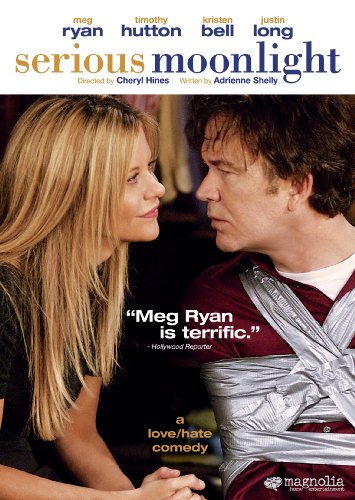
Meg Ryan arrives at her country home a day early, catching hubby Timothy Hutton in the middle of writing her a note telling her that he wants out of their marriage. Knocking Hutton out, Ryan duct-tapes him to a chair, and declares that he will remain her prisoner until he loves her again. Hutton is understandably skeptical that this tactic will work. He is also furious and freaked out. He is even less happy the next day when Ryan heads out to do some grocery shopping, and a thief (Justin Long) breaks enters the house.
Fans of Meg Ryan hoping for a romantic comedy will be disappointed. This is a much darker piece of work, and one that defies viewers to like anyone on the screen: Ryan is nut, Hutton is a jerk, his mistress is a dolt, and Long is a thug. Realizing from the start that we are in the realm of the black farce helps, and there is fun to be had in the performances. Still, what with most of the film taking place in a bathroom, there's a bit of a filmed-theater feel to the experience, and the ultimate denouement is obvious to all but the characters, leaving frustrated viewers to wait impatiently for the pennies to drop.
Posted in: Disc Reviews by David Annandale on July 5th, 2010
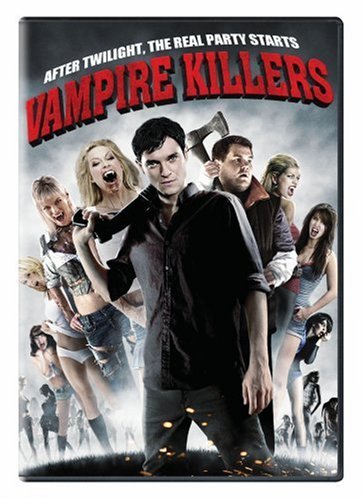
The title is grammatically ambiguous. Is this a film about vampire killers who happen to be lesbians, or killers of lesbian vampires? The former might have given the film some nicely subversive potential, but the latter is the case. Our heroes are the gormless pair of the serially dumped Jimmy (James Corden) and the piggish Fletch (Mathew Horne) – basically Shaun and Ed from Shaun of the Dead, minus the wit. Heading out to a randomly picked village in rural England for a low-budget vacation, the duo happen upon a VW bus filled with women who, based on the available evidence, have just finished a gig as background dancers for a hip-hop video. The group arrives at a decrepit mansion and proceed to party, unaware that the area is cursed by the lesbian vampire queen Carmilla. Seeking to resurrect their matriarch, her minions proceed to vamp all but one of the women, and the stage is set for a supernatural battle of the sexes.
There have been many horror comedies in the wake of Shaun of the Dead's well-deserved success, and while there have been some worthy entries, there have also been plenty of reminders that just calling something a comedy and having characters bug out their eyes and run around screaming doesn't mean the film is funny. And here we have a case in point. The production design is handsome, and echoes the Hammer flicks of yore, but the witless dialogue, clumsy action choreography, and vacant characters will soon have you wishing you were watching an actual Hammer film (or even Carry on Screaming). Then there's the premise. The filmmakers apparently never though it the least bit problematic that they were serving up repeated scenes of women being impaled and decapitated (and then exploding in a splash of white, milky fluid) for laughs. The results would be even more offensive if the viewer weren't numbed by the tedium – the 83 minutes feel twice that long.
Posted in: Disc Reviews by David Annandale on June 28th, 2010
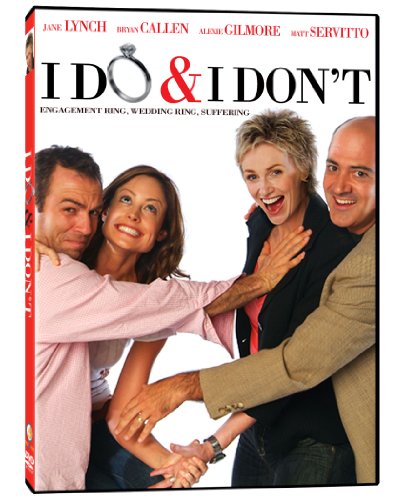
Bob (Bryan Callen) and Cheryl (Alexie Gilmore) are about to be married. Bob already can't win with his in-laws-to-be, and his latest mistake is to forget to arrange for pre-marriage counseling, which must be undergone or the church won't allow the ceremony to take place. There is only one couple available at the last minute, and it turns out to be the massively dysfunctional set of overbearingly enthusiastic Dick (Matt Servitto) and cynical and rapacious Nora (Jane Lynch). The counseling sessions become a series of disasters.
Callen comes across as a poor-man's Ben Stiller, essaying different variations of baffled panic and pained humiliation through events that feel like deleted scenes from Meet the Parents. Jane Lynch turns in yet another of her trademarked hard-boiled characterizations. She's good at this, but she could also do this part in her sleep. The script gives the cast very little to work with, and the direction is utterly flat. Scenes that should be frantic are merely dull, and there's a fight scene between Gilmore and Lynch that is one of the most badly choreographed I have ever seen. Painful stuff all around.
Hmm. I'm looking at the back of the case. What exactly does “16:9 (1.78) Full Screen” mean? Seems to be a rather contradictory set of specs. In fact, what we have is 1.78:1 non-anamorphic. The picture is decent enough, but a bit on the soft side, and the reds are a little strong. Contrasts are okay, but the picture, like the movie itself, lacks energy.
Posted in: Disc Reviews by David Annandale on June 24th, 2010
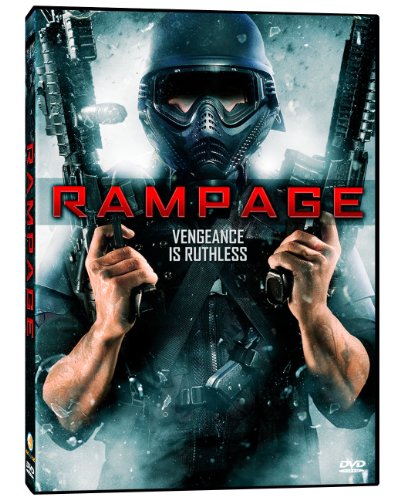
Bill Williamson (Brendan Fletcher) is an angry young man. His boss treats him badly, he can't get good service at the local coffee shop, and his parents are trying, none too subtly or smartly, to get him to move out. He hangs out with a friend who talks a big talk about changing the world, but does nothing. Bill, by contrast, is about to do something: gearing up with so much body armor he becomes a walking tank, he begins a gigantic massacre in town, beginning by blowing up a police station, and going on to gun down anyone who crosses his path. There is, however, rather more method to his madness than might appear.
The indefatigable Uwe Boll here brings us a film that echoes the likes of Falling Down, Targets and Elephant. (And in typically modest fashion, on the commentary track he feels he has improved on Falling Down.) This is one of Boll's better films, blessed by an excellent lead performance by Fletcher, convincing improvised dialogue (which does produce a couple of grammatical howlers, but hey, so does real-life dialogue), and intense hand-held camerawork. There are some genuinely witty moments, too, such as the scene where Bill enters a bingo hall, and is completely ignored by its denizens. Even at a brisk 85 minutes, however, the film doesn't have quite enough plot, and thus the rampage itself feels a bit too long. There is also too much reliance on flash-forwards, which ultimately telegraph the resolution too far ahead. As for that resolution, it isn't without a certain cleverness, but it does tend to muddy the film's social commentary. But social commentary there is, and there is quite a bit to admire about this effort.
Some of the reds are bit too strong, but otherwise the colors are excellent, as are the contrasts, blacks and flesh tones. There are moments where the film shifts to webcam footage, and the difference is clear and convincing. The overall look of the film is rich without venturing too far outside of a realist aesthetic (the exception being a gigantic explosion early on, but as far as the transfer goes, everything still looks very nice). The aspect ratio is the original 2.35:1 anamorphic widescreen.