Posted in: Disc Reviews by David Annandale on June 12th, 2010
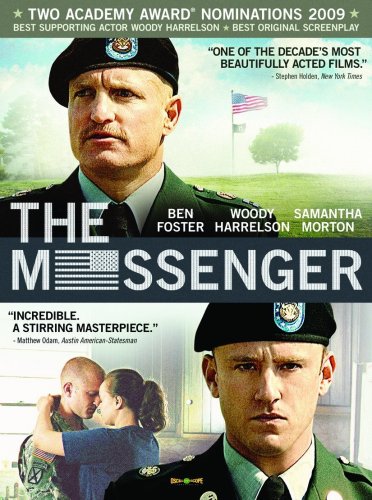
Staff Sergeant Will Montgomery (Ben Foster), a decorated solider just back from Iraq and having difficulty re-adjusting to life on the home front, is understandably less than thrilled with his new assignment: working with Captain Tony Stone (Woody Harrelson) in the Casualty Notification Service. These two have what must surely be one of the worst jobs in the history of history: knocking on doors and informing people that their loved ones have been killed. It is important that they deliver the news and leave, and have no further involvement with the bereaved. If only life were that simple...
Posted in: Disc Reviews by David Annandale on June 12th, 2010
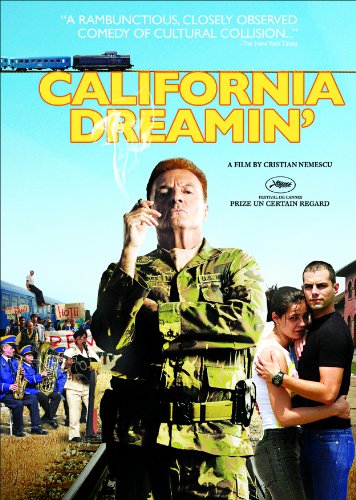
In 1999, a troupe of US marines must transport some equipment across Romania. Leading them is Captain Doug Jones (Armand Assante), a man so committed to his duty that he does a pretty convincing job of appearing passionate and proud about what is, on the face of it, a rather dull, two-bit assignment. As matters develop, the mission is far from dull, though it is not interesting in the way Jones might have hoped. The train is waylaid in the small town of Capalnita by the corrupt stationmaster, and a comical clash of cultures ensues.
Director (and co-writer) Cristian Nemescu was killed in a car accident before he had finished editing the film, and it is likely that his final version would have run less than the current 154 minutes, which is long for a comedy. Nonetheless, there has been no second-guessing of his artistic intent, and the film is presented as he left it, and if it isn't as tight as it probably would have been, had Nemescu been able to complete it, it's still a remarkable piece of work, with wonderful, finely observed (and performed) characters, and a sharp, wry sense of humour.
Posted in: Disc Reviews by David Annandale on June 9th, 2010
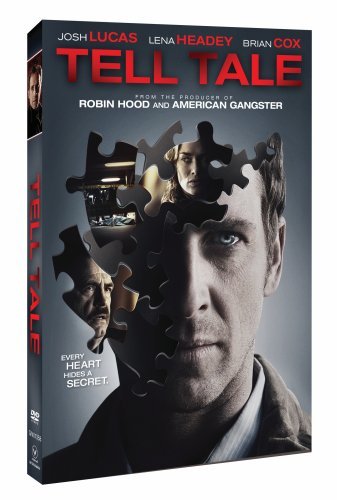
A man dies during what appears to be a botched robbery, and his heart winds up in the needful chest of Josh Lucas, single father to a young daughter with a rare bone disorder. This is obviously a man with more than his share of troubles, but things appear to be turning around. He has a new heart, and his daughter's beautiful doctor (Lena Headey) really likes him. But then, when he crosses the path of a certain paramedic, his heart begins to beat furiously, deafening him. Before long, Lucas realizes that his donor was murdered, and the vengeful heart is leading him to the killers.
Produced by the Scott brothers, Ridley and Tony, this is, as one would expect, a handsome-looking piece, but has none of the editing frenzy that characterizes Tony's work, and for that matter is more of a moody tone poem than is typical of the work of either brother. So director Micheal Cuesta is forging his own identity here, and is aided by genuinely moving performances, especially from Lucas, an actor who seems to be able to move effortlessly between hero and villain roles. Also on hand is Brian Cox, as the detective who realizes what is going on, and for reasons of his own encourages the heart's vendetta. He's always fun to watch, though his hard-boiled character here isn't much of a stretch.
Posted in: Disc Reviews by David Annandale on June 8th, 2010
A spin-off from Diff'rent Strokes, The Facts of Life centered around four residents of the Eastland Academy for Girls and their headmistress, Mrs. Garrett (Charlotte Rae). The four girls were characterized in strokes as broad as they way their physical types were presented: Blair (Lisa Welchel), rich, spoiled and blonde; Jo (Nancy McKeon), tomboy and brunette; Tootie, nosy and African-American; Natalie (Mindy Cohn), fun-loving and overweight.
The actual humour in the series is pretty pitiful – in other words, standard sitcom quips that might pass for wit if you're about five. However, like its parent show, it would consistently tackle difficult subjects. In this season, that means the likes of abortion, drunk driving, and hearing loss. Nothing subtle, and much that is painfully earnest here, but at least there is also a little bit of ambition in the stories, so credit where credit is due. The lead-in to the season was the TV movie, The Facts of Life Goes to Paris. While the dire nature of the humour is even more apparent here, now that the laugh track has been stripped away, the shooting was actually done on location, which is, frankly, more than I was expecting.
Posted in: Disc Reviews by David Annandale on June 4th, 2010
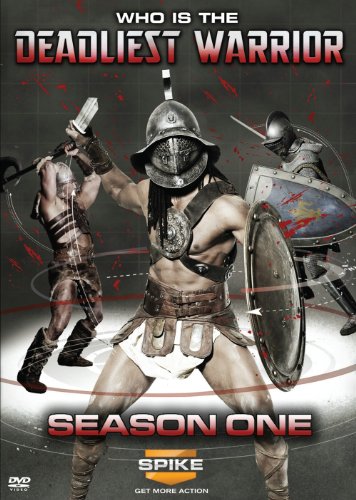
For anyone who still engages in serious debates over who would win, Thor or the Hulk, here is a series that will send you into paroxysms of nerd joy. The premise here, in the spirit of violent apples and homicidal oranges, is to scientifically (more or less) explore who would win in one-on-one battles between an Apache and a gladiator, a viking and a samurai, a Spartan and a ninja, and so on. We even have the IRA versus the Taliban. Weapons, armor, and tactics are all examined, demonstrated, and fed into a computer. The data is then dramatized at each episode's climax.
It really is difficult to respond adequately to this specimen. This is one of those ideas that is utterly whacked, but has also been pretty obviously lurking in the male psyche since time immemorial. The presentation is pure cheese, all flashy graphics and clenched-teeth narration, and the actual battles have more than a whiff of Kirk versus the Gorn about them. If you want great fight choreography to go along with your strange pairings, you're probably better off sticking to playing Soul Caliber IV. All the same, the sheer oddity of the enterprise makes it hard to tear one's eyes away.
Posted in: Disc Reviews by David Annandale on May 9th, 2010
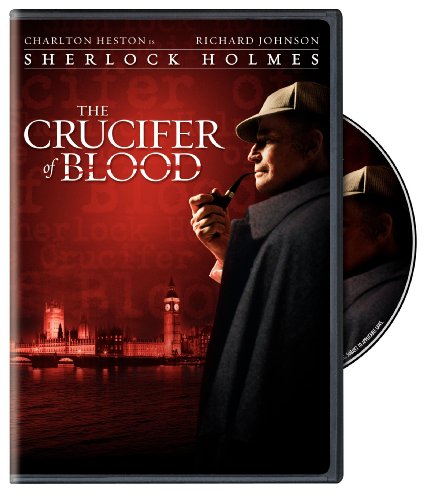
During the chaos of a mutiny, three British officers in India get their hands on a great treasure. They do not do so honorably, however, and, mistrustful of each other, make a blood pact, which cannot be broken without suffering a terrible curse. Decades later, the three have experienced very different fortunes, and vengeance has come to call. Irene (Susannah Harker), the daughter of one of these men, seeks the help of Sherlock Holmes (Charlton Heston!) and Dr. Watson (Richard Johnson). There are many dark deeds to unravel, and along the way, Watson and Irene fall in love.

The reason for this obscurity's arrival on home video is obvious, what with the Guy Ritchie movie doing the same. While this effort is far less problematically revisionist than Ritchie's, it still presents much for the Holmes fan to struggle past. Apart from the squirm-inducing age difference between Johnson and Harker, there is, of course, the supremely odd casting of Heston as Holmes. In fact, Heston had played the part in the stage version of this story, and to his credit, he does have a solid grasp on the character, and his English accent is serviceable. His angular features are also right for the part, though there is also a muscular physicality to Heston that makes his Holmes seem just as likely to punch through a wall as solve a mystery. And Heston is one of those stars who never disappears into a role, and so one is always conscious of watching Heston, not Holmes, on the screen. As for the film itself, its stage origins remain obvious, despite the many locations. This is an entertaining enough oddity, but no more.
Posted in: Disc Reviews by David Annandale on May 9th, 2010
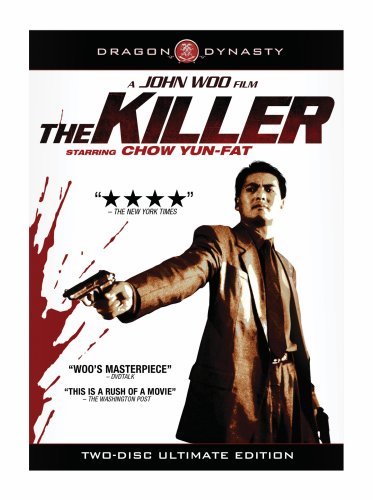
Having accidentally blinded a singer during a contract killing, hit man extraordinaire Chow Yun-Fat, consumed with guilt, becomes the woman's protector, and seeks redemption by finding some way to restore her sight. Meanwhile, Danny Lee is the plays-by-his-own-rules cop on his trail, and inevitably the two men will find themselves as unlikely allies in gigantically operatic gunfights.
I can remember when John Woo was still a name whispered with reverence by cult film fans, and his films were only available on grey market VHS or import laser disc. In fact, I first saw The Killer on one such disc, in Cantonese with Mandarin subtitles, reading a transcription of a translation, desperately trying to grasp the gist of the action. It was worth the effort, though, for I had never seen action sequences like these. Today, of course, the situation is very different. Woo's films are readily available, Hard-Boiled's sequel is a video game (Stranglehold), and his stylistic characteristics have become clichés. The passage of time and over-familiarity have arguably robbed the film of some of its power, while making the OTT sentimentality harder to take, but the fact remains that this is still a seminal moment in action filmmaking.
Posted in: Disc Reviews by David Annandale on May 9th, 2010
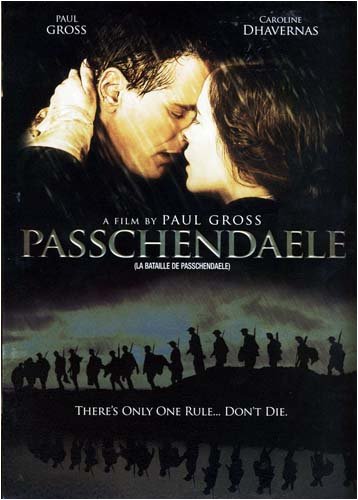
We are in the midst of the Great War. Michael Dunne (Paul Gross) is a Canadian solider recovering from physical and psychological wounds. He falls in love with his nurse (Carline Dhavernas), and when her asthmatic brother enlists, Dunne heads back to the trenches to protect him, and the two men wind up at the gigantic, murderous battle that gives the film its name.
Writer/director/star Gross has an almost messianic commitment to Canadian film and Canadian history, and here he combines his obsessions in a 20-million-dollar effort that is, by the standards of the Canadian film industry, nothing short of gargantuan. And to his credit, the battle scenes are impressive. The editing is frequently startling and brutal, in keeping with the events themselves. On the other hand, the romance is painfully hackneyed, and the naked appeals to national pride can be rather wince-inducing.
Posted in: No Huddle Reviews by David Annandale on April 29th, 2010
The wonderful thing about the Warner Archive Collection and its burn-on-demand approach to DVDs is that it permits the release of titles that would otherwise be aimed at so narrow a niche as to be nonviable as a commercial release. And this two-disc set is a case in point. Hosted by Robert L. Ripley himself (yes, believe it or not, he was a real person), here are 24 ten-minute shorts from the early 1930s. They're an entertaining hodgepodge of interesting facts, oddball trivia, quirks and freaks of nature, and travel footage. Among other things, what we have here is the ancestor of the shockumentary, and there are plenty of items that are still pretty eye-opening (such as the horned man).
As hosts go, Ripley is a fine illustrator. In other words, he's a rather stilted, charisma-free speaker, but there's a certain innocence to his delivery, and indeed to the entire proceeding, that is most engaging. I say “certain” innocence, and that qualification is important. Given the times, it should come as no real surprise that casual racism and sexism are rife. Ripley's trip to Africa (the subject of Episode 12), for instance, presents the cultural practices there (and “Africa” is treated as if it were a single, unified country) as subjects worth of amused and horrified fascination. Some segments are stronger than others, usually depending on how much actual footage or live demonstrations Ripley presents. The passages that are little more than a litany of facts spouted by Ripley (there are no legal holidays in the US!) are rather less mesmerizing.
Posted in: Disc Reviews by David Annandale on April 27th, 2010
A time of change is descending on the America and the men and women of the Sterling Cooper ad agency. The civil rights movement is underway, and (at the end of the season), President Kennedy is assassinated. Personal lives are also undergoing upheaval. Peggy is learning to express her sexuality, while the closeted Stan wrestles with some painful reckonings involving his own. And Don's marriage hits a crisis thanks to his serial philandering and a huge secret from his past.
Easily one of the most acclaimed shows of recent memory, Mad Men hardly needs me to point out how strong its performances are, how intelligent its scripting is, and how beautifully it's shot. But at the risk of being branded a heretic, I would point out a few gaps in the emperor's clothes. The series is highly inaccessible to new viewers, assuming as it seems to that everyone watching has been doing so from the first. I had only seen a couple of episodes prior to plunging into this set, and was often frustrated by the plethora of significant glances between characters that clearly spoke volumes about past events. Not only did I have trouble figuring out what was going on, I wasn't always certain that anything was. Yes, the writing is very smart, but it can, at times, wear that intelligence a little too ostentatiously – little bits of business involving a child reading Gibbons' Decline and Fall of the Roman Empire to her grandfather, or executives trading quips about Balzac feel show-offy to me. (And while we're on the topic, be wary of the knowledge you're going to parade. At one point in Episode 1, we are informed that London no longer has fogs. That is true now, but is a very anachronistic statement to be making in 1963, as my parents can attest to.) Finally, there is a certain coldness to the affair that I found made it hard to particularly care about any of the characters. Again, none of this is to deny the program's manifold and great qualities, but for my money, it isn't quite in the same stratospheric heights as something like The Wire.