Posted in: Disc Reviews by David Annandale on January 14th, 2011
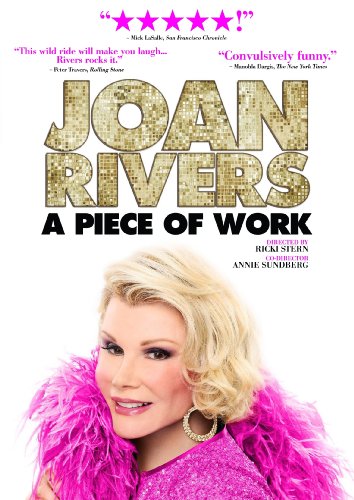
This documentary tracks a year in the life of Joan Rivers. We begin at a relatively low ebb in her career, with her finding it difficult to land desirable gigs. She throws herself into the production of an autobiographical play that debuts in Edinburgh, and her hope is that the London reception will be glowing enough to provide enough momentum for a Stateside production. Meanwhile, she and daughter Melissa are contestants on Celebrity Apprentice. As the film follows the ups and downs of these efforts (concentrating particularly on the play), Rivers opens up about her life and career.
This is a very smart, enormously entertaining, and very funny documentary. There is plenty of footage of Rivers in performance from all stages of her career. For those whose exposure to her has been limited to snippets of red carpet interviews and jokes about her plastic surgery (and I am one of those benighted souls), this film will be a revelation. There's a reason why this woman became famous in the first place – she is one ferocious stand-up comic, and as good as the footage here is, it leaves the viewer hoping for more. That's a good thing. There are, though, one or two less felicitous gaps in an otherwise very revealing doc, most notably what, precisely, was behind the erratic behavior and unexplained disappearances by Rivers' long-term manager. But this is a trivial quibble. The film is a piece of work indeed: sterling work by directors Ricki Stern and Anni Sunderberg, and brave work by Rivers.
Posted in: Disc Reviews by David Annandale on January 11th, 2011
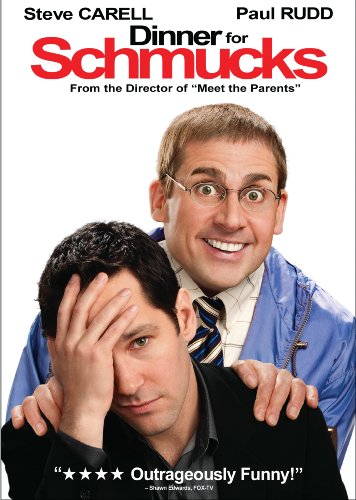
Paul Rudd is desperate for a promotion. Moving from the drudgery of the sixth floor to the executive seventh will, he feels, cement his financial status and convince his girlfriend (Stephanie Szostak) to marry him. Opportunity knocks, but also has a price: he must find an idiot to bring to boss Bruce Greenwood’s dinner party, where these unfortunates will be ridiculed. Rudd doesn’t like the idea, but then he (literally) runs into Steve Carrell, a man of such transcendent idiocy that Rudd can’t resist the siren call he represents. But before they can make it to the dinner, Carrell’s well-meaning stupidity threatens to completely derail Rudd’s life.
This is a remake of 1998’s The Dinner Game (Le diner des cons). Francis Veber’s farce clocked in at 80 minutes. Jay Roach’s bloated retread is half again as long, and only half as funny. The Paul Rudd character in the original, played by Thierry Lhermitte, was a superior, cruel SOB who deserved to have his life taken apart. Furthermore, the characters never actually make it to the dinner of the title. The remake, of course, finds it necessary to stick literally to its title, and gives us the dinner, thus inviting us to engage in precisely the form of cruel laughter it pretends to condemn. It also tries to make Rudd sympathetic, and having his character be a nice guy runs counter to the very premise of the film. End result: a film that tries much too hard to be funny, laboriously working every last predictable gag until those horses are fit for nothing more than the glue factory. There are some amusing moments, but this is, by and large, a gigantic, time-consuming waste of the talent involved.
Posted in: Disc Reviews by David Annandale on January 3rd, 2011
Paul Rudd is desperate for a promotion. Moving from the drudgery of the sixth floor to the executive seventh will, he feels, cement his financial status and convince his girlfriend (Stephanie Szostak) to marry him. Opportunity knocks, but also has a price: he must find an idiot to bring to boss Bruce Greenwood's dinner party, where these unfortunates will be ridiculed. Rudd doesn't like the idea, but then he (literally) runs into Steve Carrell, a man of such transcendent idiocy that Rudd can't resist the siren call he represents. But before they can make it to the dinner, Carrell's well-meaning stupidity threatens to completely derail Rudd's life.
This is a remake of 1998's The Dinner Game (Le diner des cons). Francis Veber's farce clocked in at 80 minutes. Jay Roach's bloated retread is half again as long, and only half as funny. The Paul Rudd character in the original, played by Thierry Lhermitte, was a superior, cruel SOB who deserved to have his life taken apart. Furthermore, the characters never actually make it to the dinner of the title. The remake, of course, finds it necessary to stick literally to its title, and gives us the dinner, thus inviting us to engage in precisely the form of cruel laughter it pretends to condemn. It also tries to make Rudd sympathetic, and having his character be a nice guy runs counter to the very premise of the film. End result: a film that tries much too hard to be funny, laboriously working every last predictable gag until those horses are fit for nothing more than the glue factory. There are some amusing moments, but this is, by and large, a gigantic, time-consuming waste of the talent involved.
Posted in: Disc Reviews by David Annandale on December 24th, 2010
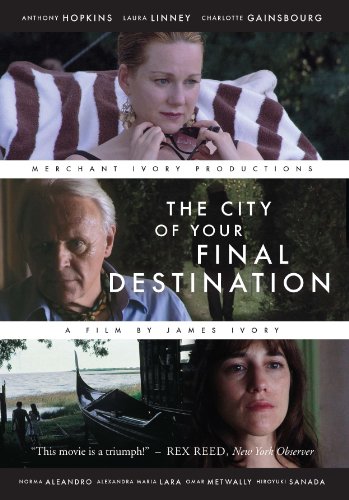
Omar (Omar Metwally)desperately needs to write the biography of author Jules Gund if he wants to hang on to his academic post. In order to do this, he will have to secure the cooperation of the reclusive author's surviving family: his wife (Laura Linney), his mistress (Charlotte Gainsbourg) and his brother (Anthony Hopkins). Pressured by his girlfriend to make something of himself, Omar heads off to Uruguay and essentially invites himself into the Gund residence, an isolated mansion in a state of genteel decay. Hopkins and Gansbourg are quick to agree to the project, but Linney resists, and Omar is gradually entangled in the family's complicated web of relationships, while drifting into an affair with Gainsbourg.
I haven't read Peter Cameron's novel which which the film is based, so I can't say whether this story's vision of academic life is the same as the book's, but I will say that what we have here is rather bizarre. Yes, there is some truth to the old “publish or perish” saw, but Omar's desperate career straights are ludicrous. So the film starts off with a shaky premise, and is further saddled with a distinctly callow protagonist. Though he is clearly supposed to be a rather weak figure, he is so difficult to care for that the film has a void at its centre. As for Linney, Hopkins and Gainsbourg, these are people who could make a recital of the phone book interesting, and their time on the screen is compelling, even if the film itself isn't quite.
Posted in: Disc Reviews by David Annandale on December 23rd, 2010
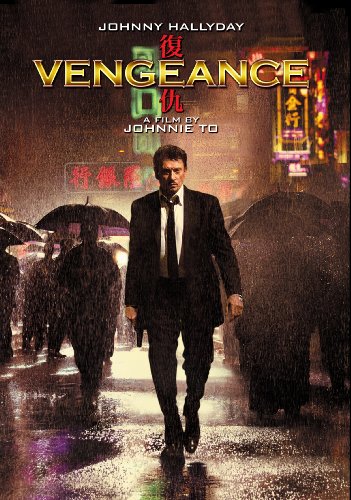
In Macao, a trio of gunmen butcher a family. Only the mother survives (barely), and her father (aging French rocker Johnny Hallyday, looking as hardboiled and grotesque as Mickey Rourke), a restaurateur who knows altogether too much about how to get by in the violent underworld, comes to town and sets out on a mission of vengeance. He hires a trio of hit men, and works with them in tracking down his enemies. They have to do so quickly, though, because Hallyday has been shot before, and the bullet lodged in his brain is gradually stealing his memory away. He wants his revenge while he can still remember why it is necessary.
Johnnie To's crime thriller is as stylized as anything John Woo did in his prime, and shows, post-Woo, that there are still new ways of choreographing violent shoot-outs. A massive showdown in a junkyard is a set-piece of such visual beauty as to be worth the price of admission in and of itself. The mix of gangster film, revenge saga, Memento, and fable will understandably be a bit rich for some palates, but taken in the right spirit, this is intense, deliriously excessive entertainment.
Posted in: Disc Reviews by David Annandale on December 21st, 2010
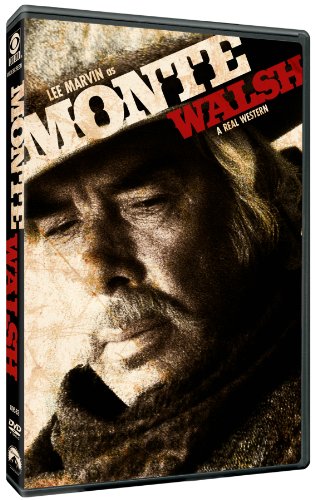
Monte Walsh and Chet Rollins (Lee Marvin and Jack Palance) are two cowboys in an era where their kind is becoming extinct. After a hard winter in the mountains, they discover that most of the ranches they knew have vanished, the land being bought up by Eastern corporations. They find work on the ranch once owned by Jim Davis, though he now answers to accountants back East. And though life, at first, seems all right, bit by bit they witness the end of their era, as a way of life dies, and the men who lived it are pushed to suicide, desperation, robbery and worse.

There were numerous “death of the west” movies in the late 1960s and early 1970s, films whose subjects also reflected the fact that the Western itself, as a genre, was entering a near-terminal decline from which it has never fully recovered (these days, if one Western per year comes out, that's doing pretty well, and yet there was a time when there were more Westerns pumped out than any other genre). Unlike the blaze of glory tales of Sam Peckinpah (The Wild Bunch being the best example), Monte Walsh is more of a tone poem. There is very little plot. We watch a few seasons in Monte's life, see him at work and play, see the tentative romance between him and prostitute Jeanne Moreau, see his sadness over a vanishing world and disappearing friends. Then, an almost subterranean thread involving the increasingly desperate straights of Mitch Ryan rises to the foreground in the final act as tragedy descends.
Posted in: Disc Reviews by David Annandale on December 20th, 2010
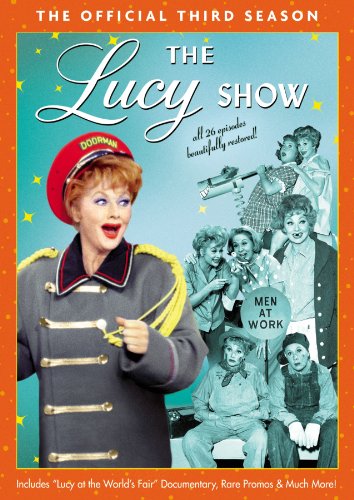
This was Lucille Ball’s follow-up to I Love Lucy. Here Ball is a widowed mother of two, sharing her home with best friend Vivian Vance, who is a divorced mother of one. All the other members of household are, of course, faced with the disasters triggered by Lucy. I screened this set immediately after viewing its close contemporary, Petticoat Junction, and the difference between the two was instructive. There are plenty of hokey gags and situations on The Lucy Show, but there is an enormous difference between the shows, thanks to the comic genius of Lucille Ball. Her energy fills each episode, her timing is spot-on, but there is also her commitment to a type of physical comedy that to this day remains pretty much the exclusive domain of male performers. Not only does she make this style her own, she grounds it in a female reality. There is a reason she was so beloved a performer, and why her work still stands up today.
The third season offers up even more laughs. Some highlights of the season include:
Posted in: Disc Reviews by David Annandale on December 15th, 2010
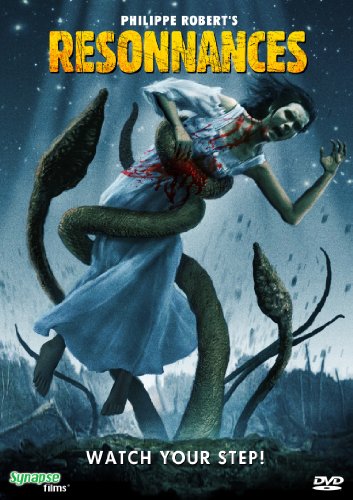
Six young men and women head off in two cars for a weekend trip in rural France. Along the way, the car with the three guys runs out of gas, fortunately within pushing distance of a filling station. There, our boys inadvisedly pick up a hitchhiker, who turns out to be an escaped psychopath. But no sooner have they started to worry about their new passenger when a mysterious fog and a ghostly vision send them careening off a cliff. Wounded and lost, they find that not only do they have a killer to contend with, but there is something monstrous and huge under the ground that is hunting all of them.
Clearly shot on a shoestring, but very ambitious in its special effects (an opening prologue featuring a meteor strike in 17th-Century France, giant tentacles reaching of the ground to grasp a helicopter), this is a film that certainly pulls out the stops. The plot is pretty packed, too, what with a ghost, a killer, AND a monster. But for all that, what the film needs is something quite inexpensive: a stronger script. The characters are set up quite well, but nothing much is done with them, and they wind up playing out in fairly conventional ways (the loser is the hero and vice versa, for instance). And for all the elements that are tossed into the mix, much of the running time still involves racing around to little effect in dark woods. Still and all, there is some fun monster work, and the just how much this little movie attempts to pull off, whether it fully manages to or not, is worthy of admiration.
Posted in: Disc Reviews by David Annandale on December 12th, 2010
A mysterious figure or organization going by the name of War on Crime is apparently engaged in just that in the streets of Soweto. Known drug dealers are being gunned down. On the case is Lt. Deel (Nigel Davenport). Caught up in the case is newspaperman Chaka (Ken Gampu), who is contacted by War on Crime and given tips as to when the next attack will take place. Deel and Chaka are friends of long standing, but their friendship is challenged by the fact that the police captain now views Chaka as a possible accomplice in the vigilante killings. The question, too, is whether there is more to these killings than meets the eye.
Now this is an interesting artifact: a South African grindhouse epic from the 70s (and thus the Apartheid era). The case boasts that this is a blaxploitation effort, and while this is only 100% accurate, as a fair amount of screen time is spent with Deel, and ditto a white killer working for War on Crime, it's certainly close enough for government work. The story is a bit meandering, given that there isn't really that much plot (and so we can take time out to watch Chaka eat lunch and feed ducks). But the moments of tedium are made up for by the over-the-top slow-motion violence, not to mention the entertainment value of the hilariously clunky post-synchronization. And the editor, it seems, was having to work while being subjected to random electrical shocks. All in all, a most fascinating oddity.
Posted in: Disc Reviews by David Annandale on December 10th, 2010
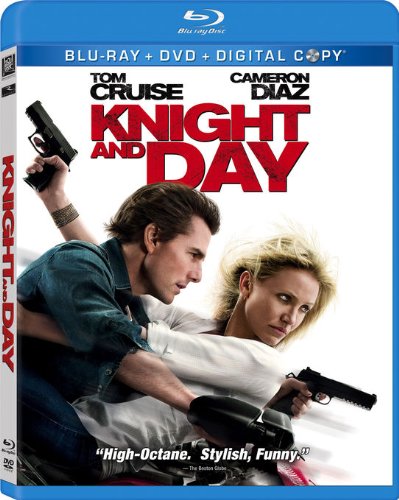
A suave Tom Cruise and a flustered Cameron Diaz (wow, what a stretch for both actors) bump into each other at Wichita airport, and a few minutes later do so again. Diaz thinks she might be on to something with the charming hunk, but she is more accurately into something, and in far out of her depth, as the plain flight turns into a gun battle and forced landing. Before she knows it, she doesn't know where to turn and whom to trust: the various menacing government officials (headed up by a sinister Peter Sarsgaard), or the cheery but possibly psychotic rogue Cruise. There will be many a narrow escape and an international location visited before she knows the answer.
Tom Cruise's return to action-adventure films was almost more notable for the off-screen backstory than the on-screen action. This, of course, was the film he chose to do when he backed out of the darker-edged Salt, where he was replaced by the rather more convincing Angelina Jolie, and which proceeded to beat Knight and Day at the domestic box office. (In fairness, neither film was a giant hit, and the overall worldwide business of both was pretty close.)