Posts by David Annandale

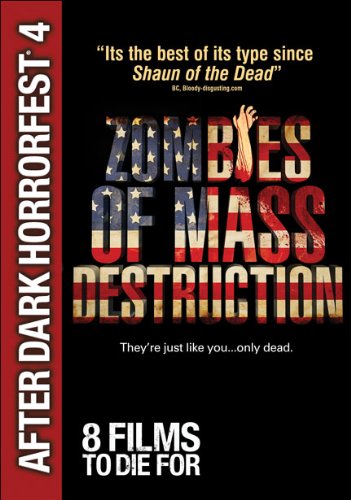
The year is 2003. The War in Iraq is just underway, and its ripples are felt even in the small town of Port Gamble, Washington. Take, for instance, Frida (Janette Armand). Her father is Iranian, which is the same thing as Iraqi as far as everyone else is concerned, and furthermore her skin tone and ethnic background mean she is not a “real American” (to quote her numbskulled boyfriend) even though she was born in Port Gamble. Tom (Doug Fahl), meanwhile, has concerns less related to world affairs: he has returned to his home town, in the company of his boyfriend Lance (Cooper Hopkins), to come out to his mother, a prospect that fills him with dread. Then, just to complicate everybody's life, a zombie plague breaks out, bringing out the best and worst of everyone in town.

Zombies have been fodder for socio-political allegory all the way back to their first cinematic appearance (in their pre-flesh-eating days) in White Zombie (1932), where they were the exploited workers of Bela Lugosi's sugar cane mill. Director Kevin Hamedani and his co-writer Ramon Isao go into satirical overdrive with this effort. There is some very funny stuff here, along with plenty of over-the-top gore FX and likable protagonists. Unlike Dawn of the Dead and Shaun of the Dead, however, whose commentary emerges naturally from the story and characters, here the personalities and story have clearly been designed to fit the political points being made. Thus, though Frida, Tom and Lance are very engaging characters (if almost entirely defined by their ethnic or sexual minority identities), their non-zombified opponents are caricatures of conservatism, as hissable as they are stupid. Now, satire is, by its very nature, a savage art, and I'm all for both savagery and movies that aren't afraid to take a stand, but Hamedani and Isao run the risk of preaching to the choir here. With almost every line of dialogue slaved to the film's political points, we are entering the realm of the editorial cartoon. And though there's nothing wrong with that, it does mean that there isn't much to the film beyond those political points. Thus, one faction of the audience will simply have its views confirmed, while the other will be completely alienated, and it is doubtful that much thought will be provoked. As well, some of the gags are arguably a bit misjudged. The scene where Tom's mother eats her own eye owes its funny/nauseating vibe to Peter Jackson's Dead/Alive, and works well enough, but the moment where a little girl Frida is trying to help is splattered by a car is more problematic, depending on your tolerance for extreme splatstick. All that said, there's still plenty of sharp work from all concerned here.

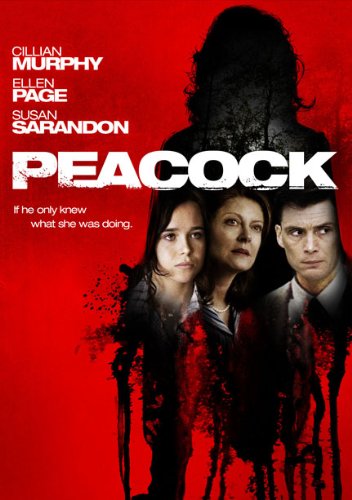
John Skillpa (Cillian Murphy) has been hopelessly damaged by the monstrous abuse his mother inflicted on him. As a result, he now has two separate personalities: John and Emma. John is a terminally shy bank clerk who exists as of 8:15 in the morning and for the duration of the work day. Emma takes care of the domestic chores and leave notes and meals for John. But one day, while Emma is doing the laundry, a derailed caboose blasts through the fence, revealing her existence to the town of Peacock. Everyone assumes she is John's wife. Coaxed out of her shell by Susan Sarandon, Emma gradually blossoms, much to the distress of John. When Ellen Page shows up with a young child and a dark revelation from John's past, the two personalities find themselves moving closer and closer towards a violent confrontation.

It is a testament to the work of director/co-writer Michael Lander and of Cillian Murphy (not for the first time making effective use of his androgynous looks) that one finds oneself increasingly viewing Skillpa as two entirely separate people as, bit by by, drop by drop, the suspense builds. Sympathy shifts back and forth between Emma and John, and by the end one can no more imagine Skillpa as a unified whole than one can decide which of the two halves is the “real” person. Touching and tense, this is a bizarre cross between Psycho and Our Town, and it somehow works very well indeed.

We are in the mid-60s, when, during the glory days of the Stones, the Who, and other colossi of British rock, the BBC allows almost no airplay of said music. To the rescue comes a group of commercial pirate radio stations, broadcasting from ships off the coast. Priggish minister Kenneth Branagh is determined to shut them down, and our focus is on one particular ship, run by Bill Nighy, and boasting such luminaries as Philip Seymour Hoffman and Nick Frost as DJs. Onto this ship of counter-culture rebels comes a young Tom Sturridge, and this wet-behind-the-ears youth becomes the eyes through which we watch the various eccentric goings-on.

Director Richard Curtis is a dab hand at ensemble romantic comedies, as the sterling likes of Four Weddings and a Funeral and Love Actually more than demonstrate. But though he has a terrific cast here, including such regulars as the always watchable Nighy, this is a misfire. It is surprising, given some of the indelible characters in Curtis' previous films (notably Emma Thompson's role in Love Actually) that the female parts here are so woefully underwritten (the women in this film are little more than disposable sex objects). As well, would-be funny scenes of the farcical, slamming-door variety (such as the scene where Frost tries to get the virginal Sturridge to replace him in bed) are older than the hills and eroded completely flat. So the comedy, the odd line here and there notwithstanding, barely raises more than a mild grin. And the tone is so light and unconcerned that it robs the context of any real rebellion or vitality. This radio station might as well be a standard classic-rock denizen of the FM band for all the edge we feel. Then there's some laziness to the writing. If we are to believe this is circa 1966, why have someone anachronistically talk about “thinking outside the box”?

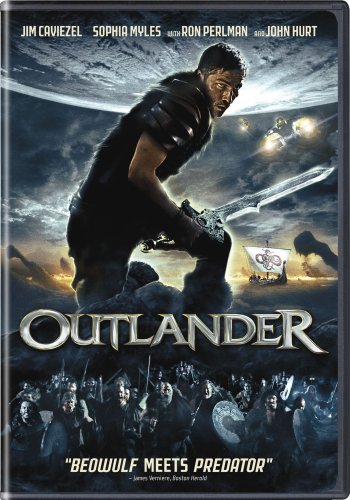
A spaceship crashes. From it emerge a monstrous creature called the Moorwen, and a man, Kainan (Jim Caviezel in Buff Action Mode), who is determined to hunt it down. However, he is promptly captured by vikings and taken to their village, at which point he must convince them of the terrible danger they are in. As it turns out, they don't take much convincing, once the Moorwen attacks.

Analyzing the zeitgeist is always a tricky business. How, for instance, to explain the fact that over the last several years there have been numerous film versions of Beowulf, almost all of the revisionist variety: Eaters of the Dead, Beowulf and Grendel, and now Outlander, to name but three. The newest take has fun with its mix of vikings and SF, and the monster action is good fun. Is anything here groundbreaking? No. But the film keeps its focus on providing the viewer with an exciting ride.

If you're reading this review, you must surely already know what the movie is about. We're talking, after all, about what must surely be the single most celebrated case of mistaken identity in the history of film. Cary Grant stands up in a lounge at just the wrong moment and is mistaken for a man who doesn't exist. That utterly perverse mix of chance and paradox, leading to ever more dangerous situations for Grant, in an ever more complicated tangle of battling conspiracies, is so utterly Hitchcockian, it might just as well be trademarked.

The film is also very funny, as so much of Hitchcock's work is. Of course, much of his humour is black as pitch, and that mordant wit is certainly still present here, but there is also a joviality to the proceedings, due in no small measure to the presence of Cary Grant. Unlike the Jimmy Stewart of Vertigo and Rear Window, whose screen image of fundamental decency makes the deeply flawed, pathological aspects of his characters even more painful and weighty, Grant here keeps things light, as his character is just as aware of the absurdity of his perils as we are, and is just as likely to be amused. But if this is Hitchcock working in a lighter vein, that astounding perversity keeps poking through. What are we to make, for instance, of that creepily close relationship Grant has with his mother?

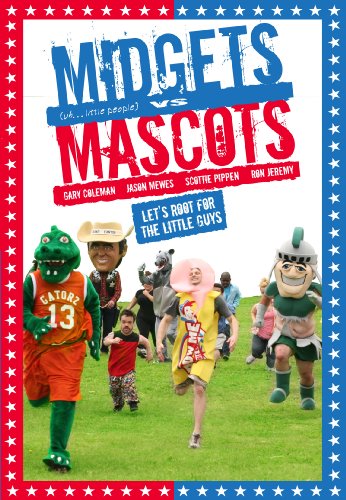
We're into the serious world of high concept now, people. Remember all those struggles D.W. Griffith and Sergei Eisenstein went through to establish cinema as a legitimate art form? Well, this here flick sure makes all those struggles worthwhile. Big Red – midget, former mascot, porn star – dies, and leaves his millions to be fought over by midget-hating son and gold-digging wife. The terms of the battle: each must coach one of the titular teams through a series of ridiculous contests and pranks.

What we have, then, is a mixture of story with would-be outrageous stunts, some real, some staged. In other words, not unlike the work of Sacha Baron Cohen. That is, if you removed every semblance of wit, intelligence and satirical bite from his work, and tossed in Ron Jeremy and Gary Coleman.  The film is sophomoric and puerile, which is exactly what it wants to be, but it also works far too hard to get reach those goals. Depressing.

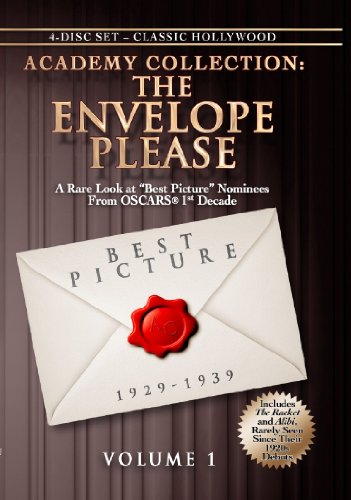
Infinity Entertainment's latest themed grouping of public domain movies deserves some props for originality: eight features that were up for Best Picture during the first decade of the Oscars. Not a single one actually won the prize, but as we all know, that doesn't mean they weren't worthy of doing so.

In chronological order, then, here are the nominees:

Cult Epics here presents us with their second box set of films by ex-pat Spanish surrealist/'pataphysician/provocateur Fernando Arrabal. These are more recent works, and are, arguably, even more of an acquired taste than the earlier set, though not necessarily for the reasons one might think.

Car Cemetery is the 1983 TV version of his 1958 play. In a dystopian future, the punk/S&M/whatnot inhabitants of the titular setting live through a rock-n-roll version of the Passion. What would have been a hell of a taboo-buster in 1958 hasn't aged well. Quite apart from the very 1980s costume design of the film (in the most unfortunate ways), the religio-political points, clearly aimed at Franco's Spain, no longer have the same bite when re-staged in the post-Franco era, and today seem altogether precious and rather twee.

Laurel & Hardy. Abbott & Costello. Martin & Lewis. And now... Harold & Kumar? Perhaps the comparison is a bit forced, but that latter day pair certainly follows the classic set-up: best friends who are also polar opposites (Kumar is the confident, slacker stoner; Harold is the shy, conservative stoner); one has mad schemes (Kumar); the other (Harold) suffers for those schemes, and so on. At any rate, here we have the complete oeuvre of these two characters (and since Kal Penn, who plays Kumar, has subsequently gone on to a couple of season of House before taking a job for the White House, I think it safe to say that we are unlikely to be seeing any further episodes).

Harold & Kumar Go to White Castle sets the picaresque model for the two films. Our boys contract a bad case of the munchies after smoking up, and only White Castle hamburgers will satisfy their craving. Their journey to the fast food joint is beset by misadventures, and before the long night is done, they'll have been arrested, ridden a cheetah and encountered grotesques who seem to have wandered in from After Hours and Pee-Wee's Big Adventure.

So here we go with yet another heaping helping of public domain offerings from Infinity. I last looked at their Abbott & Costello package, which concentrated on TV shows and only featured a couple of movies. This Mickey Rooney set is heavily oriented towards the movies. Here's what you get:

Disc 1: