Posts by David Annandale

A while back, I nattered on about The Classic Sci-Fi Ultimate Collection, a Best Buy exclusive from Universal of films long overdue for DVD release. That collection ranged from the top-flight classic (The Incredible Shrinking Man) to the mid-level classic (Tarantula, the official Second Best Big Bug Movie after Them!) to the unsung gem (The Monolith Monsters) to the middling programmers (The Mole People and Monster on the Campus). Today, Volume 2. It’s another Best Buy exclusive, but can still be found quite easily being resold on Amazon.

The first volume was an eclectic mix, as far as quality was concerned. The second one is a bit more consistent, but that doesn’t mean these are the best of the best. Far from it. On offer here: Dr. Cyclops (1940), Cult of the Cobra (1955), The Land Unknown (1957), The Deadly Mantis (1957) and The Leech Woman (1959). We’re talking the B-list players here, people. The most highly regarded of this bunch is Dr. Cyclops, wherein Albert Dekker shrinks human beings to doll size. Fine mad doctor stuff, and the first SF/horror film to appear in full Technicolor. The FX are pretty solid too. It’s a little odd to find the film, very much a 40s effort, grouped with lesser 50s works, but hey, here it is on disc, so who am I to complain?

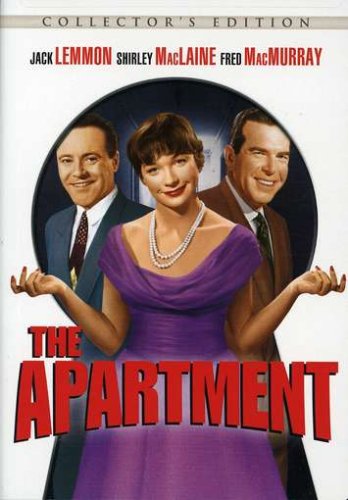
Jack Lemmon is a rather meek insurance company employee who is slowly working his way up the corporate ladder by lending his apartment to married executives looking for a place to take their girlfriends. Life is rather inconvenient, as he is locked out of his home at all hours, but things become even more complicated when the big boss (Fred McMurray) takes an interest. The good news is that Lemmon gets another promotion. The bad news is that McMurray’s affair is with Shirley MacLaine, the elevator girl for whom Lemmon is carrying a torch.

Billy Wilder’s follow-up to Some Like It Hot certainly has plenty of funny moments, most involving Lemmon’s doctor neighbour (Jack Kuschen). But the film doesn’t shy away from the darker implications of its storyline (up to and including a suicide attempt). The result is a romantic comedy-drama that is sweet without being sentimental, and hard-nosed without being cynical. And the audience’s emotions are thus sincerely earned.

One of the most devious, and delightful, films I’ve encountered in recent years is Incident at Loch Ness, a film that, if it isn’t the subject of a cult, should be. I mean, my gawd, it has Crispin Glover in a microsecond cameo. The real brilliance of this fake documentary is having Werner Herzog in the lead, a man whose filmography reveals a constant violent collision between fact and fiction, with the relationship not always moving in the direction you might think. Anyone wanting to see just how utterly bizarre things are in Herzogland should look no further than My Best Fiend, his 1999 documentary about his working relationship with actor Klaus Kinski.

The film opens with unexplained footage: Kinski performing before a huge audience, ranting maniacally, going out of his way to alienate everyone within sound of his voice. What this is (which is never mentioned in the film), is part of a tour Kinski did playing Jesus Christ as a psychopathic megalomaniac. Based on the evidence of the rest of the film, Kinski might as well have been playing himself. The picture Herzog presents us with is of a man given the rages that could last days and be triggered by the tiniest of imagined slights, of a character so volcanic he threatened to destroy all around him. And then there’s Herzog, unflappably filming Aguirre, the Wrath of God and Fitzcarraldo, movies whose production and ambition were as insane as their protagonists. In other words, Kinski appears to be playing extroverted versions of Herzog himself in these pics. One understands, therefore, why the Peruvian natives who were extras in the latter film hated Kinski but feared Herzog, reasoning that, as the quiet one, he was probably more dangerous. But one also understands why they offered to kill Kinski for Herzog, and why he later regretted not having taken them up on it.

Blackgate Prison is built on ground where massacres of one sort or another have occurred throughout the history of the United States. When a disused wing of the prison is reopened, all sorts of nastiness emerges. Michael Paré is the officer called in when a guard mysteriously commits suicide, but that is only the first of many unexplained deaths yet to come.

So here we go with another haunted prison film, and a great deal that we have seen before. Take a cinematic tone that seeks to borrow the eeriness of Session 9 (but fails), mix in creepy little girls in jump-cuts (from the J-horror remake of your choice), and season with a cast that’s a collection of down-on-their luck pros (Tom Sizemore) and a lead in Paré who clearly took the part when From Hell It Came’s tree turned the role down for something with more range. Wake me when it’s over. Our hero’s performance is not helped by a script that appears to be composed entirely of lines from CSI fan fiction.

As everything under to sun sooner or later makes it do DVD, hope turns again to those films that are long, long overdue for the deluxe treatment. Consider this another installment of the Wish List, but with an asterisk. The film in question in Seven Footprints to Satan (1929). I’ll get to the asterisk in due course.

Seven Footprints to Satan was a variation on the Old Dark House film that was so popular in the late-twenties and early-thirties. Here a bored young heir finds himself swept up in a convoluted adventure with menacing figures (human and otherwise), disappearances, abductions, and a sinister conspiracy. SPOILER ALERT: STOP READING THE COLUMN NOW IF YOU DON’T WANT TO KNOW ABOUT THE ENDING. But then comes the twist: the entire adventure was a fake, mounted by our hero’s friends to give him the excitement he craved.

Just another working day in Los Angeles. Lexi (Mary McCormack) heads off for the commute, while hubby Brad (Rory Cochrane) stays home. His morning ablutions are interrupted by the news that a series of dirty bombs have just gone off in the city. Stymied in his attempts to reach his wife, Brad retreats home, where he acts on the instructions to seal up the house, as the bombs have released a deadly toxin. When Lexi does return, Brad cannot let her in, as she is contaminated. How's that for a strain on a relationship?

The first act of Right at Your Door is a propulsive exercise in panic. There is a genuinely alarming realism to the depiction of LA under terrorist attack, accomplished through a judicious and restrained use of FX and convincingly freaked-out radio news reports. This section of the film will not only conjure unpleasant memories of 9/11, but will generate a deeply distrubing you-are-there sensation for viewers. Once Lexi returns, the film becomes less about the attack then about the individual responses to it, and the action shifts to the emotional domain. After the frenzy of the first half hour, the second act inevitably feels a bit slower, and one has the impression of the plot marking time until the conclusion can begin. Said conclusion is dark and twisty, and very much in keeping with the bleak zeitgeist the film is tapping into.

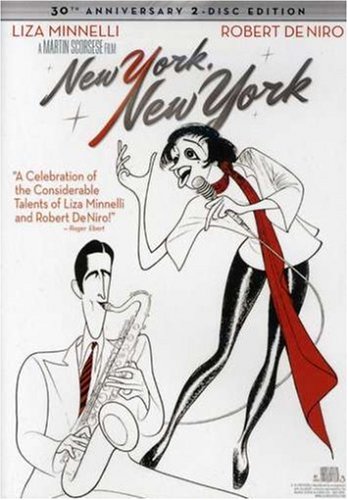
World War II has just ended, and the recently discharged Robert De Niro hits New York on the prowl for sex. He runs up against WAC Liza Minnelli, and the more she resists his advances, the more determined he becomes. There is more: he is a saxophonist, and she (of course) is a singer). So begins a tempestuous relationship between two artists whose enormous talents and equally enormous personalities mean they can neither live with nor without each other.

The idea of Martin Scorsese taking on the form of the classic musical is so bizarre that it had to happen, and here it is. Scorsese’s conceit is ingenious: all the conventions are there (the meet cute, the songs, the artificial sets and colours), but they collide with the naturalism of the performances and the emotions. A perfect case in point: wandering the streets at night, De Niro sees a sailor and his girl perform a dance together. It is a classic musical moment, but the only sound is that of a train passing. It is a scene of extraordinary beauty, grit, and cinematic truth. And it belongs in an extraordinary film.

The neurotic Shannyn Sossamon goes to Paris to visit sister Alecia Moore (aka Pink). The outgoing Moore cajoles her mopey sister to attend a party in the city’s catacombs, where the bones of some six million people are stacked. It doesn’t take long before Sossamon becomes separated from her friends, and is pursued by a maniac through the maze of tunnels.

Other reviewers have commented on the film’s overuse of shaky camerawork, ADD editing and strobe lights. I won’t belabour the point here other than to note that they are absolutely right. That the film is not actually shot in Paris is painfully obvious thanks to the awful French accents of the Romanian extras. The leads are strong enough in their roles, but Sossamon’s character is such a bringdown that she’s hard to sympathize with. The ending manages to be simultaneously idiotic and clever. One senses a great deal of effort to transcend a limited budget, but this is ultimately another case of reach exceeding grasp.

Having just watched 30 Days of Night again in order to review the DVD, I find myself thinking about vampires. They are, of course, among the most frequent of horror movie monsters (perhaps only zombies, in their various forms, offer stiff competition in this regard). They also take up far more than their fair share of shelf space in the horror section of your bookstore, thanks to the likes of Anne Rice, Laurel K. Hamilton, and their legions of imitators. A brief scan of the literary and celluloid incarnations of the vampire reveal to principle archetypes. The first, and by far the most common, is the vampire as sexy beast. The other, is the vampire as beast, pure and simple. Interestingly, both cinematic versions, it seems to me, find their models in the first adaptations of the same novel: Dracula.


Nosferatu (1922) and Dracula (1931) were both firsts. Nosferatu was the first film version of Bram Stoker’s novel. Tod Browning’s film was the first legal version. The earlier film gave us Max Schreck as creature as much rat as he was human, and the make-up’s suggested link was underlined by the actual rats that accompanied the vampire on his journey and the plague that descended on the town. Browning offered audiences Bela Lugosi in evening wear, and the film was released on Valentine’s Day. So one vampire to make you faint, the other to make you swoon.

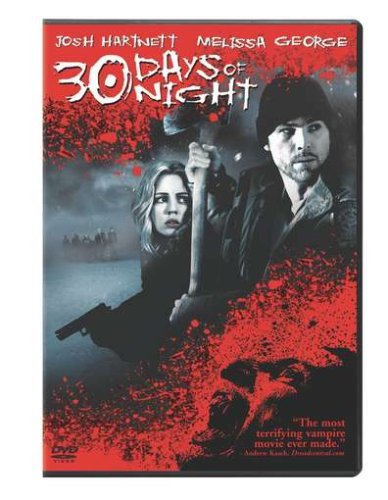
Barrows, Alaska, is just settling down for a month-long winter’s night. Many of the residents leave for the dark period, but those who remain encounter a series of strange crimes (all the cell phones in town being stolen and melted, for instance). It turns out that the incidents are the work of a man preparing the way for an invasion of vampires. After all, what better hunting ground than a town with no day? Josh Hartnett leads a dwindling band who hunker down and struggle against overwhelming odds.

Faithfully transcribing Steve Niles’ graphic novel to the screen, this is an enormous breath of fresh air in a horror market dominated by poor remakes of Asian films and tired franchises. The opening shots are breathtaking in their beauty, simultaneously (and appropriately) echo Nosferatu and John Carpenter’s version of The Thing. Those are the films that are the spiritual forefathers of this one, which melds the atmospheric chill of the latter with the thoroughly horrible vampires of the former. There is nothing glamorous about these vampires. They are completely vicious, ghastly creations, and are thus the first truly frightening vampires to grace theatrical screens in many and many a year. But as unappealing as its monsters are, the film is nonetheless filled with images of beauty as breathtaking as it is terrible. An overhead shot of the town under siege is a perfect example, and demonstrates a real commitment to the art of horror on the part of the filmmakers. If the sense of hopelesness and dread can’t fully be sustained for the length of the film, this is nonetheless one of the most effective and gorgeously crafted horror films in recent memory.