Posts by David Annandale

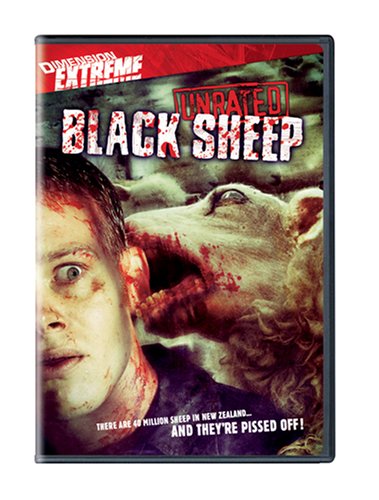
Some films have the sort of subject matter that just screams “cult in the making.” Sometimes, the attempt at cult status is so blatant that the sense of the film trying too hard is off-putting. On other occasions, said status is a by-product of a filmmaker simply having assured fun with torqued material. Bubba Ho-Tep is one such example. A brand new one is Black Sheep.

The tale is basically one of family tragedy. Years ago, a young boy is traumatized when his nasty older brother torments him with the corpse of his murdered pet sheep, and moments later they find out that their shepherd father has plunged to his death from a cliff. In the present day, the now sheep-phobic young man (Nathan Meister) returns to the family farm, hoping to confront and dismiss his fears. Unfortunately, his still nasty older brother’s genetic projects get out of hand and result in a horde of murderous sheep. To make matters worse, being bitten by one of these critters leads to a very hilarious form of lycanthropy.

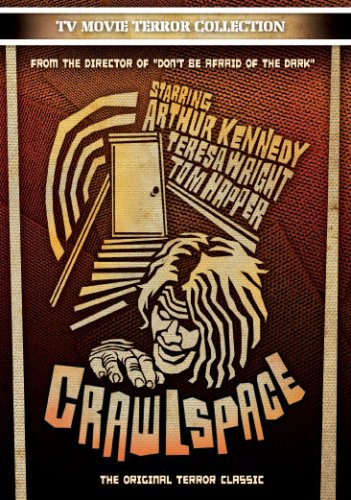
Arthur Kennedy and wife Teresa Wright are an older childless couple who discover a young man (Tom Happer) living in the crawlspace of their basement. Though they are initially alarmed, he seems harmless, and they take him under their wing. What seems to be a nice, if bizarre, solution for everyone becomes tense when Happer, tormented by locals, shows a potential for great violence.

This release from Wild Eye in their TV Movie Terror Collection is a much stronger entry than The Devil’s Daughter. Rather than highlight the limitations of television when it comes to horror, the film plays to the medium’s strengths. The tone is low-key and character-driven, and off-kilter in just the right sort of way to generate a nice current of unease. Happer is a disturbing figure, but he’s also sympathetic, much in the same vein as the Frankenstein monster.

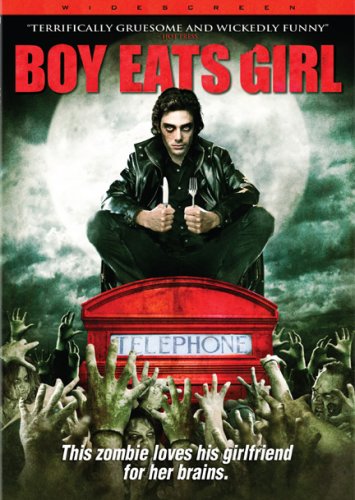
Nathan Maguire (David Leon) is having a very bad day. The boneheaded bully at school has it in for him. Jessica (Samantha Mumba), the girl he loves, doesn’t show up for their meeting where he was finally going to declare his feelings, and then he sees her in the car of one of the local studs. Plus he gets soaked in the rain. And just to cap things off, he is accidentally hanged, and his distraught mother performs a voodoo ritual to bring him back from the dead, only the manual was missing a page and he returns as an infectious zombie. Oops.

Thank you, Shaun of the Dead, for turning the zombie comedy into a veritable cottage industry. Boy Eats Girl certainly doesn’t have the brilliance of the former film or the likes of Fido. The characters are pretty generic (the Nice Girl, the Losers, the Jocks, the Slut, etc.) as well. But the film is efficiently paced (a mere 80 minutes), and the performances are engaging. We may have gone down these teen comedy paths before, but the conviction of the cast and script makes it all seem fresher than it should be. There are some very funny moments (as Nathan starts exhibiting superhuman strength and an alarming lack of pulse, for instance), and the gore, which is remarkably restrained for most of the film, explodes with would-be Dead/Alive enthusiasm at the climax.

All right, after a longer delay than expected (my apologies), here with go with John Brahm’s The Lodger (1944). This is actually a remake of Alfred Hitchcock’s 1927 effort, but Brahm’s film stands just fine on its own, thank you very much. Laird Cregar plays the title character. He is none other than Jack the Ripper, renting an upstairs room in a fashionable district. There he performs some rather dark medical experiments and obsesses over his deceased younger brother. Meanwhile, the family (pater familias Sir Cedric Hardwicke, mother Sara Allgood and singer/dancer daughter Merle Oberon) have more and more unanswered questions about their tenant. Hardwicke holds his suspicions at bay, but Allgood and Oberon become more and more nervous. Oberon has every reason to be, as her profession marks her as a likely Ripper target (so, yes, the fact that the actual killer’s victims were all prostitutes is rather glossed over). George Sanders shows up as the Scotland Yard detective assigned to the case, and also as Oberon’s love interest.


There have been so many Jack the Ripper movies, one must be very, very cautious about calling this or that one the definitive tale. I won’t make such a claim for The Lodger, but it is easily one of the best. Unlike Brahm’s The Undying Monster, which, as I wrote two columns ago, is fun but uneven, here Brahm has a film that is perfectly consistent in tone. The opening murder is chilling, a textbook perfect exercise in showing just enough to set the mind in overdrive, imagining all sorts of brutal horrors. Thereafter, the film becomes a case of gradually mounting suspense, as Oberon unknowingly places her neck in a slowly tightening noose.

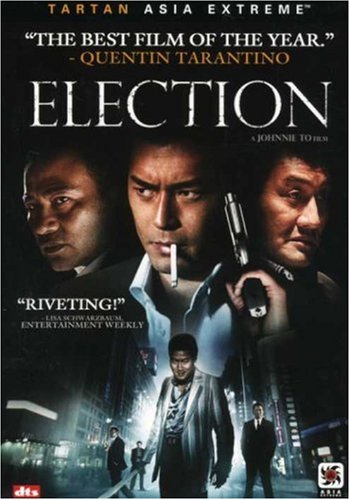
Every two years, the Wo Shing Society, an ancient Triad, elects its chairman. The two candidates this year are Lok, an amiable, level-headed, managerial type, and Big D, a flashy hothead cut from the same cloth as Tybalt. Big D throws bribes and around in an effort to win, but to no avail. Refusing to accept defeat, he resorts to violence, threatening to tear the Society apart. The question is whether Lok is made of the necessary stuff to make good his victory.

This is the first of two films recounting a crime epic, and though this effort stands very handily on its own, it is to be fervently hoped that Part 2 makes it to DVD very shortly. From a deceptively placid beginning, the story builds to a climax worthy of Shakespeare and his blackest and most violent. There are also surprising moments of humour (there’s a scene involving a two simultaneous phone calls that is one for the ages). The sheer number of characters can be a bit confusing, but this is tight, smart, economical storytelling at its finest.

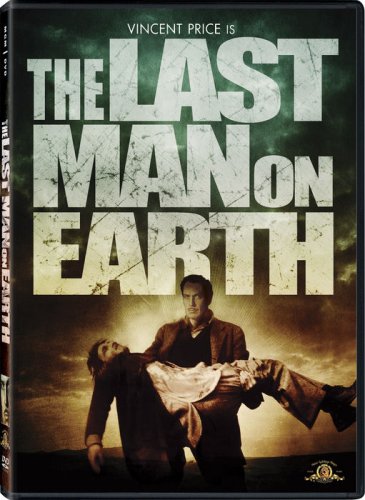
Robert Morgan (Vincent Price) is the lone human survivor in an LA devastated by a worldwide plague that killed most of the global population and turned the rest into vampires. For three years he has survived on his own, mourning his lost family and systematically staking every vampire he can find, working his way block by block through the city. Then, one day, he sees what appears to be another survivor...

Richard Matheson wrote a screenplay adapting his novel I Am Legend, but by the time the film was actually made, his script had been sufficiently changed that he replaced his name in the credits with a pseudonym. There is no denying that the film has its share of flaws. The dubbing of the Italian cast members is hit-and-miss, the action scenes are indifferently staged, and one feels a bit too acutely the monotony of Price’s lonely existence. On the other hand, there is a completely convincing vision of a deserted city achieved on a small budget, and a couple of genuinely creepy moments (most notably when Price’s wife returns from her grave). Furthermore, this remains the adaptation closest to the original novel, and the only version to retain the idea of the hero actually being a villain from the perspective of those he is exterminating.  That alone gives this somewhat clunky effort a bit of an edge of its slicker successors (The Omega Man and I Am Legend).

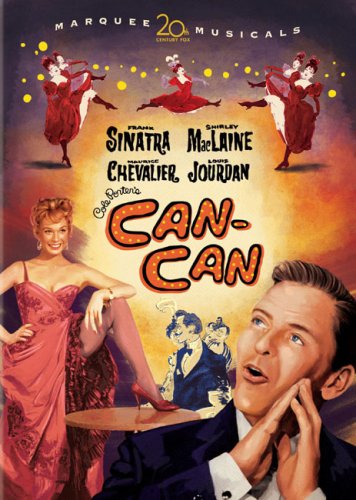
In Belle Époque Paris, the can-can is all the rage but also illegal, and Shirley MacLaine’s nightclub is cracked down on by uptight judge Louis Jourdan. MacLaine is defended by libertine lawyer Frank Sinatra. Jourdan falls for MacLaine, who is waiting perhaps in vain for Sinatra to marry her. Maurice Chevalier shows up to chuckle indulgently.

The vision of Paris may be no more convincing than MacLaine and Sinatra playing characters named “Simone” and “François,” but this is a musical, so who cares? The sets are bright, the songs are catchy, and the dance numbers energetic. But the storyline itself is stultifying. Maybe Krushchev was right about this thing after all.

Last week, I said I’d talk about John Brahm’s The Lodger this time around. I want to hold that off for another week, in order to put in my two cents’ worth on I Am Legend.

So here we are with the third adaptation of Richard Matheson’s classic novel, and the first to actually use the title. There was certainly room for improvement on the other two. The Last Man On Earth (1964) is still the closest to the book, but Matheson himself was sufficiently displeased with what was done with his original script that he had his name replaced in the credits with a pseudonym. The Omega Man (1971) has some great early mood stuff and neat makeup for the creatures, but descends into risibility by the end. So is the third time the charm?

TV reporter Jason Behr is the reincarnation of warrior from 500 years ago, charged with protecting a woman (Amanda Brooks, also a reincarnation) whose destiny is to sacrifice herself so that a mystical giant serpent (an Imoogi) can become a dragon. Unfortunately, an evil Imoogi named Buraki wants the power for itself, and summons a giant reptilian army that lays waste to LA in the search for Brooks.

The most elaborate South Korean project ever isn’t a patch on the far superior The Host, but is still a very entertaining monster mash. Though shot in English with an American cast (including Robert Foster as a kind of Obi Wan Kenobi), the hilariously nonsensical dialogue sounds very translated indeed. The plot has very little flow to it, what with our star-crossed lovers fleeing Buraki in one scene, but taking time out for a meeting in a coffee shop in the next. Then there’s the fact that the gigantic Buraki seems to be able to arrive in large urban areas without anyone noticing his 200-metre presence. One can also chuckle at the flashbacks within flashbacks that set up the back story. But a great deal can be forgiven thanks to the copious monster footage. This is a film that delivers on its promises, and once the rampage starts, the action is non-stop. The CGI nature of the beasts may be pretty obvious, but the creatures are also very detailed. As a strange cross-cultural mix of period fantasy and urban monster rampage, this is pretty infectious fun.

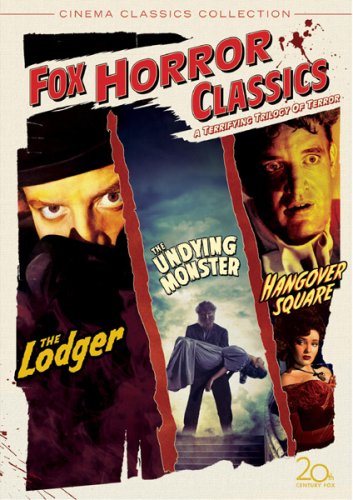
As I’ve indicated in this space before, one of the joys of the DVD age is the chance to see, at long last, films that one might have heard about since childhood, but that were unavailable until now. A recent addition to Fox’s Cinema Classics line is a case in point. Fox Horror Classics consists of three movies directed by John Brahm, and the one I want to talk about today is The Undying Monster (1942), which I first read about over thirty years ago.

The occasion of my initial encounter with the movie was a mention of it in Denis Gifford’s A Pictorial History of Horror Movies (quite the seminal book in my childhood, as, I imagine, it was for many horror fans my age). This is what Gifford writes: