Posts by David Annandale

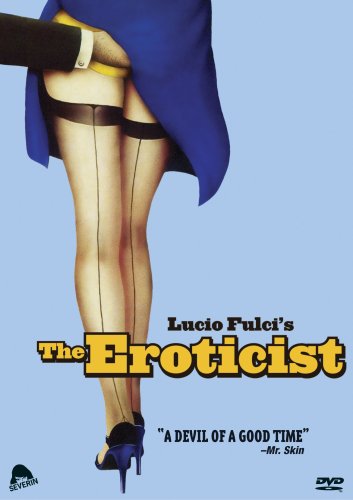
Lando Buzzanca plays Senator Puppis, a telegenic young politician on track to become Italy’s next president. He’s been groomed for the part practically from birth by the Vatican, which plans to re-exert social control over the country through its presidential puppet. But plans go badly awry as Puppis suddenly develops an uncontrollable urge to fondle women’s buttocks (Stephen Thrower has aptly described the character as a “repressed heterosexual”). Even as he seeks help for his condition, various parties around him begin to panic, as the police think Puppis is planning a coup without telling them, the military think they are being left out of the loop by the police, and the Vatican, along with its Mafia catspaws, starts whacking everyone in sight in a desperate attempt to keep everything from completely unravelling.


How’s that for a sex comedy plot? Not exactly of the been-there-done-that variety, is it now? Behind the nonsensical UK release title is one of the most interesting Lucio Fulci films to reach these shores. Fans wanting the Fulci gore will have to look elsewhere, but those open to something new will encounter a level of filmmaking absent in too much of his later work. The sex gags are rather dated (though the moment of the Puppi’s first goose is a bit of wonderful deftness I’ve never seen in Fulci), but the black political satire, which makes up the bulk of the film, while being very tied to the specific Italian context, has lost none of its bite. This is an angry film, one that builds to an utterly appalling resolution, all the more sour for its comic framing. Without going so far as to compare Fulci’s filmmaking skills to Kubrick’s, one might think of this film as Fulci’s Dr. Strangelove – a bitter, hopeless indictment that can only fully express its venom in the form of farce.

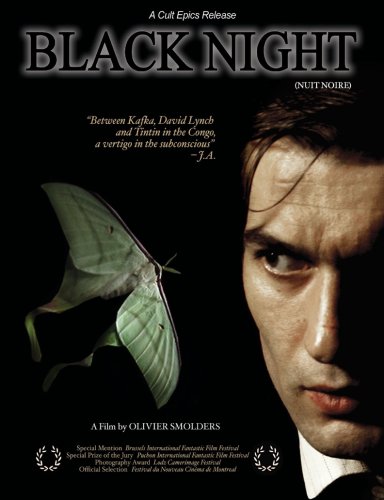
Belgian filmmaker Olivier Smolders, after a successful run of gorgeous and disturbing shorts, here makes a feature debut that is just as gorgeous and disturbing. Strongly reminiscent of the works of David Lynch, but far darker overall, the film is set at a time when the world is shrouded in the night of a perpetual eclipse. Day only comes for 15 seconds at 12:23 pm each day. Oscar (Fabrice Rodriguez) is a museum entomologist haunted by traumatic dreams involving the death of a sister who might or might not have every existed. He returns home one night to find a dying and pregnant African woman in his bed, a woman who is somehow linked to his father’s colonial past.

Trying to summarize the film’s plot is like trying to describe a dream: either case involves imposing linearity where none exists. Don’t try to figure out exactly what is going on here. Think of it as fevered nightmare inflected by guilt of Belgium’s gruesome colonial history, served up as a stunningly beautiful meditation on death, sex and insects.

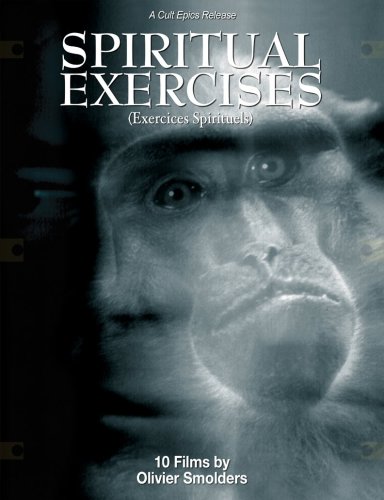
Olivier Smolders is a Belgian filmmaker with a sensibility as distinctive and challenging as his artistry is developed. Cult Epics has done North American audiences a huge service by bringing his films to Region 1 DVD release. This disc has ten short films. Each piece has its own distinct identity, yet they are all very clearly the work of a singular creative talent. The frequently disturbing shorts range from a tale of murder and cannibalism in “Adoration” (previously available on the Cinema of Death collection), to the heartbreaking “Mort à Vignole” (where Smolders narrates a family tragedy filtered through home movies made by his and his wife’s parents, along with his own family footage), to an extended yet elegantly filmed practical joke (“Point de Fuite”) to a most unusual adaptation of Sade with “La Philosophie dans le Boudoir.” The films are invariably gorgeous and clinical in the precision of their observations. The blurbs on the case invoke Lynch, Greenaway and Bergman, and the comparisons are apt, though Smolders is also very much his own man.

Audio

So I was musing over the last couple of days once again on the nature of the appeal of what I’m (extremely) broadly defining as cult movies. I’m not explicitly looking for a Grand Unification Theory here, though I wouldn’t turn my nose up at one if it turned up. There are some easy answers, but they’re very much only partial ones.

Let’s deal with them first. Yes, there are plenty of cult films that are extraordinary works, classics by any definition, even if they tend to escape the mainstream’s notice. But these are purely and simply fine cinema, and one need not look far to see why people like these movies. After all, why wouldn’t they?

Come with me, gentle viewer, back to the state of horror on TV, Anno Domini 1973. After her long-absent mother dies in mysterious circumstances, Belinda Montgomery attends the funeral where she meets Shelley Winters, an old friend of the family, or so she claims. Winters takes Montgomery into her home, and there our young heroine meets all sorts of strange people, and gradually realizes she is in the clutches of a Satanic cult who believe she is Satan’s daughter.

Televised horror has made great strides since this Movie-of-the-Week era, though even the likes of Masters of Horror still has to work, on its best days, to reach the level of a decent theatrical release. But The Devil’s Daughter is eye-witness to an era where mediocrity was, with very rare exceptions, the best one could hope for. Awful as it is, this pick is awful in entertaining ways. So here we have Shelley Winters teasing us with the promise that she might not take the volume to 11, and then spectacularly breaking that promise; Abe Vigoda channelling the spirit of Boris Karloff; Jonathan Frid stuck with a mute character of unclear motivations; Montgomery’s character portrayed as such an incurious wallflower (she’s only mildly interested in the Rather Big Clue that is the portrait of a cloven-hoofed Satan hanging over Winters’ fireplace) that sympathy is very difficult to muster; Robert Foxworth showing up late in the day as a plot device only the dullest of viewers will fail to see coming; Joseph Cotten doing ditto; and such treasures as a photo album complete with a picture of all the Satanists, in full black regalia, happily posing for a group shot. In other words, the camp comes thick and fast, and that kind of entertainment value is what accounts for this terrible movie’s star rating.

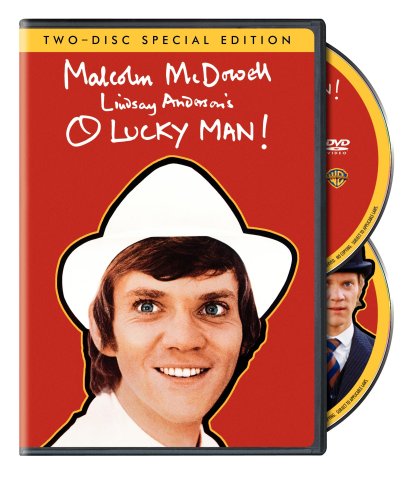
Malcolm McDowell’s second collaboration with director Lindsay Anderson, after their triumph with If..., sees McDowell as an enthusiastic new coffee salesmen sent off to make his company’s fortune in an ever widening area of the Britain. In true picaresque style, he has one strange adventure and encounter after another, each more bizarre than the last, and the whole is intercut with studio performances of Alan Price’s songs that comment on the whole enterprise.

Picaresque narratives are, by their nature, sprawling, episodic tales, and that is certainly true of O Lucky Man, which clocks in at just under three hours. They can, however, also have plots that only appear to be random, but are in fact as tight as wound watch, as is the case with Henry Fielding’s Tom Jones. This is less the case with Anderson’s film, which feels considerably more scattershot in approach. The episodes can be amusing, and McDowell is excellent throughout, but the satirical broadsides feel more obvious than pointed. Viewers will likely be divided over how they feel about the same actors (including Ralph Richardson and Helen Mirren) popping up in multiple roles, a convention rarely seen except in theatre. An interestingly messy work.

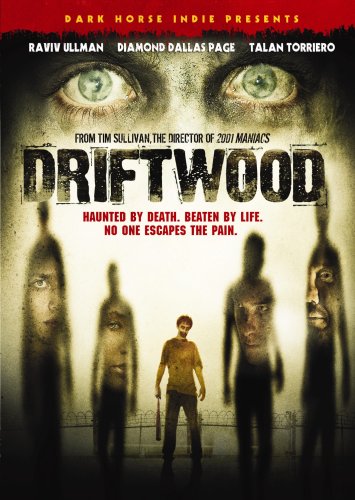
Who says horror can’t be the cinema of personal expression? Director Tim Sullivan follows up his comic horror 2001 Maniacs with this heartfelt ghost story. Raviv Ullman plays David, a teenager whose depression and death-fixation following the demise of his older brother prompts his desperate parents to ship him off to an “Attitude Adjustment Camp.” Basically a brutal cross between boot camp and prison, this is a private institution (inspired by actual places) designed to transform any insipient Columbine-copycats. Once there, David must contend not only with the sadistic Captain Kennedy (Diamond Dallas Page) who runs the place, but also with visions of a ghost who clearly wants a buried truth revealed.

There’s more than a touch of The Devil’s Backbone here, what with the ghost-story-in-an-institution premise and the emphatic socio-political overtones. Sullivan isn’t quite Guillermo Del Toro yet – the spookiness is workmanlike but hardly heart-pounding, and many of the adult performances are pitched far too broadly – but there is a seriousness of purpose here that is admirable, a refreshing (and justified) anger, and the teen members of the cast are believably natural.

The wonderful thing about cult film fandom is the peculiar obsessions that typify it. I’m thinking specifically here of the enthusiastic loyalty fans have for a given director or performer, whatever said person’s standing in the mainstream film community might be (and very often in defiance of such). Hence, for instance, the following that Joe D’Amato commands. As for performers, let’s think for a moment about character actors. I’ve already documented my great fondness for Michael Ripper, he of the bulging eyes and multiple bit parts in Hammer films. Well, I have in my hands a delightful little tome that does me one better.

Last night, the Winnipeg Cinematheque hosted a launch of Kier-La Janisse’s A Violent Professional: The Films of Luciano Rossi (FAB Press). “Who?” you might be asking. I confess that I was when I first heard of the project. The short answer is that he was a character actor who showed up (often very, very briefly) in over 70 Italian films, in everything from spaghetti westerns to cop thrillers to gialli. His look is a bit of a sleazy, greasy cross between Guy Pearce and Steve Buscemi. The launch was accompanied by a screening of Umberto (Cannibal Ferox) Lenzi’s enormously entertaining Violent Naples (1976), a Dirty Harry variation with John Saxon (speaking of character actors) as one of the lead baddies. Rossi pops up (in, according to Janisse’s book, one of his best roles) as an absolutely irredeemable rapist/thief. His demise (impaled through the throat on a metal pole) is applause-worthy.

In the vein of Underworld, here is another tale of warring supernatural societies. In this case, both sides are werewolves (the “skinwalkers” of the title). The good guys seek to protect a 13-year-old boy who represents a cure for lycanthropy. The bad guys, who like turning into monsters, want to kill him to protect themselves. The weapons of choice in this battle? Fangs, you guess. Nuh-uh. Guns.

Yep, also in the vein of Underworld, gunplay is much more popular than monster mashes, but this effort makes its inspiration look like a masterpiece. The big showpiece gun battle (anatomized at length in one of the features) is a spectacular example of unintentional camp, whose highlight is the Sergio Leone-style drawdown between chief nasty Jason Behr and the boy’s grandmother. You read that right. In a stunning bit of blazing originality, the boy is also asthmatic. Sigh. Add in painfully expository dialogue and an almost total absence of transformed werewolves (who, when they do show up, are in no way worth the wait), and what you have here is a waste of time, which, fortunately, only robs you of just under 90 minutes, and not the 110 threatened on the case.

Time for another entry in the Wish List, my lament for sorely absent DVD releases. Today: Paperhouse, to date available only in Region 2 and 4 imports, which is a real tragedy. Allow me to explain.

When I first saw Paperhouse on VHS back in the mid-90s, it was the first time in far too long that a film managed to frighten me. This was all the more surprising in that it is based (loosely) on Marianne Dreams, a children’s book by Catherine Storr. But given how so many children’s tales are based on some pretty primal nightmares, perhaps it is fitting that I felt an atavistic chill. Director Bernard Rose would go on to direct Candyman, to date still the best adaptation of a Clive Barker tale, but for my money this is a more affecting and more frightening film.