Posts by David Annandale

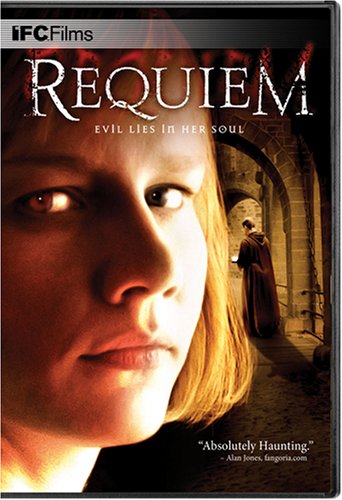
A young woman leaves her small town and intensely religious family to study at University. Even as she experiences the new freedom of campus life, her epileptic seizures become much worse, and she gradually comes to the conclusion that she is possessed. Her friends try to help her as her suffering becomes intolerable, but she eventually turns to a priest who wants to perform an exorcism.

If the above synopsis sounds familiar, that’s because this film is based on the same case that inspired The Exorcism of Emily Rose. Requiem makes that other effort look utterly ridiculous. The case misleadingly promotes the film as a gothic horror flick, which it is not, though its story is undeniably horrific. There are no special effects, and the presentation of the symptoms comes down to Sandra Hüller’s remarkable performance as the unfortunate Michaela. By the time her symptoms are at their peak, we don’t need any CGI or tricked-up sound design to recoil in horror and pity from the tortured woman. Director Hans-Christian Schmid and writer Bernd Lange shy away from a supernatural explanation (while maintaining a certain degree of ambiguity), but this in no way lessens the horror of the proceedings. In fact, the cause of Michaela’s suffering is almost beside the point – the reality of that suffering is the true focus of the film. Though it must be said that the possibility lurks that religious belief is a contributing factor to the unfolding tragedy. Despite all the movies dealing with demonic possession, The Exorcist has really been the only one definitive exorcism film. Now, at last, there is a second, and Requiem succeeds so harrowingly because of its restraint, its utterly believable portrayal of characters and events, and its refusal to imitate William Friedkin’s film. It charts is own path, and does so with enormous assurance.

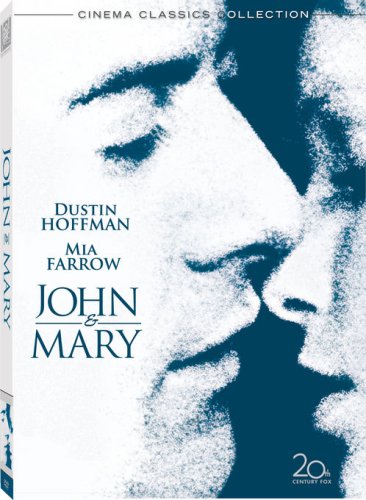
Dustin Hoffman and Mia Farrow wake up in bed together, having just met the night before. Much cautious circling of the one another ensues in the apartment, and as they go their separate ways, more anxious debating follows regarding whether they should get together again. Is Farrow the one for Hoffman, and what about the fact that he doesn’t even know her name?

This is a film that could only have been made in 1969 (unless your name is Woody Allen), what with its incessant interrogation of character neuroses and a very self-conscious attempt to present us with How Romance Works In The New Scene. The script is not as smart as it thinks it is, and a perfect example of this is the scene where are two characters first meet. The context is a disagreement over a movie that another character thinks is pretentious nonsense. The film, never mentioned by name, Jean-Luc Godard’s Weekend. So the reference is lying there for film-savvy viewers to catch and feel superior to the characters, this is hardly a film that can justifiably be name-checking that corrosive satire. In two words, the film is pretentious and contrived. In one word, tiresome.

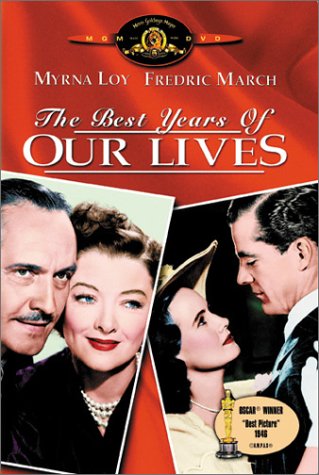
WWII over, three soldiers return to their home town of Boone City. Dana Andrews is the bomber officer unfit for any other kind of work, who foolishly married a party girl just before the war. Fredric March is the banker who is having trouble adjusting to the fact that his children have become adults in his absence. Harold Russell is the sailor who lost both his hands, and can’t bring himself to believe that his girlfriend still truly wants him.

Though clocking in at 168 minutes, this 1946 effort never drags, and does justice to all three characters, but Andrews is ultimately the real focus of the film. Russell himself really was a double amputee, and his scenes could easily have fallen into freak show elements or excessive sentimentality. Both traps are avoided. The film is powerful and moving without ever being sappy, and certainly earned its clutch of Oscars.

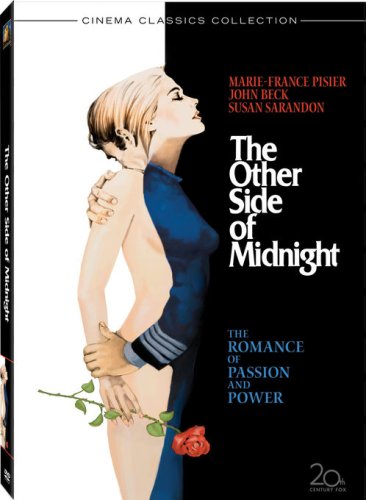
Terminally naive and beautiful Noelle Page (Marie-France Pisier) is abused and conned by every man she meets. In 1939 Paris, penniless and at the end of her tether, she meets American pilot Larry Douglas (John Beck, looking more like a 70s porn star than a 40s air force pilot). A great romance begins, but then duty calls him away. He promises to find her again in three weeks, but he never shows up. Noelle discovers that she is pregnant, and then finds out Larry is a terminal womanizer. She aborts herself with a wire hanger, and then, feeling she has nothing left to lose, slaughters all the young Jedi... I mean, she sleeps her way to movie stardom, hooks up with a Greek tycoon, obsessively tracks Larry’s life, including his marriage to PR executive Catherine Alexander (Susan Sarandon), and plots a dastardly revenge, a reigniting of the romance, and a murder. Busy girl!

As you might have inferred from the above, Noelle’s transformation from abused and abandoned waif to Queen of Darkness is no more convincing than a recent whiny brat’s transmogrification into the Lord of the Sith. In point of fact, NOTHING in this three-hour soap opera is the least bit convincing (right down to careless framing that permits a skyscraper completed in 1972 to be visible over Nazi-occupied Paris). But then, anyone expecting great art to be made from a Sidney Sheldon novel needs to see a therapist, and quickly. What we have here is trash of the absolutely highest order, and hence the four-star rating. Excessive, grotesque and unfailingly hilarious in a way only the 70s could produce, this is the cinematic equivalent of chowing down on a huge bowl of 100% deep fried, trans-fat munchies. Terrible for you, but delicious. And who can fail to love that title. What in the name of all that is holy does it MEAN?

There’s exploitation, and there’s exploitation. And then there’s nunsploitation. There are few forms more unabashedly interested in the full-on sleaze wallow, with the possible exception of the nunsploitation film’s close cousin, the Women In Prison (WIP) flick. As ever, this is less a survey (there’s an entire book on the subject out there), more some semi-random musings.

Sleazy as the form gets, its roots are relatively serious in nature (but then, the same is true of the WIP). One of the pioneering works...in the field is Domenico Paoella’s Story of a Cloistered Nun (1973, out on DVD from NoShame). A more handsomely produced film than many others of its ilk would be, it is something of a gem for fans of Dario Argento, in that it stars three of his heroines: Suzy Kendall (from The Bird with the Crystal Plumage) is the mother superior, Catherine Spaak (from Cat O’ Nine Tails) is the bad girl, and Eleonora Giorgi (from Inferno) is the title character. The basic formula is here: unwilling novice is locked up by her family in the convent, is lusted over by her fellow nuns, and becomes pregnant thanks to an illicit affair. Much torment ensues. This effort is, however, far more restrained in the nudity department than most of its successors, and much of the time comes very close to passing itself off as a serious period drama. Something one would not be able to say of the works of Joe D’Amato and Bruno Mattei.

In a New York forever conscious of the shadow of 9/11, we follow the sex lives and tribulations of a group of gay and straight characters. There’s the gay couple whose relationship is hitting a rocky patch. There’s the professional dominatrix who is finding it more and more difficult to face her work. And there’s the sex therapist who’s never had an orgasm. Her quest for same brings her into contact with the other characters, and to Shortbus, an eccentric sex club.

In the making-of featurette, writer/director John Cameron Mitchell describes where the idea for the film came from. He’d noticed the spate of serious European movies that featured real sex scenes, but also that they were all very dark. He wanted to make a sex-positive film. The intent is laudable, the performances are all convincingly natural (and CBC Radio host Sook-Yin Lee is very funny as the therapist), and there’s a wonderful conceit involving a CG table-top model of NYC through which the camera flies. And yet, one might be forgiven for longing for the explosive savagery of the likes of Baise-Moi. When the characters aren’t having sex, they talk about it. And talk, and talk, and talk. Half an hour in, both the action the discussion begin to grow tiresome. Characters that are supposed to be eccentric are annoyingly flaky, and one can’t help but wonder whether all these people don’t have anything better to with their time. So the film is earnest, sweet, and worthy, but needs something more to truly hold the viewer’s attention.

I always have the distinct feeling, when writing this column, of shipping coals to Newcastle, but I haven’t let that stop me yet, so onward. Today, boys and girls, a few reading recommendations. I trust that most of you are capable of using Google and tracking down your favourite cult movie sites, so I thought I’d point, instead, to a few magazines. Print ones. The kind you hold in your hand. Gasp.

Let’s get the conflict of interest portion over with first. Don’t let the fact that I also write for The Ph...ntom of the Movies’ VideoScope let you see too much bias here. I was a reader for much longer than I’ve been a contributor. The mag has become much slicker since its semi-newssheet incarnation in the early 90s. Each issue is packed with reviews of the latest genre/cult DVD releases, with specialized columns focusing on TV, anime, foreign, and so on. There will also be at least a couple of interviews with creators/actors/directors/etc. Generally speaking, the target audience is fan of varied tastes, and the focus of the reviews is primarily on whether the movie in question is worth watching or not, rather than detailed examinations of the DVDs and their features. If you can’t find something here that speaks directly to you, then I give up. The magazine has also spawned a couple of excellent books.

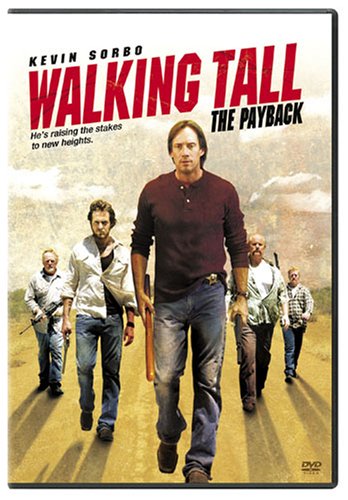
A small town is being terrorized by a gang of thugs who use extortion and violence to buy up all the businesses. The only person who tries to stand up to the gang is the sheriff, but then he meets a violent end. His son (Kevin Sorbo), who, one gathers from vague references, has military training, shucks his apathy, dons his father’s badge, and sets out to clean up the town.

The cover art is hilariously misleading, in that it shows what appears to be Sorbo leading his posse for the titular payback. But those folks behind him are actually the villains. Whatever. At any rate, this follow-up to the remake starring The Rock is mildly entertaining, but no more. Sorbo has little of Dwayne Johnson’s screen presence or sense of humour, and the storyline is utterly by-the-numbers. So routine is it, that the lack of action set-pieces really makes itself felt. On the upside, AJ Buckley is so completely unpleasant as the primary villain that he kicks the film to a semblance of life.

The cult film collector will often have a rather divided personality when it comes to DVD editions of desired movies. On the one hand, perfection is ardently sought – no better example of this can be seen than the down-to-the-very-last-frame detail of the reviews in Video Watchdog. In a perfect world, all movies would be released by Criterion.

On the other hand, down that road lies both madness and bankruptcy. And the fact of the matter is that many films, particularly of the B-level (or lower) from ...he 50's and 60's, will never look amazing, no matter how much care is given to the transfer. The source material will remain firmly and wonderfully in the realm of the sow’s ear.

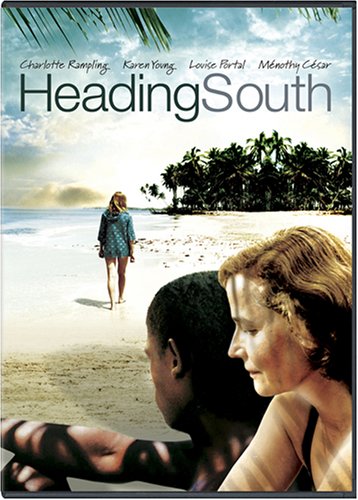
We are in Haiti during the late 1970's, under the brutal dictatorship of Pap Doc Duvalier. At a beach resort, we meet three middle-aged women engaged in what amounts to sex tourism. Charlotte Rampling is Ellen, an imperious ex-pat British professor; Karen Young is Brenda, a psychologically fragile American divorcee; and Louise Portal is Sue, an earthy warehouse manager from Montreal. Disillusioned by their romantic prospects back home, they revel in the (paid) sexual attentions of handsome young Haitians, most notably Legba (Ménothy César), with whom both Rampling and Young are in love.

Director/co-writer Laurent Cantet observes his leading ladies with an eye that, while caustic, avoids easy judgments. He does not in any way let them off the hook for what amounts to a new form of predatory colonialism, and we see them engage in activities they would never consider in their home countries. So, for instance, we learn that Brenda had her first sexual encounter with Legba three years ago, when he was 15, and we see her being tempted to take advantage of a boy who can’t be a day over 12 (something Legba witness, and nips in the bud). But neither does Cantet engage in easy condemnation. He makes all of his characters fully developed human beings, and encourages us to understand these women, even if we do not sympathise. The film is not an unqualified success, however. Once the characters and the setting have been established, the film tends to meander, taking too long to tell us not much more than we knew at the start.