Posts by David Annandale

William Peter Blatty might seem a slightly odd candidate for discussion in this space. After all, he wrote and produced The Exorcist, whose enormous mainstream success makes it rather suspect as a cult film. Ditto for another of Blatty’s screenplays: A Shot in the Dark, which is arguably the best of the Pink Panther movies. But as a director, ah, there we start getting closer to cult status. He has made two films. The Exorcist III (1990) is his best-known effort, and is debatably a cult movie. Ve...y little debate is necessary regarding his other work: The Ninth Configuration (1980).

A couple of words about The Exorcist III to begin with. Of all the sequels and prequels to the landmark original, this is the only one that really stands up to scrutiny. It is, granted, a flawed work. It’s low-key, character-driven mood is broken by the sudden over-the-top pyrotechnics of the climactic exorcism, but we can’t entirely blame Blatty for that. The story, in a nutshell, goes something like this: Blatty gets the green light to film his novel Legion. He comes up with the perfect ending for his story. Studio suits tell him that the title has to be changed to The Exorcist III or no one will know it’s a sequel. Fine, he changes the title. Then he’s told there’s another problem: there’s no exorcism in the film, and how can it be called The Exorcist III if there’s no exorcism in it? You can figure out the rest.

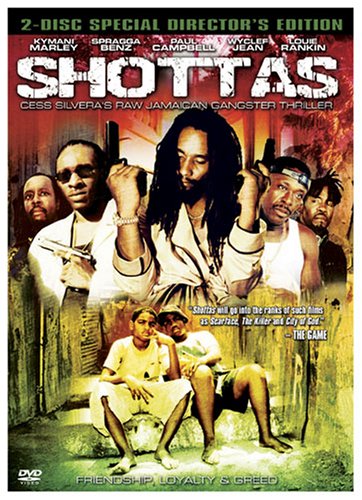
Here we go, with another rise and fall story in the underworld. Two young friends in Jamaica, Biggs and Wayne, grow up separately to become powerful gangsters (the “shottas” of the title). After a prolonged separation, they reunite in Kingston, and the story takes them back and forth between that city and Miami as they climb the drug totem pole, heading for the inevitable fall shown pre-credits.

All the characters speak Jamaican patois, making subtitle necessary. This and the vision of the grinding poverty of Kingston give a certain freshness to the film, but the storyline is utterly hackneyed, and we know nothing about the characters we are following, let alone have any reason to sympathize with them. Attitudes toward women are, as one might expect, antediluvian. Imagine a Grand Theft Auto storyline presented with all the humour and satire removed, and this is what you’d get.

You may have heard this one before. Annabelle (Erin Kelly, channelling Leelee Sobieski) is the hellraising daughter of a US Senator, sent to a Catholic girls’ school to be out of sight and out of trouble. Her rebellious ways continue, however, and she falls in love with her poetry teacher Simone (Diane Gaidry). Much angst, particularly on Simone’s part, ensues, not to mention inevitable walks on the beach and much Lilith Fair-style musical noodlings (our heroines would clearly die of shock if they had a run-in with Maria Beatty), before the consummation and the rather sudden ending of the movie arrive.

Kelly and Gaidry turn in good work, and succinctness of the storytelling keeps the viewer’s interest. There is a larger problem, though, than the movie’s rather overdone storyline and not-terribly-original narrative technique. In the making-of featurette, writer/director Katherine Brooks acknowledges the inspiration provided by Mädchen in Uniform, and how she had wished the student and teacher had gotten together in that film because that would have been “hot.” All right, so that makes this pic something a fantasy. Fair enough. But she also wants a real-world tie-in to all the stories in the news about teachers arrested for having sex with their students, only her take is sympathetic. This leads to some intellectual dishonesty. Having the student actively seduce the teacher is a neat but cheap cop-out from dealing with the unbalanced, predatory power dynamic such a relationship implies. Any truly ethical teacher would have run in a blind panic from a student making the advances Annabelle does, but Simone only utters one line at the end of the film to suggest that her many haunted looks might have been caused by the notion that what she is tempted to do might be wrong. I have this sense of the film trying to have things both ways, and it simply can’t. But even with these knocks against it, it remains a not unengaging romance.

The serial is an extinct form of movie-going experience. Right up to the fifties, your movie ticket got you not only the main feature, a B-feature, cartoons, a newsreel and other shorts, but an episode of a serial. Usually running 12 or 15 chapters, the serial would unspool in 15-20-minute units, each ending in a cliffhanger (often quite literally so, with the hero or heroine plunging off a cliff in a runaway car, for instance). George Lucas pays tribute to the serials in his Star Wars films, which begin with ...he traditional recapitulating crawl and chapter titles.

Many, many serials are available on DVD, and since most of these titles are in the public domain, you’ll find multiple editions of the same title, with print and transfer quality varying wildly. The rule of thumb here, is, as with everything else, that you get what you pay for, so don’t expect a miraculous viewing experience if you only dropped a couple of dollars on your disc. Major-label re-issues are your best bet. The Adventures of Captain Marvel, for instance, released by Republic Pictures, is a pretty solid package.

Well, it’s that festive time of the year, and what could be more appropriate than the remake of Black Christmas hitting the theatres on December 25? Now, I haven’t seen this film, of course, but the advance word is not encouraging. Head on over to www.dreadcentral.com and you’ll see that it seems that directors Glen Morgan and James Wong know how to do comedic horror (Final Destination), but have no idea how to play things straight. Sounds like we have another fine mess on our hands. But the remake has ...ad a good result in the re-release on DVD of the 1974 original. While the new version has lost some of the features of the previous release, it is now in 5.1. Whatever the home video version one watches, however, this is a terrific film, and perfectly perverse counter-programming.

Director Bob Clark has had an extremely eclectic career. Anyone who manages to have both Porky’s and the Sherlock-Holmes-versus-Jack-the-Ripper effort Murder by Decree on their resume isn’t in any danger of being stuck in a rut. But he also must be one of the few directors to have made not one but TWO significant Christmas movies: Black Christmas and A Christmas Story. Different enough for ya?

What we have here are three films from Hollywood’s days before the Production Code kicked in, which show just how much the envelope was being pushed when it came to sexual subject matters. The recurring theme here is sex as a commodity, whether the situations beinig dealt with involve outright prostitution or not.

Outright prostitution is very much the issue in Waterloo Bridge (1931), director James Whale’s effort just prior to making Frankenstein. Mae Clarke (who would play Elizabeth in Frankenstein) is an out-of-work chorus girl during WWI, not a prostitute trolling for men on the titular bridge. During an air raid she runs into a young private from a good family (Kent Douglass). He falls in love with her, and she with him, and so she tries to push him away. This is a romance that is anything but glamorous, despite some scenes in the upper class household (with a young Bette Davis as Douglass’ sister), and the resolution is brutally downbeat.

Nicolas Cage is a highway cop haunted by a gruesome accident. He receives a mysterious letter from his ex-fiancee, begging him to come to the remote colony where she lives and help find her daughter. Cage arrives there to find a grim matriarchy, uncooperative locals, and sinister hints of something nasty going to happen to the child.

I wrote about this film when it was in the theatres, and rather than repeat myself through paraphrase, I repeat myself verbatim. Note there are some spoilers below.

Old fogey time. When I first encountered Mystery Science Theater 3000 (MST3K, don’t you know), it was an authentically viral phenomenon. This would have been circa 1993. It was still on the Comedy Network, a station that very few of us in the Great White North had access to. But the closing credits ordered, “Keep Circulating Those Tapes,” and people did. Often, this meant viewing the episodes in multi-duped EP versions so muzzy the dialogue was barely audible, but enough was discernible to know that we were w...tching sheer genius.

A few years later, things become easier. Rhino started releasing episodes on VHS. Renting became a possibility, as did outright purchase, as the prices were eminently reasonable. Flash forward to today. More and more episodes are being released to DVD. At first, there was a mere trickle (two episodes per case), but now multi-volume box sets are the order of the day. So too, unfortunately, is a concomitant increase in price. MST3K is a wonderful show, but not all the episodes are equally funny. Joel, Mike and the ‘bots had some pretty grim movies to work with, and not all of them turned out to be gold mines of humour. But the best episodes have a tendency to reduce one to lethal paroxysms of laughter, and these are well worth the effort to track down.

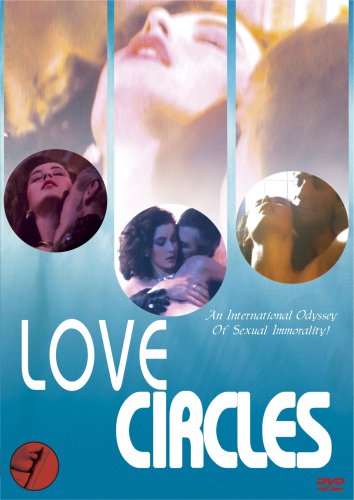
Nervy enough to claim to be an updating of the classic 1950 film La Ronde, this late-night-cable-fodder does borrow that film's structure as we move from one erotic anecdote to another, with a character from one story taking us into another, and so on, creating a chain of narratives involving rich people gettin' it on. I used the word "erotic" because everybody gets nekkid, but the charge the film carries is negligible. Thinks of it as a bad Robert Altman film with worse dubbing.Audio

Both good and bad aspects to the mono. The music (which is exactly as cheesy as you might expect) sounds surprisingly good, especially in the bass. The dialogue, however, is pretty harsh, and since it's already badly dubbed, listening to it is a real chore.

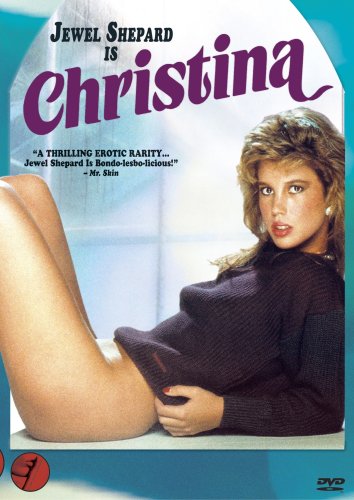
Jewel Shepard is Christina Von Belle, "The Playgirl of the Western World," which means she takes her clothes off a lot and has plenty of sex. She jets around from one European location to another, engaging in the previously mentioned activities. Something of an adventure plot kicks in when she is kidnapped by guerilla lesbians, and is subjected to rather odd bondage games (what's with the toy cars and trucks being driven over her body?).The plot isn't enough to actually make the film interesting, though, and Shepard might be willing to take her clothes off, but isn't so willing to act. I've seen planks of wood deliver more passionate love scenes.

Audio