Posts by David Annandale

The Quatermass series I wrote about last week were based, as I said, on television mini-series written by Nigel Kneale. They were not the only Kneale adaptations, nor were they the only SF films from that period to turn to television for source material. A six-part series aired in 1956 under the title of “The Trollenberg Terror.” This was written by Peter Key, doing his best to be Nigel Kneale. A film version duly followed in 1958, retaining the original title in Great Britain, but seeing light in the States under th... much more lurid (but beloved) moniker of The Crawling Eye.

Forrest Tucker is a scientist on his way to the town of Trollenberg to visit a colleague at the observatory up on the mountain. On the train heading there, he meets two sisters (Jennifer Jayne and Janet Munro). Munro is a mentalist, and the duo has an act, but she also is legitimately psychic, and she feels an inexplicable compulsion to alight at Trollenberg. The small Swiss town, meanwhile, is dealing with tragedy, as a mountain climber has been mysteriously decapitated during an ascent. Tucker’s friend (Warren Mitchell) is also concerned about this mysterious, radioactive, unmoving cloud that clings to the mountainside. Strange events multiply. Munro has visions of events going on up the mountain. A geologist is killed, and his partner becomes a possessed zombie who tries to kill Munro. Turns out there are evil aliens in that cloud. And they look like... Well, you can probably guess.Peter Key was no Nigel Kneale, and the film is no match for the Quatermass flicks. If the FX in the latter had their rough edges, the context in which they appeared – from both narrative and technical considerations (the lighting was always superb) – made them much more convincing than they might otherwise be. The tentacled eyeballs of The Crawling Eye are so ludicrous that they cannot be taken seriously. On the other had, they are extremely memorable, instantly recognizable in a way that the Quatermass monsters are not. They are also completely adorable. Rarely has an SF monster looked so precisely like the most stereotypical SF monster imaginable. I mean every word of that apparently self-contradictory sentence.Bill Warren has pointed out that the plot makes no sense. True enough. Very little by way of convincing explanations and motivations regarding the crawling eyes and their actions are ever provided. But in the final analysis, this matters not one jot. The film has such a wealth of incident that one is carried along by the plot, breathlessly watching each new (and exciting) development without worrying about how they all connect (if they do at all). The performances certainly help: everyone acts with conviction, and the delivery is often underplayed, making the whole affair that much easier to take seriously. The atmosphere is also carefully developed. The dimly lit inn where much of the action until the climax takes place starts off cozy but becomes eerie once the characters come under threat. Silly though the proceedings might be, they still carry an undeniable aura of menace, and the climax manages to be suspenseful despite the silliness of the monsters.Image’s DVD is a pretty no-frills affair (trailer and stills, plus liner notes), but it does present the film in 1.66:1 anamorphic widescreen, and is the original British print, with the original title intact.

One of the smartest, most suspenseful SF franchises to emerge from the 1950's was Britain’s Quatermass series. Created by Nigel Kneale, the series first saw light as superlative television shows, which were subsequently adapted for the big screen by Hammer. While the shorter running time necessitated certain compromises, all three films were excellent, among the best offerings of British SF. These movies were The Quatermass Experiment (1955, released in the States as The Creeping Unknown), Quatermass...2 (1957) and Quatermass and the Pit (1967, AKA Five Million Years to Earth).

Val Guest, who was also responsible for the superb The Day the Earth Caught Fire directed the first two. The first film, which introduced Brian Donlevy as the irascible, bull-headed Professor Quatermass, remains unavailable on DVD, as far as I’ve been able to determine. This is positively criminal. The film, about an astronaut who survives the disastrous returning crash of his spaceship only to slowly transform into a carnivorous, Lovecraftian blob/tentacle monster, is bleak, suspenseful and terrifically atmospheric. Donlevy’s Quatermass is a rather troubling good guy, since he refuses to countenance any delay before launching yet another spaceship. If you can find the VHS, see this film, and in the meantime, let’s hope its DVD release isn’t too long in coming.As if in compensation, the other two films were released by Anchor Bay as a double feature DVD. Brian Donlevy returns to the role in Quatermass 2. He’s still pretty irritable, but he’s much more straightforwardly sympathetic. I mentioned this film before in my tribute to Michael Ripper, but to reiterate, it is very much in the vein of Invasion of the Body Snatchers. Here, though, the takeover by aliens is already well advanced, with important members of the government not what they appear to be (a conceit revisited in last year’s Doctor Who revival). The climactic battle at the industrial plant that is the heart of the alien invasion is pretty explosive, and the monsters on display are impressive despite the limited FX budget.Quatermass and the Pit has Roy Ward Baker directing instead of Guest, and Andrew Keir taking over as Quatermass (meaning the hero is no longer inexplicably American). Both men do their predecessors proud. The only entry to be shot in colour, it makes good use of same, as there is plenty of (for the time) icky ooze and blood on display. Construction of a new subway line unearths a spaceship. The grasshopper-like corpses on board turn out to be Martians, and it seems they were responsible for the colonization of the earth. Our images of demons are the race memory of our previous overlords. The spaceship is far from being inert, however, and a terrible psychic horror descends on London. The climax is a horrific orgy of destruction, imitated (badly) by Tobe Hooper’s Lifeforce. The premise, like that of the other films, is, of course, preposterous, but it is delivered with such conviction by all involved that it winds up making perfect sense, at least for the running time of the film.While the special effects of all three films have been, of course, outclassed by advancing technology, the intelligence of the scripts is something that most current SF films can only envy. Track these down. They’ll reward your effort.

Time to put the spotlight on another DVD company that specializes in releases that are very bad for us, and for which we are profoundly grateful. Today’s object of veneration: Cult Epics. Their very name implies their agenda, but doesn’t quite do it full justice. The epics that they create a cult around are very sexual in nature. I’ve reviewed most of their recent releases individually, so I won’t rehash those musings too much here, but try to give you, loyal reader, a bird’s eye view of their output.

Thre... names dominate the Cult Epics catalogue: Bettie Page, Tinto Brass, and, to a lesser degree, Walerian Borowczyk. Page is the empress of what we might call the documentary side of the company’s sexy output. The Bettie Page Collection box set is your best bet here, with a disc of Bunny Yeager photography backing up two Bettie discs (one of her pin-up work, one of the bondage stuff). While none of Page’s films are necessarily good in and of themselves, they are valuable historical records, and make up an essential companion piece to both The Notorious Bettie Page and Cult Epics’ own tribute, Bettie Page: Dark Angel. This historical document angle also forms the principle virtue of the Vintage Erotica series, which has a disc now for every decade from the 20's to the 50's. Again, one doesn’t watch these films for their sterling qualities, but as curiosities they are invaluable, and worthy of preservation.Tinto Brass is probably still best known in North America (to the extent that he is known at all) as the man who directed that infamous folly Caligula, only to yank his directorial credit when Bob Guccione added the hardcore inserts. Cult Epics allows us to get to know the man much better through six (so far) releases. Far more light-hearted than the bloated monstrosity that is Caligula, these are all handsomely mounted, frequently period-set, exercises in erotica. The films aren’t as smart as Brass clearly thinks they are, but there is a rather disarming auteurist obsession to them.Walerican Borowczyk, on the other hand, makes the kind of movies Brass merely thinks he’s doing, and the highlight here is undoubtedly The Beast, a wildly perverse take on the Beauty and the Beast story that achieves the almost unheard of feat of being an absolutely gripping erotic film. It is a feast for the eyes.Borowczyk isn’t the only avant-garde director with an interest in the darker recesses of human sexuality on the Cult Epics roster. I should also mention Fernando Arrabal, who has the love of the surreal of an Alejandro (El Topo) Jodorowsky, but whose pretensions are nowhere near as annoying. There are three of his films on offer here, in a nice box set.A couple of one-offs deserve special mention. In a Glass Cage is a full-on horror film, though, as one might expect, the horror is sexual in nature. And is it ever horrific. This story of an iron-lung-encased Nazi pedophile is not for the faint of heart, but it is a stunning achievement. And then there’s School of the Holy Beast. There are all sorts of nunsploitation films out there vying for supremacy. But I haven’t seen any yet to top this Japanese effort for blasphemy, degradation and pictorial beauty (in case you were wondering, all three of those qualities are meant to be terms of praise). If these two titles were the only ones in Cult Epics’ catalogue, those good people could retire knowing the job was well done. I can’t wait to see what comes next.

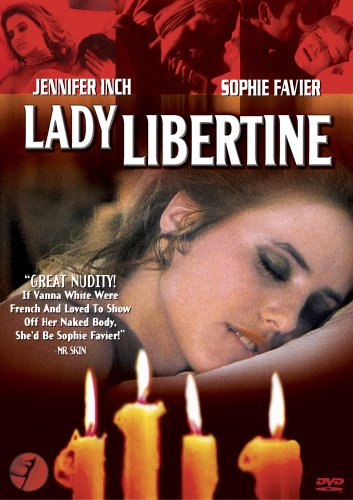
Harry Alan Towers, that prolific producer of cheap but handsome exploitation (and the man behind many Jess Franco films back in the day) backed this 1983 effort which attracted some interest (from somewhere, apparently) for featuring French game show hostess Sophie Favier showing off her prizes, as it were. She isn't the lead, though. That happens to be one Jennifer Inch (?!), who plays a young woman dressing as a young boy. She is adopted by a nobleman, who wonders why he's so excited around his young charge. The secret doesn't last long, however, and soon she's carousing with him and sundry partners, while filling him in on her upbringing (which involved much spanking). Once again, as with Black Venus, the film looks better than it has any right to, which helps compensate for the atrocious dubbing.Audio

Overall, this film's mono soundtrack sounds better than does that of its sister release. This isn't to say that there isn't any dialogue distortion, because there is, but it is certainly held to manageable levels. The music is clear. For what it is, and for its age, this track could sound a lot worse. The mix is a bit odd, though. Notice how, in one of the early scenes, a buzzing fly threatens to drown out the dialogue.

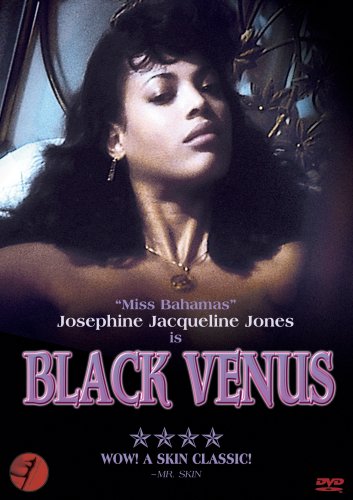
Well! The case informs us that "Former Miss Bahamas, Josephine Jacqueline Jones spraked an international firestorm with her debut starring role as Venus." I guess I must have slept through that firestorm. At any rate, this tale, "based on the scandalous story by Honor' de Balzac" (but then, Tower of the Screaming Virgins is "based on the novel by Alexandre Dumas"), is narrated in flashback by an elderly gentlemen who frequents a brothel, and sees the title character there. The film tells of her journeys through decadent 19th-Century society.This is a Harry Alan Towers production, so one expects it to be a low-budget but still handsome-enough (though sleazy) period piece. And that's what we have. The costumes and sets are nice, well above the usual softcore romp. The acting, though, is also what you'd expect, with the lines declaimed from memory rather than actually delivered. And the score is a Hooked On Classics effort that at first adds tone, but then comes off as pretty cheap itself.

Audio

It is time for a long-overdue tribute to Michael Ripper (1913-2000). Those in the know (You Know Who You Are) need no introduction to the British character actor, and we worship him for his innumerable roles in British horror films in the 60s, particularly those produced by Hammer Studios. Imagine, if you will, a dignified Marty Feldman with (usually) a beard, and you have a bit of an idea. Never the lead, but always a reassuring supporting character, ESPECIALLY if he played a barkeep. If Michael's in the tavern, all...will be well.

Where can Michael be found? All over the place, uncredited or not. Though a quick trip to the IMDB will give you the complete list of appearances, much of the joy of Ripper-spotting is running into his familiar face without warning. The earliest bar I've seen him tend is in Quatermass 2 (1957), the British equivalent of Invasion of the Body Snatchers. The British Government has been taken over by aliens, and their Horrible Industrial Plant is located near the town where Michael serves the ale. A fine exercise in paranoia, and a standout SF/horror film, as are, incidentally, the other two films in the series: The Quatermass Experiment (the first of the three), and Quatermass and the Pit.Michael sheds his beard to play a concerned seaman in the mind-torquing The Lost Continent (1968). On a ship loaded with chemicals that explode on contact with water, Michael is sensible enough to get the hell out of Dodge long before the ship drifts into the Sargasso Sea and encounters carnivorous seaweed, giant hermit crabs, other less immediately identifiable monstrosities, and a colony of Spanish Inquisitors.He is, unfortunately, not able to get out of Cairo in time to escape the wrath of The Mummy’s Shroud (1966), but he has the consolation of stealing the show as the incredibly nervous aid to a unscrupulous (and justifiably doomed) tycoon. Not the best mummy film, but not the worst either.The Plague of the Zombies (1966) finds Michael as the local constable, getting caught up (but fortunately not fatally) in a mystery involving a callous lord killing the locals and then reanimating them as cheap labour in his tin mine. No matter how bad the situation gets, if Michael's around, things will be under control.Made the same year as Plague, on the same sets, and also taking place in Cornwall, is the ultimate Michael Ripper movie: The Reptile. Oh sure, Jaqueline Pierce cursed to turn into a snake woman is pretty cool, but not only does Michael have a pretty substantial supporting role, he is back where he belongs: in the tavern. And there is a scene here, wait for it, of Michael making things right for the beleaguered leads by stirring them a couple of cups of cocoa. Those of you who do not feel warm and safe upon watching this scene are unworthy of my continued acquaintance.

Godzilla has been a household name in North America almost for as long as he has been in Japan. Over the course of the last few years, most of his recent films have been appearing here in all their unedited, widescreen, subtitled glory. But the film that started it all was never properly seen here theatrically until last year, and only now is available on DVD for the first time, but it was worth the wait.

When producers Harold Ross and Richard Kay picked up Gojira (1954) for American distribution, th...y couldn’t let the original work stand as it was. The climate was not right for something quite so grim and politically pointed (more on this in a bit). So Terry Morse was brought in to direct new scenes, inserting an Raymond Burr as reporter Steve Martin to bring an American perspective to all the chaos and destruction. The result was Godzilla, King of the Monsters. Enough of the original movie was left, at least in terms of the special effects, to preserve some of the majesty and poignancy, but there is no question that director Ishiro Honda’s movie was butchered. The original ran 98 minutes. Even with half an hour of Burr footage added, the new film only ran 80.

Consider this a follow-up to last week’s column. In my musings about the Big Bug movies, I mentioned that Tarantula had only just become available for the first time as part of a Best Buy-exclusive box set of Universal SF flicks. I’ve managed to lay my hands on this set (again, you can track it down through Amazon if you’re not having any luck with Best Buy itself – for Canadian readers, I should mention that my attempts to track the disc down through the Best Buy website proved fruitless), and for fans of 50'... SF, and particularly the work of Jack Arnold, this is Christmas come early.

Jarck Arnold directed many of the most important SF films of the 1950s. Two of his most beloved films – Creature from the Black Lagoon (1954) and It Came From Outer Space (1953) – have been out on disc for some time. Most of the other big titles associated with his name are finally available here. One stop shopping.

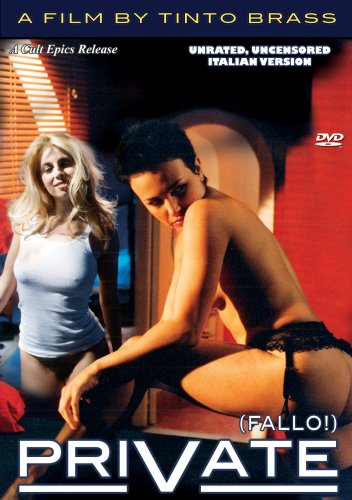
Tinto Brass, reigning high priest of the handsomely mounted skin flick, returns with this portmanteau feature. Six couples spice up their sex lives as the women have sex with other people and their menfolk watch/hear about it/join in too.This is the most explicit film from Brass to come out on the Cult Epics label, in that a fair bit of the sex here is not simulated. The tone is consistently cheerful, and there are some quite funny moments. The performers look more like real people than one might expect, and so, all in all, this ain't deep, but it's better than most efforts of its kind.

Audio

Big Bug movies. How can one not love them? They have bugs. They’re big. What else do you need to know before you hand out the Oscars?

They heyday of the Big Bug flick was, of course, the 1950's, the era of the great SF boom in the cinema. The first, and best, of these films was Them! (1954). The title is deliberately coy about what the threat is, playing very consciously on Cold War paranoia (after all, who is responsible for everything going on in the world if not the mysterious “them”). Some initia... viewers, it seems, didn’t even know the movie was going to be about giant ants. The film was originally intended to be in 3D and colour, but budget cuts nixed that idea, which is actually for the best. The black-and-white photography varies from moody low key to a flat, semidocumentary look, serving up the perfect mix of atmospheric, almost noir-like mystery in the early goings and the climax, and a nice patina of realism elsewhere. The ants were full-sized mechanical models, and still make quite the impression. The disc from Warner is pretty short on extras, but the print is in nice shape.