Posts by David Annandale

Let us sing a hymn in praise of bad movies. Not ordinarily bad, of course. There is very little joy to be had in anything touched by Martin Lawrence. No, the crap that brings warmth to the heart of the badfilm fan can be the B-movie so inept that the set falls down. But there is also the big-budget, A-lit pic that pulls a Hindenburg, and those are to be treasured as well.

I have this latter type of badfilm in mind because I saw Lady in the Water over the weekend. Now, I cannot recommend this film if ...ou want to see something good. It is a megalomaniacal mess that is also, taken straight, paralyzingly dull (one of the people I saw it with bailed after an hour, and I can hardly blame her for walking out). However, when viewed as a slo-mo career catastrophe, it becomes quite fascinating. It is also so silly that it just begs to be rediscovered as an unintentional comedy. Let’s think about the names of things: “narf,” “scrunt,” “tartutic,” “Madame Narf.” This is gold, people. Imagine screening the film and yelling “Narf!” every time the somnabulant Bryce Howard shows up. Or do as one critic did, and Google the word “scrunt.” Go ahead, do it now. I’ll wait.

In our last thrilling episode, I talked about Vampyres as being one of the pinnacles of European erotic horror. I felt that I couldn’t very leave the topic without saying a few words about the man whose lengthy career has largely been built around this form: Jesús (Jess) Franco. Cult movie connoisseurs will already be very familiar with him, and should feel free to stop reading now. For the rest of you, consider this a brief, guarded, introduction.

The word “prolific” hardly begins to describe Franco...s output. He’s directed over 150 films, most of which he also shot, wrote and scored. But are they any good? They are certainly very personal, and fine arguments for the auteur theory (but then, so are the films of Ed Wood and Doris Wishman). Lucas Balbo, Peter Blumenstock and Christian Kessler rightly titled their excellent book on Franco Obsession. Franco IS capable of putting together a well-crafted piece of cinema, though this tends to be the case earlier in his career. Kim Newman, writing about Russ Meyer, said that he “knows how to make good films, but refuses to do so,” and the same could very well be said of Franco. (Being utterly consumed with the erotic is something else the two directors have in common, but Franco has none of Meyer’s technical perfectionism). Though Franco’s films are very sloppy, are plagued by a horrendous overuse of the zoom lens, and have plots that can most charitably be described as “loose,” they are also very improvisational, much like the jazz Franco also loves (and plays), and can be rewarding in the most unexpected ways.

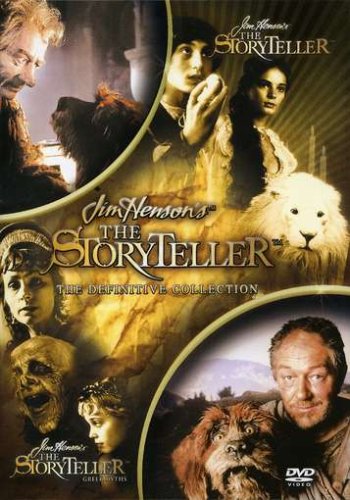
New from Sony Home Entertainment comes the complete series of Jim Henson's The Storyteller starring Mr. Elephant Man himself, John Hurt, and a slew of eye-popping creations from Jim Henson's Creature Shop. The series focuses on classic folk tales, fables, and legends, including "Fearnot," "The Heartless Giant," "The Three Ravens," and six other wonderful family-friendly tales on one disc. Also provided as part of the set is an additional disc entitled Greek Myths, which provides even more Henson-esque entertainment with the following four tales: "Daedalus and Icarus," "Orpheus and Eurydice," "Perseus and the Gorgon," and "Theseus and the Minotaur." There are thirteen episodes in all. Henson's typical production efficiency is present in each episode. His craftsmen always make the most of their miniscule budgets, and their work offers a refreshing break from these days of CGI-heavy effects.

What's so great about this series is its willingness to incorporate a myriad of cultural folk tales, many of which may be foreign to first-time viewers. Taking its selection from Greece, Russia, and Germany, the series never reached its full potential on account of the short run. However, it manages to educate and entertain children of all ages, and endures as a fine piece of family programming despite its brevity. Hurt is fabulous as usual, really sinking his teeth into the narrator role and telling each tale with an enthusiastic punch in his voice. Brian Henson also does a fine job voicing The Storyteller's cynically fearful dog. While effects may have advanced much since 1988, Creature Shop create a lovable character in the talking mutt, which is sure to enthrall younger viewers. Thankfully, these two characters are able to relate to that crowd without talking down to them. One last thing: watch for a minion of fine actors in early roles, including Gabrielle Anwar, Miranda Richardson, Joely Richardson, Alison Doody, and Jonathan Pryce.

Let us consider the term “erotic horror.” This sub-genre doesn’t have a very strong tradition in North America, despite the best efforts of Seduction Cinema and Misty Mondae. I exempt the films of David Cronenberg from this consideration, as they are hardly designed with titillation in mind – they are much colder, analytical works, and the label once applied to them – “venereal horror” – is still more appropriate. No, there just hasn’t been that much on this side of the pond, relatively speaking. Perhaps in its stead... there has been the phenomenon of the “erotic thriller.” And with very few exceptions, the less said about that category of late-night cable-fodder, the better.

Overseas, the story is considerably different. Europe and Asia have been simultaneously targeting fear and desire for decades. Readers looking for a good survey of the European scene owe it to themselves to track down Cathal Tohill and Pete Tombs’ Immoral Tales: European Sex and Horror Movies 1956-1984. There’s an enormous wealth of titles to choose from for a case study (and I don’t preclude returning to this topic), but the one I’d like to consider today is Vampyres, a 1974 effort produced in England, with an English cast, but directed by Spaniard José Larraz.

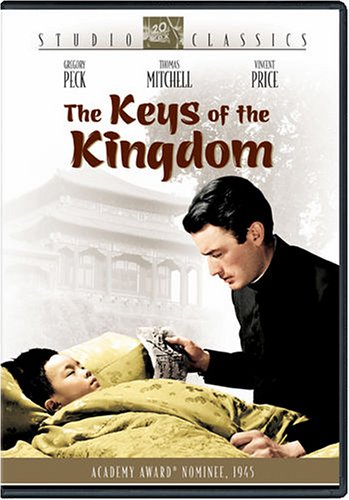
Gregory Peck plays Francis Chisholm. After losing his parents as a young boy, and then his sweetheart (to moral turpitude, it seems), Francis enters the priesthood. His unorthodox ways make him a failure initially, but kindly bishop and mentor Edmund Gwenn sees potential in the man, and sends him off to China to be a missionary. There too, things get off to a rocky start, but a turnaround happens when he saves the son of a local mandarin. His struggles are far from over, but through it all, he remains a triumphantly decent man.And one would expect no less from Gregory Peck, now would we, in this, his screen debut. This is old-fashioned religiosity following in the vein of The Song of Bernadette and Going My Way. It certainly is easy to cynical about it, and there is more than a whiff of cultural imperialism about the affair. Even so, and in spite of the very stately pace, the film is so fundamentally sweet-natured that it is very hard not to be caught up in it.

Audio

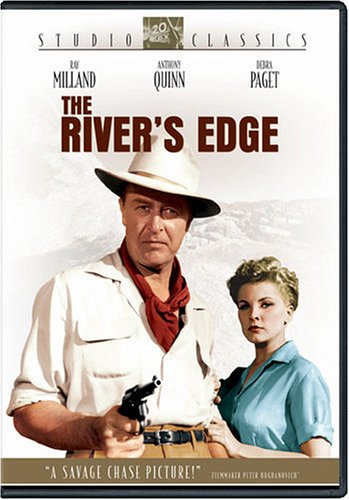
Career criminal Ray Milland shows up at the ranch of Korean vet Anthony Quinn, looking for his old flame, Debra Paget. She is now married to Quinn, but she hasn't adapted well to country life, still carries a torch for Milland, and is in the very process of leaving Quinn. She and Milland rekindle their romance, and are planning to leave town with the million dollars Milland has just scored. When Milland runs over a state trooper, he forces Quinn to guide them through the wilderness to the Mexican border. A struggle for both survival and Paget's love ensues.A welcome reminder of when thrillers didn't have to be two-and-a-half hours long, this is a tight, swiftly paced peace of work. Despite the great physical difference between them, Milland comes across as a worthy adversary for Quinn, there's a great cynical anger to the characters, and the violence is pretty brutal for its era. The location settings tend to make the studio exteriors all the more obvious, but this is a minor quibble This is a fine western noir, worthy of rediscovery.

Audio

It lurks behind a poster whose taglines are deliciously over the top, arguably meaningless, grammatically dubious, and utterly misleading: “BEHIND THIS MEMBRANE... you will be driven to a point... midway between LIFE and DEATH!” (?!?!) Further: “The only people who will not be STERILIZED with FEAR are those among you who are already DEAD!” Now, there have been many films to promise/threaten heart attacks/strokes/what-have-you in their ad campaigns, but The Flesh Eaters (1962) is, to my knowledge, the on...y one to boast putting a stop to one’s reproductive facilities. This publicity oddity is rather fitting, actually, providing yet another piece of charm to one of the most hugely satisfying B-movies of its era.

Written by Arnold Drake (co-creator of the superhero team The Doom Patrol), directed by Jack Curtis, and edited by future soft-core auteur Radley Metzger, The Flesh Eaters has WWII vet and charter pilot Byron Sanders flying alcoholic star Rita Morley and her supremely competent assistant Barbara Wilkin to Provincetown. Plane trouble forces them to land on an apparently deserted island. There they run into Martin Kosleck, a marine biologist who, despite his friendly manners, is clearly not to be trusted (we know this because of his accent). The next morning, the plane has vanished, and the castaways must contend with tiny, silvery blobs infesting the water. These are the flesh eaters of the title.

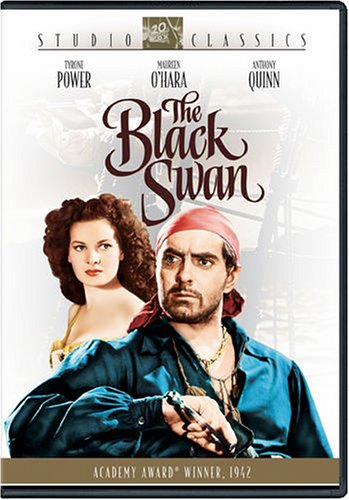
Tyrone Power has been plying his trade as a pirate in the waters near Jamaica. When his former captain becomes the governor of Jamaica, Power goes straight. He has his eye on Maureen O'Hara, who is engaged to a duplicitous aristocrat who is feeding information to unreformed pirate George Sanders (utterly unrecognizable in shaggy red hair and beard). There will be many complications before Power can claim the resisting O'Hara as his own.Compared to the Errol Flynn pirate movies Captain Blood and The Sea Hawk, this one is a bit light on the action, really only getting down to the buckling of swashes in the final act. The romance between Power and O'Hara is a bit difficult to take in this day and age as well, especially in the first part of the film as it dances into rape fantasy territory. But be that as it may, this is still a first-class adventure.

Audio

Herewith begin my weekly musings on the field of cult movies. As an opener, it would probably behoove me to define exactly what is meant by a “cult movie.” I’m going to be a bit disingenuous here, and provide a definition arguably so nebulous that some might consider it useless. That’s fine. There have been many attempts at this sort of definition, and most founder on specifics once one moves much beyond the “I know one when I see one” type of description often applied to porn. That said, here goes. Generally speakin..., the cult flick usually emerges from the realm of the B-movie (the two terms are not synonymous, though there is a large degree of overlap). As soon as there is any kind of following, however small but definitely committed, we have a cult film. So far, so good. The problem, of course, is what happens when the cult becomes huge. The Star Wars films and The Lord of the Rings (in both print and movie form) command a rabid following, some of whose members displaying behaviour no less obsessed and eccentric than that of the most religious followers of The Rocky Horror Picture Show, which is the textbook definition of a cult film.

So whither our definition? One might refine it by emphasizing the B-movie or indie nature of the movie. In other words, it must not be mainstream, or at least not have had a mainstream success. This last qualification is, I think, important, because there are major studio productions that do, I feel, qualify as cult films. Very often, however, they were not box office successes upon original release. They are frequently pretty terrible, and are celebrated by their audiences for their awfulness. In other words, the cult movie audience embraces the film for reasons not necessarily intended by its makers. Some examples: Myra Breckinridge, Showgirls, Battlefield Earth.

Carla (Yuliya Myarchuk) is a Venetian in London, looking for a flat in which she and her boyfriend Matteo can live once he actually arrives there. In the meantime, she has been in London for a month, and he is in Rome, pining for her. Both of them are getting a bit sexually frustrated, but Carla works that issue out with a series of affairs, and for some reason, Matteo seems to have a problem with this.We are once again in the of Tinto Brass' ass-worship and cheerful infedelity. The tone is established by Carla's opening credit stroll through Hyde Park (a walk which Matteo will recreate later to transformative effect), which is depicted as a carnal wonderland. It seems that the Italians see the English as sexually uninhibited. Anyway the sexcapades dance up to the border of, but do not quite cross into, hardcore, and the tone is cheery. It ain't art, exactly, but it is one of Brass' more engaging films.

Audio