Dolby Digital Mono (English)

Family Ties is likely remembered most as the series that launched the career of Michael J. Fox. There’s no question that he owes a great debt to Alex Keaton. It’s almost a bit awkward now to watch him as this young, extremely conservative teenager after Fox has spent so much of his life as a liberal poster boy in the last couple of elections. Politics aside, it’s hard not to credit his performances in Family Ties and the Back To The Future films for launching him into a well deserved lucrative career. The Michael J. Fox issue, however, might hide some of the other assets the show had going for it in its time. For one of the first times parents were portrayed as humanly flawed, and families were not the perfectly functional institutions most of these shows described. Up until Family Ties, these households were either perfect little examples of American ideal or they were so dysfunctional that they could hardly be considered families at all. This show obviously went for a bit of realism.


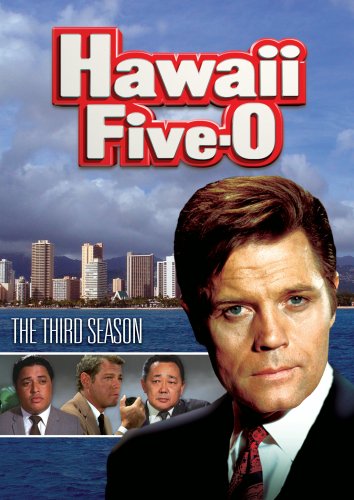
Have you ever walked down the street and heard a chorus of “Five Oh” making the rounds? In street lexicon that means the police. It’s a warning to the drug dealers and any other illegal activities that the police are on the way. That’s just one of the ways that Hawaii Five-0 has invaded our pop culture. Who hasn’t heard the phrase, “Book him Danno”? It’s no surprise, because until Law & Order, Hawaii Five-0 was the longest running crime drama on television. It started in 1968 and didn’t end until 1980 when the production staff and facilities were immediately retooled to produce Magnum P.I., which was an unofficial spin-off of Hawaii Five-0. While he never actually appeared on Magnum, Five-0’s McGarrett was often referred to by characters on the series. The series continued for a few years in syndication where the episodes were all mixed up. These DVD’s allow the first chance since their original broadcast for these episodes to air complete and in the correct order. While continuity wasn’t huge, as there were few actual story arcs beyond the episodes, there were minor changes that made the show look strange in syndication. The final season was aired under the title, McGarrett.


What started as a Neil Simon play and eventual film became one of ABC’s most endearing comedies of the 1970’s. One could credit the clever premise of putting a neat freak and a slob under the same roof. One might look to the fact that both the film and play were considerable hits to explain the success of the series. The truth is, it was none of these things. Plenty of hit films have spawned crappy shows. Remember That Big Fat Greek Wedding? Even Neil Simon plays have been the starting point for bad television. Remember Barefoot In The Park? My point exactly. Even The Odd Couple was attempted again in the 1980’s with Ron Glass and Demond Wilson. If you remember that one, you should get some help for those bad dreams you’re having. The simple truth is that it was Tony Randall and Jack Klugman that made this series fire on all cylinders. Before watching this set, I tried to think back on my favorite episodes, and I made a rather interesting discovery. I couldn’t remember even one plot. What I could recall were many moments between these two gifted comedic actors. Long after the stories themselves had been forgotten, it was Felix and Oscar, Tony and Jack that remained. It’s almost too horrific a thought that these were not the actors the show was created for. It was Art Carney and Martin Balsam that were expected to fill these parts when Gary Marshall began to construct The Odd Couple for television. Whatever happened, I don’t know the story; what I do know is that the television gods intervened and what was likely going to be a one season and out comedy ended up lasting 5 seasons.


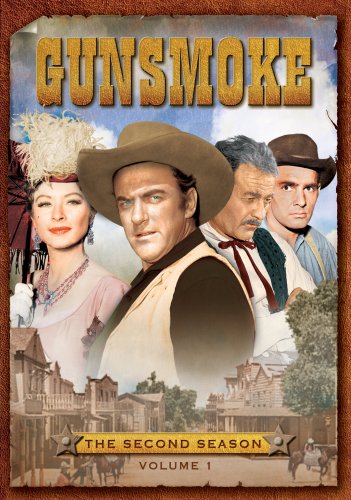
Gunsmoke is the longest running scripted live action television show in history. The series ran from 1955 to 1975. At first it was a half hour black and white show that evolved into a color hour by 1967. It actually started before the days of television, premiering on radio in 1952. Then it was William Conrad as the tough as nails Marshall Matt Dillon. When television came into its own, Gunsmoke made the jump to the bright living room box and made history. Westerns would ride across our small square screens for the next 3 decades, making it the most successful genre of that time, and it was Gunsmoke that started it all. The television version of Gunsmoke was originally conceived as a vehicle for John Wayne, who opted to remain in movies. Yet, it was Wayne himself who suggested James Arness, and it turned out to be a career for the once “carrot” monster from The Thing. Gunsmoke started before all of the big westerns and was around when most of them had departed.

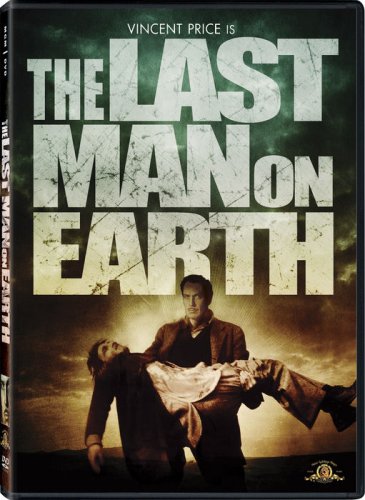
Robert Morgan (Vincent Price) is the lone human survivor in an LA devastated by a worldwide plague that killed most of the global population and turned the rest into vampires. For three years he has survived on his own, mourning his lost family and systematically staking every vampire he can find, working his way block by block through the city. Then, one day, he sees what appears to be another survivor...

Richard Matheson wrote a screenplay adapting his novel I Am Legend, but by the time the film was actually made, his script had been sufficiently changed that he replaced his name in the credits with a pseudonym. There is no denying that the film has its share of flaws. The dubbing of the Italian cast members is hit-and-miss, the action scenes are indifferently staged, and one feels a bit too acutely the monotony of Price’s lonely existence. On the other hand, there is a completely convincing vision of a deserted city achieved on a small budget, and a couple of genuinely creepy moments (most notably when Price’s wife returns from her grave). Furthermore, this remains the adaptation closest to the original novel, and the only version to retain the idea of the hero actually being a villain from the perspective of those he is exterminating.  That alone gives this somewhat clunky effort a bit of an edge of its slicker successors (The Omega Man and I Am Legend).

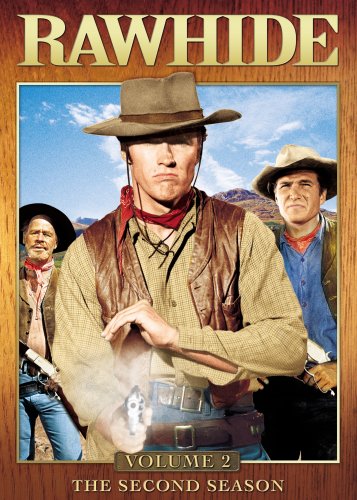
Long before Clint Eastwood was making our day as Dirty Harry or even roaming the badlands without a name for Sergio Leone, he was working the cattle drive on Rawhide. Rawhide was created to take advantage of the huge Western film and television wave that Hollywood had been riding for nearly a decade. With huge ratings for Gunsmoke and Bonanza among others, Rawhide was a bit of an unlikely success. Here the show explored the West on an endless cattle drive to get a few thousand steer to market. Along the way the crew would find themselves involved in someone else’s troubles or meet trouble head on themselves. The cattle drive theme would rely on the changing landscape to distinguish the show from other more sedentary westerns. More like Wagon Train, the constant movement always gave a sense of action even when there wasn’t much.


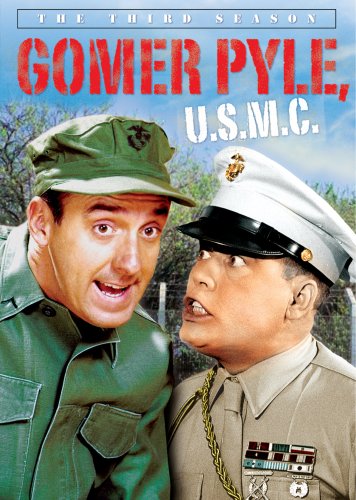
Gomer Pyle began life as a one of the down home residents of Mayberry, where Andy Griffith held court as the sheriff and Don Knotts blundered his way to fame and fortune. It’s no small task indeed to find a way to shine as a minor character who wasn’t even there from the beginning; he replaced Floyd after the second year. But shine he did. Much of the character’s charm and success has to be given to Jim Nabors. The shy naive Gomer worked as an auto mechanic in Mayberry, but for his own series he appeared in one of the most unlikeliest of places, the U.S. Marine Corp. There Nabors found the perfect comedic partner in Frank Sutton, who played his superior Sgt. Vince Carter. The chemistry and remarkable timing these two brought to the Andy Griffith spin-off made it an instant hit. Critics at the time were very skeptical of the move, and most of the predictions called for a swift end to Gomer Pyle U.S.M.C. But before you can say “surprise, surprise, surprise”, the series became as popular, if not more so, than the parent series, at least for a time. In syndication the show was always a hit.


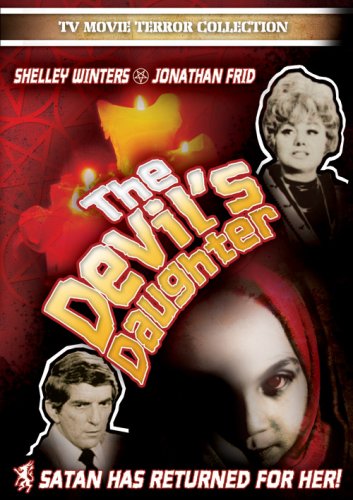
Come with me, gentle viewer, back to the state of horror on TV, Anno Domini 1973. After her long-absent mother dies in mysterious circumstances, Belinda Montgomery attends the funeral where she meets Shelley Winters, an old friend of the family, or so she claims. Winters takes Montgomery into her home, and there our young heroine meets all sorts of strange people, and gradually realizes she is in the clutches of a Satanic cult who believe she is Satan’s daughter.


Televised horror has made great strides since this Movie-of-the-Week era, though even the likes of Masters of Horror still has to work, on its best days, to reach the level of a decent theatrical release. But The Devil’s Daughter is eye-witness to an era where mediocrity was, with very rare exceptions, the best one could hope for. Awful as it is, this pick is awful in entertaining ways. So here we have Shelley Winters teasing us with the promise that she might not take the volume to 11, and then spectacularly breaking that promise; Abe Vigoda channelling the spirit of Boris Karloff; Jonathan Frid stuck with a mute character of unclear motivations; Montgomery’s character portrayed as such an incurious wallflower (she’s only mildly interested in the Rather Big Clue that is the portrait of a cloven-hoofed Satan hanging over Winters’ fireplace) that sympathy is very difficult to muster; Robert Foxworth showing up late in the day as a plot device only the dullest of viewers will fail to see coming; Joseph Cotten doing ditto; and such treasures as a photo album complete with a picture of all the Satanists, in full black regalia, happily posing for a group shot. In other words, the camp comes thick and fast, and that kind of entertainment value is what accounts for this terrible movie’s star rating.

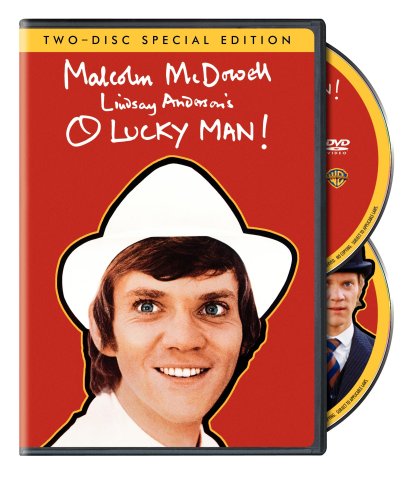
Malcolm McDowell’s second collaboration with director Lindsay Anderson, after their triumph with If..., sees McDowell as an enthusiastic new coffee salesmen sent off to make his company’s fortune in an ever widening area of the Britain. In true picaresque style, he has one strange adventure and encounter after another, each more bizarre than the last, and the whole is intercut with studio performances of Alan Price’s songs that comment on the whole enterprise.

Picaresque narratives are, by their nature, sprawling, episodic tales, and that is certainly true of O Lucky Man, which clocks in at just under three hours. They can, however, also have plots that only appear to be random, but are in fact as tight as wound watch, as is the case with Henry Fielding’s Tom Jones. This is less the case with Anderson’s film, which feels considerably more scattershot in approach. The episodes can be amusing, and McDowell is excellent throughout, but the satirical broadsides feel more obvious than pointed. Viewers will likely be divided over how they feel about the same actors (including Ralph Richardson and Helen Mirren) popping up in multiple roles, a convention rarely seen except in theatre. An interestingly messy work.

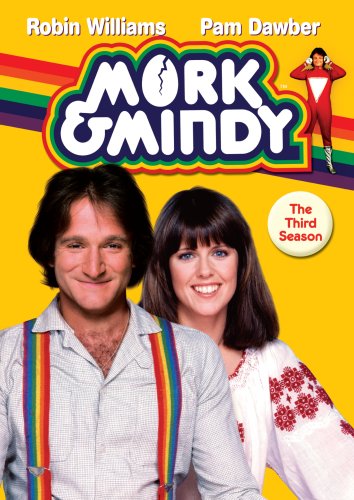
Have you ever watched a recent Robin Williams film and yearned for the days when the actor wasn’t so full of himself and stealing every scene he was in? Well, you’re out of luck, because there was never such a time for Williams; however, you can journey to a time when at least he was hungry and wasn’t so over the top. OK. Even in the days of Mork and Mindy Williams was never capable of reining himself in. Still, I thought I would look back on these episodes with that warm nostalgic feeling I tend to get and just remember the good times. And yes, there were good times. But the more I watched this third year of Mork and Mindy I was becoming all too aware that in 35 years nothing has changed except that the routine has gotten old. Watching Williams prance around with his silly voices and wide eyed faces might have been fresh in the 1970’s, but honestly, haven’t we all had just a little too much of it by now? A television film about the show didn’t present either of the stars in a very positive light, and perhaps it is that image that has tainted the show for me. Whatever the reason, I just didn’t find this stuff nearly as funny as I did 30 plus years ago. Somebody’s matured, and it wasn’t Robin Williams.