Posted in: Disc Reviews by William O'Donnell on August 16th, 2012
Dan Tanna is a private investigator whose home-base is on and off the mains strip of Sin City itself, Las Vegas. Every week saw Tanna in some sort of deadly adventure chasing bad guys down with his '57 Thunderbird, or firing at them with his signature Magnum pistol.
Perhaps it was the influence of Las Vegas, that inspired many of the stories in this series to be a bit more over-the-top than a typical crime drama would venture. Sure, CSI and all their kindred programs offer up plenty of silly plots, but not all would go so far as to have stories involving partnerships with psychics, battling body doubles (on more than one occasion), and other outrageous characters. Sometimes this silliness throws a little zest into, what can sometimes be a tired genre. Sometimes though, it simply keeps the audience from fully investing in the characters. Robert Ulrich, who plays Tanna, is largely forgettable in his own series when pitted against these sorts of cartoonish villains, but he comes off as a perfectly acceptable leading man in the end.
Posted in: Disc Reviews by Michael Durr on July 9th, 2012
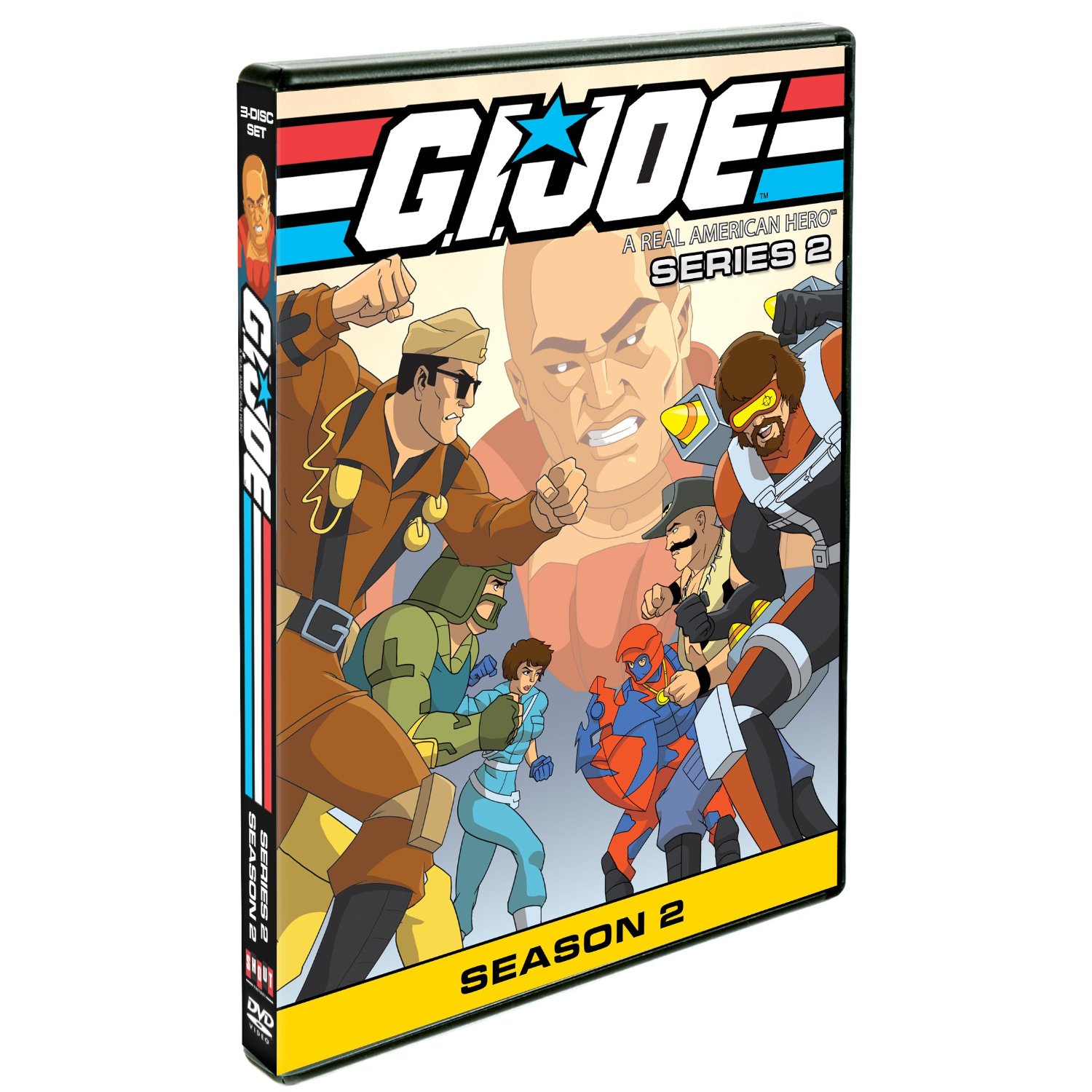
As expressed many times on these reviews, I grew up with the original G.I. Joe, the original Transformers, He-Man and so forth. In those shows, I tended to perhaps forgive some of the quirkiness and things that we would probably never see in a cartoon in this decade simply because I loved them so much as a kid. But would I be so forgiving with a G.I. Joe series that started out in the 90’s, when I was already in high school? We shall soon see when I review Season 2 of the second series of G.I. Joe.
The second series of G.I. Joe officially started in 1989 by DIC Entertainment with a 5 part mini-series which soon launched them into about forty to fifty episodes that lasted until early 1992. With this review, we are taking a look at the final twenty episodes of the show. Let us take a peek at some of the key moments.
Posted in: Disc Reviews by William O'Donnell on December 4th, 2011
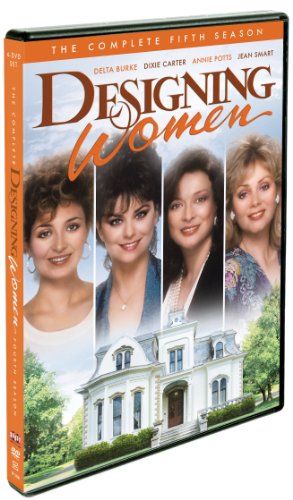
Good grief, these people again. I had previously shared my thoughts on this program when reviewing the third season on this site: https://upcomingdiscs.com/2010/03/13/designing-women-season-3/ I shall expand on this but assure you that little has changed in my sour opinion.
This season was the last to feature Delta Burke and Jean Smart, who comprised of half of the leading cast. This does not mean there are any climatic finale moments where the friends become sentimental for one and other. This season seems to stay the course of mediocre comedy it had for 4 seasons previous, except perhaps for a little more applause added character's entrances.
Posted in: Disc Reviews by William O'Donnell on November 9th, 2011
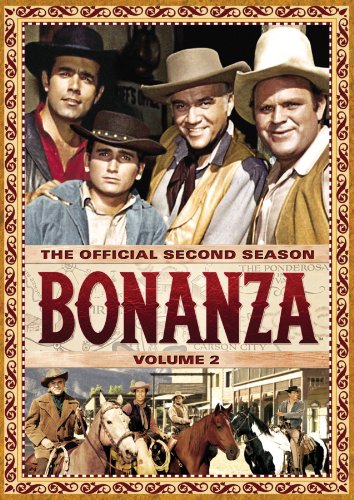
The Cartwright boys continue to do right on the Ponderosa Ranch in the state of Nevada. Having lasted 14 seasons, the series was relatively young in Season 2 but had already established Ben Cartwright and his three boys (from three different mothers) as household names on American television.
Plot wise, a good chunk of the stories revolve around the importance of having land. The Cartwrights hold the most lucrative plot in the area, and many a villain tries to find devious methods of taking it from them. Unlike fellow Old West programs like Gunsmoke, Bonanza took a sometimes comical approach to the resolving these conflicts, and guns were hardly ever drawn.
Posted in: Disc Reviews by William O'Donnell on October 11th, 2011
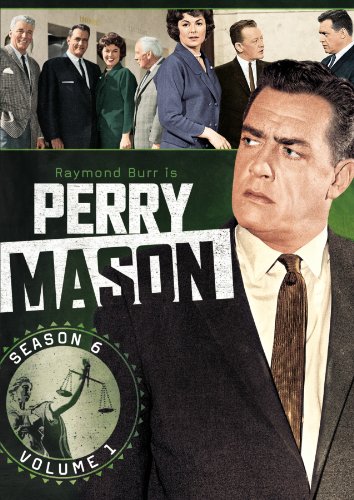
For nine seasons and several TV-movies afterwards, Raymond Burr was Los Angeles based defense attorney Perry Mason. His adventures have been well-reviewed by my compadre Gino on this very site (https://upcomingdiscs.com/?s=perry+mason) so I shall do my best to avoid redundancies while I speak of Season 6.
The formula (for lack of a better term) of each episode maintains in the sixth season. The primary suspect is profiled, caught and examined in the first half of each story. When things do to trial, the true guilty party is found out, often on the witness stand, as Perry's uncanny winning streak gets the best of those who try to hide the truth from him. Said winning streak might spoil one's enjoyment of the show since the outcomes can be predicted during the opening titles screen, but the crimes (murders) are elaborate enough to maintain interest for the most part. At the same time, I feel it should be noted that the pacing of the show can often be slow. Think of it being a closer relation to Matlock than the sexier modern Legal dramas like The Practice. Not to say that it is better to have attorneys with chiseled jaws or short skirts versus methodical investigation and character development, but you had better prepare yourself for a lot of men in suits standing in one spot speaking their thoughts aloud.
Posted in: Disc Reviews by William O'Donnell on October 5th, 2011
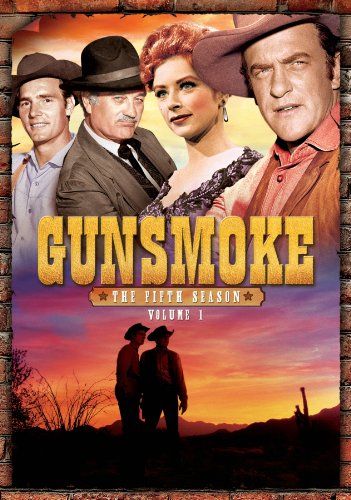
Previously on this site I had reviewed Season 4 of this legendary program (https://upcomingdiscs.com/2010/10/15/gunsmoke-season-4-volume-1/) and Season 5 still predates the major changes that occurred over this show's 20 year run, primarily consisting of supporting cast changes so that review can just about double as fair coverage of this season as well; which I hope conveys a testament to this show's consistency of quality and not to my personal laziness as a writer. Indeed, this season continues to provide entertaining evidence as to why this show lasted so long and remains beloved to this day.
James Arness' Marshall Matt Dillon keeps a stern, watchful eye on the city of Dodge. The stakes were always high in each episode's adventure, and any slip up, be you a hero or villain, could cost you your life. Being a production from the late 1950s we do deal with more than a few character stereotypes. The gypsies are devious, the natives are primitive, and the white yokels are frighteningly ignorant and violent. Dillon, as the final word of the law in all situations, makes a decent mediator and remains without prejudice so long as you keep on the happy side of his law...or you end up on the business end of his gun in many cases
Posted in: Disc Reviews by M. W. Phillips on September 26th, 2011
“There's something I've been dying to ask you. What's in the basket?”
If you are not familiar with Writer/Director Frank Henenlotter’s earliest full length feature, Basket Case, you’ve missed a grindhouse style, exploitation cult classic. It was shot on a shoestring budget, features non-professional actors, cheap special effects, and a script straight out of the fever dreams of a madman. In short, it is brilliant.

Posted in: Disc Reviews by David Annandale on August 20th, 2011
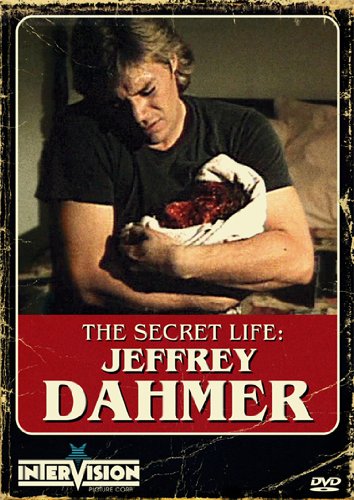
The grindhouses may be long gone, but their memory lingers on, thanks to releases like this one, which, being released in 1993, is from the twilight years of theatrical exploitation, and thus more accurately from the second, virtual life the grindhouse aesthetic found on home video. This is the life of Jeffrey Dahmer, narrated in retrospect by the serial killer (screenwriter Carl Crew). Dahmer recounts his obsessions and growing need to kill, and a fair bit of the film’s running time consists of Dahmer hooking up with young men and murdering them.
The film has, then, a very episodic structure, with very little clear narrative progression. Text on the screen fills us in as to dates and locations, and that is about it. The insights into the mind of a serial killer are of the most obvious kind. There is a bit of restraint present when it comes to the killings, in that there could have been a lot more gore, but they are certainly unpleasant, and I don’t necessarily mean that it a good way. No, they shouldn’t be fun, but the endless parade of murders becomes the film’s reason for being, and the lack of any connection between the audience and the victims is a problem. Given how recent the killings were when the film was made and released, it’s not too surprising that the victims’ families were a little upset. So this is an exploitation film in the purest sense, and interesting for that reason, and rather off-putting for the same reason.
Posted in: Disc Reviews by David Annandale on August 13th, 2011
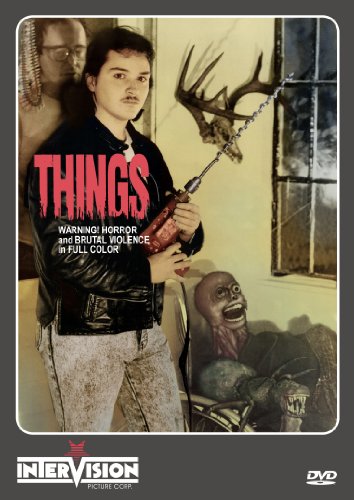
This is normally where I would summarize the plot of the film. I could tell you that this is the story of three friends in a woodland cabin who must fight monsters spawned by the wife of one of them. But that would be misleading. What the story is really about is two, sometimes three, guys sitting around and drinking beer. Later they switch to whiskey. And then there’s this one dude who puts a cockroach in the other dude’s sandwich...
As I’m hoping you will have realized from the above, this is no ordinary movie. In his excellent They Came From Within: A History of Canadian Horror Cinema, Caelum Vatnsdal argues that Things holds the title of Worst Canadian Horror Film Ever Made, and it’s really, really hard to believe that there could possibly be another contender. Badfilm connoisseurs, this release is manna from Heaven. This is a film that would embarrass Ed Wood. Tommy Wiseau would weep with despair over the future of cinema. Doris Wishman would beg to take over the camera and sound duties, just so such a thing could never happen again. I could go on.
Posted in: Disc Reviews by David Annandale on July 13th, 2011
Courtesy of the website of the same name (check it out at http://trailersfromhell.com/index.php) comes this collection of trailers of horror, SF and exploitation films. The collection is eclectic, following no particular theme (though there are several Hammer films present), and the era covered ranges from 1941 (The Invisible Ghost with Bela Lugosi) to 1998 (Trauma’s Terror Firmer). Present are the likes of The Devil-Ship Pirates, Gorgo, Donovan’s Brain, Deep Red, Flesh Gordon, and so on. Twenty altogether.
Normally, commentaries would be dealt with below, but this case is an exception. Not only does the disc default to playing the introductions and commentaries, but these are the primary attraction of the release. The commentators are a high-powered lot: Roger Corman, Guillermo del Toro (who discusses Deep Red in both English and Spanish), John Landis, Joe Dante, Lloyd Kaufman, Jack Hill, and more. There are a couple of weaker moments here – Mary Lambert’s musings on Mothra vs Godzilla are disappointingly inarticulate, and she talks about Godzilla as a nuclear metaphor as if this were news; John Landis has a rather supercilious approach to the excellent Gorgo – but these are more than offset by the strengths. Brian Trenchard-Smith, Del Toro and Dante essentially give entire film courses in two minutes – no mean feat. This is a great, informative collection.