Children’s

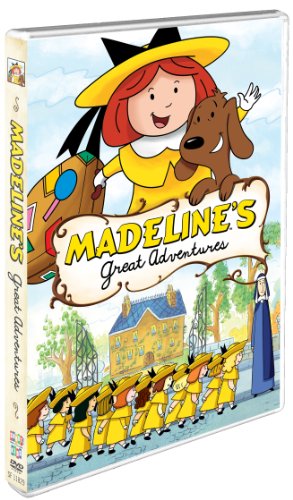
This compilation of cartoons takes from different Madeline series', produced from about 1993 to 2001. Each episode is in the half-hour long format, with different title cards, theme songs and narrators, but all following the same format of rhyming narration, and imaginative story lines, songs peppered throughout, and a couple even dipping into the supernatural.


Marvel Superhero cartoons come and they go. For every Spider-Man cartoon, there is an X-Men cartoon, or Wolverine or perhaps even Iron Man gets one. Some of them last more than one season but more often than not they are replaced by shows telling the same stories but in a different style. Marvel Superhero Squad show attempts to break the mold by providing fresh stories with a rather interesting and unique animation style.

Super Hero City is a vast metropolis full of super-heroes and civilian life but chaos has taken hold. It seems that Doctor Doom and his Lethal Legion are looking for scattered Infinity fractals which hold great power. With each one collected, they are closing to building an Infinity Sword, a source of ultimate power. However, standing in their way is the Super Hero Squad and consists of six primary members.

I'd like to think that the concepts of what makes a good children's movie is somewhat international. While cultures may vary, kids all over the world are pretty much the same. They look for the same kinds of characteristics in their heroes. While the martial arts film is somewhat cultural, there have been more than enough child-friendly martial arts films for me to conclude that these kinds of acrobatics and old fashioned good kicking-evil's-butt themes work for kids of any nationality. The recent Jackie Chan The Spy Next Door outing is one good example of the genre-crossing martial arts children's movie. I suspect these are the feelings that director Rachata Krissanapong must have had when he took on the Thai project 5 Huajai Hero or Power Kids and when Magnolia Home Entertainment packaged the film for American kids in this Blu-ray release.

At first the plot is rather difficult to follow. Blame it on the English translation or a little unfamiliarity with the culture. We get the general idea, however. We have this group of children living with their uncle, who happens to run a martial arts school. Of course, they are well trained and display impressive skills as the film throws somewhat light-hearted moments into the mix to establish the team's skill level. We eventually learn that the youngest is very sick. He has a severe heart condition and is close to death, unless he can get a heart transplant. The film attempts to build emotion and sympathy by showing the kids working together to buy the boy his favorite RC race car. But when he attempts to take it to the public track, he's bullied, and the stress brings on an attack that nearly kills him. The boy is rushed to the hospital, where it is discovered a heart has been found just in time to save his life. Unfortunately, an American diplomat has checked into the cross-town hospital where the heart is located. A group of rebel terrorists have taken over the hospital to make their vague point, and nothing is getting in or out of the building, including a certain necessary heart. Our Power Kids spring into action. They go to the hospital under siege, and inspired by the Die Hard-style films they've seen out of America, find a way into the hospital. Of course, they must locate the heart and get it out, while kicking some terrorist butt along the way.

In countries all over the world, there is still the prevalent issue of not being able to read. Even in advanced countries such as the United States, there are reports that suggest that many adults don’t ever pick up another book after leaving college. This reviewer was fortunate enough to have two adults in his life that read to him all the time when he was an infant and thus developed a desire and ability to read very early on. But for those who don’t have that luxury, perhaps they can find entertaining television programs such as Ghostwriter.

Jamal Jenkins (played by Sheldon Turnipseed) and his father (played by Samuel L. Jackson) are working in the basement of his family’s brownstone. Jamal’s father finds an old trunk that he was looking for and starts to pull it out. The father nor Jamal notices that the trunk knocks over an old book and the pages release a spirit. As they leave, the spirit follows Jamal.

In September of 1993, an animated series using the wonders of stop-motion animation was broadcast on ABC. The name of the series was called Bump in the Night. It would run for twenty six episodes, spanning over two seasons. It was created and directed by Ken Pontac and David Bleiman. It also featured the vocal stylings of Jim Cummings, a man perhaps most famous for his Winnie the Pooh performance.

Mr. Bumpy (for his warts) is a small, green and purple monster who lives under the bed of a ten year old boy. He loves to eat socks, dust bunnies, snot filled tissues and other assorted things most people would consider disgusting. His disposition can be easily described as vile but yet easy going. Oh yeah, if you haven’t figured it out yet, he doesn’t brush his teeth.

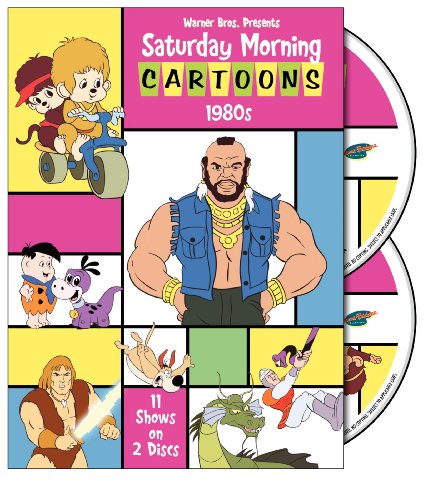
Most of my growing up and living occurred in the 1980’s. From ages five to fifteen, I grew up in an era that was famous to many different types of cartoons. It helped to shape my personality, from bad jokes to that unmistakable sarcasm. So, it was easy to attract me to a cartoon set that showcased odds and ends from that familiar era. Join me as we take a step back in history, a history that hits very close to home.

The first toon we find is one called Goldie Gold & Action Jack. They fight by air, by sea and by the seat of their pants. They aren’t kidding. Goldie is a certified lunatic: she rides a helicopter indoors, jumps out windows and talks to hobos. Doesn’t she know that she is blonde and rich? Jack really isn’t all that Action, he’s just good at being lucky. The show is very gadget heavy and has a little Scooby Doo sleuthing thrown in.

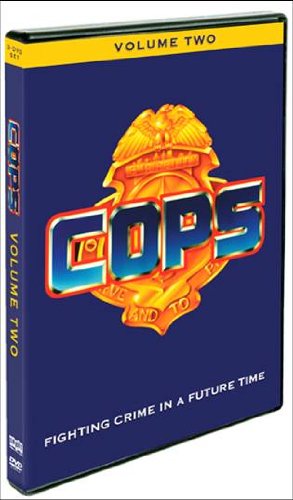
C.O.P.S aired in 1988, one year after the debut of Robocop, and the future-cop theme and design is clearly influenced by Verhoven's violent satire. As a child I caught onto this influence immediately and a part of me always saw it as derivative (along with some Judge Dredd influence). Watching it now I get an eery knot in my stomach as I realize just how silly and loaded with slapstick this cartoon really is, and yet cannot help but still recognize the design influence of Robocop. Throughout there is this strange paradox of immensely threatening looking characters doing terribly silly things. One should expect these various behemoths to be murderers, rapists or just violent thugs (just look at the caricature grins most of them have and tell me I'm wrong) and yet they're stealing fur coats and cavemen and all have goofy voices....my brain takes a while to process all of this.

"We're back..."

The Chipmunks began life oddly enough as a singing group, of sorts. They were the brainchild of struggling songwriter Ross Bagdasarian and were named after the three chief executives at Liberty records. His own alter ego David Seville’s name came from his World War II Army station in Spain. The Chipmunks first appeared in a 1958 record called The Witch Doctor, but wouldn’t officially become The Chipmunks until later that year when The Chipmunks Christmas Song was released. It is for that Christmas music that I most remember the group. They first appeared as puppets on The Ed Sullivan Show. Alvin and the boys got their own television show in 1961. When Ross died in 1972, the Chipmunks would continue on under the guidance of his son. In 1983 The Chipmunks had yet another popular cartoon show and had appeared in countless specials and films. Today they are pretty much a hallmark at the holidays, and a Christmas song collection just wouldn’t be complete without them.

One might have to legitimately ask about the thinking behind this particular children- targeted release. I have to admit that I was a little uncomfortable with the idea of reviewing this film at this particular time. I have two issues that are just unavoidable here:

They both deal with the film's two central stars here. Bindi Irwin is the daughter of famed Crocodile Hunter Steve Irwin. You all remember Steve. He used to approach some of the most dangerous animals on the planet and quite casually tell us just how deadly they were while tempting them to tag him. We all suspected that Steve might one day get a little careless and get himself killed. The truth is that didn't exactly happen. It wasn't a particularly dangerous animal or any carelessness on Irwin's part that led to his rather unexpected death a few years ago. It was a usually harmless stingray that sent a barb through his heart in what can only be described as an unfortunate freak accident. Now, even before his death, the family had been preparing their very young daughter to follow in Daddy's rather unusual footsteps. Bindi's done several documentary films, including her own television show in the wake of her father's death. Here I can't help getting the feeling that the appearance is somewhat exploitive of the whole business. When I look at Bindi's mom in the extra features, I can't shake the feeling that she's cashing in here. I don't know these guys, so I'm not trying to claim that I know their hearts and minds. I can only report the feeling it leaves me with, and it's not a good one.

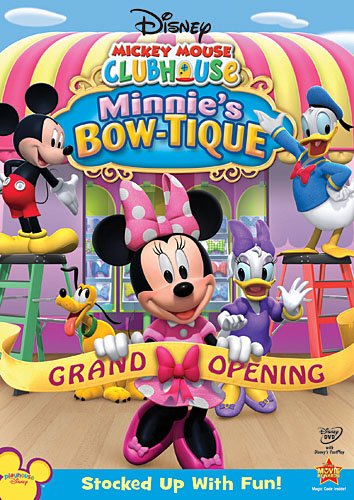
Anyone who has come here long enough to get to know my likes and dislikes probably knows what a Walt Disney and Mickey Mouse fan I am. The man and the character opened the road for so much of what we have today, from Pixar to Tom and Jerry. But, if you're looking for the kind of cartoons you and I have grown to expect, this one is bound to disappoint you. It's an episode of the current television series Mickey Mouse Clubhouse. It's an animated Sesame Street, however, and not really a cartoon adventure.

While I use the term Sesame Street, I don't mean it literally. You'll find the traditional Disney characters, to be sure. There's Donald Duck, Minnie Mouse, Goofy, Pluto, and even Professor Von Drake. You won't find a Cookie Monster or a Big Bird anywhere. What you will find is that strictly educational style. The characters talk directly to the children watching. They ask questions geared toward teaching such basic concepts as identifying colors and shapes to basic math problems. There's a great deal of shouting encouragement as well. You should be prepared for your young one to answer Mickey's questions and join him in some hollering. There's a particularly annoying repetition as the gang calls for a character named Toodles. Toodles carries objects that the characters need to accomplish various tasks. Whenever they find they are in the need of one of these tools Mickey encourages everyone, including your child, to yell “Oh Toodles”, to bring the character to them with the needed item.