Posted in: Disc Reviews by Gino Sassani on May 11th, 2010
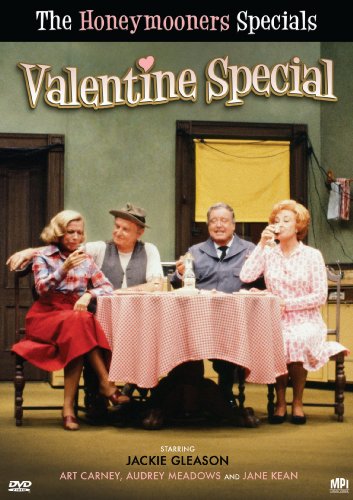
It's hard to believe that one of the most popular comedy shows of the 1950's was not really a show at all, at least not in the way that we think of a television series today. The show began its life in 1951 as a segment on the popular Cavalcade of Stars. At that time only Jackie Gleason and Art Carney starred in their familiar roles. Alice was played by Pert Kelton. The series took its more recognizable look when it became part of The Jackie Gleason Show in 1955. That's also when Joyce Randolph joined the series as Trixie Norton. The series would take up a half hour of the slot. The second half was taken up by a larger variety of pieces, usually a series called Stage Show. The show would come and go, with other cast members coming and going over time. Even Art Carney had left The Jackie Gleason Show at one time, only to return in 1957 to the role. The show's history is a complicated one to which entire books have been devoted over the years. It wasn't until syndication that the series was really a show unto itself. The original 39 episodes were joined with nearly 70 re-edited versions of the other various incarnations of the show have made up what most of us today think of as The Honeymooners. The final original versions of the show ended in 1971; both Audrey Meadows and Joyce Randolph were gone by then, replaced by Sheila MacRae and Jane Kean respectively.
But this show that wasn't really a show had legs. The syndicated versions became hugely popular, and new generations of fans were being indoctrinated with each new package. The show even survived on pay television at Showtime for a while in the 1990's when the 70 newly-formed "Lost Episodes" first aired. But the fever just never died. The show would influence a large number of series that would follow. Even the animated world of cartoons wasn't safe. The Flintstones would come along and become a prehistoric cartoon show that was basically the same down to the characters. Fred and Barney couldn't have been closer to Ralph and Norton if their names had been the same. Today, comedians constantly recall The Honeymooners and Jackie Gleason as their inspiration. To more than one generation of television viewers, Gleason really was "The Great One".
Posted in: Disc Reviews by Gino Sassani on May 10th, 2010
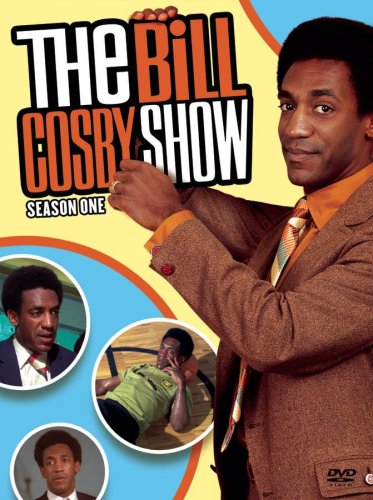
I grew up on Bill Cosby. He was everywhere when I was a kid. Fat Albert And The Cosby Kids were on my television every Saturday morning. My parents had all of his records, and I can remember borrowing them when I finally got a player of my own. I played Chicken Heart so often I think I wore away the grooves on the track. Of course, you youngsters out there have no idea what I'm talking about when I mention grooves and wearing them out. That also means that you remember a very different Bill Cosby show. Most of us think about that huge hit in the 80's. Cosby played a doctor, and he was married to a lawyer and this wealthy family had a ton of kids. The show was an instant hit. But it wasn't the first attempt at situation comedy from Bill Cosby. Back in 1968 he was the star of a very different comedy series on television. It was The Bill Cosby Show.
In this series Cos played Chet Kincaid, a high school gym teacher and athletic coach. It wasn't really a stretch, you see, because The Cos actually studied PE at Temple University with his eye toward just such a possible career. Of course, stardom interfered with those plans, and I don't think anyone has been complaining too much. The series is too eclectic for its own good. While Chet's career should be the focus, many of the episode take him out of the school and place him in oddball situations. Episodes deal with his aunt's will and a missing Abe Lincoln letter, a flood while Chet deals with a neighbor in labor, and Chet leading a group of inner-city kids on a failed attempt to get out and camp in nature. From the start, you can see that Cos is trying to bring a more intimate approach to his comedy, but it usually misses the mark completely. His natural charm and demeanor carry the day, but there's a reason why the series only lasted three seasons. He would hone those skills later to deliver one of the biggest shows in television history.
Posted in: Disc Reviews by Gino Sassani on May 6th, 2010
Most people don't know or remember that Andy Griffith had a career before his television classic reached the airwaves. He had a pretty distinctive stand-up routine going for many years that included recordings like most stand-ups of the day. He had quite a famous bit about a country farm boy seeing his very first football game. It was called “I Think They Call It Football”, and it's a priceless classic. Andy also found his way into a couple of movies in the days before he became Sheriff Andy Taylor. One of those movies was No Time For Sergeants. It wasn't a stretch for this country boy, and fans of the rural years of Andy Griffith will find about everything they're looking for here.
Will Stockdale (Griffith) is down on the farm with his Pop enjoying the slow life when they are visited by an officer from the draft board. It appears that Will has been getting draft letters, but his Pop keeps throwing them away. Now Will is considered a draft dodger and is taken away in cuffs to be inducted into the Air Force. Along the way he befriends Ben Whitledge (Adams) who comes from six generations of infantry. His mother has sent a letter asking that the military honor the tradition by giving Ben a transfer to the infantry in the Army. Will, a naive rural boy, just wants to help. So he goes directly to the company leader, Sergeant King (McCormick) and tries to help out his new pal. What he ends up with is the assignment as PLO, Permanent Latrine Orderly, a post Will thinks is intended as an honor. But when the Captain discovers the "honor", he puts King in charge of Will's classification. If Will isn't classified in one week, King will be the next PLO. The film follows the antics of getting Will classified before the three (King, Will, and Ben) are assigned to gunnery training. With Ben and Will on a training flight, their plane ends up in the middle of Yucca Flats during a nuclear test. Presumed dead, the "heroes" are to receive posthumous medals at a gathering in their honor. It's all a nice fitting tribute until the boys show up at their own memorial service.
Posted in: Disc Reviews by Michael Durr on April 30th, 2010
The review you are about to read is true. Nothing has been changed. These are the actual people who performed in this great movie and this is exactly the way it really happened. I truly believe this. Signed, Michael Durr also known as Kedrix. Trust me on this one, I couldn’t make up what I’m about to write for this review. If I were to brainstorm for the next twenty years, there would be absolutely nothing to lead me to this movie. (well except for the boobs).
(*warning* The following review might contain salty language, bad jokes and gushing about the female naked anatomy. The writer of this review bares no responsibility for this work and the director, Fred Olen Ray would have wanted it that way.)
Posted in: Disc Reviews by Archive Authors on April 30th, 2010
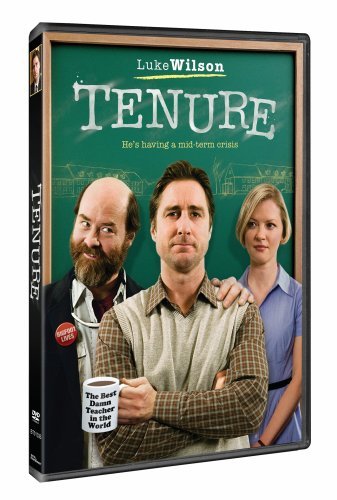
Tenure revolves around Charlie Thurber (Luke Wilson) an insecure college professor who is up for a tenure position in his English department. Charlie has an ongoing problem getting his work published and to add a further complication, the university decides to hire another applicant, Elaine Grasso (Gretchen Mol) for the position. Through the competing for the job, Charlie begins to have feelings for Elaine. As their relationship emerges, Charlie needs to make a decision about what his passions are.
The film blends comedy and drama fairly efficiently. The comedy is hammered home with Charlie’s friend Jay (David Koechner). Whether its herbal enhancements or a fruitless pursuit of Bigfoot, no comedic stone is left unturned. The drama is left for the dark and charming Charlie Thurber. Luke Wilson’s performance is bland. He doesn’t showcase much of a range. Even after his deciding moment in the film, audiences are left feeling shortchanged. However, his comedic moments in the film are timed well and his chemistry with Koechner is undeniable.
Posted in: Disc Reviews by William O'Donnell on April 30th, 2010
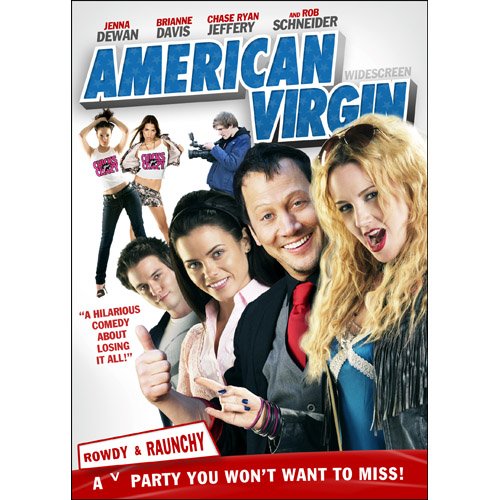
A young girl, who is obsessed with purity, appears on a “Chicks Go Crazy” video (a parody of Girls Gone Wild) and gets a group of rowdy (by comparison to her) friends to go on a road trip to track down the dvd and its maker (played by an easy paycheck receiving Rob Schneider), all the while resisting the temptations of drinking and sex.
Posted in: Disc Reviews by Gino Sassani on April 27th, 2010
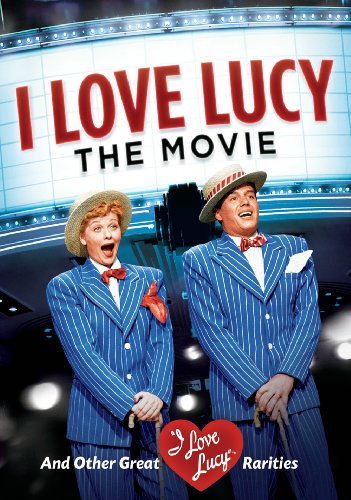
Lucille Ball was originally a radio personality starring in a popular comedy, My Favorite Husband. It was here that she began to develop the character she would continue to play for decades in television through several shows, all bearing her name in one form or another: I Love Lucy, The Lucy Show, Here's Lucy, and Life With Lucy. See the pattern? Anyone who was a fan of the radio show would instantly recognize the red-haired actress even though they had never actually seen her on the radio. That exaggerated cry was already a staple of her physical comedy, even when she couldn't be seen. She had also toured for many years with her real-life husband Desi Arnaz. When they could not convince a network to film a pilot of a show featuring both of them, they made it on their own dime. CBS was so impressed with the pilot they reimbursed the couple, and in 1951 I Love Lucy hit the airwaves.
Lucy played the character she had already perfected on radio and on the stage. Desi played her husband, a Cuban bandleader who headlined at the Tropicana. Lucy was always trying to find a way to get into Ricky's act. She had no talent, but that never stopped her, usually embarrassing Ricky along the way. The couple lived in an apartment owned by the Mertzes, Fred (Frawley) and Ethel (Vance). They were not only the Ricardo's landlords but also their closest friends. Ethel would often find herself talked into one of Lucy's crazy schemes. The show also found comedy fodder in Ricky's thick Cuban accent. Sometimes his mispronunciations caused hilarious misunderstandings. William Frawley as Fred had the job of playing straight man most of the time. It was a thankless job, to be sure, but he was perfect at it. He didn't talk as much as the others, but he had some golden moments over the show's very successful six year run. During that time the series never once fell below number three for the entire year in ratings.
Posted in: Disc Reviews by David Annandale on April 26th, 2010
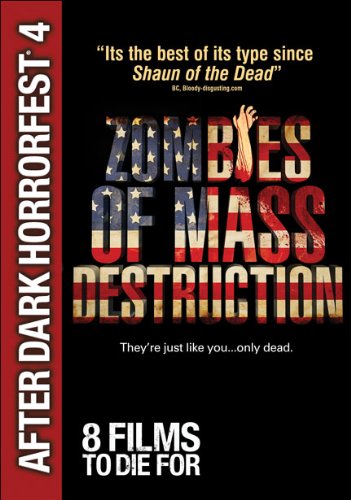
The year is 2003. The War in Iraq is just underway, and its ripples are felt even in the small town of Port Gamble, Washington. Take, for instance, Frida (Janette Armand). Her father is Iranian, which is the same thing as Iraqi as far as everyone else is concerned, and furthermore her skin tone and ethnic background mean she is not a “real American” (to quote her numbskulled boyfriend) even though she was born in Port Gamble. Tom (Doug Fahl), meanwhile, has concerns less related to world affairs: he has returned to his home town, in the company of his boyfriend Lance (Cooper Hopkins), to come out to his mother, a prospect that fills him with dread. Then, just to complicate everybody's life, a zombie plague breaks out, bringing out the best and worst of everyone in town.

Zombies have been fodder for socio-political allegory all the way back to their first cinematic appearance (in their pre-flesh-eating days) in White Zombie (1932), where they were the exploited workers of Bela Lugosi's sugar cane mill. Director Kevin Hamedani and his co-writer Ramon Isao go into satirical overdrive with this effort. There is some very funny stuff here, along with plenty of over-the-top gore FX and likable protagonists. Unlike Dawn of the Dead and Shaun of the Dead, however, whose commentary emerges naturally from the story and characters, here the personalities and story have clearly been designed to fit the political points being made. Thus, though Frida, Tom and Lance are very engaging characters (if almost entirely defined by their ethnic or sexual minority identities), their non-zombified opponents are caricatures of conservatism, as hissable as they are stupid. Now, satire is, by its very nature, a savage art, and I'm all for both savagery and movies that aren't afraid to take a stand, but Hamedani and Isao run the risk of preaching to the choir here. With almost every line of dialogue slaved to the film's political points, we are entering the realm of the editorial cartoon. And though there's nothing wrong with that, it does mean that there isn't much to the film beyond those political points. Thus, one faction of the audience will simply have its views confirmed, while the other will be completely alienated, and it is doubtful that much thought will be provoked. As well, some of the gags are arguably a bit misjudged. The scene where Tom's mother eats her own eye owes its funny/nauseating vibe to Peter Jackson's Dead/Alive, and works well enough, but the moment where a little girl Frida is trying to help is splattered by a car is more problematic, depending on your tolerance for extreme splatstick. All that said, there's still plenty of sharp work from all concerned here.
Posted in: Disc Reviews by David Annandale on April 25th, 2010
We are in the mid-60s, when, during the glory days of the Stones, the Who, and other colossi of British rock, the BBC allows almost no airplay of said music. To the rescue comes a group of commercial pirate radio stations, broadcasting from ships off the coast. Priggish minister Kenneth Branagh is determined to shut them down, and our focus is on one particular ship, run by Bill Nighy, and boasting such luminaries as Philip Seymour Hoffman and Nick Frost as DJs. Onto this ship of counter-culture rebels comes a young Tom Sturridge, and this wet-behind-the-ears youth becomes the eyes through which we watch the various eccentric goings-on.
Director Richard Curtis is a dab hand at ensemble romantic comedies, as the sterling likes of Four Weddings and a Funeral and Love Actually more than demonstrate. But though he has a terrific cast here, including such regulars as the always watchable Nighy, this is a misfire. It is surprising, given some of the indelible characters in Curtis' previous films (notably Emma Thompson's role in Love Actually) that the female parts here are so woefully underwritten (the women in this film are little more than disposable sex objects). As well, would-be funny scenes of the farcical, slamming-door variety (such as the scene where Frost tries to get the virginal Sturridge to replace him in bed) are older than the hills and eroded completely flat. So the comedy, the odd line here and there notwithstanding, barely raises more than a mild grin. And the tone is so light and unconcerned that it robs the context of any real rebellion or vitality. This radio station might as well be a standard classic-rock denizen of the FM band for all the edge we feel. Then there's some laziness to the writing. If we are to believe this is circa 1966, why have someone anachronistically talk about “thinking outside the box”?
Posted in: Disc Reviews by Gino Sassani on April 21st, 2010
"Nothing worse than an old hippie, man."
When I think of Cheech & Chong, I am brought back to the 1970’s. It was then that the pair had their first success with an iconic brand of “stoner” comedy. Their LPs sold millions across the country. You didn’t have to be a stoner to appreciate the jokes. I was about as straight as they come, but I really loved listening to Cheech & Chong. The material was about more than just getting high. It was timely, at least it was then. It mirrored the culture that we could see from our own windows, and like all inspired comedy, it was relevant.