Posted in: Disc Reviews by David Annandale on January 27th, 2010
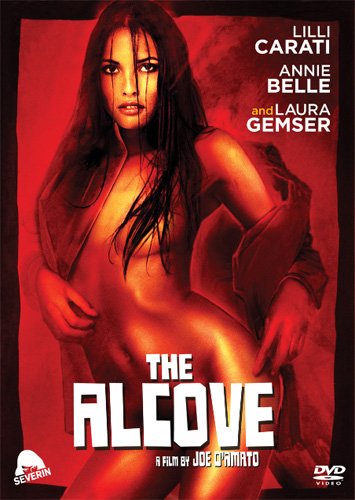
The time is the 1930s, the setting Africa, as Mussolini attempts to recreate an Empire through the colonization of Abyssinia. An officer and poet Elio (Al Cliver) returns from the campaign with the spoils of conquest, one of which is Abyssinian princess Zerbal (Laura Gemser, of D'Amato's Black Emanuelle films). The erotic heat in his home is already pretty torrid, what with wife Alessandra (Lilli Carati) carrying on with secretary Virma (Annie Belle). Zerbal's arrival upsets the emotional apple cart, passions flare, and the supposed slave starts to exert more and more influence over the putative masters.
Posted in: Disc Reviews by Gino Sassani on January 26th, 2010
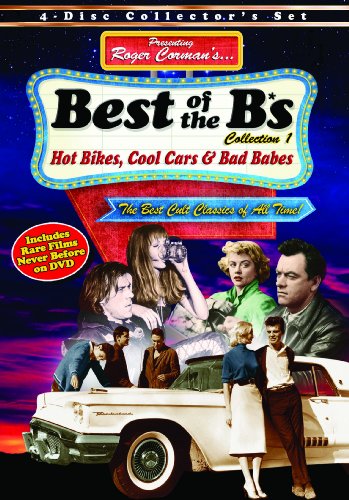
I'm a huge fan of Roger Corman. Who isn't, right? But these films are not the typical Corman offerings. Some of them have no apparent connection to the man himself. The ones that do are mostly as producer and not director. Some of the films might be notable for being an early film for this actor or that. But I would hardly classify any of these films as classics of any genre or good representations of the mastery of the B film that was Roger Corman's signature. Most of the films feature merely montages of riding, fighting, drinking, drugging, or sex. Good times for some, maybe, but hardly worth the time it takes to watch even the shortest of these bombs. I feel like Corman's name is used primarily as a catch here and that the man had nothing to do with this release.
Here are the films you'll get in this collection:
Posted in: Disc Reviews by Gino Sassani on January 20th, 2010
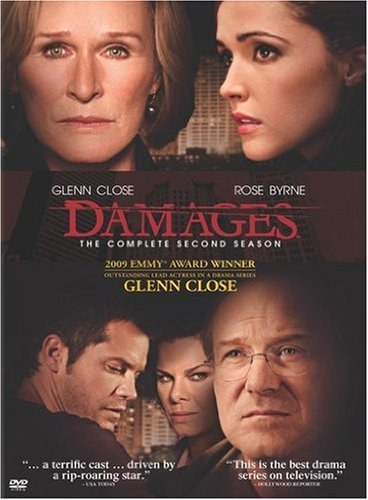
I made a huge mistake when I sat down to watch this release so that I could write this review. It sometimes happens that one in this business must watch a series from somewhere other than the beginning. In most cases, particularly with older more traditional shows, that isn't very much of a problem at all. Once you get the premise down and learn who the important players are, you can sit back and watch without much concern at all about what you might have missed. Today, however, that is becoming a more and more difficult proposition. In an effort to increase viewer loyalty, and develop more intricate and engaging plots and show mythology, shows are getting that much harder to follow if you miss even one episode. If you've missed a season or more, your odds of understanding get that much worse. If you missed the genesis of the show, those odds slip to near zero. I made a huge mistake when I sat down to watch this release so that I could write this review. Like so many heroes in these action thrillers that have become all the rage, I decided to go up against odds that were, you guessed it, nearly zero. If you are considering watching Damages from the second season, even with the provided season one recap, you're making a huge mistake, too.
The season begins with the immediate aftereffects of the first season's big case and all of the baggage that went with it. While it's true that the case is over, most of the vital things that happen here constantly reference the events of that season. Patty (Close) is using her cut of the billion dollar settlement to start a not-for-profit foundation to feed New York City's homeless. But that foundation is just another way to flex her power. She'll willingly frame a prominent candidate for governor by setting up his daughter for a cocaine bust, just to have him and his money come crawling her way. Most of the episodes give you a short look at the ending, which appears to have a potentially fatal showdown between Patty and Ellen. The rest of the season would be nearly impossible to recount without giving stuff away. Suffice it to say that it's a never-ending series of betrayals, fortune reversals, strange bedfellows, and twisted relationships. Everybody appears to be using everybody else for their own agenda. There are no good guys. Finally, the show travels a lot in time. Each episode builds through short glimpses that take place earlier or later. It messes up your orientation, making it even harder to just drop in for a visit without having seen what occurred previously.
Posted in: Disc Reviews by Archive Authors on January 19th, 2010
The series premiere of E.R on September 19, 1994 was preceded by the premiere of another medical drama, Chicago Hope, by one day. But one day didn’t seem to make much of a difference in the show’s longevity. E.R.ended after fifteen seasons on NBC in 2009. The show has seen a drastic change in cast members over the years—none of the original cast members were series regulars by the last season. We are, however, reunited with original cast members Dr. John Carter, played by Noah Wyle, Dr. Susan Lewis, played by Sherry Stringfield, and the underutilized Laura Innes as the stone-faced Dr. Kerry Weaver in season 12.

Posted in: Disc Reviews by Gino Sassani on January 19th, 2010
"Nature did not intend for you to survive out here. But here you are, and here I am to teach you how not to die..."
Whiteout has taken about as long and hard a road getting made as the characters in the film find themselves on stuck in the Antarctic. It began life as a crude graphic novel written by Greg Rucka and drawn by Steve Lieber. It developed a rather loyal cult following and was conceived as a film at around 2002. At one point it was intended as the launching point for a franchise featuring the federal marshal played by Kate Beckinsale. She might have been producer Joel Silver's first choice to play the character, as he has been heard to say. But the part was originally created for Reese Witherspoon. There were countless troubles developing a script, and studio support came and went throughout the period. Even when the film was ready to go with a street date, some troubles caused the release itself to delay its opening. Usually all of these development troubles spell disaster for a film in the end. Whiteout is no exception to that steadfast rule. The film scored a disastrous $10 million at the box and only $1 million foreign on a $35 million budget, and disappeared faster than your footprints in an Arctic blizzard.
Posted in: Disc Reviews by Gino Sassani on January 19th, 2010
"The price of love is to expect the pain of loss. Maybe it's some kind of divine punishment to have the ones we love pay the cost of our own sins. The real punishment is being alone the rest of our days hoping to forget and praying for change to come again."
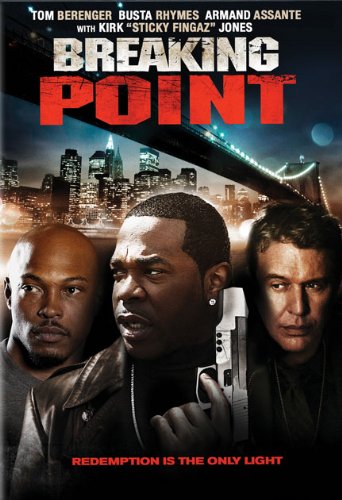
We've all seen our share of film heroes whose journeys are hard-fought paths to redemption. There's nothing particularly original in the concept. Writers from Homer to Shakespeare have explored the material. There's no shame in not being terribly original. There is shame, however, in being terribly tedious. The real punishment, as it turns out, is in having to watch Breaking Pont.
Posted in: Disc Reviews by Gino Sassani on January 12th, 2010
I'll be honest, at first Chuck sounded like a pretty bad idea to me. I expected it to be a kind of modern Get Smart with a reluctant geek hero. And that's pretty much what it turned out to be. Except it turned out to also be pretty darn entertaining as well. It all really starts with a solid cast and tightly written stories. Each episode manages to capture just the right blend of drama and comedy. I resist the trendy word dramedy, but if any series fits the mold, it would have to be Chuck.
In the first season we met Chuck Bartowski (Levi). He was a super smart student at Stanford when his best friend Bryce Larkin (Bomer) set him up to take the fall as a cheater and be kicked out of school in disgrace. The only job he can get now is working at the Buy More (Best Buy) on the Nerd Herd (Geek Squad). But Bryce wasn't done with Chuck yet. Turns out that Bryce is a CIA agent who has been working on the top secret project called Intersect. The Intersect is a computer program that can down load the entire government's database into a person's brain through a series of coded flash images. Not content with getting him kicked out of school, Bryce tricks Chuck into getting the Intersect inside his brain. Now Chuck is an important government asset and in need of protecting. Enter CIA agent Sarah Walker (Strahovski) who is Chuck's CIA handler. Their cover is boyfriend and girlfriend, which confuses Chuck's family and friends who never thought he could get such a hot girlfriend. The muscle for the team is Agent John Casey (Baldwin), who resents being assigned to such a lame mission. Not only do they have to keep Chuck and the Intersect safe, but they must take untrained Chuck on their missions because of the intel stashed in his brain. While Chuck is not consciously aware of the information he carries, when he sees something that triggers a piece of the data, something they call flashing, he is able to access the relevant data. The bad guys are part of an organization called Fulcrum which is this show's Kaos or Spectre.
Posted in: Disc Reviews by Archive Authors on January 11th, 2010
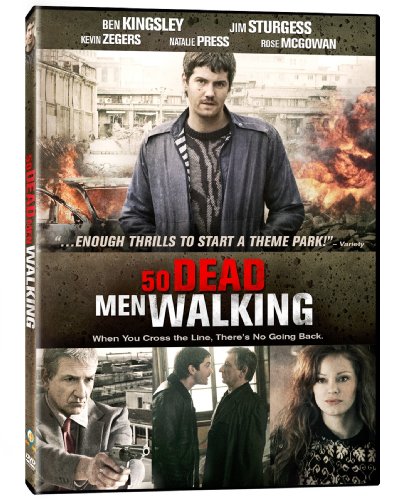
When an inside operation movie is done properly, the plot is ripe with suspense and suspicion. Who can the informer/plant trust? Have they jeopardized their family? What are they willing to do to stay undercover? Audiences have seen this play out many times before in films like Donnie Brasco and The Departed, but in 50 Dead Men Walking the setting is Northern Ireland in the late ‘80s during the Troubles—a period of violent ethno-political conflict between members of the primarily Roman Catholic nationalist community and the Protestant unionist community. The film is based on events depicted by Martin McGartland, and Nicholas Davies in the book Fifty Dead Men Walking: The Terrifying True Story of a Secret Agent Inside the IRA. This depth of history brings an edge to the film that goes far beyond typical mobster fare.
Jim Sturgess made it big in Julie Taymor’s Beatle tribute Across the Universe, but in 50 he shows a side of his acting that really surprised me. He effortlessly steps into the shoes of Martin McGartland—a young swindler who goes door to door selling stolen goods just to get by. Unable to afford a car, let alone the gas to fill it with, he has to bum rides from his friend Sean, played by Kevin Zegers. But his fortune changes one day when British police eager to infiltrate the Irish Republican Army attempt to woo him into their services with a steady job and a car. He reluctantly accepts, and that’s when things start to spiral out of control for Martin.
Posted in: Disc Reviews by Gino Sassani on January 6th, 2010
It would appear that Michael Landon, Jr. is attempting to cash in on his late father's Little House On The Prairie appeal. He is one of the driving forces behind this series of made for television films. He has directed several of them and serves as an executive producer on them all. He has also been involved with some of the writing on the series. They are based on a series of books written by Janette Oke. They follow three generations of women in the days of the Western frontier. When I say that Landon is spending on his father's legacy, you need look no further than the common elements of the films themselves to understand how I come to that conclusion. All of the films feature frontier living and the interactions of these small town peoples in surviving the hardships of the West. There's more than one little house on a prairie to be found in this collection.
The films are more than Western affairs. They are intended to be "Faith" films. In ach case someone's faith in God is put to the test and they must find their way back to grace. The films are often interrupted with spontaneous Bible verses and more than a few sermons on faith. There's plenty to go around when it comes to testing that faith. In just about every film some poor girl loses a husband and must rebound with another. Of course, each of these prospective husbands are encountered with a level of hostility at first. I guess I can understand that part, because my own wife and I had less than positive feelings for each other at first. Now we've been married for over 20 years. She hasn't had to find a new one ... yet. The films all do a good job of throwing other adversity at these women. They are often in a situation where they find little support about them and often encounter hostility towards their dreams and ambitions. As the box art tells us, they must use love and faith to overcome these obstacles.
Posted in: Disc Reviews by David Annandale on January 4th, 2010
The film begins in the middle of the story, at the end of one journey and the beginning of another. Marlon (Aldemar Correa) and Reina (Angelica Blandon) are illegal Columbian immigrants, and have just arrived in New York City. They are staying in a beyond-seedy hostel in Queens, and Reina has just spent their last coins on a fruitless phone call. Frustrated, Marlon hits the street, and after a panicky encounter with the police, winds up lost in NYC. So begins his second journey one that is both a search for belonging as well as his beloved Reina, that is intercut with flasbacks to the trip that brought Marlon and Reina to the city in the first place, beginning with their leaving the relative comfort of their lives in Medillin and tracking their increasingly nightmarish trek to the States.
The film opens with a bird's eye tracking shot of the various cells (I can hardly call them “rooms”) of the hostel. It's a striking bit of filmmaking, though we have seen this done before (see, for instance, Brian De Palma's Snake Eyes). This is not a bad encapsulation of what is to come – it is both striking (especially the harrowing trip to the States) and familiar, in that it covers ground familiar from other hard-luck immigrant narratives. Marlon is a likable character, but Reina is such a manipulative sexpot that one feels that Marlon would be better off not finding her again. Generally, the male characters are better written and a little less stereotypical than the female ones. There is a lot of power here, then, but the familiar melodrama and iffy characterizations undermine that power.