Posted in: Disc Reviews by David Annandale on July 25th, 2008
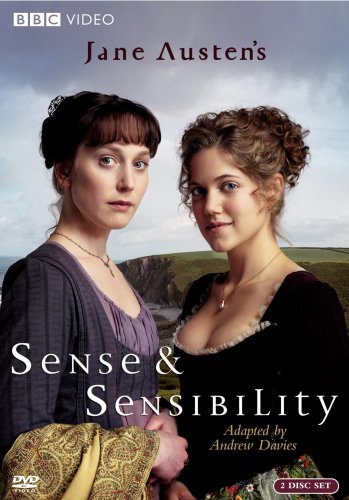
This BBC mini-series has the unenviable task of winning over audiences very likely familiar with Ang Lee and Emma Thompson’s excellent theatrical adaptation of the Jane Austen novel. And the opening scene might very alarm many a viewer: the rather steamy seduction on display does not, at first blush, seem to fit in to the comedy of manners one is expecting. The post-credit sequence is also rather more gothically melodramatic than one might anticipate (or hope for). Thereafter, however, the series settles into a tone more befitting Austen. The script is by Andrew Davies, easily one of the best scribes British television has to offer. He has graced us with contemporary pieces such as a version of Othello set amidst the members of the London Metropolitan Police and the House of Cards trilogy (an adaptation that is superior to its source material), as well as superb period adaptations (Middlemarch, for example). Here, his acid wit finds kindred spirit in Austen, and the result is very fine indeed.
Audio
Posted in: Disc Reviews by Gino Sassani on July 23rd, 2008
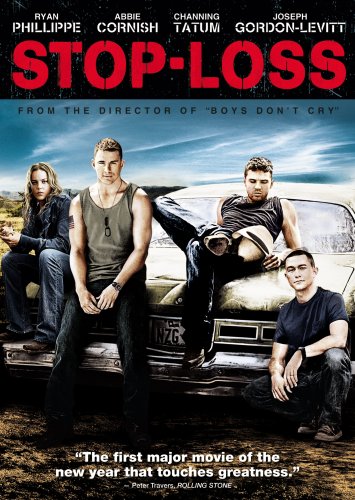
It should not have come as such a surprise to me what Stop-Loss really is. It presents itself as this generation’s Deer Hunter, but it’s actually just another mindless film that, once stripped down to its essentials, is intended only to further a blatant political agenda. I keep hearing that the film is intended to honor our troops, but it presents all of them as mentally messed up idiots who are a hair away from committing crime sprees akin to Natural Born Killers. The aforementioned Deer Hunter also offered up a bleak image of the mental health of vets returning from war, but centered on a particular case. I have no doubt that war affects everyone who participates, but I’ve known returning soldiers who did manage to cope.
Posted in: Disc Reviews by Archive Authors on July 21st, 2008
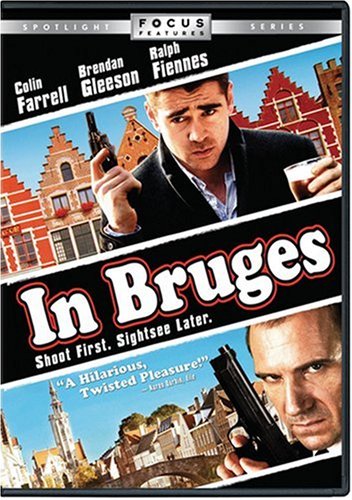
According to Wikipedia, Bruges is the capital of Belgium and home to the college of Europe. Much of the architecture from the 12th and 13th centuries is in good shape and preserved fairly well. The Church of Our Lady is one of the tallest brick buildings in the world. The Basilica of the Holy Blood purports to be a church that houses some blood from Christ. It also serves as the backdrop for a couple of hitmen who have to find comfort in the town for awhile in the film set in Bruges, called In Bruges.
The film was written and directed by Martin McDonagh, whose previous work was in the Oscar-winning short film Shooter. Ray (Colin Farrell, The Recruit) and Ken (Brendan Gleeson, Kingdom of Heaven) are forced to stay in the town for two weeks, after an assassination assignment given to Ray turns particularly brutal. The two look at this presumed exile in two different ways; Ray thinks of it as purgatory; he loves the lifestyle of London and access to anything he wishes. Ken rather enjoys it. He views it as an opportunity to enjoy a place he’s never been before. The nuances of Bruges are also memorable; aside from a little person in a movie and a drug dealing local named Chloe (Clemence Poesy, Harry Potter and the Goblet of Fire), the film is chock full of hilarity and hijinks. When Ken and Ray’s boss Harry (Ralph Fiennes, Schindler’s List) comes to meet with the boys, things take a bit of a dramatic turn.
Posted in: Disc Reviews by Archive Authors on July 14th, 2008
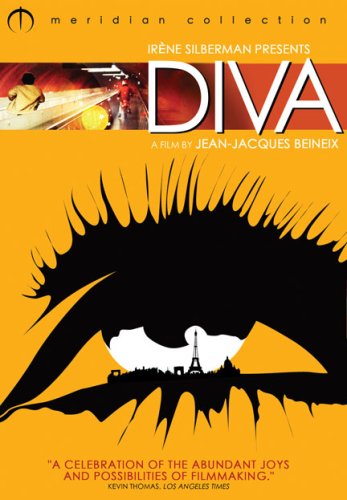
I don’t remember that much about Diva growing up; it was a film that I heard about as a kid, and a lot of people liked it, but that was the first time I can honestly say I was exposed to the arthouse film, and that it was something that I wanted to find out more about. Through the years, I’ve seen many a foreign or independent film, however the one that started all of it off for me I hadn’t seen, until now.

Diva was adapted from the Daniel Odier novel by Jean-Jacques Beineix, who previously directed a documentary version of The Diving Bell and the Butterfly long before Julian Schnabel put together a dramatic version of Jean-Dominique Bauby’s life. The story of Diva is a little complicated, but I’ll give it a go; a young messenger attends the concert of an opera singer, and creates a recording of the performance, which is a rarity for the singer, who normally frowns on recording her work. A line is said in the film along the lines of “art shapes itself around business, when business should actually shape itself around art.” A woman is murdered and drops a separate recording that is criminally linked to the police, and the tape winds up with the messenger. When the messenger, named Jules, is spotted recording the singer’s concert, they threaten him and demand to obtain the tape, so that it can be sold to the highest bidder. Unbeknownst to Jules, the participants of the other tape include a crooked police chief, who wants to try and get the other tape by any means necessary.
Posted in: Disc Reviews by Gino Sassani on July 12th, 2008
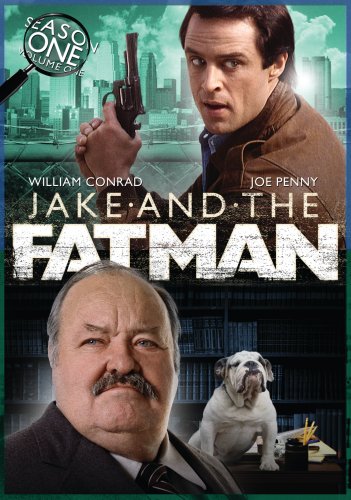
They say that it isn’t over until the Fat Lady sings. Did you ever wonder what “it” was or who the heck this Fat Lady is they keep talking about? I can’t help you there, but I do know who the Fat Man is. It’s William Conrad, who came back to television in 1987 as J.L. McCabe, better known as “the Fatman”. McCabe was one of those tough as nails district attorneys. He was actually an ex-cop, so had great criminal instincts. McCabe wasn’t above bending the law to put away the bad guy, and he wasn’t considered a very friendly type of fellow. He majored in stubbornness and plain speaking. He relied on Jake Styles, his private investigator, to do much of the leg work for the office. Jake was a bit of a flashy playboy, but he always delivered the goods for his boss. Again, Styles wasn’t against breaking a few rules to get what he needed. Styles was played by Joe Penny. McCabe also served as a mentor, of sorts, to young District Attorney Derek Mitchell, played by Alan Campbell. Mitchell was quite wet behind the ears and a little too eager sometimes. His ambition often got the better of him, and it was the gruff McCabe who kept him out of trouble. Finally, the team was completed by Gertrude, McCabe’s loyal and trusty secretary, played by Lu Leonard. While The Fatman put crooks away instead of defending innocent defendants, there could be no mistaking the parallels between Jake And The Fatman and Perry Mason. The two shows were from different times and the styles might not have been the same, but the dynamic was very much the same. You can see a lot of
Posted in: Disc Reviews by Gino Sassani on July 12th, 2008
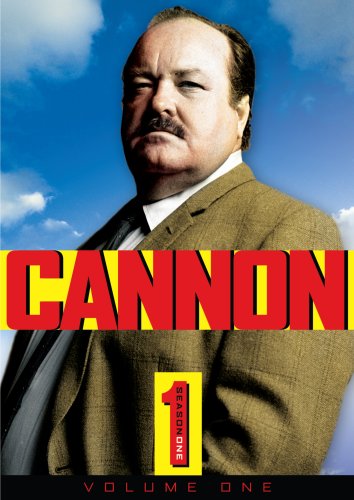
William Conrad was no stranger to audiences when Cannon joined the Quinn Martin stable of television dramas. In fact, most folks knew his voice before they got to know his trademark girth. Conrad was the original Matt Dillon when Gunsmoke was a radio drama. When the drama entered the visual medium of television, even Conrad admitted later that the audience, who thought of him as tall and handsome, would have been disappointed. His voice lent authority to any role he played, and on radio his size was never an issue. He was famous as the voice of the stern narrator in the Rocky and Bullwinkle cartoons who often crossed the laws of the trade and interacted with the titular characters. He was also the voice that narrated the struggles of Dr. Richard Kimble on The Fugitive, another Quinn Martin Production. He continued to narrate series intros even after his own success. He gave us the informative opening dialog in Buck Rogers In The 25th Century. As a voice, Conrad, was one of the bes, but when CBS approached Quinn Martin asking for a television vehicle for Conrad, it was a huge gamble. The gamble, of course, paid off… well… huge, and Cannon became an iconic figure in television. Cannon was so popular he was showing up on other shows as well. He appeared on the pilot for Barnaby Jones. The show ran 5 seasons and returned with appropriately enough The Return Of Frank Cannon tele-film in 1980. It is also interesting to note that Conrad, while greatly overweight, lived to be 74.
Posted in: Disc Reviews by Archive Authors on July 4th, 2008
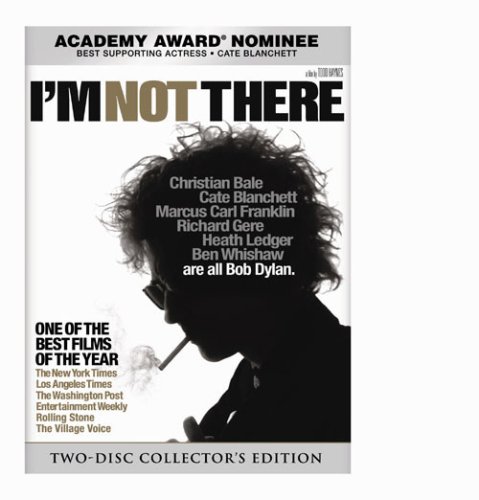
Todd Haynes continues to dazzle and amaze with his body of work. In Velvet Goldmine, he told the story of a fictitious glam-rock band in David Bowie/Ziggy Stardust style. Far From Heaven found him taking the Douglas Sirk films of the ‘50s into a nontraditional turn. In his follow-up film I’m Not There, his first directorial effect in five years, Haynes examines the persona and essence of Bob Dylan without actually really using the name or the words together at all in the film in a film released in 2007, where features like No Country For Old Men and There Will Be Blood earned a slew of awards, I’m Not There was an understated gem, and yet summing it up is a little difficult.
First off, while I’m Not There is a film inspired by the life of Bob Dylan, semantically it’s not a biopic. It examines the more notable images created by Dylan; one of the adolescent who portrayed himself to be the poor white kid who liked the work of Woody Guthrie and who, ironically enough, is named Woody (Marcus Carl Franklin, Be Kind Rewind). Arthur Rimbaud (Ben Whishaw, Layer Cake) is the mid-‘60s Dylan and de facto narrator whose words appear to be lifted from magazine articles of the era; Jack Rollins (Christian Bale, Batman Begins) is the folk hero and later born-again Christian-era Dylan; ironically Rollins is played by Robbie Clark (Heath Ledger, Brokeback Mountain), who watches his marriage deteriorate while he deals with the period of fame he has wrought; and Cate Blanchett (Elizabeth) plays the electric Dylan, touring in England, addicted to pills and alienating his acoustic fans. In his later years, Billy the Kid (Richard Gere, Pretty Woman) plays Dylan as the aging anonymous hero in the west, which in a way Dylan seems to want to do in reality. While none of these interpretations can be claimed to be accurate, they are, as Haynes says, fleeting glimpses of the image that Dylan created for himself. Using surrealistic and style choices influenced by Fellini and Goddard, Haynes helps make the worlds of Dylan all the more emotionally affecting.
Posted in: Disc Reviews by Gino Sassani on July 1st, 2008
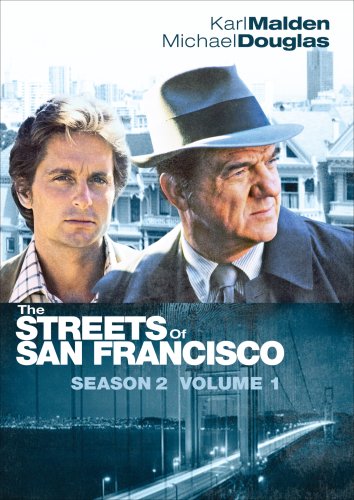
Inspectors 81 are back on the tough streets of
Posted in: Disc Reviews by Gino Sassani on June 30th, 2008
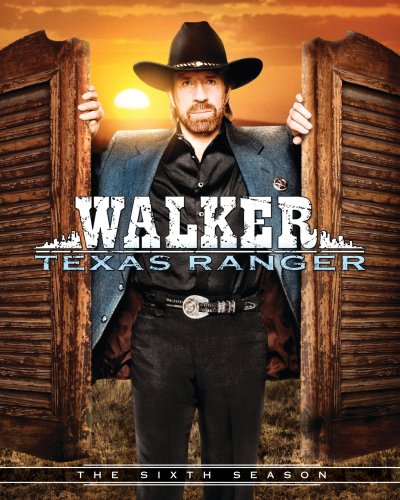
There was a new Cowboy in
Norris almost deadpans his entire performance. Let’s face it, the man is no accomplished thespian. Still, Norris fans are quite passionate about their guy. There’s a popular tee shirt design that lauds their hero in epic fashion. One of my favorite is : “McGyver can build a plane out of gum and paper clips but Chuck Norris can kill him and take the plane.” Another brags: “Some people wear Superman pajamas. Superman wears Chuck Norris Pajamas”. And there’s the humorous: “Chuck Norris knows what Willis is talkin’ about”. Fans of Norris were never disappointed in what they got here. The requisite martial arts and tough guy talk are present pretty much in every episode. Season five is no exception. You should also note if you’re using an episode guide: this is really season 6, as the first two were combined in the first season release. The series had its share of heartstring episodes, most notably the two part story, Lucas. Here
Posted in: Disc Reviews by Gino Sassani on June 20th, 2008
<>