Posted in: Disc Reviews by Brent Lorentson on July 8th, 2023
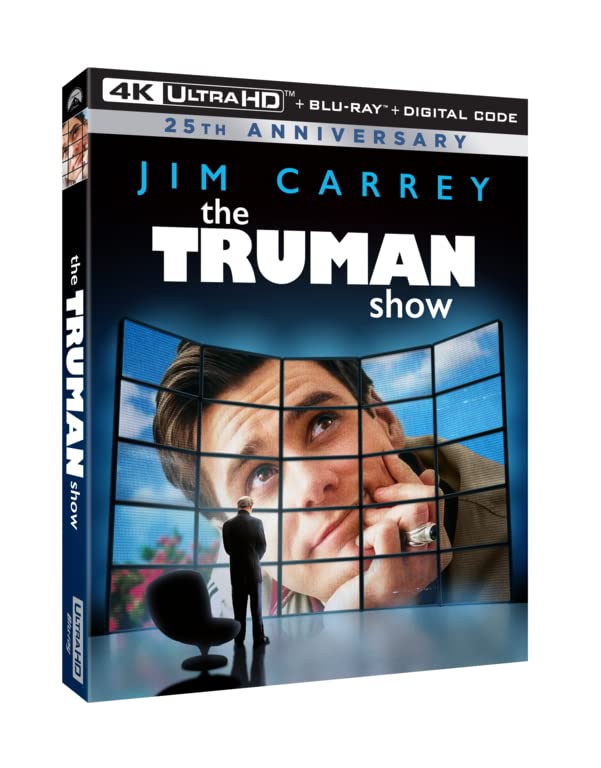
For me it’s crazy to see that The Truman Show is turning 25 years old. I was graduating high school when this had come out, and television was just an entirely different landscape back then. In 1998 when this film came out, the only reality shows were pretty much COPS and then The Real World on MTV, I really don’t believe anyone could have expected just how big reality TV would become. The same year in competition for box office dollars was Ed TV. Oddly enough, Ed TV would be a little closer to the mark on what the reality TV landscape would look like, taking a regular guy and making him a star overnight because he was on TV. The Truman Show I always felt was the superior film in just about every aspect. In many ways it is what I had hoped reality TV could be, but unfortunately it seems what viewers wanted in their reality programming was something more scandalous and absurd, more akin to a Jerry Springer episode than someone living in an idyllic world that was out of an episode of Ozzie and Harriet or Leave It To Beaver.
Jim Carrey stars as Truman Burbank, an insurance salesman who lives in an idyllic white-picket-fence town and is just living his life. The only the problem is, the world he lives in is not real; it’s all manufactured, and he’s really living in the world’s largest television studio, and everyone around him is acting, all because the reality is Truman is unknowingly the star of the world’s biggest reality show. This was such a departure for Jim Carrey. At the time he was the biggest comedy star on the screen and was known for being over the top and playing larger-than-life characters, but the role of Truman required him to be toned and down and seem even boring. The result is perhaps his most enduring performance to date (or at least tied with his massively underappreciated film, The Majestic).
Posted in: Disc Reviews by Gino Sassani on June 29th, 2023
"All right, men, now here's the play we're gonna use. I don't think the guards know this formation. It's called 'incidental punishment after the ball is blown dead.' Remember, any man you tackle gets an elbow, knee, or kick in the mouth."
In 1972 Albert S. Ruddy made motion picture history. He went from the writer of a television sit-com to landing a producer job at Paramount with almost no credentials but his nerve. Once there, this inexperienced producer delivered one of the most iconic films in history. That film was The Godfather, and it would shatter records at the Oscars and is considered one of the best films ever made. In my opinion it is the best film ever made. When the film was finished, it was a no-brainer that there would be a sequel. Sequels weren't quite so common then, but there was a lot of material in the best-selling novel to continue the story. Ruddy was offered the job of producer once again. He turned it down. He had another movie, one in which he wrote the story, that he wanted to do instead. Paramount gave him the nod, and The Godfather Part II. without Ruddy or Marlon Brando would go on to shatter records for sequels at all of the awards shows. But what happened to that passion project that Ruddy decided to do instead? That film never came close to hauling in the awards and cash that The Godfather Part II would rake in, but we do still remember that film today. You recall it, don't you? Well, in case it slipped your mind, it was a little football/prison hybrid called The Longest Yard, and while it can't compare to The Godfather in all of those mentioned metrics, it did accomplish something The Godfather never did, and never should do. It was remade twice since then. More on that later, and Kino Lorber has released it on UHD Blu-ray in 4K just in case you need a little help in remembering.

Posted in: No Huddle Reviews by Michael Durr on May 24th, 2023
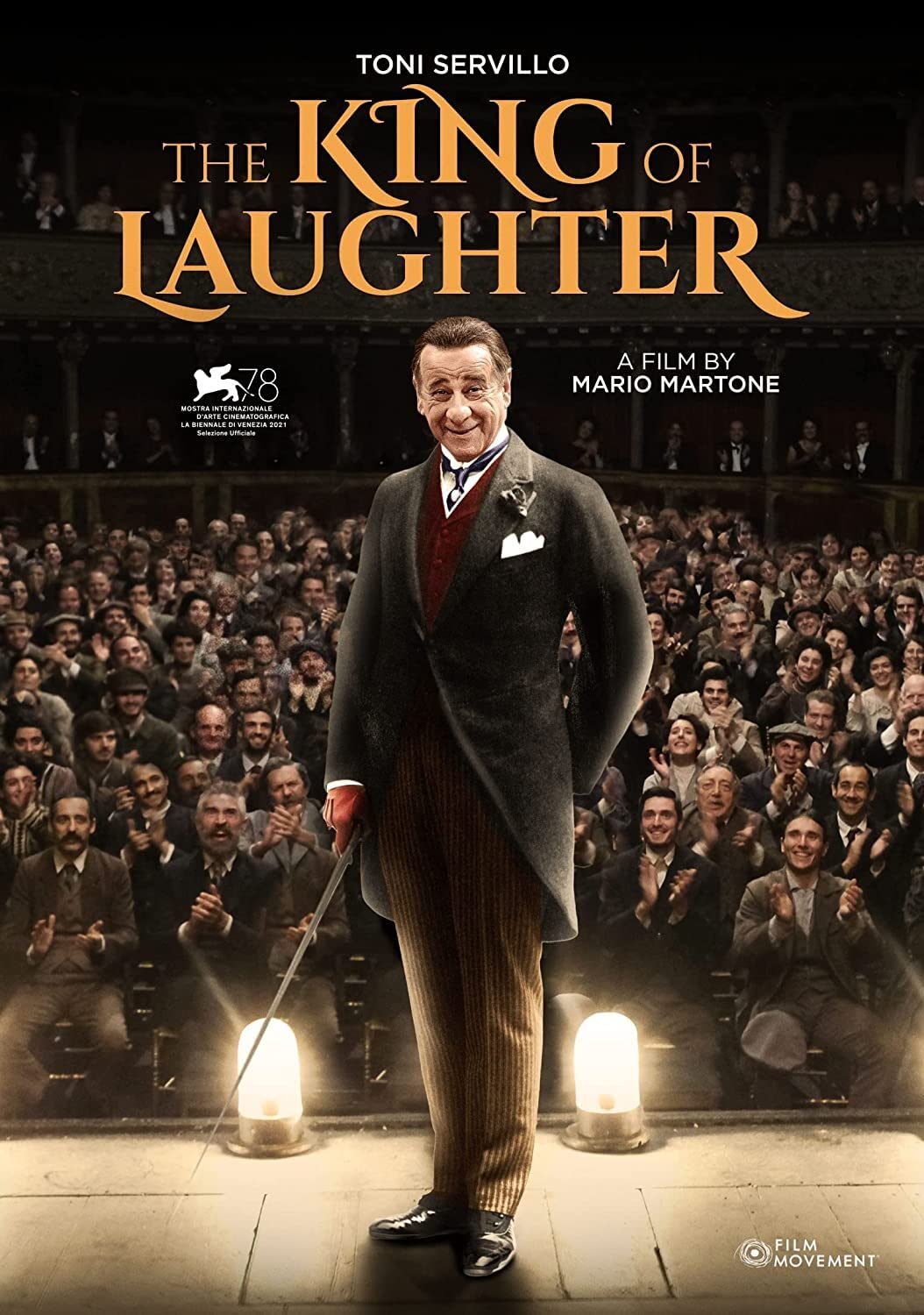
I think all of us want to be on stage, at least in theory. For me, it started with some plays in high school. But from there, those aspirations were cut short due to my father telling me that I needed a real job (which was his favorite thing to tell me in high school and college). I don't think the decade I spent in karaoke bars (and actually singing) really counts for anything either. So I've always been fascinated with theater, particularly when it comes to comedy. When I saw King of Laughter as a possible review title, I took a peek at the trailer and decided to give it a shot. After all, what's not to like about a story featuring the famous actor/playwright Eduardo Scarpetta in a battle with the courts over the concept of parody? Let's take a look.
We are at a showing of the play Poverty and Nobility. At the backstage area, we see actors eating pizza. Then we move across to the box office area where everyone seems to be trying to get a ticket, only to be told that it is sold out. Eduardo Scarpetta (played by Toni Servillo) puts on his makeup while members of his family watch. Nearby, a table has two men seated. The proceeds from tonight's play are counted over and over again while they try to figure out the payout for each crew member. Finally, we reach the point in the play where Eduardo Scarpetta makes his appearance to a sea of thunderous applause.
Posted in: Disc Reviews by Jeremy Butler on May 23rd, 2023
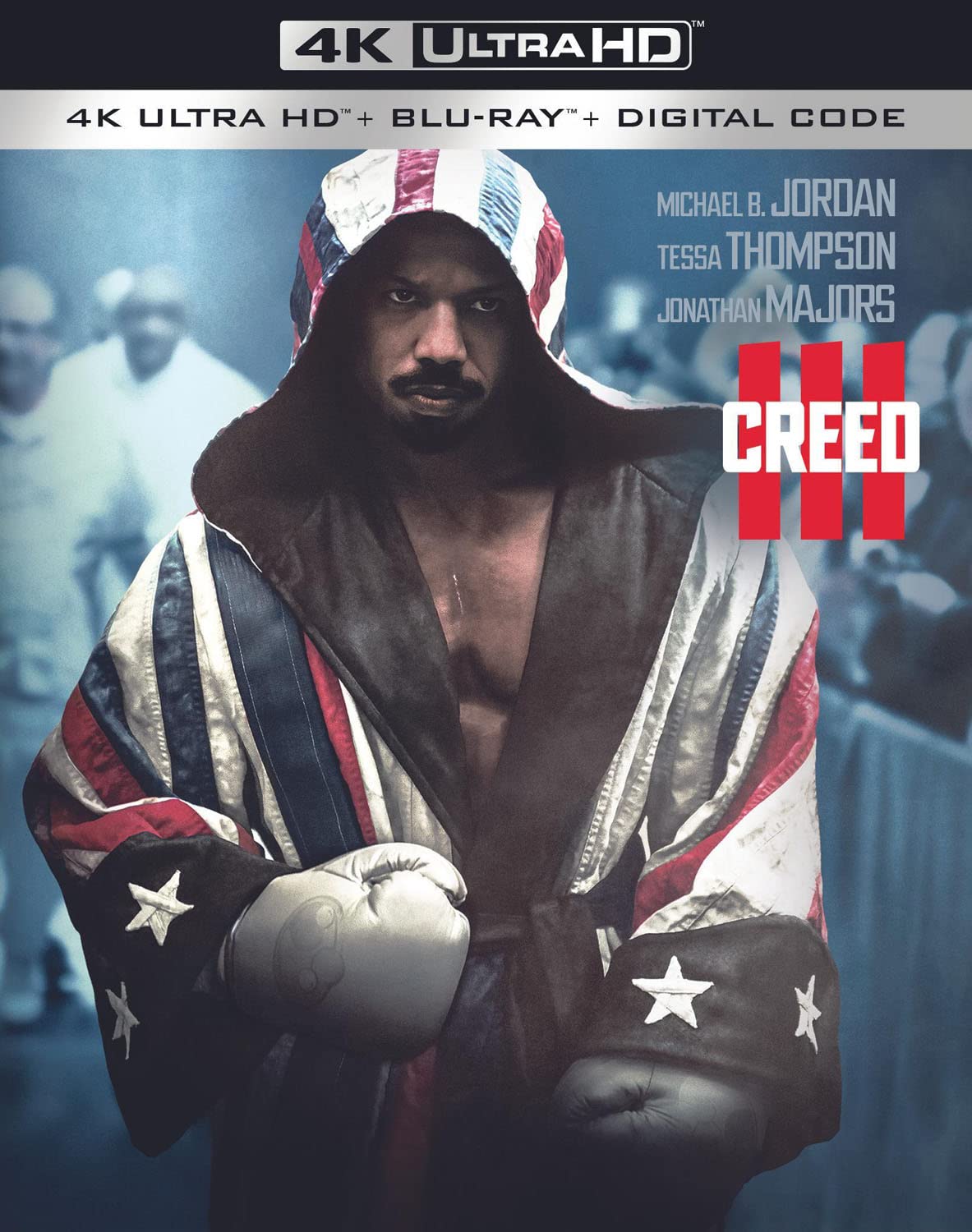
I would be remiss in my duties if I didn’t address the elephant in the room first. For the first time in the nearly 50-year history of this franchise, Sylvester Stallone was not featured in the film as Rocky Balboa. We could delve into the reasons behind why he elected not to take part in this installment, but that would be a review in itself and take away from this film. I mention it off the bat, so we can all process it and view the film with clarity. Long story short, I will say that his absence was noticed, and he was missed. I think his absence is notable due to the lack of an explanation as to his absence. I suppose the film being set in Los Angeles instead of Rocky’s native Philadelphia is meant to serve as a workaround, but still, I’d hope for some kind of explanation or at least a casual mentioning of the character. The lack thereof is what really drew attention to it. To be fair, the case can be made that that the previous film provided a pretty good conclusion for the Rocky chapters of the franchise. His finally making the trip to meet his grandchild was good catharsis for the character. What this means for the future of the franchise now I will not speculate; only to say that there is nothing saying that we’ve seen the last of Rocky. Now that we’ve gotten that out of the way, we can concentrate on fairly assessing Creed III.
Of significance, this film signifies Michael B. Jordan, our titular character, stepping behind the camera to make his directorial debut. But who better to take the helm than the man who brought the character to life. This in my opinion was a solid debut for Jordan and showcased his abilities both in front of the camera and behind it. Returning to back Jordan up on the screen are Tessa Thompson, Phylicia Rashad, and Wood Harris. However, if there was one person who outshone this cast of Creed veterans, it was the man who was making a debut of his own via his introduction into the Rocky franchise. A man who has been making quite the name for himself. Creed III introduced us to Adonis’ rival, Damian “Dame” Anderson, known as Mr. Jonathan Majors.
Posted in: Disc Reviews by Gino Sassani on May 11th, 2023
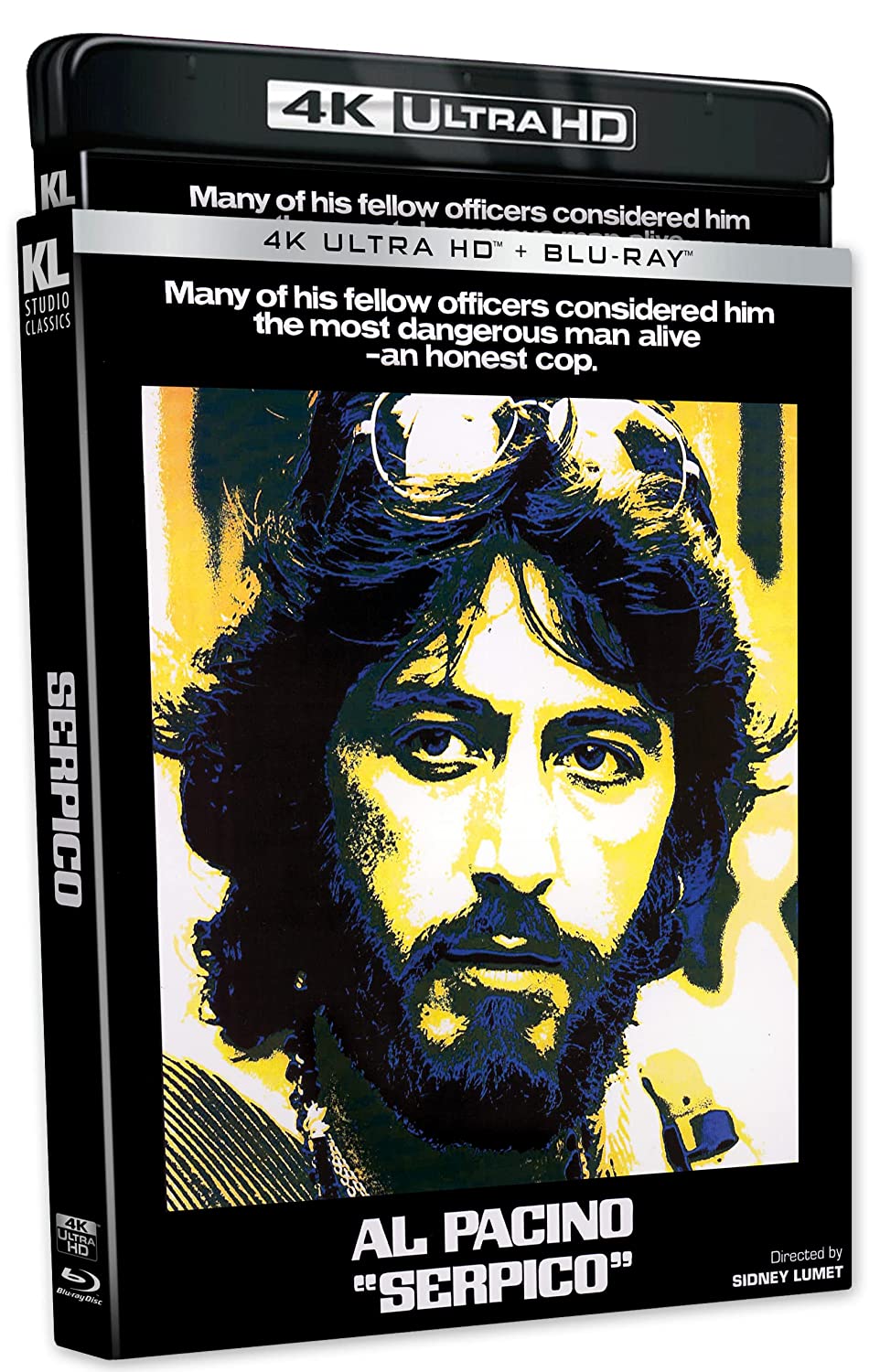
"All my life I wanted to be a cop, you know. It's like I can remember nothing else. I remember this one time somethin' happened. A domestic argument or somethin'. Somebody stabbed somebody or somethin'. And -- there was this crowd around this tenement. I must have been nine, ten years old. I was this big. I went over to see what was going on. I noticed the red light -- goin' around and around, all these people, and I couldn't see. And I kept saying, ‘Do you know what's goin' on? Do you know?’ Nobody knew. It was like a big mystery behind that -- that crowd there. All of a sudden, the crowd just parted. Like the Red Sea, you see? And there were these guys in blue, and I said, ‘They know.’ What do they know? What do they know?”
Frank Serpico was a New York City cop in the 1960's and early 1970's. Thanks to the film, everyone knows who he is, and they also know about his struggle as an honest man in a hornet's nest of corruption. His honest stand saw him a pariah and almost killed when his fellow officers stood by as he was shot in the face. He would eventually recover and testify before the famous Knapp Commission that investigated the systemic corruption inside the NYPD. If you know his story, it's because of this film, because that's the plot, pure and simple. What isn't so pure and simple is the inspired performance by Al Pacino, still a relative unknown, who had just finished The Godfather but hadn't really had a lead role up to this point. Serpico changed all of that. Pacino was on a rocket ship to stardom, and this film as much as The Godfather started the whole thing going.
Posted in: Disc Reviews by Michael Durr on April 25th, 2023
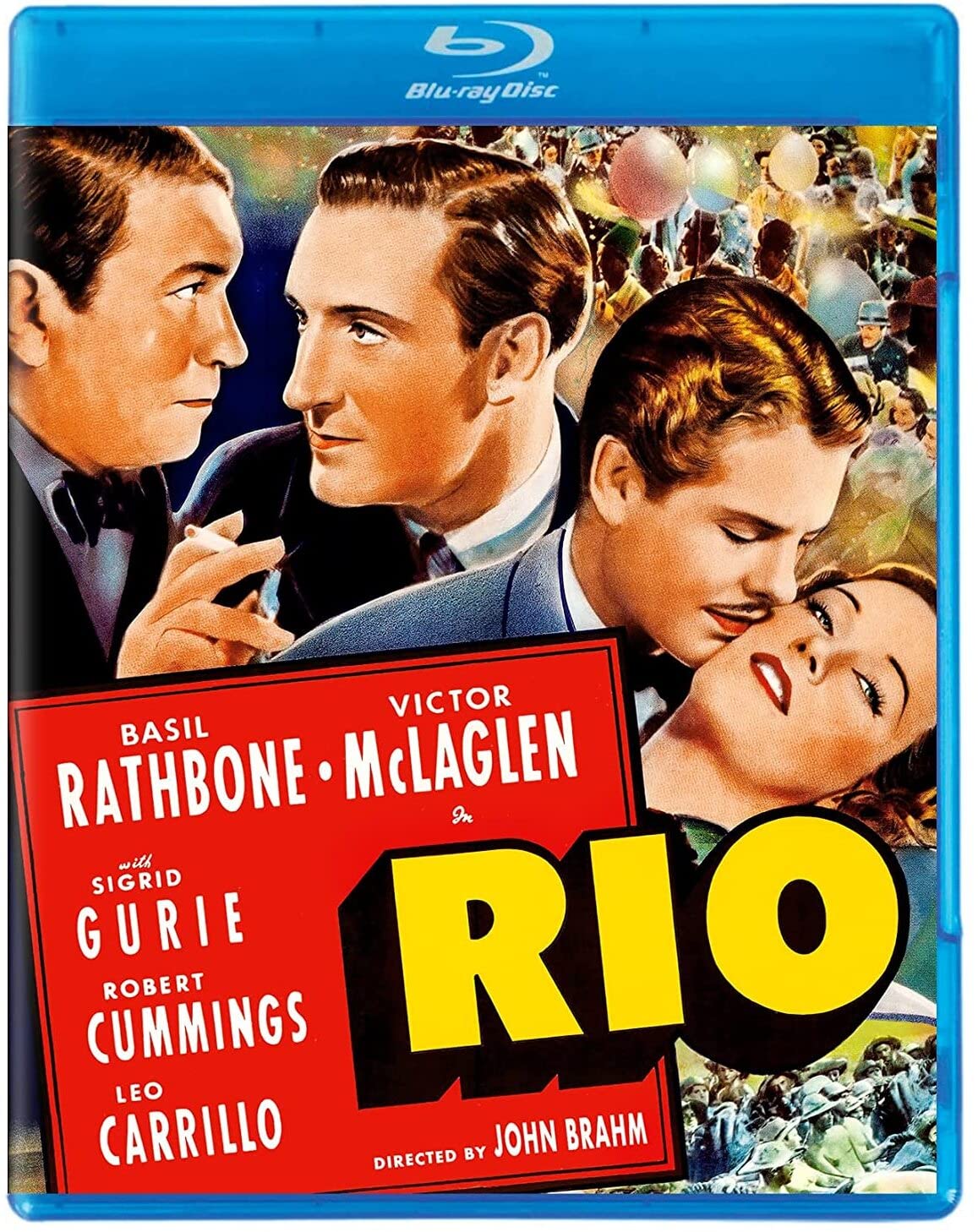
If someone were to read my biography below, one would probably learn one of two things, I have an unhealthy obsession with Alyssa Milano movies, and I deeply appreciate Basil Rathbone, the man who popularized Sherlock Holmes films. While many would argue who the best Holmes would be (Downey, Brett, Cumberbatch, etc), my heart will always go to Basil. So naturally, when I saw the movie Rio with him in the starring role had come to Blu-ray, I jumped at the opportunity to review it. Let's take a look.
We get a tight close-up of a sign that reads Paul Reynard & Associates Investment, Paris Branch. Here the board of directors are meeting and waiting for a phone call from the one and only Paul Reynard (played by Basil Rathbone). Where is Mr. Reynard? Why, he's in London securing a loan. We soon see Paul's friend, Dirk (played by Victor McLaglen) telling the board of directors to hold, Paul should be in soon.
Posted in: Disc Reviews by Gino Sassani on April 25th, 2023
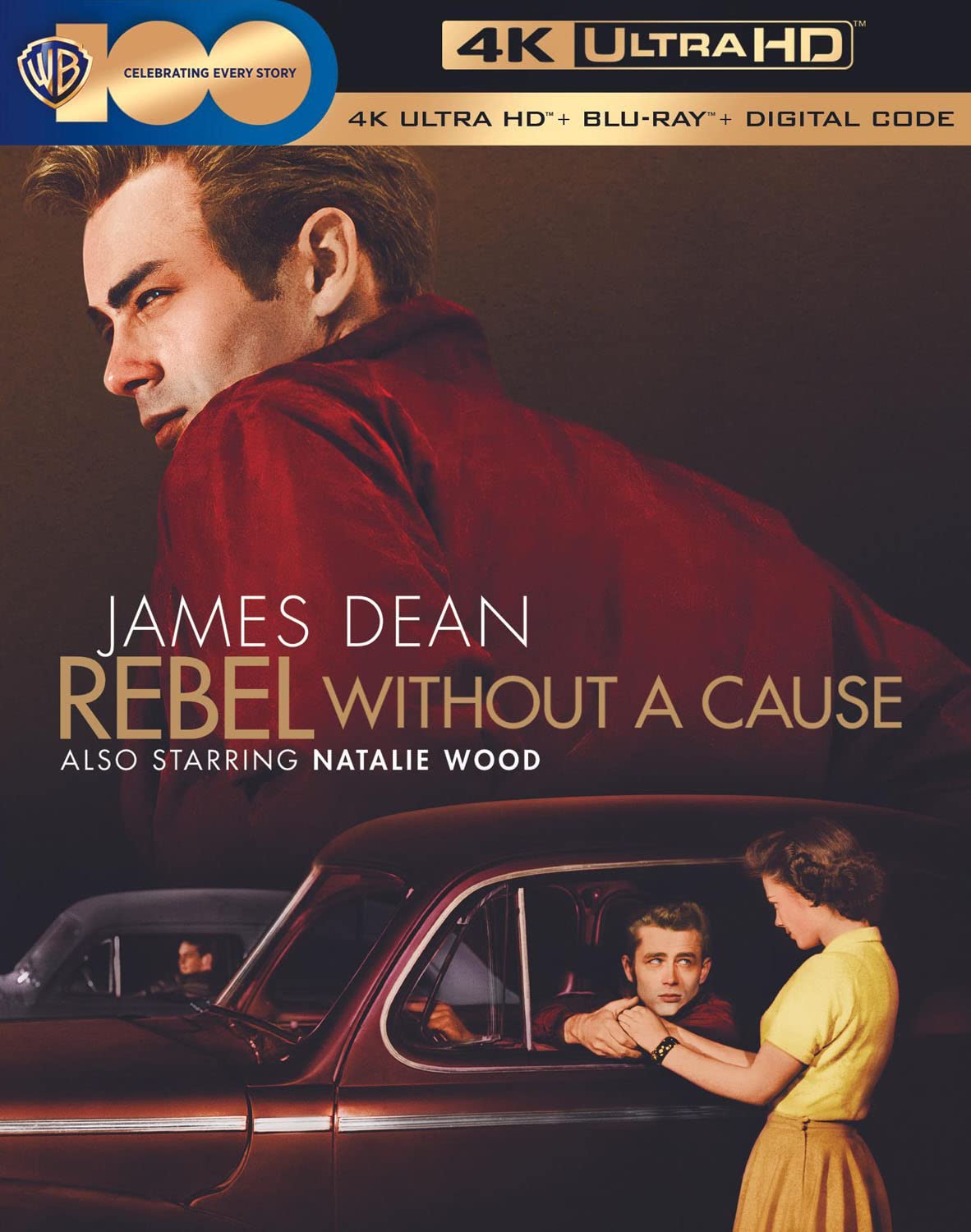
"If I had one day when I didn't have to be all confused and I didn't have to feel that I was ashamed of everything. If I felt that I belonged someplace. You know?"
There are a handful of films in Hollywood history that have stories as compelling if not more so than the story the film itself tells. I don't know if there has ever been a film about the making of Rebel Without A Cause. There have certainly been several books, but this is one of those classic films which is surrounded by so many legends, some of them urban myths, but so many of them were true that I find it rather difficult to watch the film on its own terms. With Warner's 100th anniversary celebration of 100 classic films, I had a nice chance to revisit the classic motion picture, and this time I tried my best to watch it without all of the noise that goes along with it. That wasn't easy, but I think I've now seen the film for itself more now than I ever did before. It was a groundbreaking film with an incredible cast that broke so many taboos of the time that you get the idea someone wasn't really paying attention to what was going on on the screen. It's as compelling today as it was then, and maybe more so with all of the baggage. The truth is I've never been able to watch Rebel Without A Cause the same way twice. Now I can try as often as I like with a nearly flawless print finally in UHD Blu-ray and in 4K. Warner Brothers is having a birthday, and I've been unwrapping all of the presents.
Posted in: Disc Reviews by Michael Durr on April 21st, 2023
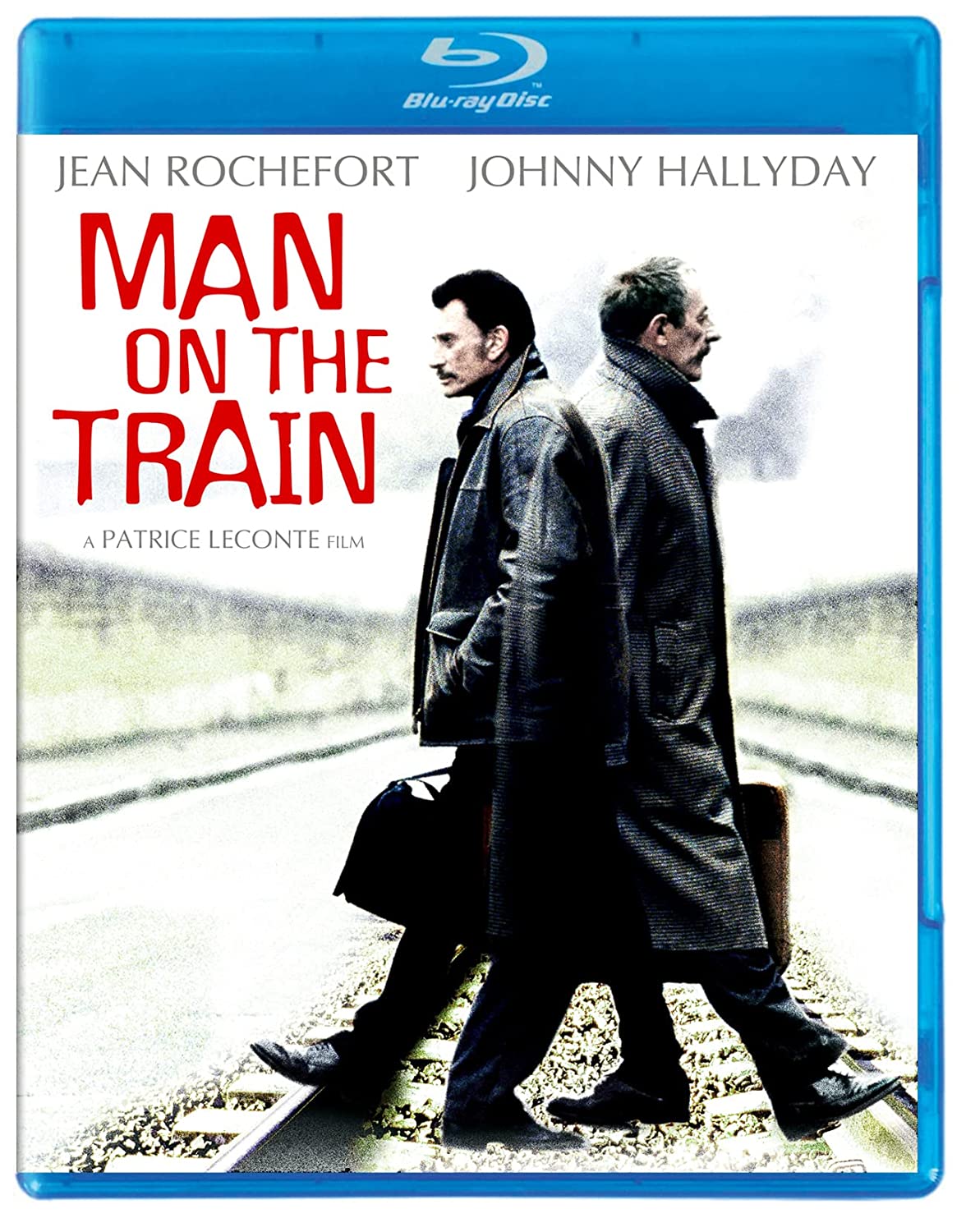
Even though I consider myself to be well-rounded when it comes to films, I admit my personal viewing history of French film to be a little lacking. Go Google any top 20 list of French films, and I've probably seen maybe two or three of the films. This is very contradictory to say Chinese, Japanese, English (UK), Australian, etc. where I've seen hundreds of films. But I'm always willing to expand my repertoire, so I jumped when I saw there was a French crime thriller named L'Homme Du Train or The Man on the Train available for review. Let's see how it plays out.
As we start, A train runs along the tracks and whips by various locales. We see a man named Milan (played by Johnny Hallyday) who tries to relax, but obviously he can't. The train finally comes to a stop, and he is only one to get off. He walks through the town, which is somewhat desolate, and finally ends up at a pharmacy. There he asks for some aspirin, which he finally receives. (Unfortunately it's water-soluble, so he also requires a glass of water).
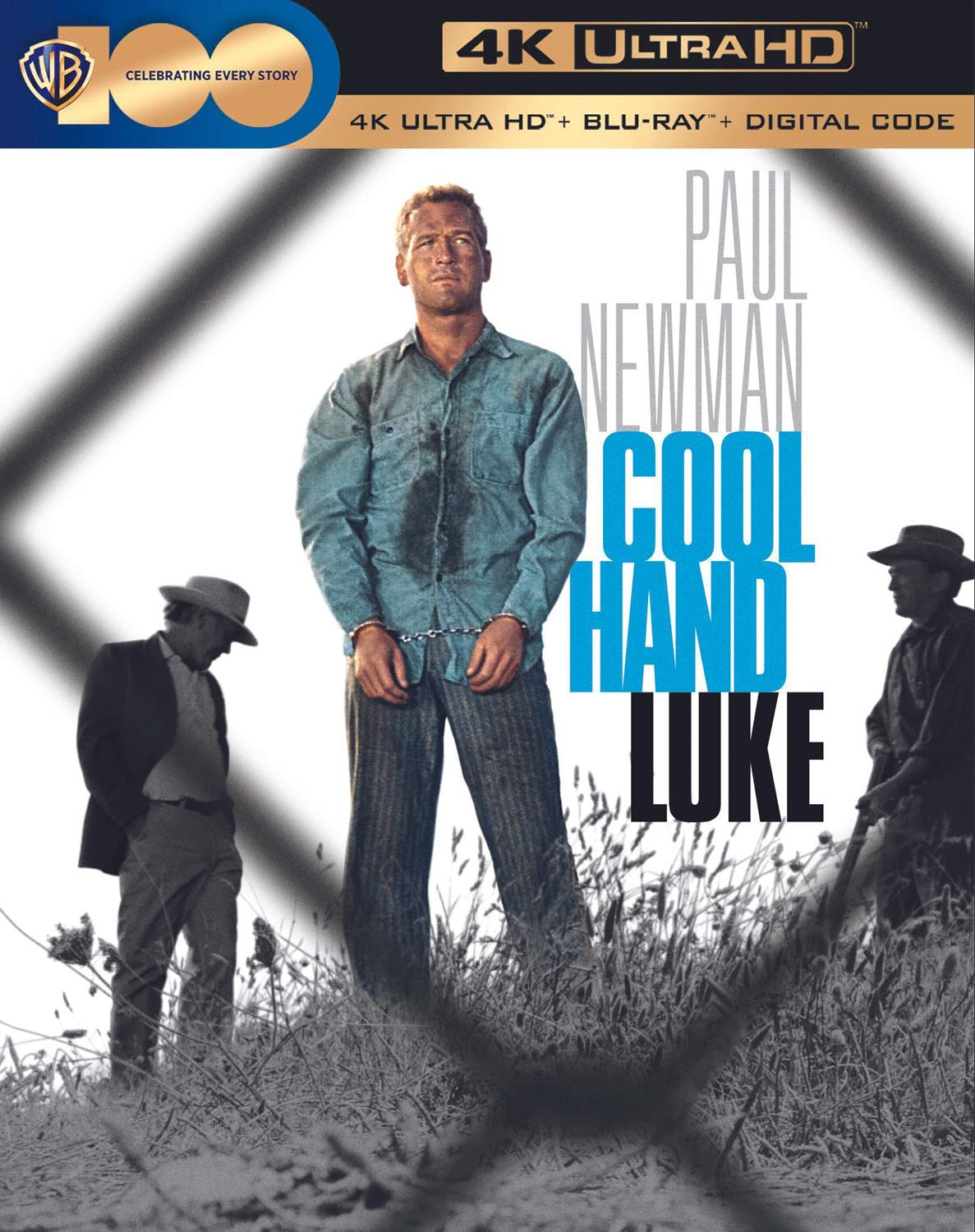
Posted in: Disc Reviews by Gino Sassani on April 21st, 2023
"Them clothes got laundry numbers on them. You remember your number and always wear the ones that has your number. Any man forgets his number spends a night in the box. These here spoons you keep with you. Any man loses his spoon spends a night in the box. There's no playing grab-ass or fighting in the building. You got a grudge against another man, you fight him Saturday afternoon. Any man playing grab-ass or fighting in the building spends a night in the box. First bell's at five minutes of eight when you will get in your bunk. Last bell is at eight. Any man not in his bunk at eight spends the night in the box. There is no smoking in the prone position in bed. To smoke you must have both legs over the side of your bunk. Any man caught smoking in the prone position in bed ... spends a night in the box. You get two sheets. Every Saturday, you put the clean sheet on the top ... the top sheet on the bottom ... and the bottom sheet you turn in to the laundry boy. Any man turns in the wrong sheet spends a night in the box. No one'll sit in the bunks with dirty pants on. Any man with dirty pants on sitting on the bunks spends a night in the box. Any man don't bring back his empty pop bottle spends a night in the box. Any man loud talking spends a night in the box. You got questions, you come to me. I'm Carr, the floor walker. I'm responsible for order in here. Any man don't keep order spends a night in..."
You guessed it ... the box. Enter our anti-hero, Luke. The anti-hero has become somewhat cliche today. What was once an artistic expression of the gray line between good and bad guys has morphed to the glorification of the just plain bad guy. We end up loving and rooting for such vicious characters like Vic Mackey, Tony Soprano, and Dexter Morgan. These are killers with nary a pang of conscience. Their deeds are always self-serving no matter what they pretend they might be. But if you go back far enough -- most credit Marlon Brando's coda performance in The Wild One -- you'll find there was once a far more nuanced kind of anti-hero. One of the industries best examples of this was Paul Newman's troubled teenager, Luke. Luke wins us over with a charm and an honest belief that he's a good guy. The archetype would later be pruned to perfection by Jack Nicholson in One Flew Over The Cuckoo's nest several years later. McNulty and Luke have a lot in common, and their environments and motivations aren't all that different. In the end they're both "broken" by the establishment, conforming to a code that did not allow guys like this to live happily ever after. Times and sensibilities have certainly changed, but performances like Paul Newman's Luke remain to remind of us of a time when audiences just wouldn't have been ready for the likes of Hill Street's Detective Buntz. Ironically, it would be Marlon Brando again who would be the first to make us root for a cold-hearted killer named Vito Corleone.
Posted in: Disc Reviews by Gino Sassani on April 11th, 2023
"In 1539 The Knight Templars of Malta paid tribute to Charles V of Spain by sending him a Golden Falcon encrusted from beak to claw with rarest jewels --- but pirates seized the galley carrying this priceless token, and the fate of the Maltese Falcon remains a mystery to this day."
What is not a mystery today is the significant role that The Maltese Falcon has played in cinema history. The film itself was a remake. In fact, it was actually Warner's third attempt to film the Dashiell Hammett novel in a single decade. The first version came in 1931 and starred Ricardo Cortez as Sam Spade. That film also featured Dwight Frye as Wilmer Cook. The film was a moderate success but never really delivered on the potential of the source material. Five years later Warner would attempt a comedy version of the story in Satan Met A Lady. It was a total flop. It would only take another five years before the studio took its third crack at the material. In this case, the third time certainly was a charm.