Drama

Based on actual Old Bailey court records from the 18th Century, Garrow's law tells the true story of William Garrow, a young barrister you revolutionized the legal system. This first series may only be 4 episodes long, but with each clocking it an an hour long a piece, this series offers plenty of drama to invest in.

The first episode kicks off with Garrow's earliest attempt to be a proper defense attorney, with the mindset to stop “blood money” from influencing convictions, and to cease the casual executions and/or barbaric treatments of innocent people. The proceeding episodes each contain a highly tense adventure, as Garrow has to not only prove his clients' innocence, but must also fend off bounty hunters, judges and other callous opponents of what he views as true justice.

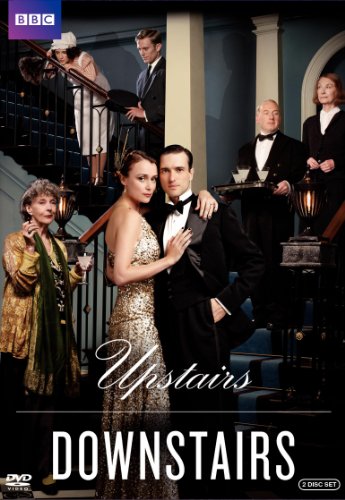
In the 1970's the critically acclaimed Upstairs Downstairs was a television mainstay in England. American audiences were soon introduced to the series through PBS broadcasts in the late 1970's and beyond. It was a unique kind of drama that served both as a period piece and an examination of the class lifestyles. The series began at the turn of the century and led up to the events of World War I and the period that soon followed. We were witness to the wealthy Bellamy family who occupied the estate at 165 Eaton Place. The family lived in the upstairs rooms, while the servants who kept the place in order occupied the rooms downstairs. Each episode would bring the dramatic events of the world to the doorstep of the home and we would see how they affected the two classes. We got to know members of both classes, and as the series progressed, observed the stark differences while also seeing the common humanity the two worlds shared. It was a huge hit and has lived on in syndication in all of the years since. The original series ran from 1971 until 1975 and covered the years of 1903 until the market crash of 1929 and the death of the patron of the estate. The whole thing had to be sold and the characters dispersed to their own lives from there.

Enter Heidi Thomas, who was eleven when the original series ended. The show stuck with her, and she made it a sort of life mission to bring the series back. In 2010 that's exactly what she did. The result is the three episode run that we have in this release.

Every year when the Academy Awards have been given out, I look over the winners in each category, and more often than not I scratch my head at the ultimate winners. I find myself wondering if they saw the same movie I saw. I start to ponder if there might be an alternate-universe version of these movies that somehow find themselves in the hands of the Academy jury. Sure, once in a while they get it right. Films like The Godfather, Gladiator and Unforgiven manage to fight off the competition and claim their earned statues. Most times, however, I find that a trend of political correctness enters the picture more than the quality of the films or actors themselves. It's the only way I can explain Sean Penn taking a statue over Mickey Rourke a couple years back. Films and actors are rewarded to showing the proper political philosophy. So, when I heard that The King's Speech won the award this year, I began to fear the same circumstances had once again prevailed. I hadn't seen the film, but the subject matter appeared to qualify. I considered it another undeserved Oscar given to an ambitious Hollywood crowd brown nose. Then I saw the film through this Fox Blu-ray release. It might not happen often, at least no more that a dozen times a day, but boy was I wrong about The King's Speech. This really was one of the best films not only of this last year but in quite a long time.

The Duke of York (Firth) has a serious speech impediment. He stammers, which isn't the most confidence-inspiring trait for a member of the royal family to have. In the past the problem likely would not have become an issue. But the invention of radio has made it essential for the members of the royal family to speak to the nation and the world. With the help of his extremely devoted wife Elizabeth (Carter), he has seen all manner of specialists both of sound scientific principle and the whack-job varieties. Nothing works. Elizabeth hears of an unconventional therapist who has a rather impressive track record. When she visits Lionel Logue (Rush) for the first time under an assumed name, she finds him a bit arrogant and unwilling to bend his rules, even for the Duke of York. Still, they decide to give the man a try. At first it appears as though this was merely another in a long string of failed attempts to help the Duke. He leaves as frustrated as he had ever been. It didn't help that the obstinate man insisted on calling him by the too-familiar name of Bertie, reserved only for close family. He treated the Duke like a child. The Duke exited holding a record made of an attempt to speak with blaring music in his ears. He decided he didn't need to hear the recording and suffer the usual humiliation.

"In the beginning was the word, and the Word was with God, and the Word was God. I am He. He was in the beginning with God. All things were made through Him, and without Him, was made nothing that has been made. In Him was life, and the life was the light of man. And the light shines on in the darkness, and the darkness grasped it not. The greatest story ever told..."

Every spring around the time of Easter you could count on several annual films to make their way to televisions across the country for special family presentations. For Easter you had The Greatest Story Ever Told and King Of Kings. For Passover there was always The Ten Commandments. And so it is an appropriate time to see all three of these films make their way unto high definition and Blu-ray for the very first time. We've already reported on the excellent release of The Ten Commandments and King Of Kings. Our review of The Greatest Story Ever Told concludes this Holy Trinity of movies to review.

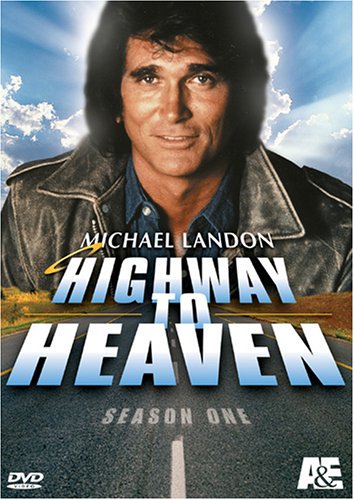
Highway to Heaven was a television series that ran from 1984-1989.  Jonathan Smith (Michael Landon) is an angel on a mission from God or “the boss”.  After quickly finding employment as a handyman, Smith teams up with the ex-cop Mark Gordon (Victor French) to solve problems and help people with their everyday struggles.  This series has plenty of sentimentality, spirituality, nostalgia, and unintentional comedy.  As a newcomer to the series, I found myself unable to look away. 

Michael Landon has an undeniable charisma.  I am too young to have seen Bonanza or Little House on the Prairie. However, from watching this series I found myself struck by his screen presence. The camera remains fixed on his face during the majority of scenes and audiences are drawn in.  Highway to Heaven is constantly delivering a message; the show looks at the human condition and questions why we operate the way we do. The delivery can sometimes be implausible.  For example, during a physical altercation, Smith begins quoting scripture to the wrong doers.  This blatant attempt at focusing on religion as the message can easily turn viewers off.  However, within the realm of this show, audiences are able to give it some leeway. 

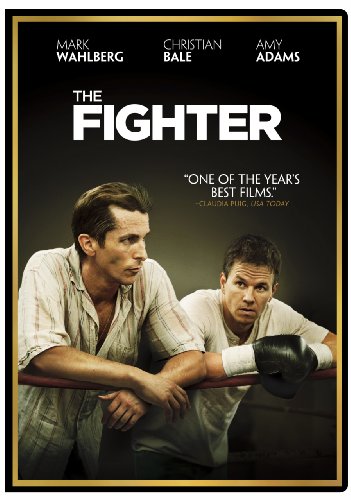
Dicky Eklund was the pride of Lowell, Massachusetts. While he constantly reminds the neighbourhood of his glorious fight against Sugar Ray Leonard, he has descended into a crack addiction that is breaking his family apart, and hindering the training of his up-and-coming brother, Mickey. As Micky inches closer to big opportunities in the fighting world, he must also battle the demons his family place upon him.

Part sports movie, and part character drama, this film's story is the sort of underdog tale that will be familiar to Rocky fans, and being a boxing film, it is readily susceptible to being compared to that series. If I may start with a focus on the sports movie angle, it diverges from the Rocky series most obviously by having less focus on the training (no big musical montages here) and the 'big' fights. Another divergence involving the fights this film has, one that is even more important to me,is a difference in how the actual fights were choreographed. I have never cared for the simplistic trading of head-shots, with little blocking, in the Rocky films. The Fighter has blood and blocking the way a true fight would have. The camera quality changes to something hand held looking when inside the ring with Micky and Dicky, and there are frequent flashes to the real life fight of Eklund vs Leonard, both of which help to make it seem like Mark Walhberg (who plays Mickey) is in an actual bout.

By the early part of World War II, the Soviet Union’s ultra-harsh prison system was already an established key to Josef Stalin’s paranoid dictatorship. Hundreds of concentration camps, called gulags, kept criminals and innocents alike trapped behind barbed wire, without edible food or minimal medical care. The most miserable gulags were the notorious Siberian compounds, stuck in such hostile sub-arctic territory that an attempt to escape was considered just another form of suicide.

One such frozen hell is the starting point for The Way Back, a visually breathtaking but icily uninspiring adventure saga from director Peter Weir. Based on a best seller that was sold as non-fiction but later revealed to be largely the author’s invention, it’s long on scenery and short on suspense. That’s because we are told at the start that it’s about escapees who slogged some 4,000 miles through Siberia and Mongolia to freedom in India.

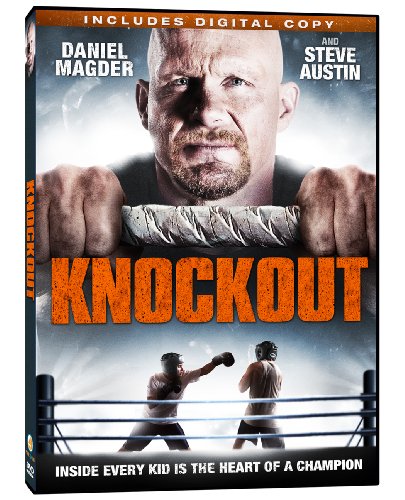
Boxing has never been a particularly popular sport for me to watch. The boxing world has always seemed to be one of lies and politics. But on the other hand, I will watch with interest any movie that has boxing as a major subject. Rocky, Raging Bull, heck The Great White Hype are all fine examples of exciting boxing movies. That is why when I received Knockout with Steve Austin, my interest was peaked a little to say the least. Let us see how it goes.

Matthew Miller (played by Daniel Magder) chews his nails and doesn’t like the fact that he is in the middle of nowhere (Tacoma, Washington). His mother, Christine (played by Janet Kidder) gets after him for his nail biting and tells him that he had to drop out of private school and go to public school because times are tight. She does it in a rather melodramatic manner and it is no wonder that Matthew didn’t just punch out her lights right there. That would have been a boxing movie to be proud of.

There are usually two schools of thought when it comes to judging sequels. One tends to be very harsh on the proceedings expecting it to surpass the original (which it hardly ever does) in all aspects of film-making. The other still expects a good film but realizes that this sort of thing is usually financially driven and just hopes for something that can favorable stand against the original. I happen to be in the later crowd. But, I certainly found myself inching towards the former when I received the blu-ray package to review Ip Man 2, Legend of the Grandmaster. Let's go inside, shall we?

Ip Man (played Donnie Yen)has escaped from Foshan and has made way with his family to the Hong Kong of the 1950's. His wife, Cheung Wing-Sing (played by Lynn Hung) is pregnant with her second child. However, the family is barely making ends meet. Cheung can't work much and Ip Man's martial arts school isn't going as well as planned. They can hardly cover rent and school fees for their son, Ip Chun (played by Li Chak).

The Green River Killer was responsible for the deaths and disappearance of dozens of young girls during the 1980s. This two part miniseries, originally airing on the Lifetime network, chronicles the two decade long investigation made by Sheriff David Reichart.

Spread out over two episodes. The mystery plot can wear a bit thin at points and start to resemble a watered down TV police drama, but credit must be given for how the director recreated both the era it took place in, as well as the sense of sickening frustration the police felt for having spent so many years chasing one person. The grim realization these investigators have is that the only way they can gather more useful evidence is by having more bodies emerge in their search. The higher the body count, the greater their chances are that the killer will leave behind a piece of evidence they can use, taking into consideration that this was a time before our modern understanding and use of DNA evidence (a point that become the linchpin to the eventual apprehension the title of the film promises).