Drama

When the WB merged with the UPN to form the hybrid CW, a lot of good things happened. The new network stepped away from the twenty-something shows that began to all look the same after a while. The network began to take on cutting edge genre shows like Supernatural and Smallville. But deep down inside there was still that family drama mentality that drove at least one of the parent networks. Life Unexpected is, unfortunately, a totally expected result of that dark place.

The premise is actually pretty interesting. Lux (Robertson) is a 16-year-old girl who has spent her entire life in foster care. She has been bounced from home to shelter to home again 7 times in those 16 years. She's lived with drug addicts and abusive situations. She's had it, and so she decides to seek legal emancipation. Because her parents are still alive and somehow never gave up their rights, she needs their signatures on the court documentation. She finds her father first. Nate Bazile or Baze (Polaha) is a guy who's refused to grow up. He lives in a loft above a bar he runs primarily so he can drink for free. His father (Thomas) owns the building, and the bar is just one of many unresolved issues between them. He lives with two roommates who are only slightly more mature than he is, including English teacher Math (Basis). He's shocked when Lux shows up, because he didn't even know she existed. Together they contact her mom, Cate (Appleby), who is a popular radio talk show host with her partner and soon to be fiancée Ryan (Smith). Cate gave Lux up for adoption unaware that she had a heart condition that required her to remain in the hospital until she was three. That made her a tough adoption candidate. So, when Lux shows up she is just as surprised, believing she was happy and in a family. The emancipation doesn't happen, and Baze and Cate are given joint custody of Lux.

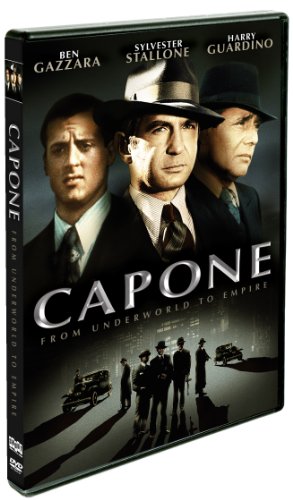
Roger Corman has never let an exploitable opportunity slip by. A case in point is what we have here. In the wake of the first two Godfather films came this rise-and-fall tale. And because the Godfather movies were handsome, expensive and classy, then this Corman-produced effort is also a nice-looking piece of cinema, even if the budget-conscious element shows through with the use of leftover footage from The St. Valentine's Day Massacre.

Ben Gazzara plays Al Capone, moving up from street-smart hood to mob kingpin through cunning and violence. His mentor is Johnn Torrio (Harry Guardino), who works to unite the various ethnic Chicago gangs, but lacks the bloodthirstiness necessary to impose his will. Capone has the right ruthlessness, and betrays Torrio, taking his place. But Capone has his own right-hand man with high ambitions: Frank Nitti (Sylvester Stallone).

A stern, hectoring narrator laments the state of the Young People of Today's Modern World, and ascribes their terminal amorality to their having come of age during the World War Two. Having set the stage, he then withdraws until the end, that we might draw the proper moral conclusions from a trio of tales (inspired, loosely, by actual cases) that show the terrible depths to which the Young People of Today's Modern World have plunged.

The first is set in France, where a group of teens head off for a day in the countryside. Their goal is to murder one of their own, believing that a) he is about to betray them by taking off to Canada; and b) that all his fanciful tales are true, and that he is fabulously rich. In the second story, a young man from a good home in Rome is involved, for no very good reason beyond selfishness, with cigarette smugglers. Barely escaping from a police raid, he guns one man down and is badly injured himself. We then follow him through the day as he slowly stumbles toward his destiny. The last story takes us to England, where a fellow, utterly convinced of his own superiority, courts a newspaper's interest first by letting a reporter know about a body he has found, and later by boasting he killed the woman himself, believing that his crime is so perfect that he can confess to the police and then recant without suffering any particular inconvenience.

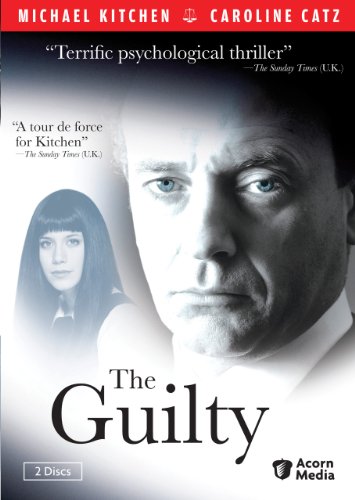
Since this week it appears I am taking on a U.K. flavor for my reviews, I decided to throw one more British drama review ripped straight from their local tele programs. This one involves a lawyer who turns into a judge and dons the infamous powdered wig. To my shock, it isn't even labeled as a comedy, so why am I already laughing? Well, before I go mad as a hatter, let's proceed forth with The Guilty. We will see if this judge is a cheeky bugger or a wanker. I'm guessing on the latter.

Steven Vey (played by Michael Kitchen)is quite the lawyer in England. He wins case after case and he is surely a lock to be the youngest person to ever be asked to be a judge. One night after a big win, he chats up a conversation with his new secretary, Nicky (played by Caroline Catz). They end up having dinner together and go back to her place for a midnight cup of joe. One tiny fact might be important at this juncture, Mr. Vey is very married. That cheeky bugger.

I say old chap, I do fancy a good British TV show. Maybe, it is because I grew up with more than my share of shows like Monty Python and the Black Adder. Maybe, I just like their funny accents. There is probably a bloke in the next alley who is willing to give me a beating for that comment. However, I will hold out and share with you my take on Man in a Suitcase, a late 60’s British drama that aired on ABC. Could I possibly bribe this bloke with some fish n chips?

McGill (played by Richard Bradford) used to be a former US Intelligence Agent. In one of his assignments from six years, he saw the writing on the wall that a top American scientist was going to go work for the Russians. Mac tried to prevent the situation by trying to intercept. The agent was told to stand down by his superior. However, shortly after the superior disappeared in a sailing accident and the scientist defected, leaving McGill to hold the bag.

"Sherlock Holmes, the immortal character of fiction. Created by Sir Arthur Conan Doyle, he's ageless, invincible and unchanging. In solving significant problems of the present day, he remains -- as ever -- the supreme master of deductive reasoning."

"And it came to pass in these days that a decree went out from Caesar Augustus that all the world should be taxed. And all went to be taxed, everyone into his own city. So it was that Joseph, a carpenter, went up from Galilee unto Bethlehem to be taxed with his wife, Mary who was with Holy Child."

Every spring around the time of Easter you could count on several annual films to make their way to televisions across the country for special family presentations. For Easter you had The Greatest Story Ever Told and King Of Kings. For Passover there was always The Ten Commandments. And so it is an appropriate time to see all three of these films make their way unto high definition and Blu-ray for the very first time. We've already reported on the excellent release of The Ten Commandments. Our review of The Greatest Story Ever Told will come to these pages very close to Easter itself. That leaves the one more in this Holy Trinity of movies to review.

A newspaper article infuriates the White House, which retaliates with all its political might to discredit the story, crush its author and cover up its own internal corruption. Sound familiar, like maybe All the President’s Men? If that’s among your favorite docudramas, then make room on the shelf for Fair Game, a real-life paranoid trip that unfolds across continents but finds its emotional center in a quiet suburban home.

There are striking similarities between the 1976 Redford-Hoffman classic and the inexplicably overlooked Fair Game. There are also major differences: The ’76 film exudes the idealism of its era, while the new one is steeped in the cynicism of modern media. The older movie is told from the viewpoint of hustling young reporters, while the one released this week on video comes through the eyes of a married couple -- respected officials whose careers collide in a cataclysm of government disinformation. Yeah, there’s another huge difference to point out: This time, the good guys don’t win.

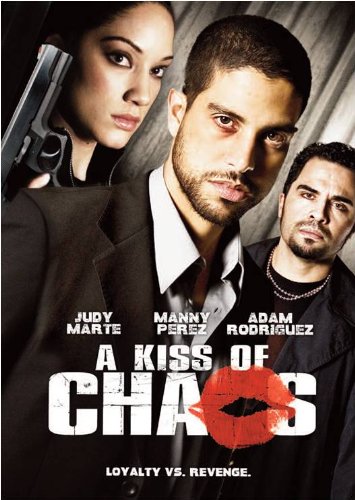
Phoenix is having a rough night. Her scumbag ex boyfriend has just shown up in her apartment with a gunshot wound and a sack of stolen cocaine and her psychotic HIV positive prostitute sister has also shown up, having just shot a john in the face. Plus there are gangsters after the cocaine who will stop at nothing to get it back. Plus there’s her lesbian friend downstairs whose brother is involved on multiple levels and wants to drag her into a plot to steal and sell the cocaine. Plus it’s her birthday.

Phoenix is the central character in A Kiss of Chaos, the unfortunately titled offering from Maya Entertainment. She is played with sullen competence by Judy Marte and surrounded by a cast of “where do I know that dude from?” Latino actors in a basic drug/gangster/crime movie that is clearly aspiring to be more. For one, the character of Phoenix is supposed to be an artist of some kind. We know this because there are a couple of flashes of her on a stage in some kind of coffee shop, apparently reading entries from her diary, which, as her lesbian friend tells her, “sound like poems”. We must, however, take this on faith, since the only tidbit we hear is the enticing entry, “November seventh; I’m in love with the wind”. I’m serious.

All eyes are on Angelina Jolie; okay, so that's not much of a surprise, is it? But, I'm talking about the opening scenes of Jolie's partnership with Johnny Depp in the remake of the French spy thriller Anthony Zimmer, retitled for the American audience, The Tourist. Her character Elise is attracting a lot of attention from men hidden away in vans with surveillance equipment trained on her every move and from every angle. No, it's not the paparazzi this time. Elise is being followed because the intelligence community believes she will lead them to their real target, an elusive master criminal named Alex. Instead Elise merely receives a letter which she proceeds to burn and walk away. The agents swarm on the smoldering paper, convinced it's a message from Alex and a clue to his whereabouts. It seems he's gotten away with a ton of money, and sources say he has used some of those riches to alter his appearance, and Elise is the only clue they have left.

The note has instructed her to take a specific train and locate a random person that approximates his size. The idea is to convince the agents that the rube is Alex, thus distracting them from their true quarry whom she is to meet in Venice. On the train, Elise chooses math teacher Frank Tupelo (Depp) for the ruse. She develops an odd attraction for the man and invites him to stay with her in her lavish hotel suite. A series of mistaken identity gags gives Depp a chance to shine in the role, while Jolie offers the window dressing and emotional attachment for the team. Expect plenty of misdirection and red herrings.