Drama

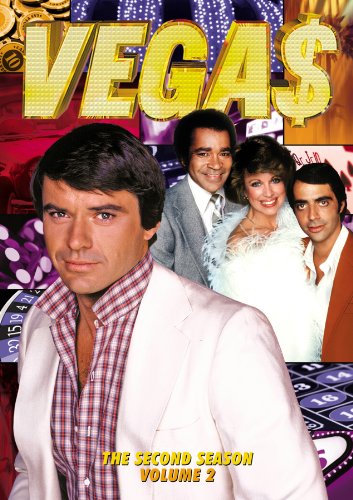
By 1978 the television detective model had been nearly complete and possibly already a cliché. Dan Tanna might have well been the complete model as far as the formula goes. It was almost as if you could go down a checklist and, like Dr. Frankenstein creating a monster, check off the necessary elements. The scripts could then almost write themselves, and you let the show fly on autopilot for three seasons or so until someone decides to look behind the curtain.

So let’s go down that checklist, shall we?

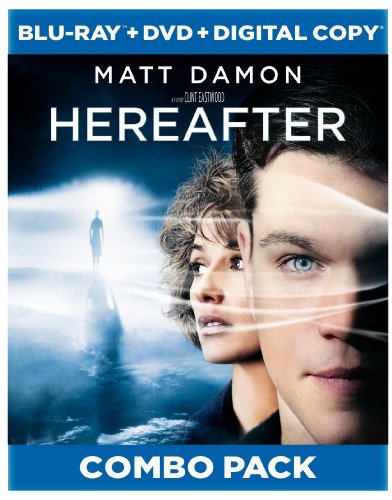
The home video release of Hereafter, like its Asian box office release, is the victim of bad timing. The movie has been pulled from theaters in Japan since the tragic events that have struck that country in recent weeks. It's unfortunate that the movie opens with one of the most realistic depictions of a tsunami that I've ever seen. The ultra-realism will be an emotional pang for anyone who shares the sadness of the current disaster. The film has suddenly been criticized for its graphic portrayal, but that kind of statement bears the mark of the worse kind of insincerity. Anyone who has seen the recent works of Clint Eastwood knows that he's never been about such things. Eastwood has learned to mine the vast treasures of the subtle in recent years, and the scene here is an integral part of the story he's trying to tell. The movie was filmed long before the Japanese incident, and you certainly couldn't have expected anyone to anticipate such a thing. Still, with all of that said, this is not a movie you should be watching if you find yourself sensitive to those images. With the real images we've seen on our television and computer screens, this will be hard for anyone with a heart. I'm sure that Eastwood himself has experienced strong emotions in the last week or so. Is it disrespectful to watch something like this now? That's a question you'll have to answer for yourself. I will say it's an emotional experience. Perhaps it's a film best saved until distance has dulled some of the pain. It was absolutely the right move to pull it in Japan.

The film tells three very separate and distinct character vignettes that don't converge until the final moments. Each of the three characters has been touched by death in some fashion or another.

A sure sign that Easter is just around the corner is yet another home video release of perennial seasonal favorite The Ten Commandments. In years past, we got the multi-disc edition, complete with original silent version of the film. This particular version is rather more stripped down, as far as features go, but it does mark the film's extremely welcome arrival on Blu-ray.

The first act of Cecil B. DeMille's epic is as much a tale of Egyptian power politics as it is the story of a man coming to terms with his identity and destiny. We follow Moses (Charlton Heston) as, rising from triumph to triumph, he has the throne of Egypt within his grasp (much to the displeasure of Yul Brynner, the Pharaoh's actual son and rival for the affections of the sinuous Anne Baxter), only to lose all worldly power when he realizes he is actually the son of Hebrew slaves. Cast out of Egypt, he returns to demand the liberty of his people, and comes clutching a fistful of plagues to make sure his former brother pays heed.

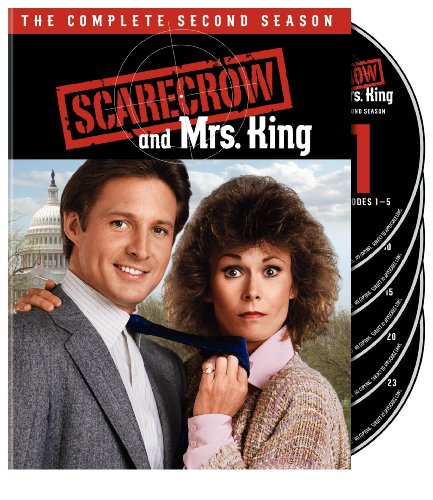
While Scarecrow And Mrs. King first aired in 1983, this show is really one of the last of the 1970's crime dramas. It was an early attempt to bring in more of the female audience that seemed reluctant to join the popular detective shows of the era. While not really a "detective" show (they were spies), it employed a lot of the 1970's conventions. Even the film footage has that distinct style from those days and type of shows. The idea worked, and the series did bring in a sizeable female audience, but it never really caught on with the guy crowd who found it a bit too relationship-heavy. The two leads were chosen less for their character appeal than for their apparent "easy on the eyes" look. Again more fodder for the chick crowd. The show was always rather lighthearted, even if the material was somewhat serious cold war espionage. The two shared a banter that revealed a kind of love/hate relationship and the expected sexual tension that would eventually lead to the two getting hitched. And while the series only lasted four seasons, the formula would end up being tweaked to bring us the more successful Moonlighting with Bruce Willis and Cybill Shepherd, which took the idea into the 80's with slicker production values but still a mainly female appeal.

Amanda King (Jackson) is a recent divorcée with two sons and a nosy mother (Garland) who lives with her. She has a boyfriend named Dean who works as a meteorologist at a local Washington DC television station, whom you never actually get to see. While at the train station, she suddenly finds herself embroiled in an espionage plot when a package is handed to her on the platform. Then she meets government agent Lee Stetson (Boxleitner) who works under the codename Scarecrow. She's intrigued by Scarecrow and agrees to help him in his current case. Of course, she ends up in a more permanent role with "The Agency", taking a job at their cover corporation The International Federal Film Company. Every week we find Amanda trying to balance her new role as a spy with trying to raise her kids, have a normal dating relationship, and keep her cover safe from her particularly prying mother. The results are often quite funny. There is also Scarecrow's partner, Francine (Smith), who is somewhat jealous of Amanda and Lee.

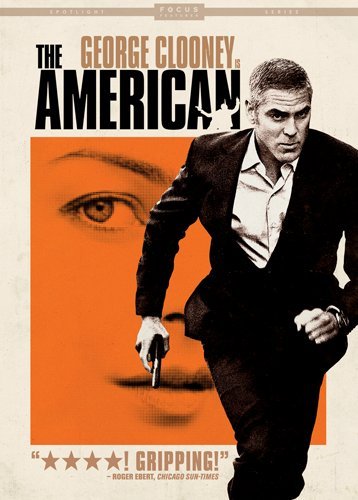
The cover of this DVD is, depending on which signals you pick up on, either misleading or perfectly accurate. If all you see is George Clooney running with a gun, and you therefore come to the conclusion that this is going to be some action-packed thriller, and that is what you're hoping for, then you're going to be disappointed. If, on the other hand, the orange colour and the rather retro look to Cloney's image, not to mention the rather uninformative title, makes you think of the 1970s, then you're on the right track.


Clooney plays the titular American, an intelligence operative whose last job results in rather more bloodshed than it should, and people are clearly after him. Nonetheless, he is given a new assignment, and he takes it. He is to craft a specialized assassination rifle, and he does so while holed up in a hillside Italian village. There he meets a priest and a prostitute, encounters that will alter the course of his life.

There have been very few films of this stature that I have not had the chance to see over the years. Even if I don't think I might enjoy a particular movie, there are those titles that have become so well known or a part of the culture that one feels a sense of obligation to take in. For years The Last Tango In Paris was one of those films for me. Thanks to a new Blu-ray release by MGM, I was finally afforded the opportunity.

The plot of the film is almost irrelevant. It's not about a story at all. Marlon Brando plays a man who has just lost his wife to suicide. But we quickly learn that he had lost her really long before she took her life with a razor blade. She was having an affair with a man who lived in the hotel they ran. It was an odd affair. She insisted that her lover take on the habits and appearances of the husband she was running away from. She required that he wear an identical robe and drink the same booze, or at least have the bottle on hand. She went so far as to tear the wallpaper from the bedroom walls with her fingernails so that the room would appear as hers. One gets the impression that this would have been the more compelling story. Alas, that is not meant to be.

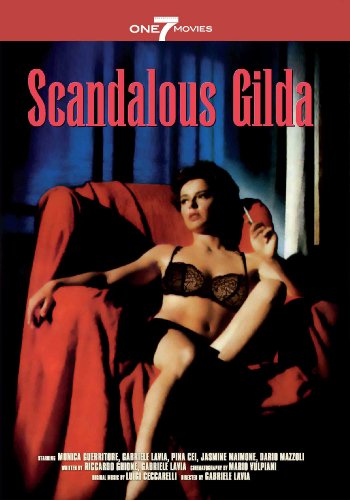
Monica Guerritore is an unnamed wealthy socialite (all of the characters in the film are unnamed) who catches her husband in flagrante with another woman. To add insult to injury this woman is a TV personality of a sort unknown in North America, but common in France and Italy – an attractive woman whose only job is to let you know what's coming up next – and, rightly or wrongly, can represent, as is the case here, a certain form of empty glamour.

At any rate, Guerritore, sexually humiliated, heads off on the road with no particular destination in mind. She encounters exuberant cartoonist Gabriele Lavia (also the director of the film, but best known on these shores for his roles in Beyond the Door and Dario Argento's Deep Red and Inferno). The two begin an affair that rapidly spirals out of control, crossing all the boundaries of passion (that's the idea anyway) and veering rapidly towards self-destruction. All in about twelve hours!

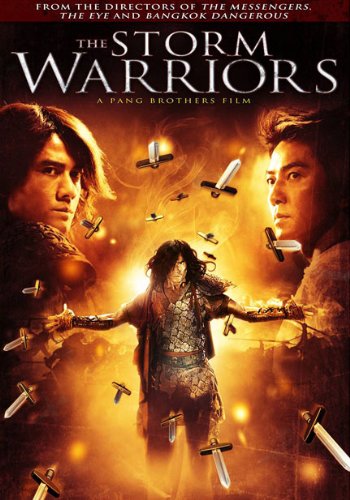
I must admit, I came at The Storm Warriors with very little knowledge of its creators, the Pang brothers, but as someone who appreciates Asian cinema, I felt that I had the sensibilities to enjoy the film. The movie deals with a Japanese invasion of China by a dread warlord named Lord Godless. As the film opens, we learn from an almost impossible to follow title sequence, he has captured China’s mightiest heroes and is preparing to execute them. Being invincible, Lord Godless is almost assured of victory, unless two of the aforementioned Chinese heroes, Wind and Cloud, can combine their power to defeat him and his army.

We learn all this and much more in the first two minutes of the movie.

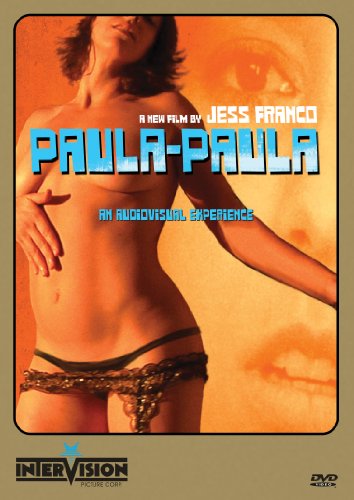
Paula (Carmen Montes), a dancer at a strip club, is arrested for the murder of Paula (Paula Davis), a fellow dancer. The arresting officer (Lina Romay) questions the near-catatonic Paula, and the rest of the film is a slow-motion, flashback of the dead Paula dancing, the two women making love, and the murder. Once the slow-mo begins, there is no further dialogue, except for a cryptic fable that Paula tells to the camera.

Jess Franco's latest effort is his most minimalist, and in some ways most personal, film to date. There is no set to speak of: the film was obviously shot in Franco and Romay's apartment, which doubles for both the home of the Paulas and, perhaps, the police station. I say “perhaps” because the notion of any definable space is a very tenuous one in this film. The only set dressing consists of a few aluminum screens, which play a role in the zero-budgeted surrealist effects. As has been pointed out elsewhere, there is nothing groundbreaking about the effects the Franco conjures here. The kaleidoscopic images, frequently involving Davis fusing and splitting from her double, would not have been out of place in the 1960s, and aren't going to break the back of even the most basic computer editing suite today.

Cynical, alcoholic ex-musician Paul Newman arrives in New Orleans with barely a cent to his name. Following a tip from scam-artist preacher Laurence Harvey, Newman lands a job as a DJ for WUSA, an extreme right wing/white power propaganda radio station. Newman has no patience for his employers' message, but he's happy to take the money and drink himself into an apathetic stupor. Acting as the unwelcome voice of his conscience are the scarred hard-luck woman he has taken up with (Joanne Woodward) and the twitchy, anxious liberal (Anthony Perkins) who is about to discover that the survey work he has been doing in the city's ghetto is, in fact, in the service of Newman's dark masters.

Very much a reflection of, and commentary on, its turbulent times (1970), this is a film that is messy in its construction but ferocious in its convictions. The plot meanders more than is good for it, the script takes some rather pretentious flights into poetry, and Newman's character changes too little to be very interesting, with the result that the final scene lacks the kick that it clearly wants to have. Perkins, however, is magnificent in his painful, tortured sincerity, and the climax – a WUSA rally that becomes a hellish riot – is a knockout.