Drama

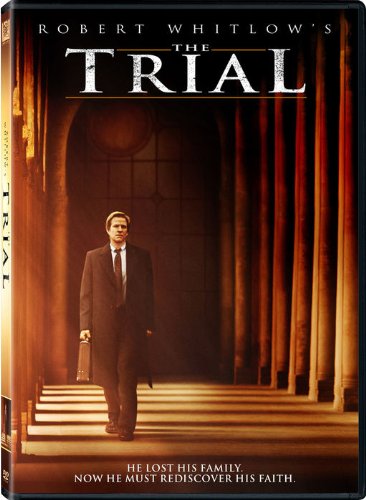
A criminal defense attorney, played by Matthew Modine, has lost all hope after his family dies in an accident. On the brink of suicide, he is called upon for one more case, defending a young man who may face the death penalty on a murder charge.

The story is established very quickly and though each character resists joining forces for the defense, it only takes about a 30 second scene each to convince them otherwise, and then it is straight into the trial (hence the title I suppose).This quick assembly and ever faster exposition makes the story harder to buy. I understand the film only clocks in a bit faster than an episode of Law and Order, but one wonders if it is all necessary if its going to be so hasty.

Everyone knows Charlie Chaplin. For many, he is the symbol of the silent age of film. The stiff figure in trademark hat and twirling cane comes easily to mind. But that wasn't really Charlie Chaplin. That was a character he created called The Tramp, or often The Little Tramp. So, it would seem that Chaplin spent most of his career playing The Tramp, who in turn played many different characters on the silent screen. He was known for his subversive antics and charming stare. He became the champion of the common man, all the while becoming the first elite star in Hollywood. With his troubled life and numerous sex scandals, you would expect that Chaplin would have been the subject of a bio-pic before 1991.

The script is based on two books. One of them is Chaplin's own autobiography. The other is David Robinson's book Chaplin His Life And Art. You get the idea that the material is authentic enough. It doesn't attempt to gloss over the flaws in the man's character. While it obviously spends much of the time on his films and the things that went into them, we don't get an over-stylized idea of Chaplin as anything less than what he was: a flawed human being like the rest of us.

"In training they give you an F. Out here you get killed."

When was the last time you saw a good train movie? There have been a few classics. Most of the best merely happened on a train with the drama having to do with what was happening on the train. I can't really remember when I saw a good train film where a train itself was the source of the tension. Yes, there have been several films where terrorists hijack a train and threaten something bad if their demands weren't met. But in Unstoppable, the threat really is just the train. There's no political agenda at all going on here. It's really quite a clever threat when you think about it. The train doesn't "want" anything. It's powered by its own laws of "nature" and can't be talked down or reasoned with in any way. There's no emotion to get in the way. It just drives forward at its own pace. It doesn't care what is in front of it or what it's left behind. It merely is. In fact, Unstoppable can be a metaphor for runaway technology, the machine that can't be stopped. What a rather nice old-school device for one of society's deepest philosophical quandaries.

A Chicago man has a strange genetic disorder that makes him involuntarily travel through time. This film follows the unimaginably complicated romance he has with a woman who he has known since she was a little girl and they never get to age chronologically together, and sometimes share different memories of the past (which might be the future for the other...I know...I told you its complicated).

Based on the extremely popular book of the same name, this film sometimes seems to be more an exercise in adapting a very challenging screenplay than it is an engrossing romance. Rachel McAdams and Eric Bana do glow when interacting, as they make the love their characters share convincing and helps us stay with the story when the time line gets a bit convoluted. Meanwhile, the dialogue doesn't do them any favours and occasionally bogs things down.

"I've always believed that, done properly, armed robbery doesn't have to be a totally unpleasant experience."

You would think that Thelma And Louise would have been a blockbuster film. It's certainly become entrenched in our pop culture. The famous ending has been spoofed to death in other films and television shows, including the latest Star Trek, if you can believe that. You would think, but you'd be completely wrong. This was one of the movies that got a ton of critical attention and even some Academy Award attention. Ridley Scott, Geena Davis and Susan Sarandon all got nominated for statues. The film ended up only taking one for the screenplay. Silence Of The Lambs took the actress and director Oscars that year. The film only pulled in $45 million, hardly a blockbuster but more than enough to cover the $17 million budget. The truth is that 28 films finished with better numbers in 1991, but few of them still have the enduring fame that Thelma And Louise has in 2010.

Character studies. They might be the most misunderstood movies in the business. Those who do understand them love them when they're done right. When the perfect balance of performance and direction create dynamic moments through character and to a lesser extent the story, we get pretty excited. I watched Stone recently, and I got pretty excited. But that's not the experience a lot of folks had. Perhaps because the film had a limited release in just over 100 theaters nationwide, the idea that it was an art-house or festival film might have put the mainstream folks off a bit. I would have thought that a cast that featured both Robert De Niro and Edward Norton would have more than compensated for the perception. Still, the film has not been treated very kindly by moviegoers and many critics. Again, I think that's because there are still a lot of people out there, critics included, who still don't understand the nature of a character study.

Jack (De Niro) works at a prison. He's a probation officer who must evaluate potential parolees for the parole board. His job is to sit with them and hold conversations akin to counseling sessions to get a feel for where their head is at. He makes his recommendation, and it carries a lot of weight, so he literally has these men's future in his hands. His wife (Conroy) is deeply religious, and the couple read from the Bible each night. The film's opening vignette reveals that Jack was a violent and unstable man in his youth and has obviously settled down. But now he appears to go through life numb. He's about to retire, and he's searching rather desperately for some meaning in his life. His worldview is about to be shaken with his final case.

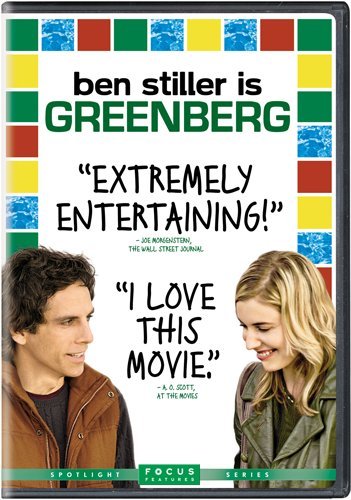
Roger Greenberg (Ben Stiller) once was a musician, but now he is a carpenter and an inveterate writer of letters of complaint (to pet taxis, for instance, for not having a soft carpet for the paws of their passengers). After a stay at a mental institution, he arrives in LA to look after his brother's house and dog while the family is away in Vietnam. He reconnects with an old friend from his band days (Rhys Ifans, a long way from his manic energy in Notting Hill), and circles around a stop-start romance with personal aid and professional doormat Florence (Greta Gerwig).

Stiller's performance here reminds me of Adam Sandler's in Punch-Drunk Love. In both cases, we have actors known for embodying a particular comic type: Sandler is the raging man-child, while Stiller is the sensitive soul prone to social catastrophe. And in both films, we see the actors working with a distinctive auteur (P.T. Anderson, Noah Baumbach) on a low-key comedy that is very much a film of personal expression (to borrow a term from William Bayer). Finally, the borderline art-house trappings and new gravitas notwithstanding, they are still playing recognizable versions of what they've always done. It's just that what is a type of clown perfect for one form of comedy becomes a psychotic in the more realist version. At any rate, I find Stiller's same-yet-different performance very interesting, and very good, and that goes for the other performers too, especially Gerwig, who nails Florence's insecurities, naivete and strength. However, though I found the performances interesting, I didn't find the characters that interesting. Greenberg is thoroughly repellent, and that's fine, but he isn't compelling. I found myself unable to care about what he would do or say next (partly because I had a pretty good idea of what that would be), and wished that Florence were the protagonist instead. Though her self-destructive crush on Greenberg is as inexplicable as it is nonsensical, and so she too tries our patience, she has enough off-beat quirks and surprising resilience to make her worth following around. This is, then, a film that is finely wrought, written and acted, but that is also rather static and distancing.

Charlie Babbitt (Tom Cruise) is a self-centered dealer in exotic cars. He imports high-end sports cars into the states and sells them to the highest bidder. Within the first 10 minutes, we learn that he is not above bribing the EP for the cars to pass emissions, that he treats his girlfriend poorly, and that his father has just passed away. As he goes to the reading of the will, hoping for a big payday, his father leaves him only a car. Charlie is furious to learn that more than $3 million in a trust account has gone to an anonymous person. Turns out the anonymous person is an institutionalized autistic savant named Raymond (Dustin Hoffman).

Since Raymond is a voluntary patient, Charlie organizes his discharge (for his own nefarious reasons) and the two set off on a journey to Los Angeles. Along the way, the cold and calloused Charlie warms up to Raymond, even as the autistic man has more and more difficulty in living life outside of the controlled environment of the institution. So it’s basically a road movie that tracks the change in character of Charlie from a money-hungry bastard to a caring individual. In the end, Charlie becomes less concerned with the potential money he can get from Raymond and more on the health and safety of Raymond himself. It’s a satisfying arc for Charlie. The film is widely credited as an insight into a condition (autism) that previous to 1988 wasn’t very well understood by the masses. The writing is strong, the directing excellent, and the acting top-tier.

Written by Diane Tillis

Written by Diane Tillis