Foreign

Synopsis

In Akira Kurosawa’s later years, it was almost criminal that a director with his resume was forced to practically beg for financing. Kurosawa was in the midst of a career drought, having made only two movies in almost 15 years with Dersu Uzala and Dodesukaden. This coming after a run of films that has proved influential to even today’s filmmakers. While Kurosawa did have to obtain foreign financing for his movies in later years, Francis Ford Coppola and George Lucas, both of whom cite...Kurosawa as heavy career influences, agreed to finance his next film, 1980’s Kagemusha (or The Shadow Warrior).

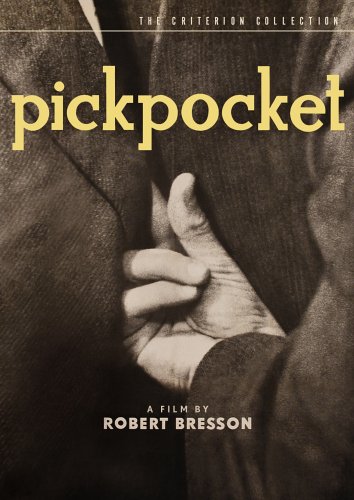
Pickpocket is precisely the kind of film that could never have been made in Hollywood in the 50's. The Hays Code was a set of morality guidelines that dictated what was and was not acceptable to be shown in motion pictures. Amongst many other things, the code would not allow a criminal to be depicted on screen in such a way as to induce sympathy from the audience. It also said that criminals must always be punished for their actions. (For a complete copy of the code, visit http://www.artsreformation.com/a...01/hays-code.html.)

Luckily, the Hays Code only applied to films made in the US, giving foreign filmmakers certain freedoms that were not awarded to those in here the states. Robert Bresson made the most of his freedoms with Pickpocket, a film that, as one might deduce, tells the story of one such nimble-fingered miscreant, and his evolution into the business. His first attempts are quite clumsy, but with time, practice, and the help of a tutor, he soon becomes quite handy. Of course, nobody can break the rules of law forever, and consequences almost inevitably follow a crime.

Let’s face it. Hollywood isn’t taking enough chances these days. In the era of film franchises, sequels and remakes, Hollywood has become too predictable, leading to mediocre reviews for most big releases and even worse box office returns. Many film goers have looked to independent and foreign films to challenge them, and for good reason. Foreign films march to the beat of their own drum, use complex themes and imagery to tell their story, and they usually keep you guessing until the very end. The same can be said f...r Sympathy for Mr. Vengeance.

Sympathy hails from Korea, a country not known for its movie making abilities until Chan Wook Park’s Oldboy showed up on the radar last year. Being that Sympathy for Mr. Vengeance is part of the “Vengeance Trilogy” that includes Park’s Oldboy and Lady Vengeance, Sympathy is surely going to gain some late momentum as curious fans of Oldboy start digging beneath its surface and find this 2002 film.

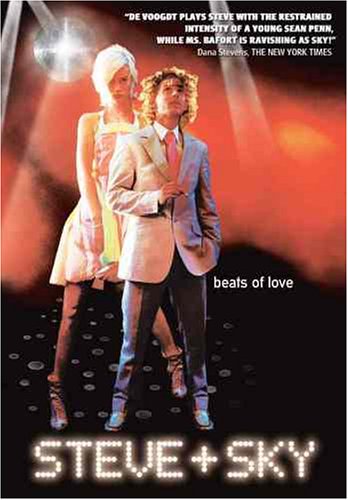
Titus De Voogdt, Delfine Bafort, and Johan Heldenbergh head a mostly forgettable cast, which tends to fall so far into the background, you'll often forget more than just three actors are in Steve + Sky... and for what it's worth, I believe this stems more from the supporting cast's lack of charisma than it does from any real star power the three headliners bring to the table. The film is more of an inciting situation which throws Steve and Sky together, followed by randomly pointless character bits, which stil... could have worked had either star been in the least bit interesting. De Voogdt does the best he can with the main role, but unfortunately, his Steve acts with little-to-no rhyme or reason, and ends up condemning the film's status as a mindless romp through the lives of two deadbeat characters.

I don't have to like characters to enjoy a film, but I must feel drawn in to their plight, if for nothing more than to see them get their just desserts. With Steve + Sky, the film plods along in an effort to achieve "character piece" status, but all that's really accomplished is they simply "do stuff" for an overly long 100 minutes, when writer-director Felix Van Groeningen finally -- and mercifully -- calls an end to the proceedings. At the end of this ride, I honestly wondered what point the film had just made that hadn't already been made far better by many a crappy film. Hopefully, Van Groeningen's next effort will focus more on storytelling aspects in addition to his characters, and less on the aimless A.D.D. brain droppings that too often pass for good cinema, both here and abroad.

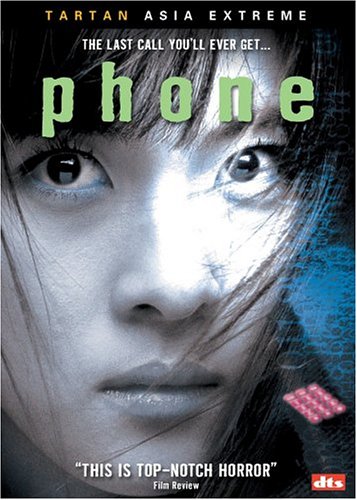
Phone director Byeong-ki Ahn admits he wanted to take the premise of Ringu and incorporate cell phones as the primary transmitter of terror instead of VHS tapes. (Just when these vengeful spirits will make the jump to DVD is uncertain -- and when they do, will it be Blu-Ray or… oh, I’ll save it for another time.) Anyway, he puts together an impressive-looking package with this horror tale, but unfortunately, the film itself falls flat on the wings of derivative, copycat storytelling.

Ji-Won H... is a hard-nosed journalist, who, we soon learn, has blown a sex scandal wide open and made a slew of enemies in the process. Does she care? Of course not. But someone has a mind to make her, as a series of harassing phone calls from a deep-voiced male leads her to believe someone wants her real dead, real soon.

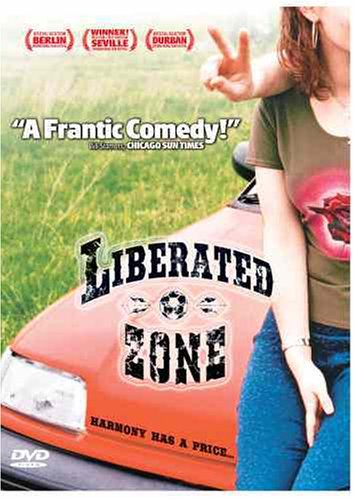
It is always a shame when unknown filmmakers take a page fromthe popular filmmaking techniques of the day. For this film, the model is part Run Lola Run, part Bend it Like Beckham. The similarities to Lola are plentiful, complete with the rapid still-frame snapshots that were that film's trademark. The plot is Beckham-esque, featuring a small-town soccer team, a new star player, and love.

This film is the very definition of “low budget”. It seems to me that if you are going to have...a film about a soccer star, you should actually be able to afford to shoot some shots of a game or two. The sad thing is, there are games depicted in the film, but instead of going to all the hassle of gathering together multiple players and uniforms, the games consist of showing the same couple of abstract jumping scenes over and over again. Even the film's start looks like a poor man's Seal, complete with giant gap teeth and markings on his cheeks.

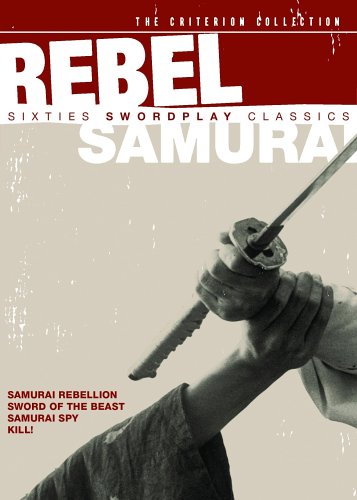
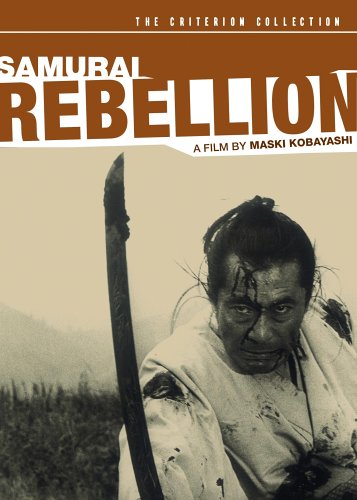
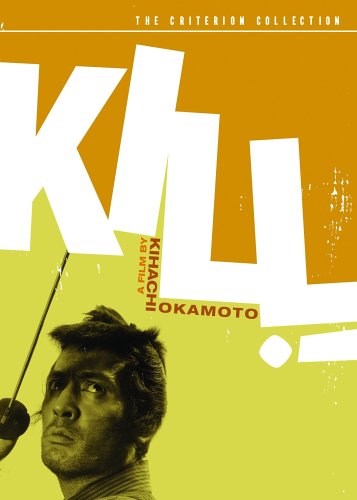
Criterion doesn't put out too many box sets, so you know that when they do, it is really going to be something special. Their Brazil set is a benchmark release that all other single-film, multiple-disc sets are measured against. The Wrong Men & Notorious Women – Five Hitchcock Thrillers set is a brilliantly-themed way to showcase five of the director's most devious films. They have taken that same approach with Rebel Samurai – Sixties Swordplay Classics. The four films in this set, Samurai Re...ellion, Kill!, Samurai Spy and Sword of the Beast, represent unrelated productions that turn the proven conventions of the samurai film genre on its ear.

In the sixties, rebellion was occurring worldwide; not just in the United States. These films show how revolutionary thoughts of freedom were affecting the citizens of the East. While each of these films is different in its style and tone, the unifying message is the same. The Japanese were starting to see that the ruling class may not be the flawless entity that it had been perceived to be for so many hundreds of years. It is not only a citizen's right, but their duty to question authority, and to stand up for injustice, even when that injustice comes from within. These are powerful and controversial ideas in a culture devoted to duty, honor and respect. The examination of the fall of the samurai through film may have been the best way to safely share these new national feelings. The films in this boxed set may be one of the best examples that I have ever seen of the power of art to affect and change the collective conscious of a society.

In an odd sort of way, Samurai Spy has the feel of one of the Sean Connery Bond films. The plot seems to be more convoluted than it really needs to be, and there are many scenes that show a character quiet and alone, as they discover a new piece of the plot puzzle for themselves. I would say that parts of the film could be a bit too complex for some American audiences to follow, as so much of the story is driven by Japanese character and clan names. It seems that Criterion anticipated this problem, as they hav... included a character gallery in the extras, complete with brief character bios.

However, as is the case with many of Criterion's releases, patience is well rewarded. Those that put in the effort will find a film that is rich in its message and quite modern in its tone. While most samurai films up until this point rested on the fact that a samurai can always trust completely in his shogunate, this film is full of double-crosses and wavering allegiances. No longer is what is good for the community always best. Sometimes, this film teaches, personal interests are more noble than those of the collective.

First and foremost, it is important to note that this is a large, “A” list film. While many samurai movies are low budget stories, everything about this beautiful film is first rate. As you can see by the two hour running time, the story comes first in this piece, with the swordplay coming in later, merely to serve the story.

And an important story it is. In 1967, World War II was still fresh in the minds of many Japanese citizens. These people, who had never questioned authority in thousands of years, had j...st begun to wonder if blind loyalty to authority was always the best path. This film dares to place the honor of the family unit over that of the ruling clan. The brilliance of the film lies in the fact that even the act of disobedience is performed with the utmost respect for the ruling class, and violence is considered absolutely as a last resort.

Kill! plays like something of a dark spaghetti western comedy. Honestly, how many times have you heard that line before? A warrior with no master wanders into a ghost town, tired and hungry, to find the only restaurateur in town dead. As he begins to contemplate where he will find his next meal, a farmer wonders into town under similar circumstances. The two form a loose partnership as they discover that they have placed themselves in the middle of a standoff between the local samurai and yakuza clans. As they...find out more about what is going on in the seemingly-deserted town, their loyalties shift and they begin to concentrate more on doing what is right than on their original selfish desires.

Fans of the Kill Bill films will find much to enjoy in this film, as it will give them an opportunity to see some of the history behind Tarantino's films. This piece is an unconventional take on the same book on which Akira Kurosowa's film Sanjuro was based. I always enjoy the opportunity to see different takes on a theme, and this 1965 film is quite fascinating in its disregard for traditional samurai film conventions.