Foreign

Mel Gibson has become somewhat of a character these days. Gibson has become a bit weary of the "Hollywood" way of doing things and so has struck out on a course of originality that can be both inspiring and controversial as the man is himself. His "The Passion" film was viewed by many as the ultimate depiction of Christ's suffering. At the same time just as many believed they were seeing a slant on Jews that was unfair. Just when a balance seemed to have been struck and his film was being accepted for what he claim...d it to be, Gibson the character mucks it all up. Unless you've been living in an isolated island somewhere with a mysterious bunker filled with corn flakes, you've by now heard quite enough of Gibson's arrest and related comments about Jews. Undeterred by such setbacks, Gibson again chose a controversial subject and proceeded to create another of his "masterpieces". This time the ancient Mayan civilization is the subject. Another film shot in an obscure language. These movies are overwhelmingly self-indulgent. That isn't to say they aren't any good. It just means that Gibson frankly doesn't give a damn what anyone else thinks.

Apocalypto is as complicated as the man who created it. The first observation I had was that the film was often best when it was at its simplest. Unfortunately Gibson doesn't allow these moments to dominate with the impact they actually possess. There are inexplicable moments of slapstick that can only be explained by Gibson's love for Three Stooges comedy. While that kind of buffoonery was welcome in the Lethal Weapon franchise, it is painfully out of place here. There is also a trend toward modern translations and phrases that are equally out of place. I'm obviously not learned in the Mayan language, so I can't be sure if these phrases are actually what is spoken or simply misrepresentation in the subtitles. There is no question that the cinematography here is outstanding. The lush Mexican locations were well scouted and serve a great purpose in the overall realism of the film. Still, these beautiful locations provide a stark contrast to the brutality and violence often on display. The musical cues are also outstanding. The exotic rhythms and tones invite the viewer to become emotionally involved in the story. Finally, the cast is an excellent group of relative unknowns. Most of the actors are true native American descendents from as far north as Canada and into Mexico. Everything about this production gives you a startling visceral experience that I admit I haven't felt in very many films I've seen. I missed this one on the big screen. I was admittedly put off by the Mayan language of the production. So my first experience was this DVD, which still gave me a relatively large screen experience.

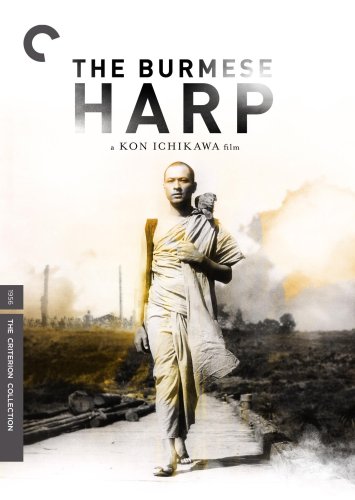
Criterion has surprised me once again with this beautiful film. It amazes me ow they continue to find these “diamonds in the rough”. Films that couldn't possibly exist, yet here they are, widely available on the mas market. The Burmese Harp is a Japanese war film that is decidedly anti-war, and features some truly beautiful music.

At the end of World War II, a group of Japanese soldiers find themselves in Burma, held by British forces as prisoners of war. One soldier from the party has spent his free t...me in Burma learning to play a native harp. This skill proves valuable upon capture, until an unfortunate incident leaves him in a state where he is thought to be dead. Upon recovery, the soldier finds true enlightenment, and takes the viewer along on the journey.

Pedro Almodévar is a big deal in Spanish film, and well respected worldwide by those in the know. Almodévar - director, screenwriter and producer - has had major success with films that explore complex themes and favor female characters. His latest, Volver, remains true to those qualities.

Starring Penélope Cruz (Vanilla Sky), Carmen Maura (Comunidad, La) and Lola Dueéas (The Sea Inside), Volver is a film about female resilience, and the power of death over life. Raimunda (Cruz) is a hardworking mother with a lazy husband and a teenage daughter, Paula. When Paula's dad drunkenly approaches her for sex, claiming he's not really her father, she accidentally stabs him to death. Raimunda, taking charge and protecting her daughter, cleans up the mess and hides his body in the freezer of her neighbor's nearby vacant restaurant, which she's supposed to be minding.

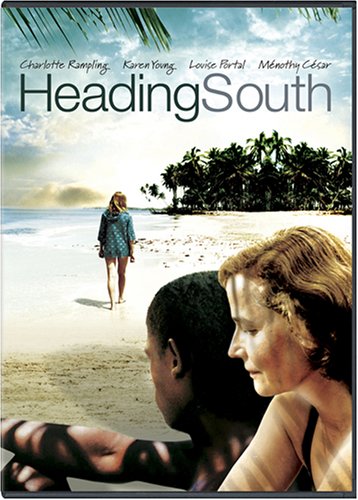
We are in Haiti during the late 1970's, under the brutal dictatorship of Pap Doc Duvalier. At a beach resort, we meet three middle-aged women engaged in what amounts to sex tourism. Charlotte Rampling is Ellen, an imperious ex-pat British professor; Karen Young is Brenda, a psychologically fragile American divorcee; and Louise Portal is Sue, an earthy warehouse manager from Montreal. Disillusioned by their romantic prospects back home, they revel in the (paid) sexual attentions of handsome young Haitians, most notably Legba (Ménothy César), with whom both Rampling and Young are in love.

Director/co-writer Laurent Cantet observes his leading ladies with an eye that, while caustic, avoids easy judgments. He does not in any way let them off the hook for what amounts to a new form of predatory colonialism, and we see them engage in activities they would never consider in their home countries. So, for instance, we learn that Brenda had her first sexual encounter with Legba three years ago, when he was 15, and we see her being tempted to take advantage of a boy who can’t be a day over 12 (something Legba witness, and nips in the bud). But neither does Cantet engage in easy condemnation. He makes all of his characters fully developed human beings, and encourages us to understand these women, even if we do not sympathise. The film is not an unqualified success, however. Once the characters and the setting have been established, the film tends to meander, taking too long to tell us not much more than we knew at the start.

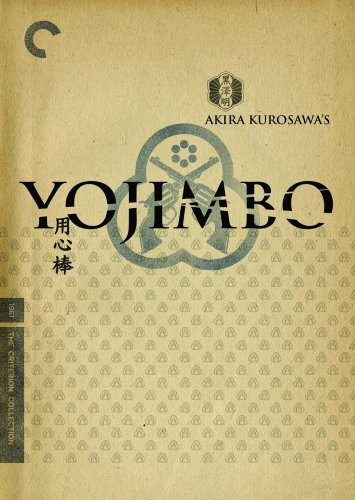
Portions of this review were lifted from the previous Criterion Collection edition review.  Now on to the review...

After making such internationally renowned samurai period films such as Rashomon and The Seven Samurai, Akira Kurosawa did make another film, Yojimbo, with a decidedly different tone, bordering on dark comedy. The opening shot is of Sanjuro (Toshiro Mifune, Throne of Blood), a samurai without a master, who look  at a mountain, and suddenly scratches his head, as if his hair is on too tight. It's almost the breaking down of a facade, helping to show you that the film will be bit different from other Kurosawa samurai films. The introductory cards say that the film is set in the 1860s, and the samurai comes into a town ruled by rival gangs. He doesn't know this when he comes in, but the first thing he sees in town is a dog carrying a human hand. People have said that the way that this film was told reminds them a lot of the Clint Eastwood/spaghetti westerns that came out several years later, and it's easy to understand why, with the quiet main character whom you can never really tell if he's a hero or villain. He deals with some situations with a toothpick in his mouth, reminding me of Chou-Yun Fat in Hard Boiled. Kurosawa does action flicks? That's probably the best way to characterize it, but he does it well, without a lot of one-liners or lack of common sense seen within a lot of today's action films.

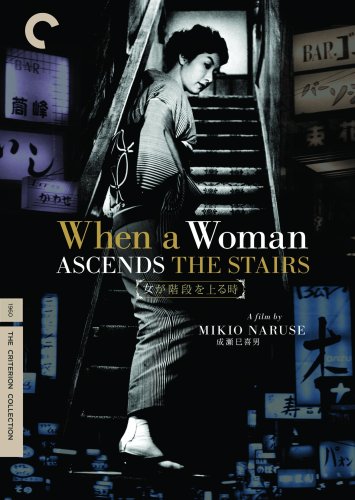
Let me get this out of the way right up front; I really enjoyed Memoirs of a Geisha. Now, I am certainly smart enough to understand that the film was not entirely realistic, and there were some plot developments that pushed suspension of disbelief pretty far, but I wound it charming and entertaining. It was so charming, in fact, that it was often times easy to forget that you were essentially watching a movie about whores. You can romance it all you want, but at the end of the day a Geisha is really nothing mo...e than a high-paid escort.

When a Woman Ascends the Stairs is sort of the realistic companion piece to Memoirs. The story here revolves around a modern-day Geisha, where the lifestyle has moved out of the Geisha-houses and into the bars. The lifestyle is still basically the same; women are “companions” to wealthy male bar patrons, making long-term relationships with one woman. The women pay a portion of their income to the owner of the bar, and keep the rest for themselves (though most of it is spent on kimonos and personal upkeep). Our heroine, Mama, is a Geisha that is well-respected amongst her peers, but she is starting to feel the pressure of age. As she is advancing in years, she is not able to rely as much on her youthful good looks. The time has come for her to either get married or open a bar of her own. As she is so well liked, it is not too long until she has suitors offering to pay for her own bar. Now she must decide how she is to proceed with the rest of her life.

Romeo and Juliet is a classic tale that has been told and re-told over and over again. It is generally accepted that the definitive film version of Shakespeare's story of lovers' twisted fate is the 1968 version by Italian director Franco Zeffirelli. Rather than attempt to best this effort, more recent film adaptations have decided to modernize the story. Baz Luhrmann tackled it with Claire Danes and Leonardo DiCaprio using all the original dialog, but ultra modern wardrobe, sets and music. While some critics myself included) fell in love with this fast paced adaptation, others were appalled.

This time around, the story is told in a Spanish language film from Mexican director Fernando Sarinana. You know the plot. This time, the divides between the two star-crossed lovers are not political but economical. Our Juliet is a very wealthy girl, while "Romero" is a poor but good boy who has to work to get by. I really wanted to like this movie, but I just couldn't do it. This is the same lifeless high school girl romcom crap that you find here in the states, it just looks worse.

Bernardo Bertolucci is no stranger to controversy. His Last Tango In Paris caused quite a bit of noise when it was released. Novecento, as 1900 is known in its original Italian, has been a subject of controversy for decades. Since its 1976 original Italian release, American studios have been cautious about releasing the film in the states, at least as it was originally intended. First there is the running time. The film clocks in at over 5 hours. Theaters in the US face fierce competition for movie goers’ dollars. The economics of the industry make such a long film simply impracticable even in 1976. There were other problems. A short version was eventually brought to the United States, but the unprecedented violence and sexual images required the then dreaded X rating. Even with today’s more forgiving mores, 1900 would certainly have received an NC-17 rating. The political subjects are also problematic. Americans need good guys and bad guys. This film blurs those lines. The competing forces here are Fascist and Socialist. Neither group is embraced here by anyone other than the far left wing of the Democratic Party. Finally, foreign language films serve a very small niche even with today’s public. Mel Gibson broke down some of those barriers recently, but the hardship remains. I must confess, I am not drawn to films requiring subtitles. I find relying on reading the dialogue a distraction. I watch films with a careful eye toward detail. Reading subtitles simply doesn’t allow me the luxury to observe the subtle nuances of a film. It is these minute details that more often than not create a great film. Enter 2006, and the DVD has removed each of these problems. Sitting in the comfort of my own theater, I can pause when I wish and take multiple breaks. The DVD offers me an English dubbed version which allows me to see those magical details that a film like this requires. The dubbed version also has the added bonus of allowing me to hear Robert DeNiro’s and Donald Sutherland’s voices. Like many film connoisseurs, I had only heard of this film. Now I had the chance to enjoy it in comfort and style.

1900 benefits from an extraordinary cast. American staples Robert DeNiro, Donald Sutherland, and Burt Lancaster lead a mostly Italian supporting cast. Sutherland is absolutely evil as the Fascist enforcer, Attila. His mutilation of a cat is quite an infamous scene. Although it wasn’t quite as graphic as legend had proclaimed, it is disturbing just the same, made more so by the gleeful way Sutherland revels in the act. Robert DeNiro shows flashes of the brilliance that would become his trademark. The character is often moody and perhaps not written with as much passion as DeNiro provides. Burt Lancaster has a small but potent role as Alfred’s grandfather. It helps to establish some historic place mark for the film. Finally, French actor Gerard Depardieu provides an uneven portrayal of Olmo. At times he provides incredible passion and depth in the role. Still, there are moments he seems almost uninterested. The chemistry with DeNiro is a little awkward and never really clicks. This is a huge shame, as this relationship is vital to the story.

Jet Li's Fearless is reportedly the star's final martial arts epic. Since we're talking about the guy who did Once Upon a Time in China, Twin Warriors and Hero, that fact alone makes this is a significant film for martial arts fans.

Fearless tells the story of Huo Yuanjia, who in 1910 helped found the Jin Wu Sports Federation (Chin Woo Athletic Association), the first civil Kung Fu organization in China. Li plays Yuanjia, who is a Chinese folk hero. The film follows Yuanjia's life from early childhood until his last days, showing his journey from a weak, little boy to a cocky, selfish bully, and finally to a respected martial arts master and Chinese patriot.

Written By Jeff Mardo

This disc certainly had me fooled. I though I was in for another one of those lame teenage “comedies” where the emphasis is on lame and cliché jokes and the occasional glimpse of gratuitous nudity. What I wound, however, was a wonderful movie that is the very definition of an indie film. If you liked Kevin Smith's first foray into filmmaking, then you will probably like this piece as well. I would contend that Clerks was a better film, but this Mexican film certainly has it's on charm as well. While Smith's fi...ms are packed full of dialog, Fernando Eimbcke has crafted a piece that is about those moments when there is nothing to say.