Foreign

Call me crazy, but I came away from this disc feeling like I had just watched a samurai western. On one side, the film is filled with Japanese warriors, fantastic swordfighting and talk of honor and revenge. On the other hand, a major subplot of the film revolves around panning for gold in the mountains, and fighting over the claims. This excellent 1965 film has much in common with great westerns, such as The Good, The Bad and The Ugly, including interesting plot twists and a complicated-yet-comical sidekick t... the main character that is surprisingly similar to Eli Wallach's character in the Italian epic.

Of course, there is plenty of samurai action in this film as well. It is interesting to see the rapid zooms that are such a trademark of this style of film used in a black-and-white format. These conventions are even more interesting when juxtaposed with some of the other delicately framed deep focus shots in the film. The cinematography alone is enough to elevate this film out of the category of a basic samurai film and into that of art, but the script and the wonderfully-choreographed fight scenes really put this film into a whole new level.

This is the kind of film that usually comes from the English or the French... not the Germans. Let's face it, Germany is not known for a stable of modern intellectual comedies. If you need a beer, or a fine automobile, you go to the Germans. If you need an entertaining art film, you go to France. Still, this is a film that bucks the trend... and will hopefully start a new one.

The Schultze of the title is a retired German miner that finds himself lost in his newfound abundance of free time. Eventually,...he turns to his accordion playing as a release from the banality of everyday life. This pursuit eventually leads him to discover Louisiana Zydeco music, and his world is turned upside-down. If you have seen About Schmitt, then you are on the right track with the tone of this film. Personally, however, I preferred this picture much more than the Jack Nicholson vehicle.

The great thing about DVDs produced under the Criterion moniker is that they can't really be compared to much else. Usually, I can just whip out a peppy little monologue about the film I have just watched, but Criterion always makes things a bit more difficult... which is great for film fans that have seen it all before.

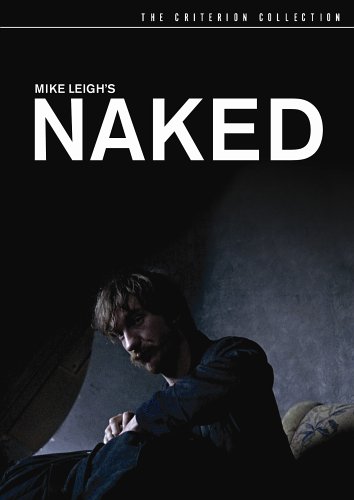
Naked is, of course, no different. There is no easy summation for this piece of art, which won awards for Best Actor and Best Director at the 1993 Cannes Film Festival. This is ... simply fantastic dark comedy, filled with superb performances and brilliantly witty dialog. While many American audiences live and die by the easy-to-follow plot, this is more of a collection of character studies, with Johnny (played by David Thewlis) serving as the tour guide. Microcosms of relationships, criminal minds, malicious intent and the curse of intelligence are all explored here, in a film that may severely expand the viewer's beliefs about those that live on the fringe of society, and their own lives.

Synopsis

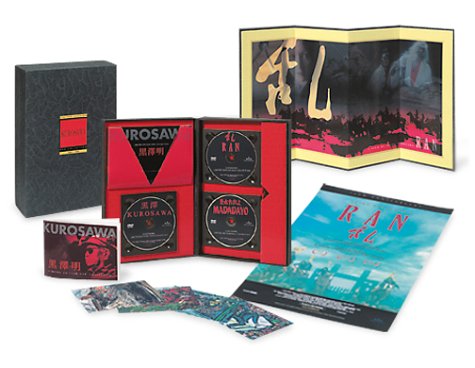
Akira Kurosawa’s impact on filmmaking and storytelling will be part of Western cinema for decades to come. Despite being slightly underappreciated in his later years in his native Japan, some of the work he put to film is some of the greatest and most influential ever seen. His work, such as Rashomon, The Hidden Fortress and The Seven Samurai, to name a few, have been remade or cited as major influences in the films and/or careers of George Lucas, Clint Eastwood and James Cobur..., among others. I’ve become increasingly interested in Kurosawa’s work, and I recently picked up the Kurosawa DVD Collection, which is available as an Amazon.com exclusive as part of a limited edition run of 5,000. The 3-disc set contains the documentary on the sensei (Kurosawa’s nickname), aptly titled Kurosawa. The other two discs house Kurosawa’s last film, Madadayo, and the Masterworks Edition of Ran. In terms of packaging, it’s a bit hard to describe, the box opens much like your standard amaray case. On the left side, Kurosawa is at the bottom, and on the top, there is a greeting card sized package of materials. Aside from the obligatory certificate of authenticity, four 5x7 glossy cards that are Kurosawa storyboard illustrations for Madadayo and Ran are here, as well as a small booklet that is mainly comprised of biographical information. The discs for Madadayo and Ran are on the right side, as well as a small board (Amazon says it’s a “Japanese-style miniature shoji screen”) that has art from Ran on it. It’s nice artwork, plus it’s been clear-coated to help prevent damage to it. To round out the goodies, there is a reproduction of the poster that trumpeted the re-release of Ran in 2000, but the poster is reduced to a more manageable size to fit the case.

Synopsis

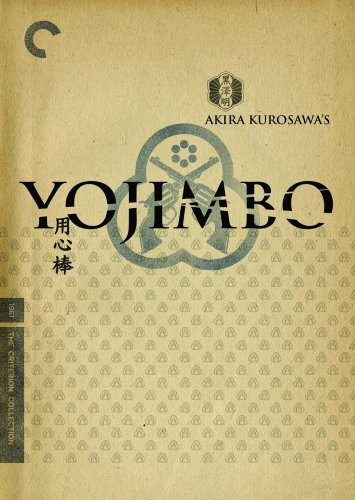
After making such internationally renowned samurai period films such as Rashomon and The Seven Samurai, Akira Kurosawa did make another film Yojimbo, with a decidedly different tone, bordering on dark comedy. The opening shot is of Sanjuro (Toshiro Mifune, Throne of Blood), a samurai without a master, who looks at a mountain, and suddenly scratches his head, as if his hair is on too tight. It’s almost the breaking down of a facade, helping to show you that the film will ...e bit different from other Kurosawa samurai films. The introductory cards say that the film is set in the 1860s, and the samurai comes into a town ruled by rival gangs. He doesn’t know this when he comes in, but the first thing he sees in town is a dog carrying a human hand. People have said that the way that this film was told reminds them a lot of the Clint Eastwood/spaghetti westerns that came out several years later, and it’s easy to understand why, with the quiet main character whom you can never really tell he’s a hero or villain. He deals with some situations with a toothpick in his mouth, reminding me of Chou-Yun Fat in Hard Boiled. Kurosawa does action flicks? That’s probably the best way to characterize it, but he does it well, without a lot of one-liners or lack of common sense seen within a lot of today’s action films.

East Meets West

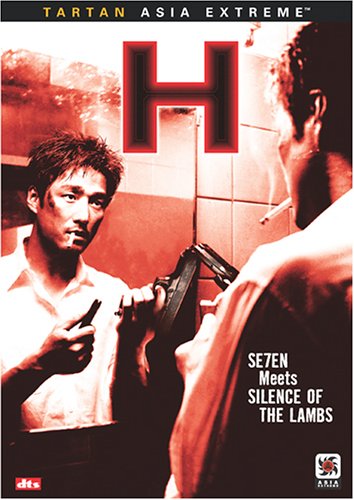
I don’t know a great deal about Korean cinema, but I imagine that H must have been a milestone in the Korean film industry – a distinctly Korean interpretation of a Western tradition. H is a dark psychological murder mystery, thriller, and suspense film, best compared to The Silence of the Lambs, or Kiss the Girls - not what one expects from the other side of the Pacific. There’s no martial arts to be found, and no running through trees, and pseudo-mystical mum...o-jumbo is just as Western as Se7en. Never once does a sword fight break out, and no wise, old monastic sages are ever consulted.

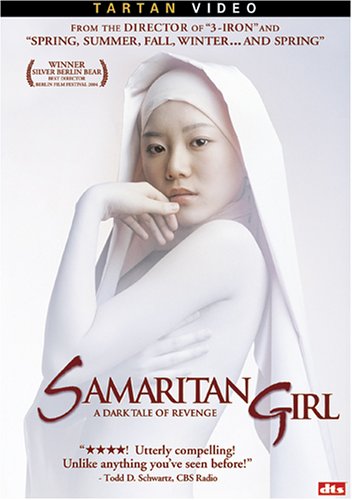
Samaritan Girl is a provactive little film from South Korea. The director, Kim Ki-Duk, has been said to be a filmmaker to watch. The plot surrounds the plight of two teenage girls, Jae-young (played by Min-jeong Seo) and Yoe-Jin (played by Ji-min Kwak). These two friends have dreams of going to Europe. The only problem: they need money. What's the solution: the oldest profession. Jae-Young becomes the prostitute and Yoe-jin is the pimp. Sounds a little twisted. Well...tragedy strikes. And Yoe-Jin devo...es herself to the men Jae-young slept with. You-Jin's father, a detective (played by Eol Lee), finds out about his daughter's secret life, thus going on a revenge mission. Ki-Duk's visual style is simple, but haunting. The narrative seems a bit far fetched, but works on a symbolic level.

Audio

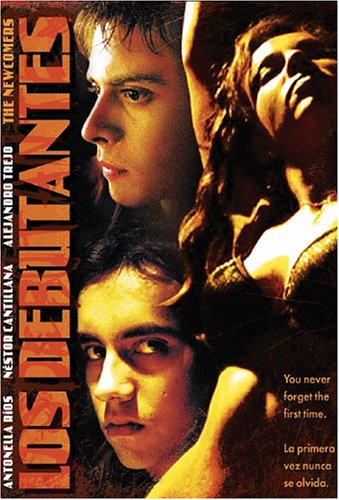
For those of you who think that all foreign films are drab and dreary, Los Debutantes may reinforce that belief. Written and directed by Andres Waissbluth, it tells the story of two brothers in Chile who celebrate Victor’s (the younger brother’s) birthday by going to a strip club. He falls in love with one of the dancers there named Gracia and attempts to pursue her (even during her day job, when she is the attendant at an adult theater), despite the feelings his older brother Silvio has for her.

The...story shows several different points of view in 30-40 minute periods, first you see the Victor’s, then Silvio’s, then Gracia’s, followed by the dramatic and violent ending the film seems destined for. Granted, the plot twists are familiar to other nonlinear films like Rashomon or Pulp Fiction, but the characters, particularly Gracia, dream of lives beyond their current state, and look to do better. Victor goes to school, while Silvio works to make Victor’s life easier.

Synopsis

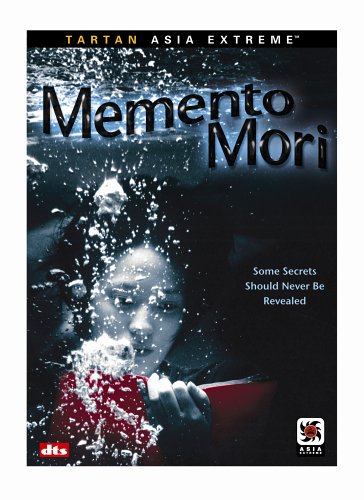
Set in a girls’ high school, this tells the tale of Min-Ah, who finds a diary written by two of her schoolmates. This is a revealing book, exposing as it does their love affair. Concurrently with Min-Ah reading the diary, that relationship comes to an end, and one of the girls leaps to her death from the school roof. Supernatural events begin almost immediately thereafter.

Films like Crimson Tide, Hunt for Red October and U-571 have tried on their own ways to take their place as the definitive modern submarine movie, but Das Boot still stands as King, over 20 years after its release. I remember hearing about this film growing up, and as a lad of 10, wasn’t into foreign films, or war films, as I am now, which may not be saying much. In seeing it when the Director’s Cut first came out in 1997, many people snapped up the 5.1 soundtrack, and Director’s Commentar... which was on the flipper disc. In my first viewing, I became enamored by the experiences of German war correspondent Werner (Herbert Gronemeyer), as he watches the transformation of the baby faced crew of the U-Boat transform into unshaved, withdrawn men and the end of their journey in the 10 foot wide by 150 foot long submarine.

Jurgen Prochnow (Air Force One) is the Captain of the sub, who has become jaded from hearing the numerous failures of the sub, and while he does follow orders, and attempts to attack an Allied shipping convoy, the mission is almost one of survival. Doing what you can to stay sane, almost civil, during the time in cramped quarters. When his (and other) boats encounter the Allied ships, the chase is sonically powerful, with loud depth charges booming in the water, rattling the metal chassis of the sub, along with the contrasting quiet of the crew, hoping to avoid the ships above them. Wolfgang Petersen (The Perfect Storm) does an outstanding job of portraying the cramped quarters, the decaying morale of the crew, and all of the suspenseful elements up to, and including, their trip home.